
“Two Famous Johns” – a true jazz story by Bob Hecht

April 16th, 2026

.

.


Wikimedia Commons

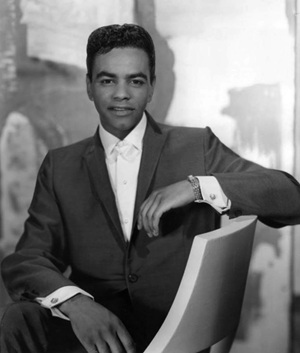
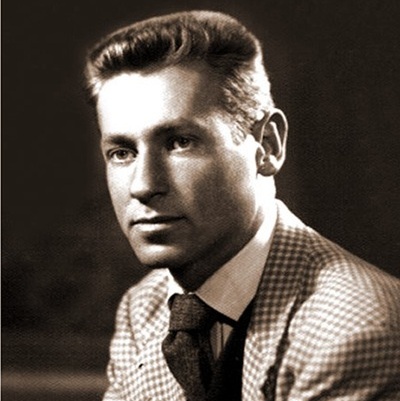
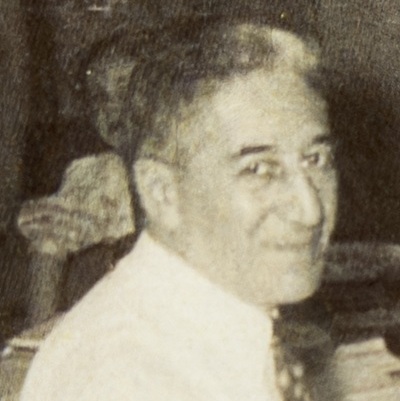
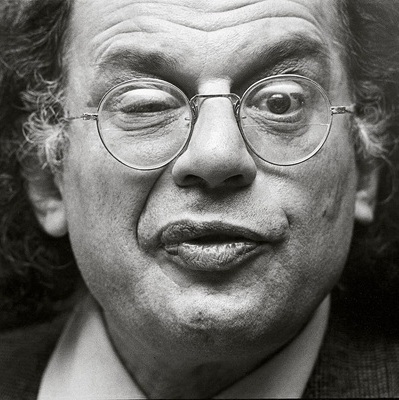
Johnny Mathis, c. 1960

Wikimedia Commons

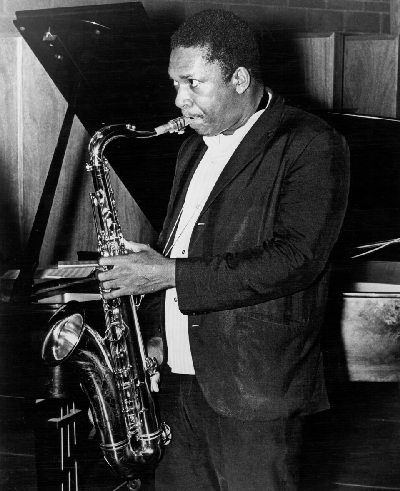
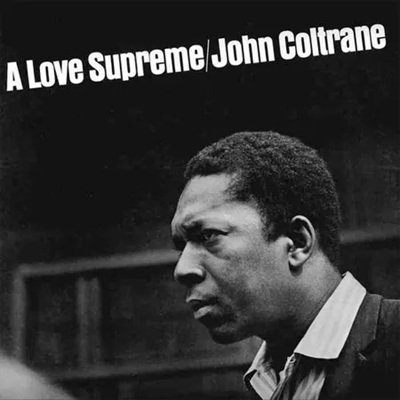
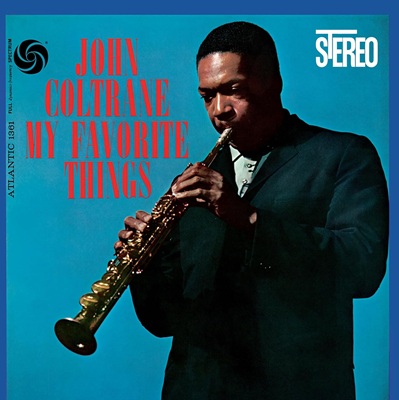
John Coltrane, 1963

.

.

Two Famous Johns

By Bob Hecht

.


…..It was a weeknight in 1964 and there was hardly anyone in the Half Note. I was sitting in the back, near the entrance to the famous New York jazz club, now long ‘defunked.’ John Coltrane and his quartet were on the bandstand playing for a mere handful of patrons. By that point in his musical evolution, Trane was getting into some of his farthest-out excursions, often marked by a lot of impassioned shrieks and squawks. The music was a far ‘cry’ from the lush lyricism of his popular Ballads album, released just the year before. But it was Trane and I was always open to hearing the various things he was doing, even when they were not my favorite things.

…..Partway through the set, I happened to glance over to my right and saw that there, seated alone at a corner table under the windows that faced out onto Spring Street, was another famous John — one I never expected to find in a jazz club listening to Coltrane. It was none other than pop singing star Johnny Mathis. He was dressed in white pants and white shirt and appeared to be listening intently to what Coltrane was doing. I tried not to stare and shifted my attention back to the bandstand.

…..Later, upon reflection, I realized that Mathis’s presence in a jazz club was not really all that surprising. After all, he had originally been on a jazz career track back in 1956 when he made his very first album for Columbia; that album featured charts by some great jazz arrangers, including Gil Evans. When the album didn’t sell very well, the A&R people at Columbia came up with a different plan for the handsome young man with the smooth tenor voice. Soon he was singing the kinds of blockbusters that catapulted him to fame — and that made Columbia Records, and him, a lot of dough: soft romantic ballads like “Chances Are” and “The Twelfth of Never.”

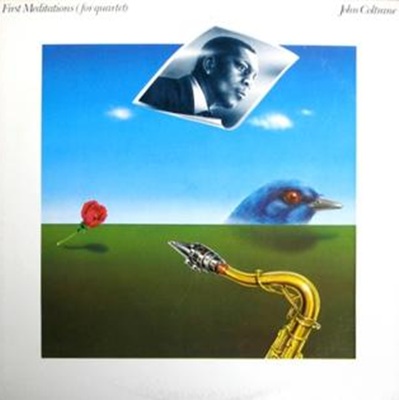
…..And speaking of romantic ballads, during the year before my evening at the Half Note, both of those two Johns, Coltrane and Mathis, had shared something musical in common. Trane’s classic Ballads album included Jimmy McHugh’s, “Too Young to Go Steady,” and Mathis’s album Romantically included the same song. Was that just a coincidence? We’ll never know, but they did release the same song — with each of their versions rendered lovingly and tenderly — in the very same year.

…..Coltrane would be gone just a few years later, in 1967, at only 40 years old; Mathis would continue as one of the country’s top vocalists until his retirement in 2025, at 89.

…..I’ve learned recently that as a young man Mathis was exposed to a lot of great jazz. When he was growing up in San Francisco, his parents not only played classic jazz records at home, but his father often took him to the city’s famous Blackhawk jazz club to hear the likes of Dave Brubeck and Miles Davis, who appeared there with John Coltrane in his band.

…..“Some of those musicians became good friends,” Mathis recalled in a 2018 Washington Post article. “Dizzy Gillespie, for instance, became a good buddy of mine. I was 13 or 14 years old at the time,” he says, “and I got to meet all of these incredible jazz artists. And later on, after I started to sing professionally, I’d meet them on the road, and they’d say, ‘Oh, you’re little Johnny.’”

…..That night at the Half Note I didn’t stick around after listening to Trane’s set, but I wonder if “little Johnny” and John Coltrane, two heavyweights in their own respective musical arenas, took that opportunity to get reacquainted. I’m betting that — chances are — the chances are awfully good.


.

.

___

.

.


Listen to the 1962 recording of John Coltrane performing the Jimmy McHugh composition “Too Young to Go Steady,” with Coltrane (tenor saxophone); McCoy Tyner (piano); Jimmy Garrison (bass); and Elvin Jones (drums). [Universal Music Group]

.

.


And…the 1963 recording of Johnny Mathis performing the same song… [Columbia/Legacy]

.

.

___

.

.

 

Bob Hecht frequently contributes his essays, photographs, interviews, playlists and personal stories to Jerry Jazz Musician. He has a long history of producing and hosting jazz radio programs; his former podcast series, The Joys of Jazz, was the 2019 Silver Medal winner in the New York Festivals Radio Awards. In addition, he is a widely published fine art photographer, whose work has appeared multiple times in The Sun, LensWork, Black & White Magazine, Zyzzyva and other periodicals, as well as in the book, Dream of Venice in Black & White, published by Bella Figuera Publications. He lives with his wife in Portland, Oregon.

Bob recently published a new book, Haiku Eye, comprised of 65 of his color photographs, each accompanied by one of his original haiku poems. Click here for information about the book.

His photo website is roberthecht.com

Instagram: @roberthechtphotography2.0


.

Click here to read about his book, Stolen Moments: A Photographer’s Personal Journey


Click here to read “Two Jazz Survivors,” his reflection on his personal friendship with Sheila Jordan


.

In addition to putting together great playlists, Bob has conducted several fine interviews for Jerry Jazz Musician.

Click here to read Two of a Mind: Conversations on Creative Collaboration, featuring Bill Charlap and Sandy Stewart; Click here to read his interview with Pepper Adams biographer Gary Carner. Click here to read “Life in E Flat” – a conversation about Phil Woods – with pianist Bill Charlap and jazz journalist Ted Panken, and click here to read his interview with Alyn Shipton, author of The Gerry Mulligan 1950’s Quartets.

Click here to view all playlists published on Jerry Jazz Musician

.

.

.

.

___

.

.

Click here to read The Sunday Poem

Where the Music Wasn’t Allowed” is Jane McCarthy’s winning story in the 71st Jerry Jazz Musician Short Fiction Contest

Click here for information about how to submit your poetry, short fiction, playlists, art, or essays

Click here to subscribe to the (free) Jerry Jazz Musician quarterly newsletter

Click here to read other editions of “True Jazz Stories”

.

Click here to help support the ongoing publication of Jerry Jazz Musician, and to keep it ad and commercial-free (thank you!)

.

___

.

.

Jerry Jazz Musician…human produced (and AI-free) since 1999

.

.

.


.
 

Share this:

Comment on this article:

Your email address will not be published. Required fields are marked *

Site Archive

Your Support is Appreciated

Jerry Jazz Musician has been commercial-free since its inception in 1999. Your generous donation helps it remain that way. Thanks very much for your kind consideration.

Click here to read about plans for the future of Jerry Jazz Musician.

In this Issue

Announcing the publication of Volume II of Kinds of Cool: An Interactive Collection of Jazz Poetry...The second edition of Kinds of Cool, an Interactive Collection of Jazz Poetry has just been published, and is now available for sale on Amazon.com. This edition is dedicated to publishing women poets from all over the world who share their personal passion for and relationship with jazz music, and the culture it interacts with. With a foreword by Allison Miller, one of the world’s most eminent jazz drummers, and photography and design by Rhonda R. Dorsett

Poetry

photo of Sidney Bechet by William Gottlieb
21 jazz poems on the 21st of July, 2026...An ongoing series designed to share the quality of jazz poetry continuously submitted to Jerry Jazz Musician.

The Sunday Poem

The Sunday Poem: “Interplay,” by Bob Hecht

The Sunday Poem is published weekly, and strives to include the poet reading their work...

Bob Hecht reads his poem at its conclusion.


Click here to read previous editions of The Sunday Poem

Performance

The performance poet Emmett Wheatfall
A Letter from the Editor…On “The Weary Blues: Celebrating Langston Hughes and the Harlem Renaissance”A brief recap and photos of the February 7, 2026 Jerry Jazz Musician-produced performance of “The Weary Blues: Celebrating Langston Hughes and the Harlem Renaissance”

Short Fiction

photo by Daniel's Richard/via Pexels.com
Short Fiction Contest-winning story #72 – “La Fontaine,” by Ashlee Trahan...A broken familial relationship in post-WWII France finds a semblance of closure in a crumbling countryside estate.

Community

photo by Rhonda R. Dorsett
In Memoriam: Michael L. Newell, 1945 – 2026...News regarding the passing of the poet Michael L. Newell, whose work has been published on Jerry Jazz Musician since 2015.

Poetry

“Dreaming in a Spacecraft” – A prose poem inspired by the voyage of Artemis II, by Robert Alan Felt...

Interview

photo of Billie Holiday by William Gottlieb/Library of Congress
Interview with Paul Alexander, author of Bitter Crop: The Heartache and Triumph of Billie Holiday’s Last Year...The author talks about the courage and resilience of the legendary Lady Day, and his outstanding book – an inspirational and revealing portrait of an iconic American, that, like his subject, exudes compassion and creative soul.

Poetry

photo by Nathan J. Hilton/via Pexels
“Pax Vobiscum” – a poem by Michael L. Newell

Feature

Book Excerpt from Crossing Bar Lines: The Politics and Practices of Black Musical Space, by James Gordon Williams...In this entire chapter from his book, the author explains how the trumpeter Ambrose Akinmusire expresses his political views and lived geography through his improvisational music, notably his critique of police brutality that has, as he states, “become a leitmotif throughout my albums.”

Poetry

Yves Moch, CC BY-SA 3.0, via Wikimedia Commons
“Remembering Sonny Rollins” – a collection of poetry...Over the years, many poems have been published on Jerry Jazz Musician that were written in reverence of the man we refer to simply as “Sonny.” In the wake of his death, many more have been written. The unsolicited poems making up this collection is an example.

Interview

photo by Warren Fowler
Interview with John Gennari, author of The Jazz Barn: Music Inn, the Berkshires, and the Place of Jazz in American Life...The author discusses how in the 1950s the Berkshires – historic home to the likes of Hawthorne, Melville, Wharton, Rockwell, and Tanglewood – became a crucial space for the performance, study, and mainstreaming of jazz, and eventually an epicenter of the genre’s avant-garde.

Short Fiction

“The Cartographer” – a short story by Timothy Collyer...The story – a finalist in the recently concluded 71st Short Fiction Contest – is a work of speculative fiction about the gentrification of memory. It follows a recovering alcoholic who is building a guerrilla augmented-reality map of Philadelphia’s lost jazz history—specifically the “Blue Note” era of the 1960s—while battling a corporate developer who wants to sanitize the data for tourists.

Feature

Memorable Quotes: Abraham Lincoln..."I like to see a man proud of the place in which he lives..."

Community

Ricky Esquivel/Pexels.com
Community Bookshelf #6...“Community Bookshelf” is a twice-yearly space where writers who have been published on Jerry Jazz Musician can share news about their recently authored books and/or recordings. This edition includes information about books published within the last six months or so (September, 2025 – March, 2026)

Poetry

Six poets write eight poems (in the midst of our times)...Poets within this community of writers are feeling this moment in time, and writing about it. This collection is another example.

Short Fiction

collage by Judith Beth Cohen
“The Eating Club” – a short story by Judith Beth Cohen...The story – a short-listed entry in the recently concluded 71st Short Fiction Contest – centers on an affair two writers share around gourmet meals.

Poetry

Peter Buitelaar, CC BY 2.0 , via Wikimedia Commons
Two Poems for Miles Davis

Feature

photo by Laura Stanley via Pexels.com.
Trading Fours, with Douglas Cole, No. 28: “Little Samba”...Trading Fours with Douglas Cole is an occasional series of the writer’s poetic interpretations of jazz recordings and film. This edition is based largely on a documentary – They Shot the Piano Player – about Tenório Junior, a Latin jazz musician who only produced one album (1964) before he “disappeared” in 1976.

Short Fiction

kaboompics.com/via Pexels
“The title is not included in the word count…” – a short story by Scott Cash...In this story – a finalist in the 71st Short Fiction Contest – self-ordained genius Kevin feels that life has been against him. But he thinks he has discovered a loophole and can exceed the 3,000 word limit for a writing contest by utilizing the title. When this is thwarted, he instead lands upon footnotes as a way to exceed the limit. This story is a celebration of writers and the act of writing.

Jazz History Quiz

Besides being one of the first to be influenced by Charlie Christian (pictured), in 1944 this electric guitarist employed Charlie Parker on his first recording date and eventually led an R&B-oriented group “The Rockin’ Highlanders” that featured the saxophonist Red Prysock. Who is he?

Poetry

Poems on Charlie “Bird” Parker (inspired by a painting by Al Summ) – an ekphrastic poetry collection...A collection of 25 poems inspired by the painting of Charlie Parker by the artist Al Summ.

Contributing Writers

Click the image to view the writers, poets and artists whose work has been published on Jerry Jazz Musician, and find links to their work

Coming Soon

New poetry collections, Jazz History Quiz, and lots of short fiction; poetry; photography; interviews; playlists; and much more in the works...

Interview Archive

Ella Fitzgerald/IISG, CC BY-SA 2.0 , via Wikimedia Commons
Click to view the complete 25-year archive of Jerry Jazz Musician interviews, including those recently published with Judith Tick on Ella Fitzgerald (pictured),; Laura Flam and Emily Sieu Liebowitz on the Girl Groups of the 60's; Tad Richards on Small Group Swing; Stephanie Stein Crease on Chick Webb; Brent Hayes Edwards on Henry Threadgill; Richard Koloda on Albert Ayler; Glenn Mott on Stanley Crouch; Richard Carlin and Ken Bloom on Eubie Blake; Richard Brent Turner on jazz and Islam; Alyn Shipton on the art of jazz; Shawn Levy on the original queens of standup comedy; Travis Atria on the expatriate trumpeter Arthur Briggs; Kitt Shapiro on her life with her mother, Eartha Kitt; Will Friedwald on Nat King Cole; Wayne Enstice on the drummer Dottie Dodgion; the drummer Joe La Barbera on Bill Evans; Philip Clark on Dave Brubeck; Nicholas Buccola on James Baldwin and William F. Buckley; Ricky Riccardi on Louis Armstrong; Dan Morgenstern and Christian Sands on Erroll Garner; Maria Golia on Ornette Coleman.