
.
.

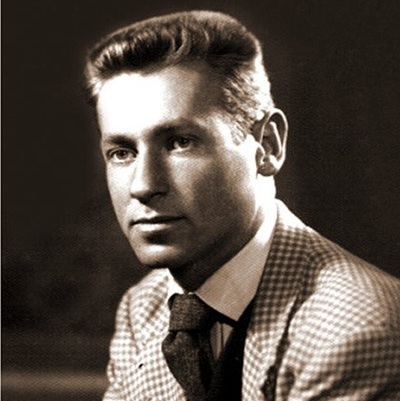
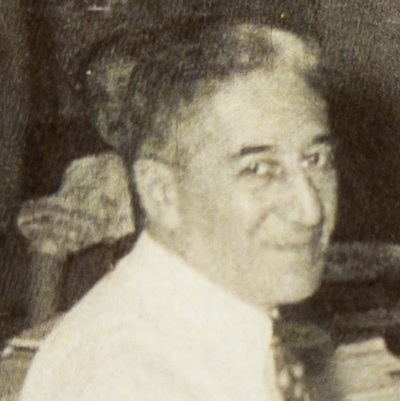
Bob Hecht’s grandfather Ira Hecht, c 1956.
.
___
.
Generation Gaps
by Bob Hecht
.
…..Have you ever tried to turn your mom on to jazz? I did, and it didn’t go so well…
…..I’m about 16 the day this goes down—we’re just sitting around talking about music and on a whim I play her Charlie Parker’s classic version of “A Night in Tunisia,” with his famous, rapid-fire, breathtaking alto break, hoping she would at least appreciate the sophistication and virtuosity of his playing. Now, my mom was not a jazz fan, although back in the forties she and my dad had danced to Benny Goodman, Tommy Dorsey and Glenn Miller. I don’t know what I was thinking—I guess I harbored a vain hope that she might at least understand the depth and profundity of the music I adored so much, and which had become so important to me.
…..“Why does he have to play so many notes?” she asks, condescendingly. “I don’t like all those pyrotechnics—it’s just too frantic!”
…..I suppose people from each generation have their own cultural context, and it’s very difficult for them to transcend that. It’s like Archie Bunker sang on All in the Family:
“Boy the way Glenn Miller played,
Songs that made the hit parade.
Guys like us we had it made,
Those were the days.”
…..After playing the Parker track, I try to give my mom some background on the music to help her process and appreciate what she’s been hearing. I tell her about Bird’s technique being unprecedentedly virtuosic, about the harmonic and rhythmic innovations he brought to the music. To lighten the mood I even I tell her the legendary story about Dizzy Gillespie composing “A Night in Tunisia” by beating out the rhythms on the lid of a garbage can.
…..“Well, he should have just put it in the garbage can,” she snipes.
…..At that, I give up.
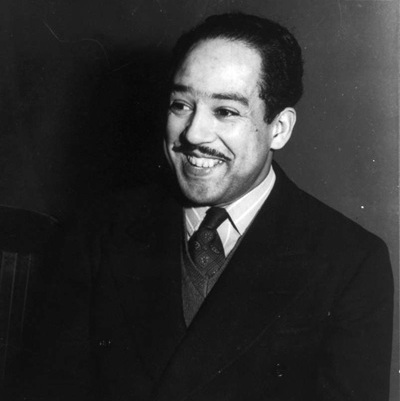
…..The conversation with my mom reminds me of a wonderful jazz and poetry piece, “Scenes in the City,” with music by Charles Mingus and words by Langston Hughes and Lonne Elder. In it, the narrator, Melvin Stewart, talks about trying to get his mother to appreciate the jazz music he loves so much.
…..But, as he laments, “Moms didn’t dig—she just didn’t go for it.”
…..Why do we even try to convince earlier generations of family members to get with the music we love? I suppose parental approval can be a big unconscious need for a child, and perhaps that explains why we sometimes seek affirmation from our elders—affirmation that we are not completely off base in our choices and preferences—even if it’s like beating one’s head against the proverbial wall.
…..I never had the chance to listen to jazz or to discuss music with my dad—he died when I was twelve and had been mostly absent up to that point. Decades after his death a family friend happened to mention in passing that my father’s favorite singer had been Sarah Vaughan (she is one of my top favorites as well). This was news to me, and I latched on to that tiny tidbit of information like a life raft, wondering—had he lived—whether our mutual admiration of “The Divine One” could perhaps have been a source of the bonding with him I missed so terribly. Of course I’ll never know.
…..A good friend of mine once told me about the time he played a jazz record for his dad. After listening to Stan Getz improvise several brilliant choruses on a familiar standard tune, his father said, “Does he think he’s improving on the melody?”
…..I was more successful with my paternal grandfather when I played him a Mingus record once. But first, let me give you a bit of background about this special man.
…..When my grandpa, Ira Hecht, Sr., was a young man, he aspired to be a concert violinist. Sadly, when he married my grandmother, Edna, he soon gave up the instrument because she couldn’t stand the sound of it! Instead, he wound up with a fifty-year career as a clerk for the New York-Long Island Railroad. I never got to hear him play, as his violin was long gone by the time I was on the scene. However, he introduced me as a young boy to a great deal of wonderful classical music. Two of his favorite violinists were Nathan Milstein and Yehudi Menuhin— which I thought was the funniest name I had ever heard.
…..Grandpa Hecht had a decent record player in their apartment in North Bergen, New Jersey, and sometimes for hours on end he would play his records for me. I loved my grandpa—he was a sweet, gentle and kind man—and I fell in love with his music. There was no jazz in his house but some terrific classical music; one piece in particular became one of my all-time favorites—Tchaikovsky’s Andante Cantabile, from his String Quartet No. 1, Op. 11. Listening to that slow and poignantly lyrical composition may have been the first time I literally got chills from listening to a piece of music. It was sublime.
…..Once during my high school years when my grandparents were visiting my mom’s house, the subject of my burgeoning love and fanaticism for jazz came up, and my mom decided to try to prove her point that modern jazz was rubbish.
…..“Go ahead, play some of that discordant, frantic stuff you love so much for your grandpa,” she hectored me.
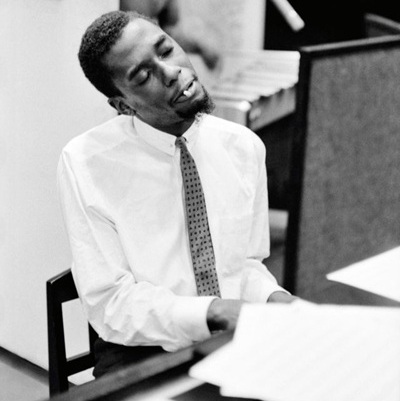
…..So I put on a Charles Mingus track from his Mingus Dynasty album. I chose “Diane,” which has some lovely classical elements as well as strong jazz rhythms and harmonies, with a beautiful improvised piano solo by Roland Hanna. My grandpa listened intently and at its conclusion smiled, and said simply: “That’s timeless music, music for the ages!”
…..I grinned broadly, but man, was moms pissed.
…..My maternal grandparents were another story, however. The only music I ever heard in their apartment was on the Lawrence Welk show on TV, with all those hokey polkas! I’ve often wondered if they were watching when Welk famously introduced the classic Ellington theme song, “Take the ‘A’ Train,” by announcing: “And now the boys in the band are going to play ‘Take a Train.’” Trust me, if they were watching, they wouldn’t have noticed his hilarious error!
…..As a young teen I had made an amazing discovery. East Orange, where I was living with my grandparents, was a city with a large black population, and evidently some jazz fans, because the local newsstand sold DownBeat Magazine. I was astonished—I had no idea there was an entire magazine devoted to this music, and I couldn’t wait for each new issue to hit the stands. My grandma would see me reading DownBeat, and would always refer to it as ‘beat-down.’ But whenever I put on some jazz in my room, grandma would make a point of closing the door, loudly.
…..My grandfather also did not take kindly to the idea of jazz being played in his house. However, I believe his disapproval had less to do with the music itself than the fact it was mostly played by African Americans, whom he so wrongly considered inferior.
…..Regarding these kinds of familial objections to jazz, I take some consolation in the fact that even many world-famous jazz musicians had to contend with, and overcome, the same sorts of things in their own families.
…..The great pianist Hank Jones prevailed with his chosen musical path in spite of the vociferous displeasure of his religious father, who believed that jazz was an affront to Christian values. Similarly, the pioneering pianist and composer Jelly Roll Morton recounted that when his grandmother found out that he was playing jazz music, “She told me that I had disgraced the family…and that that ‘devil music’ would surely bring about my downfall. But I just couldn’t put it behind me.”
…..In the aforementioned “Scenes in the City” jazz and poetry piece, the narrator does eventually experience a much better outcome with his mom. He tells how the music finally got through to her one night:
…..“She just couldn’t see it,” he says, “that is, until I played her some Thelonious Monk one night late, ‘round about midnight time—and now moms spends many of her nights in Tunisia!”
.
.

.
.
A Spotify playlist of the songs Bob refers to in his essay…
.
.
___
.
.

Bob Hecht frequently contributes his essays, photographs, interviews, playlists and personal stories to Jerry Jazz Musician. He has a long history of producing and hosting jazz radio programs; his former podcast series, The Joys of Jazz, was the 2019 Silver Medal winner in the New York Festivals Radio Awards. In addition, he is a widely published fine art photographer, whose work has appeared multiple times in The Sun, LensWork, Black & White Magazine, Zyzzyva and other periodicals, as well as in the book, Dream of Venice in Black & White, published by Bella Figuera Publications. He lives with his wife in Portland, Oregon.
Bob recently published a new book, Haiku Eye, comprised of 65 of his color photographs, each accompanied by one of his original haiku poems. Click here for information about the book.
His photo website is roberthecht.com
Instagram: @roberthechtphotography2.0
.
Click here to read about his book, Stolen Moments: A Photographer’s Personal Journey
Click here to read “Two Jazz Survivors,” his reflection on his personal friendship with Sheila Jordan
.
In addition to putting together great playlists, Bob has conducted several fine interviews for Jerry Jazz Musician.
Click here to read Two of a Mind: Conversations on Creative Collaboration, featuring Bill Charlap and Sandy Stewart; Click here to read his interview with Pepper Adams biographer Gary Carner. Click here to read “Life in E Flat” – a conversation about Phil Woods – with pianist Bill Charlap and jazz journalist Ted Panken, and click here to read his interview with Alyn Shipton, author of The Gerry Mulligan 1950’s Quartets.
Click here to view all playlists published on Jerry Jazz Musician
.
.
___
.
.
Click for:
Other essays published on Jerry Jazz Musician
“La Fontaine,” Ashlee Trahan’s winning story in the 72nd Jerry Jazz Musician Short Fiction Contest
Information about how to submit your essay, poetry or short fiction
Subscribe to the (free) Jerry Jazz Musician quarterly newsletter
Helping to support the ongoing publication of Jerry Jazz Musician, and to keep it commercial-free (thank you!)
.
___
.
.

Jerry Jazz Musician…human produced since 1999
.
.
.