
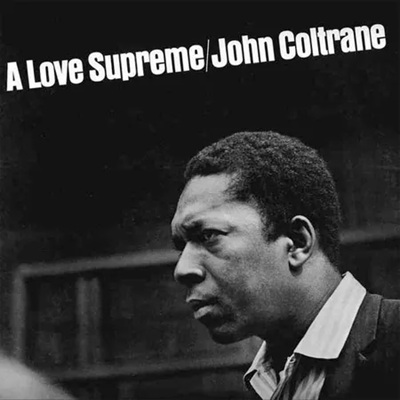
The A Love Supreme Interviews

September 23rd, 2026


.

.

.

Today marks the 100th anniversary of John Coltrane’s birth…

There are many ways to honor this landmark, and I would like to offer up a unique option that resides within the pages of this website. 

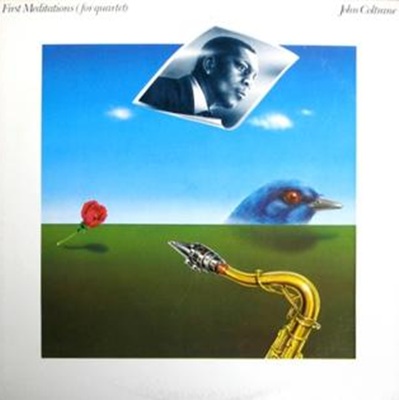
For several years I published a series of interviews with scholars, musicians, and poets about the significance of Coltrane’s 1964 recording  A Love Supreme,  a tentpole in the history of recorded music.

On December 9, 2014 – the occasion of the 50th anniversary of its release – I published the following remembrance of my own experience with the album, as well as links to interviews compiled within it.  Many of the interviews (known as, simply enough, “The A Love Supreme Interviews”) were among the first I ever published.

I hope you enjoy…

Joe Maita

Editor/Publisher

.

.

_____

.

.

…..Ask just about any jazz musician, scholar or fan for a list of the greatest jazz albums ever recorded, and John Coltrane’s A Love Supreme — recorded 50 years ago today — resides on it. My own first experience with it was in 1975, on a late evening in a dark, smoke-filled, back alley cottage on North Oakland’s Alcatraz Avenue.  My listening was guided by a dear friend who understood that this was not just music — it is what happens when musical genius meets intensity, sensitivity, and spirituality. So many details of that evening remain with me 40 years later, not the least of which was how I sunk into the couch, eyes closed, the worn Impulse album jacket never leaving my grip. I was amazed and I was hooked.

…..Over the years, I have found that a favorite discussion among jazz fans is their recollections of their first experience with this album. When I began developing content for Jerry Jazz Musician, one of the first ideas I had was to interview people who were either 1) part of the A Love Supreme recording itself, 2) as a musician, impacted by its brilliance, or 3) had an informed opinion about it. Thus, I set out on a mission over several years’ time that ultimately resulted in a series called “The A Love Supreme Interviews,” featuring conversations with prominent figures, including musicians McCoy Tyner and Joshua Redman, biographer Ashley Kahn, critics Gary Giddins, Francis Davis, Nat Hentoff and Ben Ratliff, and poet Michael Harper.

.

…..Here are some excerpts from the interviews…

*  In my interview with McCoy Tyner (the pianist on the recording), he shared this memory about the recording session:

I remember that Rudy Van Gelder, who was a premiere jazz recording engineer at the time, cut the lights down, which made it more like a club atmosphere. I don’t think we even rehearsed that music. Usually John would play the music and then we would record it and see what could happen, because it usually developed. Once we started playing it, new ideas would form as far as interpretation of that particular song or group of songs, and  A Love Supreme  was kind of a suite. Many of the arrangements were head arrangements. There was only one horn so we were able to do that easily, and he just had things sketched out that he would want, nothing in detail, just more or less a few changes, and there you go! We had reached a point where we had that kind of high level communication between us.

.

*  Here is what saxophonist Joshua Redman told me after I asked him what effect  A Love Supreme  had on him:

I think the thing that always impacted me about A Love Supreme was just the intensity and the force of the music, and the soulfulness of it. I don’t mean soulfulness in the sense of a style of music, but just the sheer passion came through, maybe from the first time I heard it. I think that is the case for most people when they hear that record, whether they ever hear another lick of jazz or not. They may not have any understanding of what’s happening musically, the incredibly deep and complex musical issues that Coltrane is tackling, but I think the conviction and the intensity and the passion and the sincerity – the honesty – you feel these qualities when you hear this record, and that’s what makes it so compelling, it’s what makes it one of the greatest jazz albums of all time.

.

*  Nat Hentoff, the legendary jazz writer who wrote liner notes on several Coltrane albums, had this to say about where this album stands among the great recordings of jazz:

It stands among them, just as some of his others do. This was a man who was always searching, and therefore always evolving. That is why in his live performances, some of which have been recorded, he could go on for an hour and a half on one song, because he was always looking deep, trying to discover what else could be said. On  A Love Supreme,  he was able to reach inside himself through his music. I never asked him about this, and it may be a wrong theory, but I think some of the parts of his recordings and his live performances that were like anguished or tortured shouts, was almost therapy, a self-cleansing in a way.

.

Today is a great day to revisit this all-time great recording, and for accompaniment, I invite readers to visit The A Love Supreme Interviews

.

.

_____

.

.

Watch “How John Coltrane Made A Love Supreme,” from the 2016 documentary on Coltrane, Chasing Trane


.

.


___

.

.


Click here to read other interviews published on Jerry Jazz Musician

Click here to subscribe to the (free) Jerry Jazz Musician quarterly newsletter

Click here to help support the ongoing publication of Jerry Jazz Musician, and to keep it commercial-free (thank you!)

.

___

.

.

Jerry Jazz Musician…human produced since 1999

.

.

.


.

.

___

.

.
Share this:

Comment on this article:

Your email address will not be published. Required fields are marked *

Site Archive

Your Support is Appreciated

Jerry Jazz Musician has been commercial-free since its inception in 1999. Your generous donation helps it remain that way. Thanks very much for your kind consideration.

Click here to read about plans for the future of Jerry Jazz Musician.

In this Issue

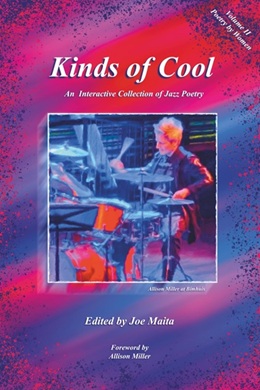
Announcing the publication of Volume II of Kinds of Cool: An Interactive Collection of Jazz Poetry...The second edition of Kinds of Cool, an Interactive Collection of Jazz Poetry has just been published, and is now available for sale on Amazon.com. This edition is dedicated to publishing women poets from all over the world who share their personal passion for and relationship with jazz music, and the culture it interacts with. With a foreword by Allison Miller, one of the world’s most eminent jazz drummers, and photography and design by Rhonda R. Dorsett

The Sunday Poem

art by Jerrice J. Baptiste

The Sunday Poem: “The Red Bridge” by Jerrice J. Baptiste

The Sunday Poem is published weekly, and strives to include the poet reading their work...

Jerrice J. Baptiste reads her poem at its conclusion.


Click here to read previous editions of The Sunday Poem

Feature

Wikimedia Commons
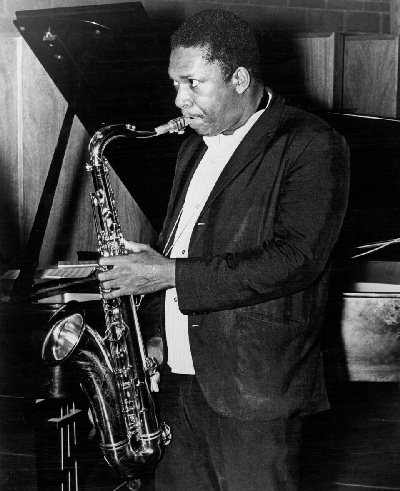
Memorable quotes – John Coltrane (with a poem by Michael L. Newell)

Interviews

The A Love Supreme Interviews...A word about the classic 1964 recording, and archived Jerry Jazz Musician interviews on it with McCoy Tyner, Gary Giddins, Nat Hentoff, Ashley Kahn, Joshua Redman, Francis Davis and Michael Harper

Poetry

“Coltrane’s Still Speaking at 100” – a poem by Jason A. Hendricks

Editor’s Notes

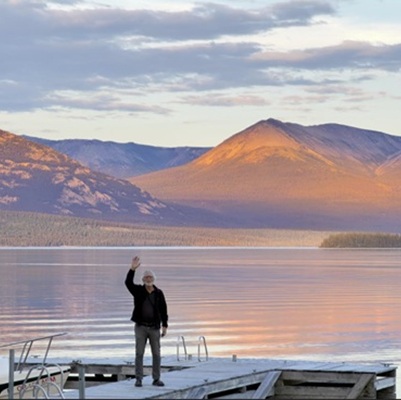
“Where I’ve Been” – a brief update... A trip through Alaska, Yukon, Alberta, and British Columbia…

Poetry

photo via Wikimedia Commons
21 jazz poems on the 21st of September, 2026...An ongoing series designed to share the quality of jazz poetry continuously submitted to Jerry Jazz Musician.

Performance

The performance poet Emmett Wheatfall
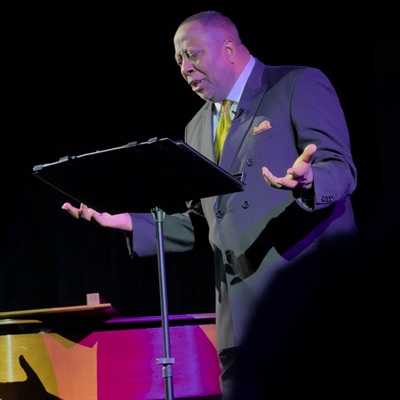
A Letter from the Editor…On “The Weary Blues: Celebrating Langston Hughes and the Harlem Renaissance”A brief recap and photos of the February 7, 2026 Jerry Jazz Musician-produced performance of “The Weary Blues: Celebrating Langston Hughes and the Harlem Renaissance”

Short Fiction

photo by Daniel's Richard/via Pexels.com
Short Fiction Contest-winning story #72 – “La Fontaine,” by Ashlee Trahan...A broken familial relationship in post-WWII France finds a semblance of closure in a crumbling countryside estate.

Feature

photo of Bob Zieff via Blue Sounds Records
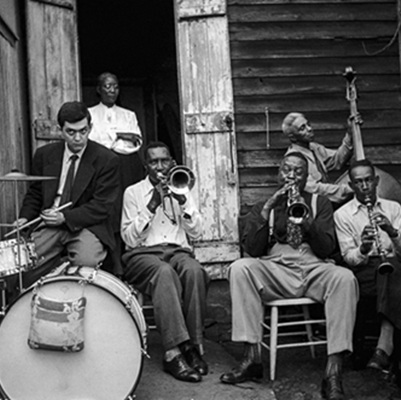
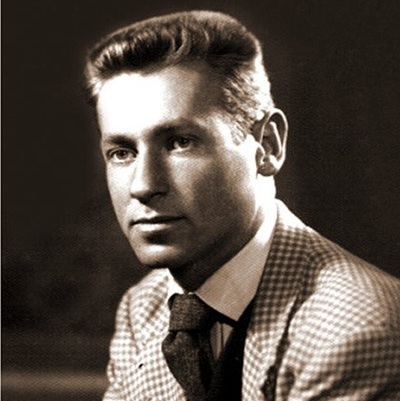
“The Well-Kept Secret of Composer Bob Zieff’s Chamber Jazz” – an essay & playlist by Bob Hecht...On the little-known jazz composer of 18 tunes, the most famous versions having been made during the 1950s – and many by Chet Baker

Poetry

photo of Rosemary Clooney via Wikimedia Commons
“And the Angel Sings” – a poem by David Nemerov

Community

photo by Rhonda R. Dorsett
In Memoriam: Michael L. Newell, 1945 – 2026...News regarding the passing of the poet Michael L. Newell, whose work has been published on Jerry Jazz Musician since 2015.

Poetry

“Dreaming in a Spacecraft” – A prose poem inspired by the voyage of Artemis II, by Robert Alan Felt...

Interview

photo of Billie Holiday by William Gottlieb/Library of Congress
Interview with Paul Alexander, author of Bitter Crop: The Heartache and Triumph of Billie Holiday’s Last Year...The author talks about the courage and resilience of the legendary Lady Day, and his outstanding book – an inspirational and revealing portrait of an iconic American, that, like his subject, exudes compassion and creative soul.

Poetry

photo by Peter Pettus/via Picryl
On music and freedom…Three poems by Daniel Warren Brown

Feature

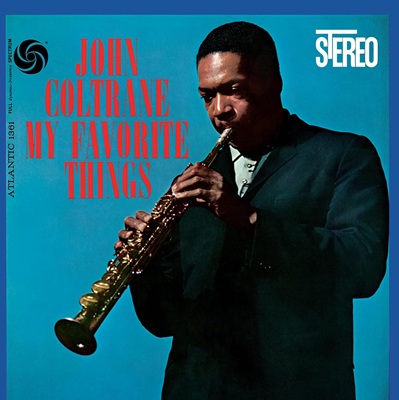
“My Favorite Things” – a true jazz story by Uri Marc Nusinow...Discovering a classic (and life changing) jazz recording…

Poetry

photo by Nathan J. Hilton/via Pexels
“Pax Vobiscum” – a poem by Michael L. Newell

Feature

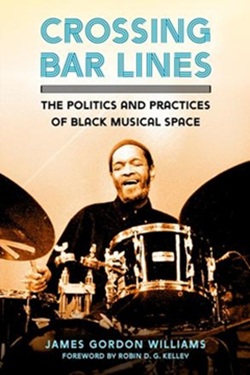
Book Excerpt from Crossing Bar Lines: The Politics and Practices of Black Musical Space, by James Gordon Williams...In this entire chapter from his book, the author explains how the trumpeter Ambrose Akinmusire expresses his political views and lived geography through his improvisational music, notably his critique of police brutality that has, as he states, “become a leitmotif throughout my albums.”

Poetry

Yves Moch, CC BY-SA 3.0, via Wikimedia Commons
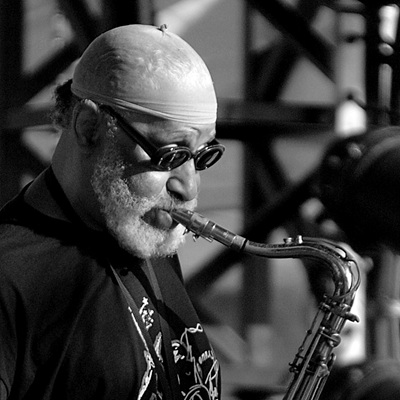
“Remembering Sonny Rollins” – a collection of poetry...Over the years, many poems have been published on Jerry Jazz Musician that were written in reverence of the man we refer to simply as “Sonny.” In the wake of his death, many more have been written. The unsolicited poems making up this collection is an example.

Interview

photo by Warren Fowler
Interview with John Gennari, author of The Jazz Barn: Music Inn, the Berkshires, and the Place of Jazz in American Life...The author discusses how in the 1950s the Berkshires – historic home to the likes of Hawthorne, Melville, Wharton, Rockwell, and Tanglewood – became a crucial space for the performance, study, and mainstreaming of jazz, and eventually an epicenter of the genre’s avant-garde.

Jazz History Quiz

Tommy Dorsey
Jazz History Quiz #189...This popular music singer once sang backup with her vocal group the Pied Pipers in Tommy Dorsey’s band and occasionally performed under the pseudonym “Darlene Edwards.” By 1955, she had sold more records than any other female artist, and one of her songs was the first record by a woman to reach #1 on the U.K. Singles Chart. Who is she?

Short Fiction

photo by ömeraliko/via pexels.com
“Strange Timings” – a short story by Terry Sanville...In the story – a short-listed entry in the recently concluded 72nd Short Fiction Contest – a jazz show is seen from different perspectives, one of which involves a long-ago romance…

Feature

Allen Ginsberg in 1979; photo by Michiel Hendryckx, CC BY-SA 3.0, via Wikimedia Commons
Memorable Quotes: Allen Ginsberg

Community

Ricky Esquivel/Pexels.com
Community Bookshelf #6...“Community Bookshelf” is a twice-yearly space where writers who have been published on Jerry Jazz Musician can share news about their recently authored books and/or recordings. This edition includes information about books published within the last six months or so (September, 2025 – March, 2026)

Poetry

photo via pxhere.com
“Midnight Blue” – a poem by Connie Johnson

Short Fiction

photo of Kyoto by Tom Lorber/via pexels.com
“Ken Namura’s Long, Strange Trip” – a short story by Peter Newall...In this story – a short-listed entry in the recently concluded 72nd Short Fiction Contest – a Western jazz musician living in Kyoto, Japan, befriends a Japanese pianist, learns about his experiences with acid in the 1970s, then discovers a curious secret about his life; that some trips can stay with you for a very long time.

Feature

photo by Laura Stanley via Pexels.com.
Trading Fours, with Douglas Cole, No. 28: “Little Samba”...Trading Fours with Douglas Cole is an occasional series of the writer’s poetic interpretations of jazz recordings and film. This edition is based largely on a documentary – They Shot the Piano Player – about Tenório Junior, a Latin jazz musician who only produced one album (1964) before he “disappeared” in 1976.

Short Fiction

Görkem Dalgıç/via Pexels.com
“Things I Almost Remember” – a short story by Ye Eun Lee...In this story – a short-listed entry in the recently concluded 72nd Short Fiction Contest – memory loss issues interfere with the life of a young woman scarred by a major auto accident…

Poetry

Poems on Charlie “Bird” Parker (inspired by a painting by Al Summ) – an ekphrastic poetry collection...A collection of 25 poems inspired by the painting of Charlie Parker by the artist Al Summ.

Contributing Writers

Click the image to view the writers, poets and artists whose work has been published on Jerry Jazz Musician, and find links to their work

Coming Soon

New poetry collections, Jazz History Quiz, and lots of short fiction; poetry; photography; interviews; playlists; and much more in the works...

Interview Archive

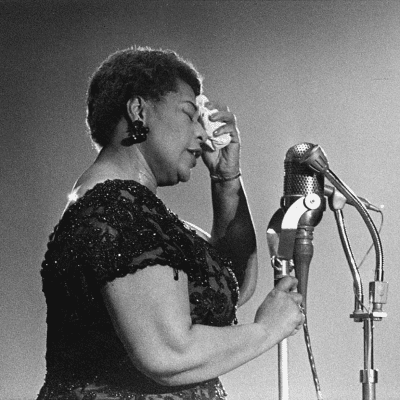
Ella Fitzgerald/IISG, CC BY-SA 2.0 , via Wikimedia Commons
Click to view the complete 25-year archive of Jerry Jazz Musician interviews, including those recently published with Judith Tick on Ella Fitzgerald (pictured),; Laura Flam and Emily Sieu Liebowitz on the Girl Groups of the 60's; Tad Richards on Small Group Swing; Stephanie Stein Crease on Chick Webb; Brent Hayes Edwards on Henry Threadgill; Richard Koloda on Albert Ayler; Glenn Mott on Stanley Crouch; Richard Carlin and Ken Bloom on Eubie Blake; Richard Brent Turner on jazz and Islam; Alyn Shipton on the art of jazz; Shawn Levy on the original queens of standup comedy; Travis Atria on the expatriate trumpeter Arthur Briggs; Kitt Shapiro on her life with her mother, Eartha Kitt; Will Friedwald on Nat King Cole; Wayne Enstice on the drummer Dottie Dodgion; the drummer Joe La Barbera on Bill Evans; Philip Clark on Dave Brubeck; Nicholas Buccola on James Baldwin and William F. Buckley; Ricky Riccardi on Louis Armstrong; Dan Morgenstern and Christian Sands on Erroll Garner; Maria Golia on Ornette Coleman.