
In Memoriam: “Departures to the Final Arms Hotel in 2024” – poetic tributes, by Terrance Underwood

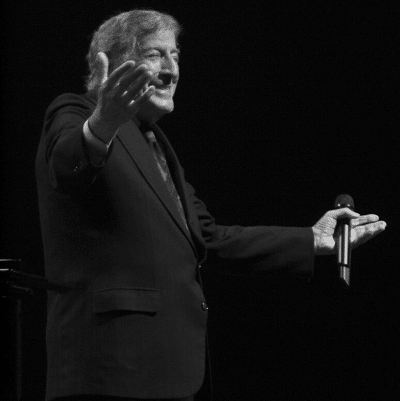
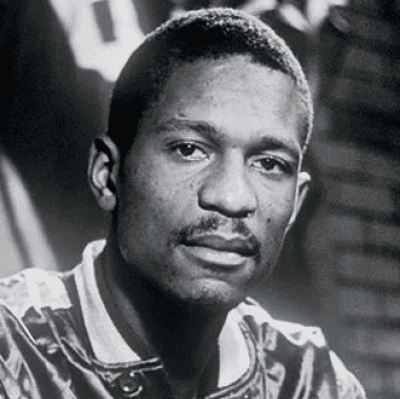
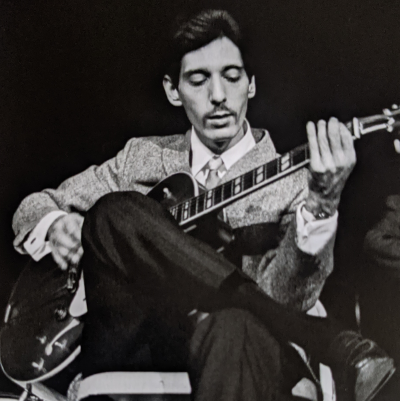
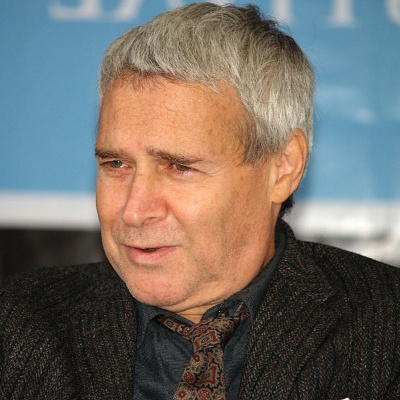
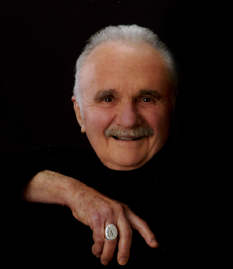
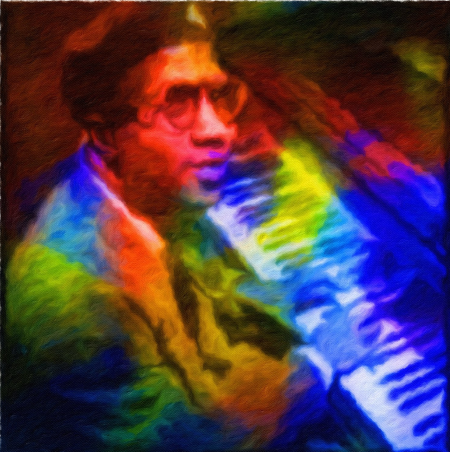
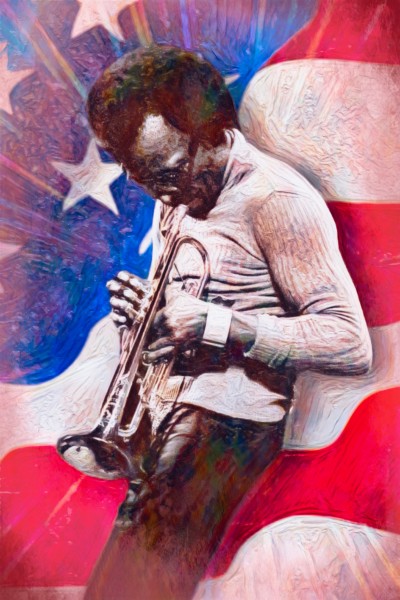
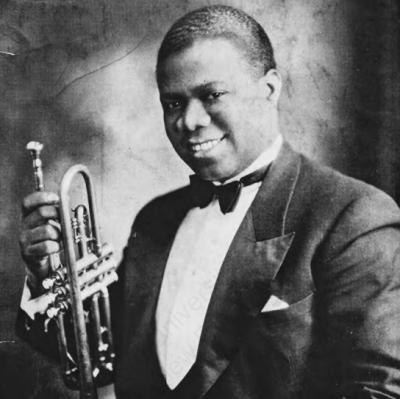
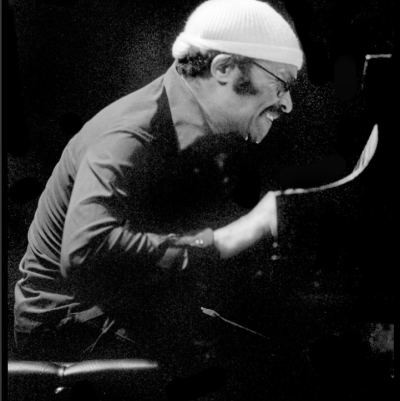
2024 produced its share of losses of legendary jazz musicians. Terrance Underwood pays poetic homage to a handful who have touched his life, imagining their admittance to the Final Arms Hotel, a destination he introduces  in his prelude.

...

December 30th, 2024
In Memoriam: Carla Bley, 1936 – 2023

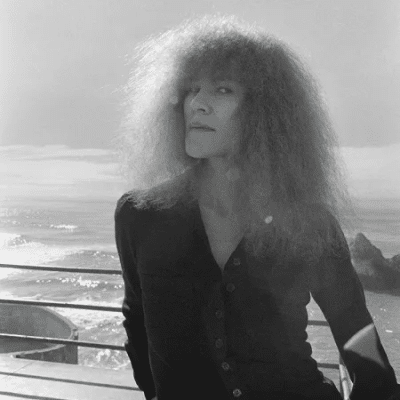
An account that the photographer Veryl Oakland shared of his time spent with Carla Bley and her then-husband Michael Mantler during her visit to the San Francisco Bay area in 1979.  This encounter is an example of how she’d find inspiration for her music; in this case within the  “the marvelous inner workings of mechanical music boxes.”

...

October 17th, 2023

A thought or two about Tony Bennett

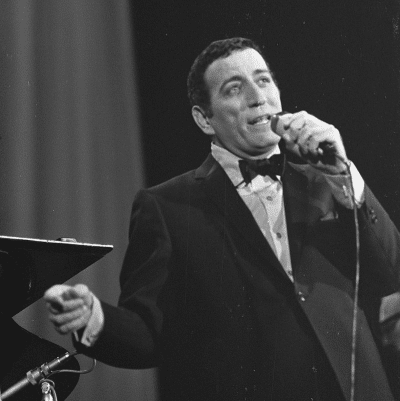
. . Fotograaf Onbekend / Anefo, CC0, via Wikimedia Commons Tony Bennett, 1966 . ___ .   …..We’ve lost a ton of iconic celebrities lately – stars of all ages and from many creative worlds.  Among them: Tina Turner, David Crosby, Cormac McCarthy, Alan Arkin, David Bowie, Ahmad Jamal, Wayne Shorter, Sidney Poitier, Gordon Lightfoot, … Continue reading “A thought or two about Tony Bennett”

...

July 25th, 2023

“Tony Bennett, In Memoriam” – a poem by Erren Kelly

. . David Becker, CC BY-SA 3.0 , via Wikimedia Commons “‘Benedetto’ means the ‘blessed one’ and I feel that I have truly been blessed.” -Tony Bennett . . ___ . .     Tony Bennett, In Memoriam Lightning strikes as your voice makes magic on a summer night i think of a tall girl … Continue reading ““Tony Bennett, In Memoriam” – a poem by Erren Kelly”

...

July 22nd, 2023

Aretha and her father — the Reverend C.L. Franklin

      The passing of Aretha Franklin yesterday hits hard on a variety of levels.  I am sure we all have wonderful Aretha memories.  For me, she will always be remembered as the singer who opened my world to the sounds of soul and gospel music, and doing so during the height of the civil rights movement, when so much important work was being achieved — and cutting edge art was being created in response to it — virtually every day.

     Aretha learned to sing at the New Bethel Baptist Church in Detroit, where her father, the Reverend C.L. Franklin, was minister — “the most famous African American preacher in America,” according to his biographer Nick Salvatore.  Franklin’s style of “booming, soaring, flashy and intense” preaching “revolutionized the art, and his call for his fellow African Americans to proclaim both their faith and their rights helped usher in the civil rights movement.”

     Rev. Franklin had an intense influence on daughter Aretha,  …[Aretha] always sang from her inners,” Ray Charles once said.  “In many ways she’s got her father’s feeling and passion,’ [for when C.L.] — one of the last great preachers — delivers a sermon, he builds his case so beautifully you can’t help but see the light. Same when Aretha sings.”

...

August 17th, 2018

“One for (my) Daddy-O”

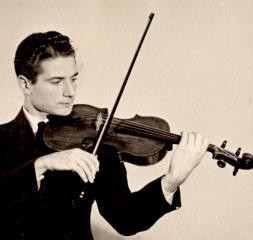
Besides doing his best to help raise three kids, during my 1960’s childhood my father worked his heart out at two jobs — one of which was as owner of a restaurant on Oakland’s Telegraph Avenue, and the other as a musician, playing trumpet and viola throughout the San Francisco Bay area, mostly on evenings and weekends in “casual” jobs. For years he was part of a strolling quartet that entertained San Francisco’s elite at the World Trade Club — an ensemble that at its peak toured the Philippines, playing to an audience that included

...

June 17th, 2018

Gary Giddins…on Cecil Taylor

In 2003, as part of the Jerry Jazz Musician “Conversations with Gary Giddins” series, I was fortunate to interview Giddins — his generation’s most esteemed jazz writer — about Cecil Taylor, who died earlier today at age 89.  It is an excellent read for anyone with an interest in Cecil (or Gary). You can access it by

...

April 6th, 2018

Remembering Jon Hendricks, 1921 – 2017

The great jazz singer Jon Hendricks died in New York earlier today at the age of 96.  In his New York Times obituary, Peter Keepnews writes that “Mr. Hendricks did not invent this practice, known as vocalese — most jazz historians credit the singer Eddie Jefferson with that achievement — but he became its best-known and most prolific exponent, and he turned it into a group art.” 

His work with Lambert, Hendricks and Ross was one of my gateways into jazz music.  My childhood home had only a few mostly dreadful record albums (and my beloved mother’s favorite radio station was KABL/San Francisco, with Mantovani and 101 Strings in heavy rotation on the Philco clock radio on the kitchen counter), but somewhere in the bowels of the house was Sing a Song of Basie LP that would somehow occasionally make its way on to our Hoffman stereo system’ turntable — in competition for time with Creedence and the Doors and Beatles 45’s.  Even as a little kid I could tell this was “hip” music, and it ultimately led me to an unforgettable experience.   

When I was living in Berkeley in the late seventies I went to see him on stage in a small North Beach

...

November 22nd, 2017

Remembering Fats Domino

Fats Domino is remembered as a rock and roll legend, and idolized by many musicians of his era, including Elvis Presley, who, according Peter Guaralnick, author of Careless Love: The Unmaking of Elvis Presley, referred to Fats as “The King of Rock and Roll.”

In 2006, Jerry Jazz Musician contributor Adrienne Wartts interviewed Domino’s biographer Rick Coleman…You can read it by

...

October 30th, 2017

Dizzy is 100 today

Dizzy Gillespie — born 100 years ago today — recalls his childhood in this excerpt from his 1979 autobiography, To BE, or not…to BOP


*


The pictures show me as a very beautiful boy, but I was the last of nine children and my arrival probably didn’t excite anybody. So many people had been born at our house before. I don’t think Mama felt too blessed about having nine children, unless “blessed” means “wounded” like it does in French. She probably figured someone had put the bad mouth on us.

Every Sunday morning, Papa would whip us. That’s mainly how I remember him. He was unusually mean; and hated to see or hear about his

...

October 21st, 2017

Monk is 100 today

We have stood over record bins, thumbing through his records, moved by his breathtaking originality and creativity.

We have made friends over his music, made love to it, cruised in the car to it, introduced our children to it, and defended it against those who don’t quite comprehend his genius.

We love the emotions his music brings out in us – joy, tears, humor, inspiration.

We continue to sit up when we hear “Straight, No Chaser,” marvel at the brilliance of

...

October 10th, 2017

Ella is 100

2017 is the 100th birthday year of several jazz immortals – among them Thelonious Monk, Dizzy Gillespie, Buddy Rich, and, today, Ella Fitzgerald.

As a young and naïve jazz fan in the 1960’s, like Louis Armstrong, Ella seemed “square” to me – her voice too sweet and happy for my ears, especially when compared to the singer who most moved my soul to discover more of the music, Billie Holiday.   Plus, the Songbook series she became internationally famous for seemed too smartly packaged, slick in a Madison-Avenue-way that tore me away from the bins that stocked her record albums.

Over the years, however, I eventually came to appreciate and cherish her, especially as I learned the courageous and inspirational nature of her biography, and played her recordings with Chick Webb, and dug the collaborations with the Ink Spots, Louis Jordan, and eventually, of course,

...

April 25th, 2017

A memory of Nat Hentoff

Paul Morris is a longtime friend and contributing writer of Jerry Jazz Musician.  He currently writes “Cover Stories with Paul Morris,” a frequent column about classic record album art and design.

Paul shares a memory of the legendary jazz writer and journalist Nat Hentoff, who died on January 7 at the age of 91.


_____


     In the late 1970’s I was a jazz fan who liked reading about the music as much as listening to it. My next music choice often came from a recommendation from a jazz critic’s liner notes or articles. Nat Hentoff proved to be a reliable guide in his early jazz books and the occasional article. 

     These years were the heyday of the Village Voice, where Hentoff was a regular. He concentrated on First Amendment issues in his Voice column, but from time to time he would mention

...

January 30th, 2017

A writer’s appreciation of Nat Hentoff — by Scott Shachter

I was eighteen when I read Nat Hentoff’s Jazz Is, and it changed my life. I’d always thought good jazz was just the crafting of pretty notes with a smooth feel. I’d never imagined it could be a “cry for justice.” Or a captivating tour through a heart lay bare. The greatest jazz goes even beyond that: the symphony of a soul freshly released and taking flight, nothing less than what Nat calls “spirit-music.”

As readers know, Nat Hentoff was far more than a jazz authority. He was a spectacular writer and a freedom-of-speech icon with no tolerance for hypocrisy. He was a great hero of

...

January 11th, 2017

On Nat Hentoff

I am saddened to read of the passing of journalist Nat Hentoff, who died yesterday at the age of 91. Hentoff’s work was published by the Village Voice for 50 years, and was also frequently found in the New Yorker, the Atlantic Monthly, the Wall Street Journal, and Jazz Times. He was also editor of Downbeat during the mid-1950’s. There are many obituaries available to read about Nat and his career – including Robert McFaddin’s in today’s New York Times.

As I began publishing original content on Jerry Jazz Musician in 1999, I had the privilege of having my site embraced by the three most prominent jazz writers of the time, Gary Giddins, Stanley Crouch, and Nat Hentoff. All three of them got involved in Jerry Jazz Musician in their own way.

Giddins — who I was able to catch up with during a recent trip I took to New York — and I developed an interview series called

...

January 8th, 2017

Bobby Hutcherson, 1941 – 2016

Bobby Hutcherson, the most eminent postbop jazz vibraphonist who helped define the sound of Blue Note Records during the 1960’s and 70’s, has died. Described by contemporary vibes player Stefon Harris as “by far the most harmonically advanced person to ever play the vibraphone,” his career included the release of more than 40 albums as leader, and as a prominent sideman on many great records, including Eric Dolphy’s classic Out to Lunch and Jackie McLean’s One Step Beyond. I saw him many years ago at Kimball’s in Oakland (long since shuttered), an exciting set that, if memory serves, included

...

August 16th, 2016

A brief tribute to Maurice White

On the heels of the deaths of iconic rock musicians David Bowie and Glenn Frey comes the very sad news that Maurice White, the founder of the Earth, Wind and Fire, has died today at age 74. White’s music came to prominence in the thick of soul’s musical ascent, and E W & F embodied the sound of urban America at the time, their message communicated optimistically and on a large scale. White’s band possessed an unusual crossover appeal — the fact that his death has invited praise from

...

February 5th, 2016

Meadowlark Lemon and the complexity of being a Globetrotter (and Globetrotter fan)

This morning came news of the passing of Meadowlark Lemon, the face of the Harlem Globetrotters for more than 20 years, his peak coming during the height of the civil rights movement. It was a complex time to be a Globetrotter, who at one time (prior to Lemon’s tenure with the team) was a legitimate and powerful basketball entity that was so good in 1948 it beat George Mikan’s Minneapolis Lakers, to that of a team so focused on clowning that, in the words of Bruce Weber in today’s New York Times obituary, “some thought to be a discomforting resurrection of the minstrel show.”

It was also a complex time to be a fan of the Globetrotters, whose occasional appearance on national television always elicited

...

December 28th, 2015

“One For Daddy-O” — in memory of my dad on Father’s Day

Besides doing his best to help raise three kids, during my 1960’s childhood my father worked his heart out at two jobs — one of which was as owner of a restaurant on Oakland’s Telegraph Avenue, and the other as a musician, playing trumpet and viola throughout the San Francisco Bay area, mostly on evenings and weekends in “casual” jobs. For years he was part of a strolling quartet that entertained San Francisco’s elite at the World Trade Club — an ensemble that at its peak toured the Philippines, playing to an audience that included

...

June 21st, 2015

Bruce Lundvall, 1935 – 2015

Bruce Lundvall, a record executive best known among fans of jazz music as Blue Note Records president for 25 years, died yesterday at the age of 79. In addition to his work at Blue Note, Lundvall was president of CBS Records during the heyday of the LP business, and was responsible for signing many of that label’s major artists, and for expanding the jazz division of Columbia Records.

My own experience with him was always very favorable. Although I hadn’t spoken to him for several years, whenever I did reach out to him, either as a record executive myself or as publisher of Jerry Jazz Musician, he always made himself available and was supportive of my work.

In 2003, I hosted a conversation on the state of the business of jazz with Lundvall, New York Times columnist Ben Ratliff, and saxophonist Joshua Redman. Part of the discussion dealt with

...

May 20th, 2015

“It Only Hurts When I Laugh”

Sad news this morning…The great comedian and satirist Stan Freberg, who was also successful as an actor (and voice over actor), recording artist, puppeteer, advertising creative director and radio personality, died yesterday at the age of 88. His career was filled with artistry and courage. His comic recordings were always hilarious and often biting – his mocking of Senator Joseph

...

April 8th, 2015

Orrin Keepnews, 1923 – 2015

I awoke to the very sad news that a prominent figure in the history of jazz music has died. Orrin Keepnews, whose work as co-founder of Riverside Records forever connected him to the lives and spirits of Bill Evans, Thelonious Monk, Cannonball Adderley, and so many other great jazz musicians of mid-century America, died in California at the age of 91 (a day shy of his 92nd birthday).

Keepnews was a transcendent figure in jazz music, excelling as a journalist, entrepreneur, and producer. The recordings he produced were among the very first to

...

March 2nd, 2015

A Roy Eldridge story

Happy Birthday #104 to Roy Eldridge, who in addition to being one of the great trumpet players of his time, is known as the “bridge” between Armstrong and Dizzy. I loved the brightness of his playing, and for contributing to one of the great moments in jazz — his vocal duet with Anita O’Day, leading into a seldom-in-a-generation trumpet solo on “Let Me Off Uptown.”
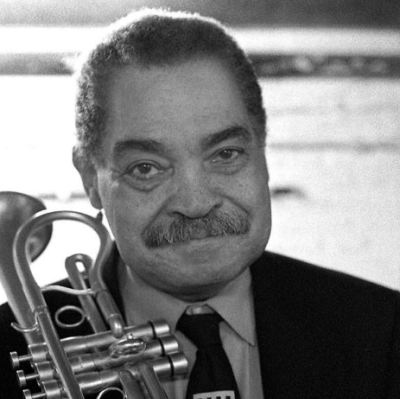
When I was a kid, my dad used to tell me stories about his friendship with “Eldridge,” and in particular one eventful experience he had while he was traveling with his band in Pennsylvania. In 1998, two years before his passing, my father wrote this piece for Jerry Jazz Musician about this very special experience in his life. I hope you enjoy his telling of it…

...

January 30th, 2015

Vince Guaraldi — a career beyond “A Charlie Brown Christmas”

Arguments abound about what is hip and what isn’t when it comes to Christmas music, but few can argue that Vince Guaraldi’s A Charlie Brown Christmas remains a breath of fresh air in a world otherwise dominated by recordings by Kenny G, Mannheim Steamroller, and the Trans-Siberian Orchestra. Certified “triple platinum” by the Recording Industry Association of America, and ranked by Sound Scan as the #10 best selling Christmas album since 1991, A Charlie Brown Christmas — and his association with Peanuts creator Charles Schulz — is what Guaraldi is best remembered for.

What few of us probably know about Guaraldi, however, is that he was actually a self-proclaimed “reformed boogie-woogie player” who got his start filling in for

...

December 25th, 2014

“Cry Me a River” — Joe Cocker’s remake of a 1950’s torch song

Joe Cocker, the flamboyant British rocker who died yesterday at the age of 70, was best known for his gravelly voice and charismatic onstage personality, but his career was especially noteworthy due to his successful model of interpreting popular songs of the day. The most obvious example -– the Beatles’ “With a Little Help From My Friends” performed before hundreds of thousands at Woodstock in 1969 -– was his signature career achievement, a performance Paul McCartney yesterday called “mind-blowing,” one that he was “forever grateful for him for having done that.” One could make the case that Cocker’s appearance at Woodstock and his filmed performance of that tune was indeed a defining moment of the rock era.

Cocker also successfully remade Arthur Hamilton’s “Cry Me a River,” a 1953 torch song originally composed for Ella Fitzgerald to sing in Pete Kelly’s Blues, the Jack Webb film in which Peggy Lee portrayed an

...

December 23rd, 2014

Joe Sample, the S.L.A., and a budding writer’s altered career path

Pianist Joe Sample — who died on September 12 at the age of 75 — was a critical link to both the glories of hard bop and the perils of smooth jazz. His career will principally be remembered as a founding member of the Jazz Crusaders (ultimately just “The Crusaders”), a band he described as being “fathers of jazz-funk-fusion.” While his musical contributions are noteworthy, I also remember him for an altogether different reason.

In 1974, The Crusaders were all over the radio. In the San Francisco Bay area (where I lived at the time), their music — particularly their arrangement of Carole King’s “So Far Away” and a sweet ballad called “Way Back Home” — was in heavy rotation on the adult contemporary formatted KSFO-AM as well as on the era’s alternative rock giant KSAN-FM. In record industry parlance, they had “crossed over” into multiple formats. The Crusaders were “huge.”

In addition to being an important musical influence during

...

September 18th, 2014

On the passing of Horace Silver

Concerning yesterday’s passing of the great pianist Horace Silver, others much more qualified than I will write of his musical brilliance, and communicate his importance to the music’s growth.  (To that end, there is an excellent life remembrance of Silver by Peter Keepnews in today’s New York Times that you can read by going here).  I would just like to devote a couple paragraphs to my own introduction to his music, and what it meant to me at the time.

When I moved from Berkeley to Portland in the summer of 1978, I was already a pretty passionate listener of jazz, but I was still in the “101” phase.   I knew and loved the “A Team”  — Basie, Ellington, some early Armstrong, Monk, Bird and Miles. Coltrane’s ballads were gorgeous, and I loved his playing on

...

June 19th, 2014

“One For Daddy-O” — in honor of my dad on Father’s Day

Besides doing his best to help raise three kids, during my 1960’s childhood my father worked his heart out at two jobs — one of which was as owner of a restaurant on Oakland’s Telegraph Avenue, and the other as a musician, playing trumpet and viola throughout the San Francisco Bay area, mostly on evenings and weekends in “casual” jobs. For years he was part of a strolling quartet that entertained San Francisco’s elite at the World Trade Club — an ensemble that at its peak toured the Philippines, playing to an audience that included “strongman” Ferdinand Marcos and his wife Imelda.

Prior to that, in the 30’s he traveled the country and led his own band in Sacramento. In the 40’s, he spent the war years as a member of the Winged Victory Orchestra. And, in the late 40’s and 50’s, among many musical pursuits (although toned down once he married my mom in 1947), he played in the Jack Fina Orchestra, as well as in Ernie Heckscher’s orchestra, which famously played at the Fairmont Hotel atop Nob Hill.

He loved his music, and part of my own early appreciation for music came as a result of hearing his practice sessions. To this day I can still very clearly hear the sound of his viola

...

June 15th, 2014

Amiri Baraka — “Beatnik, Black Nationalist, Marxist”

Amiri Baraka, the poet, author, playwright and activist who, as described by the New York Times, “spent his early career as a beatnik, his middle years as a black nationalist and his later ones as a Marxist,” died on January 9 at the age of 79. In Blowin’ Hot and Cool: Jazz and its Critics, John Gennari called him “the pioneer and preeminent symbol of the 1960’s black cultural revolution” who, along with Malcolm X, Eldridge Cleaver, Stokely Carmichael, and Huey Newton gave “black power a distinctive masculinist intonation.”

As a jazz and blues writer, he was brilliant, essential, astute and polarizing. Of Baraka’s writing in the 1960’s (while LeRoi Jones), Stanley Crouch — himself a brilliant and polarizing jazz writer — said that he was “the first

...

January 14th, 2014

Earl “Fatha” Hines Lives On

Earl “Fatha” Hines was born on this day in 1901. As one of jazz music’s most influential pianists, his work has touched the creative heart of American culture since 1925, when he first met Louis Armstrong at a Musicians’ Union poolroom in Chicago.

Hines is one of those figures who contributed to the development of jazz on a variety of levels. In The Chronicle of Jazz, Mervyn Cooke credits Hines’ “trumpet style playing” for being the “first tangible departure from the post-ragtime stride idiom, cultivating a right-hand melodic technique more directly comparable to that of front-line melody instruments.”

...

December 28th, 2013

The “Underrated” Kenny Dorham

December 5th marks the 41st anniversary of the bebop trumpeter Kenny Dorham’s death. Only 48 years old at the time of his passing from kidney disease, Dorham’s professional life enjoyed a great measure of respect from his fellow musicians, but, as Nat Hentoff pointed out in the liner notes to Dorham’s 1963 Blue Note recording Una Mas, “he has yet to break through to the kind of wide public acceptance which has occasionally seemed imminent.” His recordings are timeless – each and every one packed with delicious passion and brilliant playing that still sounds fresh — but Dorham never did “break through” in his lifetime, and continues to be classified by important jazz historians as “underrated.” In a Jerry Jazz Musician-hosted conversation on underrated jazz musicians, the most eminent jazz writer Gary Giddins said “when anybody wrote about [Dorham]

...

December 5th, 2013

Remembering Clifford Brown

October 30 is Clifford Brown’s 83rd birthday. Long since deceased (he died in a car crash in 1956 at age 25), his birthday is a reminder of the musical joy he shared with his listeners, and of his classic sound. For me, it is a time of remembrance and appreciation for the contribution he made to intensifying my interest in jazz. To this day, my memory is thick with the sound of “Joy Spring” filling my Berkeley apartment in the mid-1970’s, when I was falling in love with the music.

Check out what bandmate Harold Land said about Brown, and then treat yourself to a listen to “Joy Spring.”

...

October 30th, 2013

Fats Navarro’s 90th Birthday

“As an influence, Navarro was important almost immediately after he first made his presence felt in the mid-1940s Billy Eckstine band. Kenny Dorham was affected early in his career and you could hear Fats in Red Rodney too. Then, of course, came Clifford Brown and through him Navarro has indirectly influenced so many of the young trumpeters playing today.”

...

September 24th, 2013

On the Passing of Jazz Photographer Lee Tanner

There is no disputing the fact that the power of jazz lies within the music itself. Giants of the art like Armstrong, Duke, Basie, Dizzy, Bird, Monk, Miles and Coltrane ushered us into this music with a display of genius so great that an entire lifetime isn’t ample space to fully absorb all their passion.

...

September 16th, 2013

Site Archive

Your Support is Appreciated

Jerry Jazz Musician has been commercial-free since its inception in 1999. Your generous donation helps it remain that way. Thanks very much for your kind consideration.

Click here to read about plans for the future of Jerry Jazz Musician.

In this Issue

Announcing the publication of Volume II of Kinds of Cool: An Interactive Collection of Jazz Poetry...The second edition of Kinds of Cool, an Interactive Collection of Jazz Poetry has just been published, and is now available for sale on Amazon.com. This edition is dedicated to publishing women poets from all over the world who share their personal passion for and relationship with jazz music, and the culture it interacts with. With a foreword by Allison Miller, one of the world’s most eminent jazz drummers, and photography and design by Rhonda R. Dorsett

Poetry

photo of Shelly Manne by William Gottlieb/Library of Congress
21 jazz poems on the 21st of May, 2026...An ongoing series designed to share the quality of jazz poetry continuously submitted to Jerry Jazz Musician. In this edition…An array of poetic styles communicate personal reverence for and experiences with jazz music, and its cherished musicians.

The Sunday Poem

Marek Lazarski, CC BY-SA 4.0, via Wikimedia Commons

The Sunday Poem: “Sonny Rollins” by Akua Lezli Hope

The Sunday Poem is published weekly, and strives to include the poet reading their work...

Akua Lezli Hope reads her poem at its conclusion.


Click here to read previous editions of The Sunday Poem

Interview

photo of Billie Holiday by William Gottlieb/Library of Congress
Interview with Paul Alexander, author of Bitter Crop: The Heartache and Triumph of Billie Holiday’s Last Year...The author talks about the courage and resilience of the legendary Lady Day, and his outstanding book – an inspirational and revealing portrait of an iconic American, that, like his subject, exudes compassion and creative soul.

Feature

Book Excerpt from Crossing Bar Lines: The Politics and Practices of Black Musical Space, by James Gordon Williams...In this entire chapter from his book, the author explains how the trumpeter Ambrose Akinmusire expresses his political views and lived geography through his improvisational music, notably his critique of police brutality that has, as he states, “become a leitmotif throughout my albums.”

Poetry

Yves Moch, CC BY-SA 3.0, via Wikimedia Commons
“Remembering Sonny Rollins” – a collection of poetry...Over the years, many poems have been published on Jerry Jazz Musician that were written in reverence of the man we refer to simply as “Sonny.” In the wake of his death, many more have been written. The unsolicited poems making up this collection is an example.

Short Fiction

Photo by Johannes Schröter, via Pexels
Short Fiction Contest-winning story #71 – “Where the Music Wasn’t Allowed,” by Jane McCarthy....The award-winning story is about a young immigrant growing up in Southern California to the sound of music seeping into his family’s home from an upstairs neighbor’s piano, shaping the boy’s understanding of memory, family, belonging, and the improvisational ethics of music.

Interview

photo by Warren Fowler
Interview with John Gennari, author of The Jazz Barn: Music Inn, the Berkshires, and the Place of Jazz in American Life...The author discusses how in the 1950s the Berkshires – historic home to the likes of Hawthorne, Melville, Wharton, Rockwell, and Tanglewood – became a crucial space for the performance, study, and mainstreaming of jazz, and eventually an epicenter of the genre’s avant-garde.

Poetry

photo by Tsutumu Takasu/via Flicker/CC BY 2.0
“Cajun Glory” – a prose poem by Robert Alan Felt

Community

Ricky Esquivel/Pexels.com
Community Bookshelf #6...“Community Bookshelf” is a twice-yearly space where writers who have been published on Jerry Jazz Musician can share news about their recently authored books and/or recordings. This edition includes information about books published within the last six months or so (September, 2025 – March, 2026)

Poetry

Six poets write eight poems (in the midst of our times)...Poets within this community of writers are feeling this moment in time, and writing about it. This collection is another example.

Short Fiction

“You Don’t Know What Love Is”- a short story by L.F. Graubard...A recovering junkie jazzman in a Starbucks time slips through the key years that fed his addiction — 1967 R&B and jazz gigs, ’69 biker bars, ’71 methadone hustles, ’79 script scams — before landing in the Narco Farm, where music, Sonny Rollins, and Secretariat crack his heart open. A fractured, noir confession about love, dope, and improbable grace.

Poetry

Peter Buitelaar, CC BY 2.0 , via Wikimedia Commons
Two Poems for Miles Davis

Feature

photo by Laura Stanley via Pexels.com.
Trading Fours, with Douglas Cole, No. 28: “Little Samba”...Trading Fours with Douglas Cole is an occasional series of the writer’s poetic interpretations of jazz recordings and film. This edition is based largely on a documentary – They Shot the Piano Player – about Tenório Junior, a Latin jazz musician who only produced one album (1964) before he “disappeared” in 1976.

Short Fiction

“From Ingenue to Earth Mother” – a short story by Lisa Grunberger...The story – a short -listed entry in the recently concluded 72nd Jerry Jazz Musician Short Fiction, centers on a couple who “get” each other from the beginning, but who can’t seem to make a life together.

Poetry

art by Marsha Hammel
“Learning the Alphabet of the Blues” – a poem by Mary K O’Melveny...A poem from Kinds of Cool: An Interactive Collection of Jazz Poetry, Vol. II

Short Fiction

Alejandro Aznar/via Pexels.com
“Down at the Crossroads” – a short story by David Rudd...In this story – a finalist in the recently concluded 71st Jerry Jazz Musician Short Fiction Contest – a jazz composer hears a lone fiddler play a tune that enters his head and won’t leave it, like a virulent earworm, wrecking his playing, his friendships, and indeed, his life, until he finally finds a way to remove it.

Feature

photo via Wikimedia Commons
Memorable Quotes: Two, by Edward R. Murrow…

Feature

photo via Wikipedia
“Two Famous Johns” – a true jazz story by Bob Hecht...The writer remembers an evening in New York’s Half Note in 1964 when he witnessed a John Coltrane performance that was also attended by the pop singer Johnny Mathis

Poetry

Haiku: Musings – by Connie Johnson...Exploring segments of the world of jazz – in three suites of vivid haiku poetry…

Jazz History Quiz

photo of "Hot Lips" Page by William Gottlieb
Jazz History Quiz #187...This trumpeter began his career in California, where he organized a big band that had a residency in China in 1934, and, during a trip through Kansas City in 1936, was invited to join Count Basie’s orchestra, replacing “Hot Lips” Page (pictured). Who is he?

Feature

“Bohemian Spirit” – A Remembrance of 1970’s Venice Beach, by Daniel Miltz...The writer recalls 1970’s Venice Beach, where creatives chased a kind of freedom that didn’t fit inside four walls…

Feature

Boris Yaro, CC BY 4.0, via Wikimedia Commons
“The Bowie Summer” – a personal memory, and how art can fundamentally reshape identity, by G.D. Newton-Wade

Poetry

Poems on Charlie “Bird” Parker (inspired by a painting by Al Summ) – an ekphrastic poetry collection...A collection of 25 poems inspired by the painting of Charlie Parker by the artist Al Summ.

Feature

Albert Ayler’s Spiritual Unity – A Classic of Our Time, and for All Time – an essay by Peter Valente...On the essence of Albert Ayler’s now classic 1964 album…

A Letter from the Publisher

The gate at Buchenwald. Photo by Rhonda R Dorsett
War. Remembrance. Walls.
The High Price of Authoritarianism– by editor/publisher Joe Maita
...An essay inspired by my recent experiences witnessing the ceremonies commemorating the 80th anniversary of liberation of several World War II concentration camps in Germany.

Interview

Interview with Tad Richards, author of Listening to Prestige: Chronicling its Classic Jazz Recordings, 1949 – 1972...Richards discusses his book – a long overdue history of Prestige Records that draws readers into stories involving its visionary founder Bob Weinstock, the classic recording sessions he assembled, and the brilliant jazz musicians whose work on Prestige helped shape the direction of post-war music.

Contributing Writers

Click the image to view the writers, poets and artists whose work has been published on Jerry Jazz Musician, and find links to their work

Coming Soon

An interview with Paul Alexander, author of Bitter Crop: The Heartache and Triumph of Billie Holiday's Last Year; New poetry collections, Jazz History Quiz, and lots of short fiction; poetry; photography; interviews; playlists; and much more in the works...

Interview Archive

Ella Fitzgerald/IISG, CC BY-SA 2.0 , via Wikimedia Commons
Click to view the complete 25-year archive of Jerry Jazz Musician interviews, including those recently published with Judith Tick on Ella Fitzgerald (pictured),; Laura Flam and Emily Sieu Liebowitz on the Girl Groups of the 60's; Tad Richards on Small Group Swing; Stephanie Stein Crease on Chick Webb; Brent Hayes Edwards on Henry Threadgill; Richard Koloda on Albert Ayler; Glenn Mott on Stanley Crouch; Richard Carlin and Ken Bloom on Eubie Blake; Richard Brent Turner on jazz and Islam; Alyn Shipton on the art of jazz; Shawn Levy on the original queens of standup comedy; Travis Atria on the expatriate trumpeter Arthur Briggs; Kitt Shapiro on her life with her mother, Eartha Kitt; Will Friedwald on Nat King Cole; Wayne Enstice on the drummer Dottie Dodgion; the drummer Joe La Barbera on Bill Evans; Philip Clark on Dave Brubeck; Nicholas Buccola on James Baldwin and William F. Buckley; Ricky Riccardi on Louis Armstrong; Dan Morgenstern and Christian Sands on Erroll Garner; Maria Golia on Ornette Coleman.