
.
.
“SOLO. Suite in Ten Movements” was a finalist in our recently concluded 72nd Short Fiction Contest, and is published with the consent of the author.
.
.
___
.
.

.
SOLO
Suite in Ten Movements
by Angelo Basil
.
The symphonic score of this suite unfolds in ten movements, or tableaux.
A Prelude, for the waiting that precedes every gesture. A Refrain, reflecting habit. An Allegro, red and circular, in the expectation of an embrace. A Domestic Interlude, among distant voices and cold dishes. A Microwave Elegy, warmed in wine and silence. A Mother-of-Pearl Scherzo, in the darkness of denied desire. A Canon of Habit, in two bodies turning away. A Rondo of Questions, echoing through the night. A Silent Cadenza, when the voice is no longer enough. A Finale in Dew, light as possibility.
.
One. Prelude, Smudged with Blue
The glowing screen infects the desk with a bluish light.
The long neon fixtures hanging from the ceiling are switched off, plunging the office into a dim courtesy lighting. The others left before evening laid siege to the sealed windows, shutting down their computers and printers and leaving behind a silent cacophony of loose papers and empty chairs.
On Fridays I always stay a little past the usual hour. Before the pandemic some colleagues would gather for a drink. I never did. I have a family waiting for me.
I linger only to put the last things in order. I don’t want to find them here on Monday. Perhaps this is the moment I like best. There is a strange sense of peace in it.
I cast a horrified glance at the other workstations, identical to mine, wrapped in plexiglass like small oxygen tents. From the chaos that reigns there, they look as if they had been abandoned in haste after a bomb alarm or a sudden earthquake.
I arrange the pens and pencils in the holder after sharpening them over the wastebasket. I check the stack of paper in the photocopier. I wipe every object and the entire surface of the desk with disinfectant—certainly more carefully than the cleaning company will do in a little while, when they reset the desks quickly, without any real order.
.
Two. Refrain in Faded Green
The elevator at the end of the office opens.
Out comes a cart armed with buckets and mops, pushed by a woman wearing a faded green smock. As every Friday evening, we exchange a silent nod of greeting. In all these years we have never asked each other our names. It probably doesn’t matter to either of us.
Perhaps she is not even the same woman each week, but in that washed-out uniform they all look alike.
She moves slowly down the central corridor, carving a small groove through my routine.
From the Start menu I click Shut Down and switch off another week.
.
Three. Allegro in Circular Red
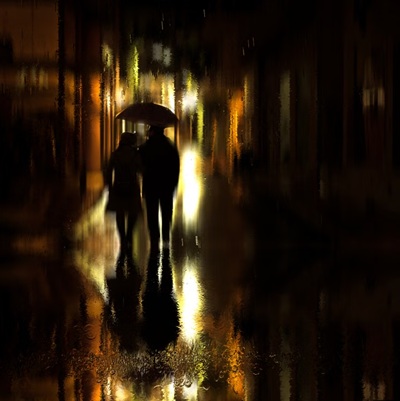
The car splashes through streets of weightless rain that clings to the windshield like cellophane.
I finished paying off the loan a few years ago. It’s a beautiful car—comfortable, spacious. I bought it with the idea of traveling with my family, my wife and the boys, but most of the time it carries only me.
There are hundreds of roads I once meant to enter into the navigator, and that I probably never will.
Time passes. Children grow up. Distances increase in ways that even the fastest car cannot bridge.
I listen to classical music on the radio. It keeps me company.
From the office to home it takes about twenty minutes. Half an hour if there’s traffic, but for months now the evening streets have been almost empty. I pass the dark signs of closed bars and restaurants, their shutters pulled down.
It’s strange how quickly I got used to it. Now it feels normal for restaurants to be empty, for streets and squares to lie deserted.
The red light of a traffic signal crystallizes inside the car, reflected by the thousands of droplets resting on the windshield. It’s good to have something to think about while waiting to move again.
The workday still clings to my skin like a persistent smell; the steady rhythm of the wipers isn’t enough to sweep it away like rain from glass.
But I think about the family waiting for me at home.
I carry with me the expectation of an embrace.
The light turns green and captures a dreaming smile on my face.
.
Four. Domestic Passacaglia in Weary Yellow
The keys in my hands are cold, almost icy.
I hurry to close the door behind me, leaving outside an evening already as dark as night and thick with damp cold.
I slip off my shoes and my heavy jacket.
Beyond the door that opens from the hallway into the living room, the yellow glow of the lamps filters through—warm and enveloping.
When I push it open I find my younger son sitting cross-legged on the floor like a small Indian—though not in front of a campfire but before the television screen. A pair of headphones is clamped over his ears and a PlayStation controller is tight in his hands.
I walk toward him to say hello. I try to hug him, demand a kiss the way he used to give me when he was little, but he pushes me away, annoyed, gesturing for silence. He doesn’t want the friends he’s connected to online to witness my affection.
The irritated grimace on his face is the best welcome I can hope for.
The rest of the room is empty.
I call out a hello toward the stairs that lead to the bedrooms upstairs.
I guess at my wife’s reply somewhere behind the voices of the television mounted on the wall above the bed.
I imagine my older son in his room listening to music, earbuds buried deep in his ears.
.
Five. Small Microwave Elegy in Acid Green
The smell drifting from the kitchen tells me dinner has already been eaten.
I know from habit that no one will come downstairs to keep me company.
I don’t take it personally. The day has been long for everyone. I expect nothing, and indeed I find no sign of any particular care for me. The remains of dinner sit in pans on the stove. There isn’t a glass or a napkin set on the table to suggest the food was saved with me in mind.
I fill a plate with something and slide it into the microwave. It turns slowly, lit by a harsh green light.
I pour myself some wine from the refrigerator.
I eat the way a patient in a hospital might eat—simply to stay alive.
At least I can drink as much wine as I want.
I add my plate to the others waiting inside the dishwasher and start the cycle.
Then I step out through the kitchen door and light a cigarette.
I watch the red ember glow with every drag: a tiny point of light among the millions of raindrops falling in their silent dance, invisible yet pulsing—destined, inevitably, to go out, leaving nothing but the faint memory of smoke and ash.
.
Six. Mother-of-Pearl Scherzo, in the Dark
I have been turning in bed for hours.
Around me lies a muffled silence, underlined by the rain brushing against the windows. In the darkness I imagine the familiar shapes of the objects that surround me. Sometimes I almost believe I can see them, deceived by the certainty of habit: the wardrobe along the far wall, the bedside tables holding their Tiffany-style lamps with colored glass shades, the chair at the foot of the bed where I carefully folded my clothes.
Beside me I hear my wife’s steady breathing. I know she is lying on her side, her back to me. She always sleeps that way.
I reach for her.
A sudden desire for her tightens the fabric of my pajama pants. I stroke her hair lightly, like a breath of air, then let a finger drift down between her shoulder blades.
Her back is bare.
I follow the path of her spine—one I have traced many times before—until my hand slips beneath her underwear. I recognize them by touch: smooth satin, trimmed with elegant lace. I bought them for her. They are white as a pearl, the color that best sets off her dark skin.
Suddenly she sighs in irritation. Her hand pushes mine away. She turns sharply in the bed, and her breath—heavy with sleep—reaches my face.
Her voice is muffled in the darkness so the boys won’t hear, but it carries anger.
“Don’t even think about it. You know I have work tomorrow. Leave me alone.”
.
Seven. Canon of Habit in Warm Ash
I would like to apologize. I didn’t mean to wake her so abruptly. I only wanted to make love to her.
But she has already turned away again.
She does it with a precise movement, without hesitation, as though it were written in a score performed from memory: she turns, I withdraw.
It is a silent canon we have been performing for months—perhaps years—always the same.
Two bodies lying in the same bed, close enough to feel each other’s warmth, yet separated by a space that cannot be filled.
There are no words anymore. Only the rustle of sheets and the beating of my heart stretching the night.
In the darkness I cannot see her, but I know she is holding the pillow the way she always does, her body curved into that familiar posture that leaves no room for dialogue.
So I imitate her.
I turn my back to her as well.
.
Eight. Rondo of Questions in Deep Blue
I float in the darkness, rocked by a sleep that refuses to come, while thoughts lose the clear urgency of daytime and unravel for no apparent reason along the fabric of the night.
When did sleeping become more urgent than making love?
When did I allow myself to believe that embraces were no longer necessary?
When did it happen that the spontaneous freshness—the reckless force of feeling—was sterilized by everyday life?
Inside my chest a bitter resignation swells, like a sea foaming before the storm. I myself helped make it possible, day after day.
If I were a film director, I would let the camera linger from above on my body, bent like a hook beneath the sheets. Then I would widen the frame to include my wife’s body, turned away from mine. Wider still: the house where I live with my sleeping family.
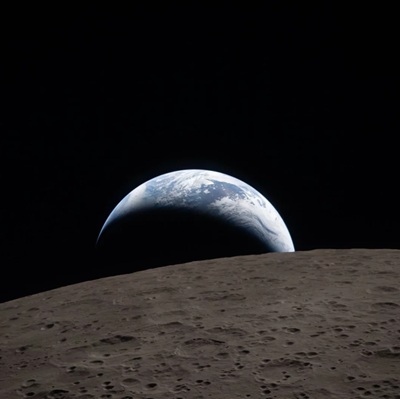
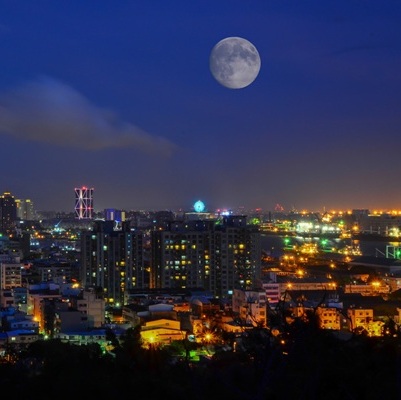
The image would expand further and further—there is the city shining beneath the rain, the continent surrounded by oceans, the spherical planet turning on its axis.
At that point the scene would stretch so far that the Earth would become nothing more than a tiny point in the vast darkness of the universe.
From those sidereal distances I now fall silently back inside myself.
The pleasure of being together was lost long ago. I struggle to remember the last time the four of us sat around the same table.
I recall the stories my grandparents told about their own childhood: evenings spent gathered around a fireplace, listening to the tales the elders told.
I try to imagine what that must have been like.
But I can’t.
Where did I lose myself?
.
Nine. Silent Cadenza in Dull Silver
I feel a few tears, warm and quiet, tracing the line of my face.
They come to visit me like old friends—
or perhaps like curious new lovers.
They touch my tired skin, until they reach my lips, whispering promises dissolved in salt.
.
Ten. Finale Through the Dew, in Rainbow Light
I imagine I can see them.
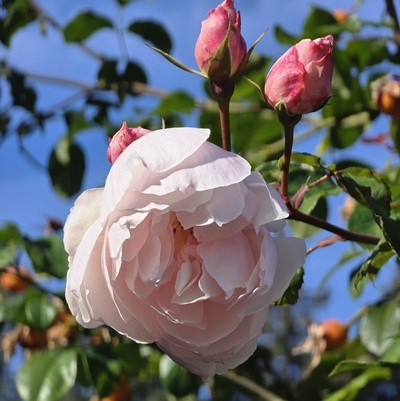
I transform them into small drops of dew resting on a bush of bright flowers, beyond which I glimpse a stretch of white sand meeting the newly born dawn.
What I taste in my mouth is the flavor of the sea.
I must convince myself of this—
and of the possibility that somewhere there still exists the chance to begin again,
to leave pairs of footprints along the shoreline,
in the trembling light of a day beginning once more.
.
.
___
.
.

Angelo Basile is a writer based in Milan, Italy. He made his literary debut in 2016, winning the international Le Fenici Literary Prize. His novels include Plenilunium, Lorenzo Malerba e la villa dei misteri, and Hamelin, published by Il Ciliegio in 2024. His short fiction has won or received recognition from several Italian literary prizes, including the La Quara Literary Prize, which he won in 2025. His stories have been published in literary magazines and anthologies in Italy, Brazil, and the United States. His story “Notte stellata” was published in English as “Starry Night” by the U.S. literary magazines Ovunquesiamo and Adelaide, and in a Brazilian anthology dedicated to Vincent van Gogh. Basile lives in Milan, where he has worked as an operating-room nurse for many years. He enjoys writing and sailing.
.
.
___
.
.
Click here to help support the continuing publication of Jerry Jazz Musician, and to keep it ad and commercial-free (thank you!)
.
Click here to read “La Fontaine,” Ashlee Trahan’s winning story in the 72nd Jerry Jazz Musician Short Fiction Contest
Click here to read more short fiction published on Jerry Jazz Musician
Click here to read The Sunday Poem
A Letter From the Editor: On “The Weary Blues: Celebrating Langston Hughes and the Harlem Renaissance”
Click here for information about how to submit your poetry or short fiction
Click here for details about the upcoming 73rd Jerry Jazz Musician Short Fiction Contest
Click here to subscribe to the Jerry Jazz Musician quarterly newsletter (it’s free)
.
.
.
___
.
.

Jerry Jazz Musician…human produced since 1999
.
.
.