
On music and freedom…Three poems by Daniel Warren Brown

September 17th, 2026

.


.

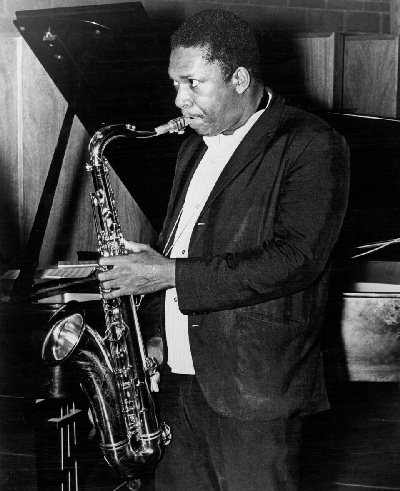
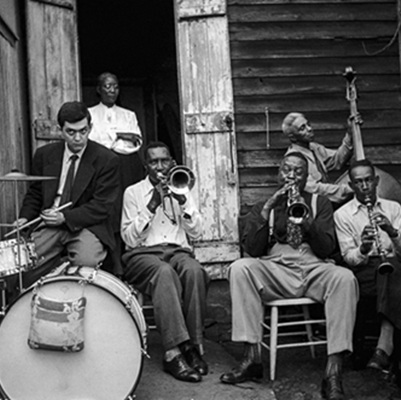
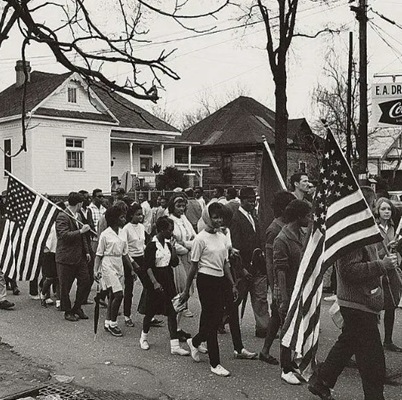
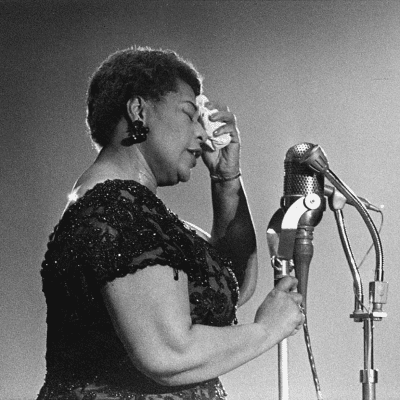
photo by Peter Pettus/via Picryl
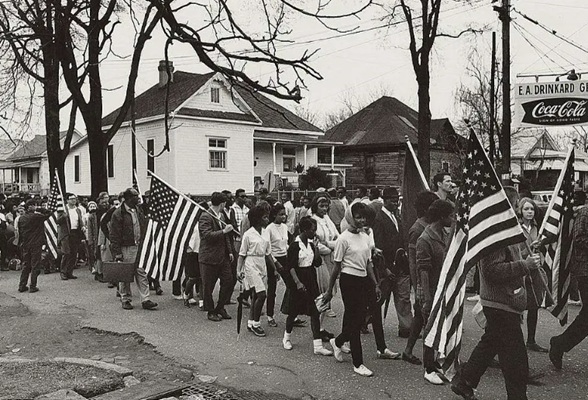
.

.

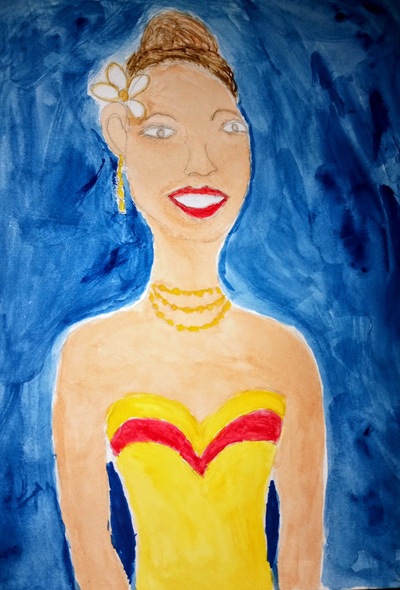
Nina Sang

Nina sang Mississippi Goddamn

because
everybody knew

black folks couldn’t vote
everybody knew
the murder of civil rights workers

who disappeared

for registering people
for human rights and dignity

no one knew of a future
where each person
had skin like morning sun

in unashamed brightness

a world void of shadows
wearing colors of equality

a view of heaven where
people black red yellow
picnic together on lime green grass

singing soul songs

the skies harlequin swirls
never seen this side of
the freedom chasm

where being human
without fear is a joyful dance

and white supremacists
are not allowed
to block schoolhouse doorways

safe on Martin’s mountain top

feeling what it means
to be free

this was Nina’s song
as old as Nefertiti’s beauty
just out of reach

Nina sang Mississippi Goddamn

because everybody knew
the kingly dream

if she with anger’s voice
could only cast a spell of love
on everything.

.

___

.


A Dream On My Mind

In 1947 Three famous Bluesmen
(as famous as Bluesmen can be)
Memphis Slim, “Big” Bill Broonzy
and  “Sonny Boy” Williamson  sang the blues,
pitched boogie and told bleak funny stories
about their early years;
having to call white horses “Mr. Horse”
or buying tobacco by asking for “Mr. Prince Albert”;
hidden back rooms where blacks
sat silently reading the negro newspapers
with a guard at the door. And levee camps,
where after working from dawn to dark
a guy at the table yelled, “hey, there’s a worm in my greens”
and someone else yelled like a call and response
“Hey, brother, give me that meat”

Three famous Bluesmen
(as famous as Bluesmen can be)
recall sundown towns,
where you didn’t get caught after dark,
oh, no no no. And about black folks
who fought back and were
massacred, lynched, their houses burned,
women raped.

Three famous Bluesmen
(as famous as Bluesmen can be)
were terrified, in fear of their lives and
especially for their families in the south,
asked that the record not be released.
Because of their plea,
the album Blues In The Mississippi Night
was first released by Alan Lomax
in England 12 years
after it was recorded
and in America years after that.

Three famous Bluesmen
(as famous as Bluesmen can be)
became on the record, “Natchez”, “Leroy” and “Sib”.
Three Bluesmen
(as invisible as Bluesmen can be).

“Big” Bill Broonzey
played Carnegie Hall in 1938,
standing straight and tall, singing the blues
in his own humorous jazzy way
billed right up there with
Benny Goodman and Count Basie.
In 1947 he was cast as  “Leroy”,
his big frame bent over
and diminished in a folding chair.
“Another Man Done Gone”.
Perhaps a last stanza to his signature song
“Just A Dream” should have been added:

…..“I dreamed I made a record
…..told the story of my life
…..and all the white folks understood
…..southern blues and strife

…..But it was just a dream
…..a dream I had on my mind
…..And when I woke up
…..no understanding could I find.”

.

___

.

This Little Light Of Odetta’s

This little light o’ mine, I’m goin’ let it shine
Let it shine, let it shine, let it shine.
Ev’rywhere I go, I’m goin’ let it shine (repeat)

Yes.
Let it shine, let it shine, like Odetta let it shine.
With her commanding voice
it lit up the state of Alabama
it lit up the state of Mississippi
it lit freedoms path
it even lit the soul of our nation when she sang it
on national television after 9/11.

Odetta held the light cupped like a lantern
in her mighty black hands
so little it found its way through
the crevice of hatred
under the door blocked by bigots
it shone where needed
and it has never stopped shining.

Odetta was large in every way;
Large in body
Large in soul
Large in volume
Large in dedication.

She’s gone now but not
the incandescence of her voice
and the spirit of the tiny flame
she left us.

And nothing not even the North Star
sings as powerfully while casting such
little light.

.

___

.

.

Daniel Warren Brown has loved jazz (and music in general) ever since he delved into his parents’ 78 collection as a child. He is a retired special education teacher who began writing as a senior. He always appreciates being published in journals and anthologies. At age 72 he published his first collection Family Portraits in Verse and Other Illustrated Poems through Epigraph Books, Rhinebeck, NY. Daniel writes daily about music, art and whatever else catches his imagination.

.

.

Watch the 1965 film of Nina Simone performing her composition “Mississippi Goddam”

.

Listen to the 1939 recording of “Big” Bill Broonzy performing his composition “Just a Dream” [The Orchard]

.

Listen to the 1963 recording of Odetta performing “This Little Light of Mine” [RCA/Legacy]

.

.

___

.

.

Click for:

A Letter From the Editor: On “The Weary Blues: Celebrating Langston Hughes and the Harlem Renaissance”

Information about the book Kinds of Cool: An Interactive Collection of Jazz Poetry, Vol. II (featuring women poets)

The Sunday Poem Archive

“21 jazz poems on the 21st” collections

More poetry on Jerry Jazz Musician

More short fiction on Jerry Jazz Musician

Information about how to submit your poetry or short fiction

Subscribe to the (free) Jerry Jazz Musician quarterly newsletter

Helping to support the ongoing publication of Jerry Jazz Musician, and to keep it commercial-free (thank you!)

.

___

.

.

Jerry Jazz Musician…human produced since 1999

.

.

.

.

Share this:

Comment on this article:

Your email address will not be published. Required fields are marked *

Site Archive

Your Support is Appreciated

Jerry Jazz Musician has been commercial-free since its inception in 1999. Your generous donation helps it remain that way. Thanks very much for your kind consideration.

Click here to read about plans for the future of Jerry Jazz Musician.

In this Issue

Announcing the publication of Volume II of Kinds of Cool: An Interactive Collection of Jazz Poetry...The second edition of Kinds of Cool, an Interactive Collection of Jazz Poetry has just been published, and is now available for sale on Amazon.com. This edition is dedicated to publishing women poets from all over the world who share their personal passion for and relationship with jazz music, and the culture it interacts with. With a foreword by Allison Miller, one of the world’s most eminent jazz drummers, and photography and design by Rhonda R. Dorsett

The Sunday Poem

art by Jerrice J. Baptiste

The Sunday Poem: “The Red Bridge” by Jerrice J. Baptiste

The Sunday Poem is published weekly, and strives to include the poet reading their work...

Jerrice J. Baptiste reads her poem at its conclusion.


Click here to read previous editions of The Sunday Poem

Feature

Wikimedia Commons
Memorable quotes – John Coltrane (with a poem by Michael L. Newell)

Interviews

The A Love Supreme Interviews...A word about the classic 1964 recording, and archived Jerry Jazz Musician interviews on it with McCoy Tyner, Gary Giddins, Nat Hentoff, Ashley Kahn, Joshua Redman, Francis Davis and Michael Harper

Poetry

“Coltrane’s Still Speaking at 100” – a poem by Jason A. Hendricks

Editor’s Notes

“Where I’ve Been” – a brief update... A trip through Alaska, Yukon, Alberta, and British Columbia…

Poetry

photo via Wikimedia Commons
21 jazz poems on the 21st of September, 2026...An ongoing series designed to share the quality of jazz poetry continuously submitted to Jerry Jazz Musician.

Performance

The performance poet Emmett Wheatfall
A Letter from the Editor…On “The Weary Blues: Celebrating Langston Hughes and the Harlem Renaissance”A brief recap and photos of the February 7, 2026 Jerry Jazz Musician-produced performance of “The Weary Blues: Celebrating Langston Hughes and the Harlem Renaissance”

Short Fiction

photo by Daniel's Richard/via Pexels.com
Short Fiction Contest-winning story #72 – “La Fontaine,” by Ashlee Trahan...A broken familial relationship in post-WWII France finds a semblance of closure in a crumbling countryside estate.

Feature

photo of Bob Zieff via Blue Sounds Records
“The Well-Kept Secret of Composer Bob Zieff’s Chamber Jazz” – an essay & playlist by Bob Hecht...On the little-known jazz composer of 18 tunes, the most famous versions having been made during the 1950s – and many by Chet Baker

Poetry

photo of Rosemary Clooney via Wikimedia Commons
“And the Angel Sings” – a poem by David Nemerov

Community

photo by Rhonda R. Dorsett
In Memoriam: Michael L. Newell, 1945 – 2026...News regarding the passing of the poet Michael L. Newell, whose work has been published on Jerry Jazz Musician since 2015.

Poetry

“Dreaming in a Spacecraft” – A prose poem inspired by the voyage of Artemis II, by Robert Alan Felt...

Interview

photo of Billie Holiday by William Gottlieb/Library of Congress
Interview with Paul Alexander, author of Bitter Crop: The Heartache and Triumph of Billie Holiday’s Last Year...The author talks about the courage and resilience of the legendary Lady Day, and his outstanding book – an inspirational and revealing portrait of an iconic American, that, like his subject, exudes compassion and creative soul.

Poetry

photo by Peter Pettus/via Picryl
On music and freedom…Three poems by Daniel Warren Brown

Feature

“My Favorite Things” – a true jazz story by Uri Marc Nusinow...Discovering a classic (and life changing) jazz recording…

Poetry

photo by Nathan J. Hilton/via Pexels
“Pax Vobiscum” – a poem by Michael L. Newell

Feature

Book Excerpt from Crossing Bar Lines: The Politics and Practices of Black Musical Space, by James Gordon Williams...In this entire chapter from his book, the author explains how the trumpeter Ambrose Akinmusire expresses his political views and lived geography through his improvisational music, notably his critique of police brutality that has, as he states, “become a leitmotif throughout my albums.”

Poetry

Yves Moch, CC BY-SA 3.0, via Wikimedia Commons
“Remembering Sonny Rollins” – a collection of poetry...Over the years, many poems have been published on Jerry Jazz Musician that were written in reverence of the man we refer to simply as “Sonny.” In the wake of his death, many more have been written. The unsolicited poems making up this collection is an example.

Interview

photo by Warren Fowler
Interview with John Gennari, author of The Jazz Barn: Music Inn, the Berkshires, and the Place of Jazz in American Life...The author discusses how in the 1950s the Berkshires – historic home to the likes of Hawthorne, Melville, Wharton, Rockwell, and Tanglewood – became a crucial space for the performance, study, and mainstreaming of jazz, and eventually an epicenter of the genre’s avant-garde.

Jazz History Quiz

Tommy Dorsey
Jazz History Quiz #189...This popular music singer once sang backup with her vocal group the Pied Pipers in Tommy Dorsey’s band and occasionally performed under the pseudonym “Darlene Edwards.” By 1955, she had sold more records than any other female artist, and one of her songs was the first record by a woman to reach #1 on the U.K. Singles Chart. Who is she?

Short Fiction

photo by ömeraliko/via pexels.com
“Strange Timings” – a short story by Terry Sanville...In the story – a short-listed entry in the recently concluded 72nd Short Fiction Contest – a jazz show is seen from different perspectives, one of which involves a long-ago romance…

Feature

Allen Ginsberg in 1979; photo by Michiel Hendryckx, CC BY-SA 3.0, via Wikimedia Commons
Memorable Quotes: Allen Ginsberg

Community

Ricky Esquivel/Pexels.com
Community Bookshelf #6...“Community Bookshelf” is a twice-yearly space where writers who have been published on Jerry Jazz Musician can share news about their recently authored books and/or recordings. This edition includes information about books published within the last six months or so (September, 2025 – March, 2026)

Poetry

photo via pxhere.com
“Midnight Blue” – a poem by Connie Johnson

Short Fiction

photo of Kyoto by Tom Lorber/via pexels.com
“Ken Namura’s Long, Strange Trip” – a short story by Peter Newall...In this story – a short-listed entry in the recently concluded 72nd Short Fiction Contest – a Western jazz musician living in Kyoto, Japan, befriends a Japanese pianist, learns about his experiences with acid in the 1970s, then discovers a curious secret about his life; that some trips can stay with you for a very long time.

Feature

photo by Laura Stanley via Pexels.com.
Trading Fours, with Douglas Cole, No. 28: “Little Samba”...Trading Fours with Douglas Cole is an occasional series of the writer’s poetic interpretations of jazz recordings and film. This edition is based largely on a documentary – They Shot the Piano Player – about Tenório Junior, a Latin jazz musician who only produced one album (1964) before he “disappeared” in 1976.

Short Fiction

Görkem Dalgıç/via Pexels.com
“Things I Almost Remember” – a short story by Ye Eun Lee...In this story – a short-listed entry in the recently concluded 72nd Short Fiction Contest – memory loss issues interfere with the life of a young woman scarred by a major auto accident…

Poetry

Poems on Charlie “Bird” Parker (inspired by a painting by Al Summ) – an ekphrastic poetry collection...A collection of 25 poems inspired by the painting of Charlie Parker by the artist Al Summ.

Contributing Writers

Click the image to view the writers, poets and artists whose work has been published on Jerry Jazz Musician, and find links to their work

Coming Soon

New poetry collections, Jazz History Quiz, and lots of short fiction; poetry; photography; interviews; playlists; and much more in the works...

Interview Archive

Ella Fitzgerald/IISG, CC BY-SA 2.0 , via Wikimedia Commons
Click to view the complete 25-year archive of Jerry Jazz Musician interviews, including those recently published with Judith Tick on Ella Fitzgerald (pictured),; Laura Flam and Emily Sieu Liebowitz on the Girl Groups of the 60's; Tad Richards on Small Group Swing; Stephanie Stein Crease on Chick Webb; Brent Hayes Edwards on Henry Threadgill; Richard Koloda on Albert Ayler; Glenn Mott on Stanley Crouch; Richard Carlin and Ken Bloom on Eubie Blake; Richard Brent Turner on jazz and Islam; Alyn Shipton on the art of jazz; Shawn Levy on the original queens of standup comedy; Travis Atria on the expatriate trumpeter Arthur Briggs; Kitt Shapiro on her life with her mother, Eartha Kitt; Will Friedwald on Nat King Cole; Wayne Enstice on the drummer Dottie Dodgion; the drummer Joe La Barbera on Bill Evans; Philip Clark on Dave Brubeck; Nicholas Buccola on James Baldwin and William F. Buckley; Ricky Riccardi on Louis Armstrong; Dan Morgenstern and Christian Sands on Erroll Garner; Maria Golia on Ornette Coleman.