
.
.
“The Cartographer” was a finalist in our recently concluded 71st Short Fiction Contest, and is published with the consent of the author.
.
.
___
.
.
.
The Cartographer
by Timothy Collyer
.
00:00 | 39.9721° N, 75.1364° W | North Philly | Wind in the wires
…..The app drops a pin and chirps. I listen before I look. Distant trolley bell. A bin lorry grinding its gears. A dog has opinions. I hold the phone on my palm like it might bolt.
…..“Site not verified,” the screen says. I know it is. The floorboards went through here in 1931 when the city widened the road and a man with a cornet had to move his Friday nights to a cellar two streets over. It’s not in any book. It’s in a box of receipts I found in a church basement, paper thin as pastry, pencilled name of a house band—The Evening News Boys—paid two dollars and a supper.
…..Fifteen years sober and this is how I do my amends. Walk, listen, pin, breathe. My sponsor—Shirley Scott’s nephew, quiet man, hands like he still tuned an organ—told me: set it down so someone else can find it. Don’t make a speech. Make a map.
…..I press record.
…..Audio note 1: “North Philly, pre-war dance hall, later a pool hall. House band ran on tips. You can hear the boards under the soles. If you stand still, a tram hums under your ribs. That hum is the key.”
…..I set the time stamp. Move on.
.
00:27 | 39.9684° N, 75.1500° W | 17th Street | Ghost of Spider Kelly’s
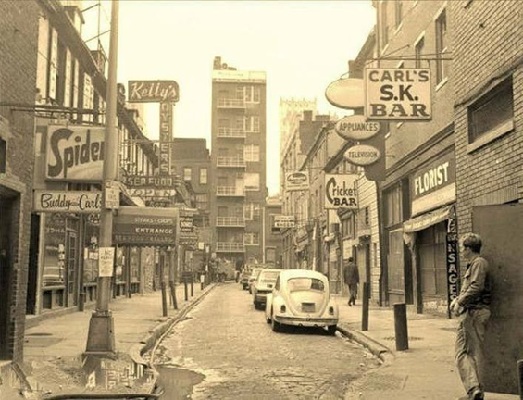
…..Spider Kelly’s is a barber now. Clipped hair, bottled blue aftershave trying its best. I close my eyes and switch to the past track. The app plays a loop I cut last night: cheap tape hiss from 1946, someone laughing too close to the mic, then a trumpet that pops like a kettle lid. People say Dizzy signed the inside of a hat here—the owner’s granddaughter keeps it in a cake tin.
…..I log the story as “oral history, unverified.” I log the smell of the clippers oil. I log the high note that still tests the ceiling.
…..My mother used to say: not that life. Not the late nights, the smoke, the money that goes sideways. She said it softly, because she loved her sister, who kept her piano in tune with a butter knife and still had to pawn the radio some winters. My great-aunt’s fingers lived at the Showboat and any room that had a Hammond, from 1962 until the city moved under her feet. She could find the bass pedals with her eyes shut. I can find a hydrant in a storm without looking, so maybe it all travels down the blood anyway.
.
01:05 | 39.9583° N, 75.1739° W | 52nd & Market | The corner with the venti cups
…..The corner sings a different song now. Foam lids in a stack. The metal swish of an espresso wand. Headphones on every second head. I was forty-three when I came back here sober, counted the beats of the crossing while a bus pressed heat against my leg.
…..It used to be a music corridor. Pep’s down the way. A side door that stuck in summer. Electric organ swagger on the stairs. A bouncer who would call my aunt “Ma’am” and my mother “ma’am” and me “kid,” and he was right on all counts.
…..I hold my phone against the glass. The app recognises the address; I gave it a private alias so the algorithm wouldn’t feed it to estate agents. “Blue Note Club—Philly,” it reads, “unaffiliated with NYC.” In small print: “No remains.” It isn’t a ruin if people still stand on it every morning and order oat milk.
…..The GPS voice says, bright as a receptionist: “Continue for thirty metres.”
…..I stand still. I let the hiss and the dunk of the bin lid and the street preacher’s radio collect in the microphone. It doesn’t matter if anyone listens later. The act of collecting is itself a reply.
…..When I was thirty-five I was very good at collecting. Warnings. Pity. IOUs. I took them like shots. There is a sound to the moment before a relapse. The body leans. The night opens a soft door. Music becomes background.
…..I drained seven years into a drain you couldn’t map. Lost the job. Sold the bike. Missed my mother’s sixty-fifth. Stopped walking; woke up two days later in a bathroom with the light off. The silence was so large I could hear my own blood like a tube train that wouldn’t stop, and I thought, well then, I’ll get on.
…..You can’t make a map from inside the tunnel. My sponsor met me at the mouth of it, fed me scrambled eggs, and put on Shirley Scott. The room softened; the organ talked to the left side of my chest. He said, “We don’t fix you. We keep you company while you fix you.” Then he told me about the Showboat. He told me about South Street when a drum kit crossed the road under a coat and nobody asked questions.
…..We made a rule: every urge becomes a step. Every step becomes a point. Every point becomes a line. A line you can follow back.
.
01:31 | 39.9560° N, 75.1783° W | Sponsor’s kitchen | Present tense
…..Kettle clicks. He buys the cheap biscuits I pretend to hate. He nods at the chair.
…..“You look tired,” he says.
…..“I’ve been putting bones back in the map. The city wants to pay me to take them out.”
…..He smiles without teeth. “Tone?”
…..“They said it three times in one email.”
…..“What do you want to be responsible for?”
…..I pick up the mug. “Keeping the servers up. Keeping the truth in.”
…..“Do both if you can. If you can’t, say which one you’re choosing and don’t lie to yourself.”
…..“I could make two versions.”
…..He whistles a bar of “Like Someone in Love.” “That’s two beats at once.”
…..“Polyrhythm,” I say.
…..“That’s the word you wanted.”
…..He says nothing else. That’s the help.
.
01:42 | 39.9444° N, 75.1696° W | South & Broad | The Showboat shadow
…..I don’t photograph the plaque because there isn’t one. The best clubs never got plaques. They got evictions and rumours. The Showboat Lounge sat under your feet and then it didn’t. 1962 to 1969 like someone marked it with a ruler and then snapped the board. Great-aunt Ruth took the late set Thursday and the early set Sunday and kept coins in her left shoe because tips went faster if you didn’t put them in sight.
…..I hold the phone. Record.
…..Audio note 12: “Shirley Scott took the Hammond like it owed her lunch and paid it back with interest. Groove Holmes came through and the room learned how a left hand can walk without lifting its feet. Jimmy Smith blew the dust off the ceiling fans. If you close your eyes, the bass pedal still feels like a second heart. I stopped lying to myself on this step, listening to a bootleg. When I forget, the air here sets me straight. Old wiring buzz that never quite clears.”
…..A wide man stops and listens to the nothing I’m recording. He says, “What was it?”
…..“A basement,” I say. “A good one.”
…..He nods. He doesn’t ask me to prove it. I like people who let a thing exist without a sign.
…..The tourism board wants signs. They want QR codes and cheerful blurbs. They want “where legends played” without why the legends liked basements—because upstairs, the neighbours called the police when certain faces came with instruments after midnight. They want “history” without red lines on maps or the way a landlord raises a rent when a song draws a crowd.
…..Two weeks ago they offered money. Not much, but enough to pay a developer to fix the backend that crashes when twenty users log in at once. Enough to print something on heavy paper. The contract said: “We reserve the right to edit for tone.” Tone is the bruise you press that tells you how deep it goes.
…..I said I’d think about it. I thought for exactly one bus ride and then told them no. Then I told them maybe. Then I told them I’d send a draft. That’s where the trouble starts. You think you can bargain with your own spine.
.
02:03 | 39.9455° N, 75.1569° W | Alley, South Street | Craving beat
…..A lad comes out of a pub with a pint in a plastic cup. The smell is cold and sweet. My tongue remembers. The body leans. I count to eight. I map while I count—alley mouth, fire escape, old chalk on a brick from a long-gone sign. Every urge becomes a step. I take three. The street slips out of time for half a bar, then clicks back in. I start an audio note for nothing. It’s just air. I listen till the want goes flat and walk on.
.
02:20 | 39.9416° N, 75.1525° W | South Street | Aunt Ruth’s block
…..The cobbles still talk when a van rolls. Someone’s hung washing three floors up. It crosses the sky like a weak flag. The drumstick shop is candles now—one’s called “Midnight Jazz.” I let it pass. I’m busy with a doorway that isn’t the old one, though my knees swear it is.
…..A boy opens it carrying crates. He watches me speak into the phone.
…..“Making a podcast?” he says.
…..“A map.”
…..“Cool. Of what?”
…..I tilt the screen so he sees the title—Aunt Ruth’s Block—and the dates.
…..“Never heard of it,” he says, which is fair. He wasn’t born. He holds the door for me anyway.
…..Inside, the cellar smells damp but honest. The owner lets me take five minutes because I explained it was a family thing and because I bought a scone I won’t eat. The floor has that old give. I set the phone on a table that wants to be a stage.
…..Audio note 19: “Showboat Lounge, 1962–1969. Great-aunt Ruth on piano, sat in on organ when someone called in sick. Shirley Scott passed through; so did Trudy Pitts, who never met a standard she couldn’t refit. There’s a myth the city shut it down for safety. The truth is letters from neighbours, and a by-law that said basements couldn’t host more than forty people if the walls didn’t have a certain kind of paint. Guess who couldn’t get the paint.”
…..Outside, the developer waits. Slim suit, tidy hands, a smile you could shelve.
…..“We love your app,” he says. “We’re building five blocks east. The history would help prospective—”
…..“Residents,” I say.
…..“—appreciate the depth of the neighbourhood.”
…..“The depth?”
…..“Texture,” he says. “You know. Authenticity.”
…..He says the word the way a landlord says “community.” He says we could “partner.” He says we could “frame the story in a positive light.”
…..“Meaning light without shadows,” I say.
…..“You’ll reach more people. And it’s the future.”
…..He drops that last word like a brick on butter. I write a note: Developer pitch. Declined. For now.
…..He hesitates. “My gran worked coat-check at Pep’s,” he says, like a passcode.
…..“What was her name?”
…..“Alma.”
…..I know an Alma. I say nothing, because complicity has a family tree too.
.
03:07 | 39.9509° N, 75.1749° W | Pep’s (approximate) | The record in the wall
…..Pep’s Musical Bar isn’t there. It hasn’t been there so long my first digital map, the one I made when I was twenty-two, doesn’t know it ever was. But a building holds on under its paint. You can hear it if a bus rattles past and the window puts a chord in your ear.
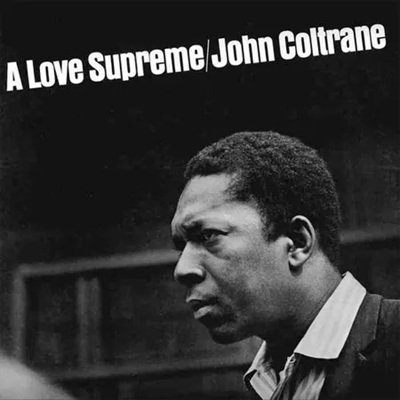
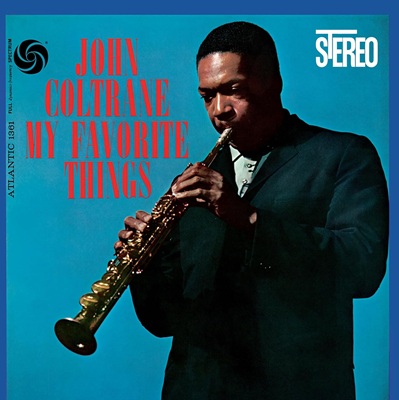
…..Coltrane recorded here. That sentence is taller than I am. I write it small anyway and tuck it under the fold.
…..My mother came once, stood at the back so nobody would offer her a drink. She said the sound was so close she could see it. She saw my aunt fall in love with a bandleader in eight bars. She put a hand on her sister’s shoulder and said, “Come home after, okay?” My aunt said, “I live where the music lives,” which is a bad answer and a true one. The door kept opening and closing until the city taped it shut.
…..I record a thing you can’t prove.
…..Audio note 27: “There’s a nail in the west wall that holds an echo. It sounds like a low E on a worn string. If you put your ear to the brick you can catch it. Don’t make a scene. Just lean.”
…..A woman passing says, “Are you alright, love?” and I am, for once.
.
03:33 | 39.9488° N, 75.1690° W | Tourism board voicemail | “Tone”
…..They’ve emailed edits twice. I ring them because typing gives them time to tidy.
…..“Thanks for calling,” the man says. “We adore the concept. The tone, though—can we look at tone?”
…..“What’s wrong with the tone?”
…..“It’s heavy.” Paper shuffles. “We’re aiming for an inclusive tone.”
…..“Inclusive of what?”
…..“Families.”
…..“Families lived this,” I say. “They also got evicted.”
…..“We don’t want to alienate visitors.”
…..“I’m mapping alienation.”
…..A pause. “We’re simply requesting a lighter tone. Less… controversial. The city’s brand—”
…..“You said tone four times.”
…..“Five,” he says, tries a laugh. “We’re on your side.”
…..That sentence is usually followed by a bill. I say I’ll send a draft by end of week. He thanks me for my “flexible tone.” I hang up and record the click.
.
03:43 | 39.9482° N, 75.1604° W | Blue Note (Philly) | Not that Blue Note
…..A hairdresser lifted the stage and made it a mirror station. I make do. I ask if I can stand by the back wall for a minute. The hairdresser says sure and points me away from a wet sweep pile. He plays jazz on a Bluetooth speaker anyway, which is kind, but it isn’t the room, so I turn my recorder off while he does it and back on when he stops. He grins. “You’re picky.” “Occupational hazard,” I say. He trims a fringe while I mutter into my sleeve.
…..Audio note 31: “The Blue Note Club, Philadelphia. Not a franchise, thank you. If you came here to be seen, you picked the wrong door. If you came to listen, you found a corner. A trumpet would find the back door through a standard and nobody clapped until the end because this wasn’t that kind of room.”
…..The tourism board’s latest email pings. “We’re excited to move forward,” it says. Friendly adverbs. They’ve attached a draft of their edits to my South Street notes. They removed the raids. They removed the zoning line. They removed the sentence about the by-law that used paint as a fence. They’ve left the names and the dates and the phrase “legendary nights.” They’ve added “family-friendly.” The city loves “family-friendly” like it invented the family.
…..My sponsor would raise an eyebrow. He wouldn’t tell me what to do. He would say, “What do you want to be responsible for?” which is worse because you have to answer it twice, now and later.
…..I open a new project in the app, title it JJM TOUR—SANITISED because I’m in a mood. I copy the bones over. I leave the meat in the first one. I feel cheap and also proud of the file path that says root/guerrilla/archive/true. I write code as a prayer.
.
04:06 | 39.9466° N, 75.1668° W | Sound-only scene | The room that isn’t there
…..Stool scrape. Pedal thump. Jacket sleeve on lacquer. Two quiet coughs. A shoe taps the wrong beat then finds it. A glass meets wood, not hard, not soft, just there. A hand rests on a key before pressing. Air moves. Somebody’s laugh starts and stops like a match. The bass pedal lays down four steps and waits. The organ breathes in. The drummer’s brush circles the snare like a cat deciding. A coin hits a pocket. The room chooses a key.
…..(There. No pictures. It works.)
.
04:18 | 39.9422° N, 75.1470° W | South Street again | Quiet door
…..I sit on a stoop no one uses. The app shows two maps open. The clean one has crisp borders and neat icons. The true one has red pins like marbles I kept in a jar as a kid—I lost one behind a radiator and cried over glass. My mother gave me the look she used when she wanted to rescue me and also didn’t want to teach me that everything comes back if you cry.
…..A message pops from the developer: Any thoughts? Could we hop on a quick call?
…..I type, No calls. Email.
…..He replies, We adore your passion. We just think the market skews toward an uplifting narrative.
…..Uplift is a lovely word for a crane. Also for a lifted wallet.
…..I don’t send it. I close both maps and listen to my aunt walking her left hand across the two lowest octaves.
…..Audio note 34: “Some stories have a front door that’s locked and a back door you have to pretend not to see. Go round the back. That’s the instruction.”
.
05:02 | 39.9389° N, 75.1520° W | South Street | Paper-bag strategy
…..I buy a sandwich and carry it in a paper bag like it’s the 1970s and I don’t own a tote. The bag makes a sound when I fold the top over that I’ve heard on a dozen bootlegs at the quiet end of a track—someone packing up, saying without words that night is nearly done.
…..A teenager with a skateboard asks what I’m recording. I tell him. He says, “I thought jazz was like… hotel music.” I play him twenty seconds of Groove Holmes. He blinks. “That’s… dirty,” he says, which makes me happy in a way I don’t overthink. He asks if I’ll put his voice in the app. I do.
…..Audio note 38: “Hotel music my arse.”
…..We both laugh. He goes. The city coughs. A bus release-valves. Somewhere someone drops a tray and it becomes part of the timeline.
.
05:49 | 39.9610° N, 75.1606° W | Broad Street | Council step
…..The council archive site crashes. I photograph the gap. The by-law is there somewhere: paint, occupancy, fire exits only rich rooms could afford. My mother’s friend worked at a club where they kept a stool in front of the back door because the landlord hadn’t fixed the hinge; if the inspector came, someone kicked the stool away and hoped the door opened fast enough to look legal. The inspector didn’t come unless a neighbour called. The neighbours called. That’s how a city edits.
…..The tourism board has notes on my “tone” again. I paste their requests into a document titled MUSEUM VOICE. I read them in the audio-guide voice at a posh gallery that never mentions where the bronze came from.
…..Audio note 41: “Two ways to tell a story. One: as if no one suffered. Two: as if you still can’t quite look the suffering in the face. The third way is tell it even and let the details carry the weight.”
…..I used to love a platform. I used to think a good speech could fix a day. Now I like small notes tucked under stones.
.
06:26 | 39.9583° N, 75.1739° W | Back at 52nd & Market | The choice that isn’t
…..Late afternoon. The sun shows off on a window. The Starbucks queue shifts its weight. The bus stop adverts want me to buy a mattress on a monthly plan. My phone battery is at nine per cent and both maps glow: the one that sells tickets and the one that doesn’t.
…..I’ve put every place in. North down to here. Spider Kelly’s to Pep’s. Blue Note to Showboat. Shirley Scott’s corners. Jimmy Smith’s swing that could make a sober woman consider drinking a measure of sound, which is not how anything works and yet. My amends aren’t words. They’re pins. Directions that won’t let the past be parked up and sold back with a ribbon.
…..The sponsorship would keep the app alive. It would fix the crash. It would let the server breathe. The sponsorship would shave off the burrs. It would file down the sharp bits until the city fit in a brochure.
…..The guerrilla archive has no budget. It has a password that is three words from a Trudy Pitts interview. It has my great-aunt’s name in the index and a photo of her hand on an F key, wedding band shining with the kind of shine cheap gold gets after a decade of use.
…..I open both. My thumb shakes—six hours on the pavement and too much coffee. The clean map has jaunty icons. The true one has written notes like repairs.
…..I look up. For a second I hear the old upstairs flat where a man practised snare rolls until a neighbour banged the ceiling with a mop. I hear the door wedge fail. I hear a laugh that knows the joke is on the house. I hear the hum in the wires.
…..The maps sit there, open like hands. I don’t close either.
…..I press record.
…..Audio note 52: “52nd & Market. Starbucks now. Pep’s once. If you’re listening, stand where the door used to be. The floor tilts a touch to the east. Think of a bass pedal settling its weight. Decide nothing today. Let the room decide you.”
…..The GPS voice, patient as ever, repeats: “You have arrived at your destination.”
.
.
___
.
.

Timothy Collyer is a British short story writer and multiple Pushcart Prize nominee. He won the Flash 500 Prize and the Seán Ó Faoláin International Short Story Competition. His work has appeared in The Threepenny Review, Nebula, and Clockhouse. He lives in Wiltshire and writes literary and speculative fiction.
.
.
___
.
.
.
Click here to help support the continuing publication of Jerry Jazz Musician, and to keep it ad and commercial-free (thank you!)
.
“Where the Music Wasn’t Allowed,” Jane McCarthy’s winning story in the 71st Jerry Jazz Musician Short Fiction Contest
Click here to read more short fiction published on Jerry Jazz Musician
Click here to read The Sunday Poem
A Letter From the Editor: On “The Weary Blues: Celebrating Langston Hughes and the Harlem Renaissance”
Click here for information about how to submit your poetry or short fiction
Click here for details about the upcoming 72nd Jerry Jazz Musician Short Fiction Contest
Click here to subscribe to the Jerry Jazz Musician quarterly newsletter (it’s free)
.
.
.
___
.
.

Jerry Jazz Musician…human produced since 1999
.
.
.