
“The Piano Whisperer” — a short story by Arya Jenkins

     In the underground of how it used to be, in days long ago when things were quite good, when the only bad thing, if you want to call it bad, was poverty, which was longstanding, a dull ache of years that traveled with you through good times and bad and sometimes sang you to sleep like a sad horn, bwa la la la (high note) bwa la la la (high note) bwa la la, in that time, the song of poverty that belonged to everyone belonged also to Noname.

       Noname, pronounced Noh-nameh,  ran the bleak streets then 60 years ago when the world was kinder, a better place, where murder was just, well, murder, and horror, ordinary, conceivable, and every person, regardless of how they appeared, who they were, part of a diverse evolving unique American gyroscopic system. Even the most jaded soul understood being different was natural, even if your difference was made of so many facets, no one thing stood alone and nothing alone could capture it–save poverty herself, true interpreter of shades and depths of differences, which we celebrated on saxophone streets, in piano bars and when looking to the heavens for inspiration in the form of

...

News about Jerry Jazz Musician contributing writer Arya Jenkins

          In July of 2012, Arya Jenkins’ short story “So What”—a story about an adolescent girl who attempts to connect to her absent father through his record collection – was chosen as the 30th winner of the Jerry Jazz Musician Short Fiction Contest.  When that outstanding work was soon followed up with another quality entry with jazz music at its core, I invited her to contribute her fiction to this website on a more regular basis.  We agreed to a commission of three stories per year, and tomorrow’s publication of “The Piano Whisperer” is her 15th story to appear on Jerry Jazz Musician.

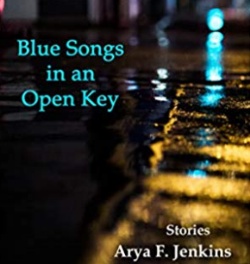
         I recently received word from Ms. Jenkins that Fomite Press, a small, independent publisher out of Vermont whose focus is on exposing high level literary work, will be publishing these stories in a collection titled Blue Songs in an Open Key.  Publication date is

...

“Lulu and Me” — a short story by Arya Jenkins

     The winter I ran away, I moved into a garret in Provincetown, where I wrote poetry under the light of a candle far into the wee hours. Out my window, two stories up, I could see snow glistening on slanted rooftops that led like an uneven staircase to the bay. Below me, a twisted narrow path led to Commercial Street, peaceful and stark as an unwritten page. It was 1973 and I had run to the end of the world as I knew it to find freedom.

       I knew Provincetown from spending summers with my dad and Grandma Tess in her cottage in Truro. It seemed she’d lived most of her life since Grandpa’s passing as a beachcomber. I liked following behind her when we collected

...

“Voodoo Run” — a short story by Arya Jenkins

Allie drove her taxi with a smart ass attitude, smacking gum ceaselessly, and wore a Yankees cap backwards on her head on the job, even though she’d never watched a baseball game in her life, didn’t even like the game. Her dad had named her after a pitcher who’d won five straight World Series and Allie was always grateful that pitcher hadn’t been named Lefty or something like that.

Allie’s father had been the true baseball fan and Allie wore his cap in his memory. His real gift to her was love of music, jazz in particular. In her cab, she listened to WBGO, 88.3, remembering times she hung out with her dad in the garage listening to Miles Davis, Chick Corea, Wayne Shorter, experiments in sound, beautiful chaos while he fixed things. The garage was Bert’s space and his peace, or rather, the music was, and the smoke and silence that rose between them accentuated this. Whenever the strangers she drove around asked about her father, Allie always told them, “He went the way of the Marlboro man.” Cancer.

It surprised people to hear that she, a Millennial should enjoy jazz. “Jazz was like my Gerber food,” she liked to say. As a teen she dug hip hop enough to explore its fusion with jazz, but the fusion didn’t

...

“Foolish Love” — a short story by Arya Jenkins

     That winter we lived among mice in the Berkshires, in a little cabin set not far from a large white clapboard house that belonged to the owner Betty, who was a widow. Two steps up to the cabin did nothing to keep the mice away. Their constant tweaking and bustle made me feel I was living in an indoor forest. Betty, who was a nice old lady, warned us. “You’ll never be able to keep the mice out. If you can stand them, the place is yours.”


      We had come up to the Berkshires figuring we might have to rough it, but had no idea. Van and I had been together about two years then. The summer before we had been married on a beach in

...

“Like a Pigeon in the Park” — a short story by Arya Jenkins

“What a shame,” people always said whenever they saw the two of them, Jeremy and Jade. What a shame the beauty of the boy had escaped the girl, who had her mother’s small oval face and father’s prominent nose and small dark eyes that were filled with a peculiar, almost unnatural intensity. “Such a shame,” relatives observed unabashedly at family gatherings. The remaining phrase that hung in air unspoken was, ”that she isn’t the beautiful one. “

To herself in the mirror, Jade’s own face and visage seemed fine, just a part of her, not even all that consequential. Didn’t brains and character matter more? She was striking much in the way Zelda Fitzgerald had been—a beauty you could not capture in photographs, more in movement, gesture, articulation. Somewhere, not far from the small, provincial town where Jade lived, where people stared at you if you did not fit a mold, there were people like her who were different and proud of their differences and she looked forward to meeting them one day. In the meantime, she would have to deal with challenges.

Growing up, many of them had to do with her brother, who was two years older. Although Jade garnered high marks in school, not much was made of it so

...

“THE BLUE KISS” — a short story by Arya Jenkins

She stood in a room at The Met glancing at the painting on the wall, which was of two women kissing. From her vantage point, standing slightly away and to the side, the two women lying together interlocked in bed appeared cushioned awkwardly in space, free-floating yet connected.

The painting was by Henri Toulouse-Lautrec, the alcoholic French dwarf artist, and she tried to imagine what it was like living when he did in Paris at the time of the painting, 1892, and what it might have been like for these two prostitutes and others like them who often turned to one another for relief from a world of men then.

Mireille, it was reported, was one of the girls in the brothel in the Rue d’Amboise, when Lautrec was commissioned to create a series of panels about the lives of the girls there, and she was one of his favorites. He visited the salons of the brothels in the Rue des Moulins and Rue d’Amboise many times to study and paint the women, who felt very free to be

...

“Woman Plays Horn” — a short story by Arya Jenkins

She was born into a family of musicians. Her father had played bass in a jazz band and traveled with Dizzy until an accident had cost him his arm and his career. Getting out of a limousine that had stalled on the highway en route to a gig in Chicago, he opened the car door to get out at the wrong time, just as a truck was passing.

“C’est la vie” he always said about that, as if it meant something. He had to go on, a musician without a limb, without his instrument, because he was a man and had children and a legacy to uphold through them, but inside, where nothing touched him, he felt as torn as his shoulder had been that night. Something had shifted. Only his wife, his gentle, meek and attendant wife who saw him sitting at the edge of their bed each night head bowed counting his blessings, all but one, only she knew what

...

“Don’t Threaten Me with Love, Baby” — a short story by Arya Jenkins

Chantal Doolittle wasn’t like anybody else she knew. Who else, for example, would stand transfixed before a record player or stereo, still as stone while listening to music — not merely attending to it — her very cells taking in the song, calculating and absorbing. “That girl is special,” Nana Esther always said.

When she was a kid and Motown was the thing, Chan would sing Marvin Gaye’s tunes to her grandmother in their high ceilinged apartment, where, more often than not it was soul music, the harmonizing voices of The Four Tops, The Temptations, The Supremes, drifting in from the surrounding windows and disappearing into the sky that was perennially a washed out gray, as if there was an invisible flag always at half mast, hanging outside heaven. From the time she was five or six, all Chan had to do was hear a song once and she would know it. She knew all the Motown tunes word for word, and sang them right on key, perfectly, which is why Nana Esther dubbed her, “my little songbird.”

Of course, there was nothing little about Chantal, but, being her grandmother’s one and only, she was “a little one” to her. Chantal was tall, big for her age, and when she developed as a young woman, busty too. She stood out even before she opened her mouth, due to her attitude. Her nana had taught her to be “confident as a man,” and she had seemingly

...

“A Man’s Hands En Clave” — a short story by Arya Jenkins

Club Havana was known for hosting decent Afro-Cuban jazz bands. There was dancing Thursdays through Sundays, and Sunday afternoons, the management handed out free cigars. Hector became close to the house band, whose rhythm section inspired him. He thought the drummer Manny was off the charts. Completely bald, he wore leather bands that cinched his pump wrists as if to keep his hands from flying off his body whenever he played fast and furious. A skinny, short guy played bongos, and a drunk worked the tumbadoras. Jorge, Carlos and Javier, all dapper guys, played horns. As if to distinguish themselves, one wore a mustache; another, a hat; and the other, wire rimmed glasses. Additionally, there was a young Julliard graduate on piano, a white-haired Cubano on flute, and a sax player who looked exactly like Lester Young. One afternoon, before their gig, Manny and Hector got to talking, and Hector started messing around on the tumbadoras, imitating what he had so often seen and heard. Manny raised his eyebrows and cocked his head. He liked this kid, and his sound was good.

“Why don’t you come hang with us this weekend. A few of us like to jam at Columbus Circle. Come along and let’s see how you work those congas in a group.”

Over the course of the summer, Hector hung out in the park. It was there he met

...

“HEAT” — a short story by Arya Jenkins

1. Savoy Blues

Mercies would have put blues on the menu if it could, but that was a province of the kitchen, where I worked four and a half months too many. I heard actual blues music and caught a gust of air conditioning whenever I snuck through the dining area early in my shift to use the guest bathroom before customers arrived, passing the line of booths next to the orange and black walls on which hung colorful modern paintings of jazz musicians and the

...

“Broad Street” — a short story by Arya Jenkins

The publication of Arya Jenkins’ “Broad Street” is the fourth in a series of short stories she has been commissioned to write for Jerry Jazz Musician. For information about her column, please see our September 12 “Letter From the Publisher.”

For Ms. Jenkins’ introduction to her work, read “Coming to Jazz.”

__________

The day I moved into Broad Street, the roiling waters of the Long Island Sound burst over sea walls along the Connecticut coast from New Haven to Greenwich, flooding Bridgeport so badly, a poor, emotionally disturbed man actually drowned in a sewer. At Seaside Park, water rushed across two parking lots, swirled around a few skimpy trees and headed straight for the historic set of row houses that included my basement apartment. It was early December as I arrived, two knapsacks in tow, only to find my new landlady Rosie and my neighbor Alice knee-deep in galoshes in muck, hauling out my furniture.

A week earlier, Alice had lured me with, “There’s a vacancy next door and it’s yours. Everybody’s an artist here. You belong.” I had felt that the studio with its cozy rooms

...

“Epistrophy” – a short story by Arya Jenkins

The publication of Arya Jenkins’ “Epistrophy” is the third in a series of short stories she has been commissioned to write for Jerry Jazz Musician. For information about her column, please see our September 12 “Letter From the Publisher.” For Ms. Jenkins’ introduction to her work, read “Coming to Jazz.”

__________

Disenchanted leaves fell early through the trees the summer I left my life for an ashram. The path to the ashram snaked into the woods not far from Tanglewood and reminded me less of where I had been than where I was going with its rotund emphasis on kindness and formality-Within a year I would be studying Buddhism in a monastery and teaching English at Cornell in Ithaca.

I was attempting to put a punto finale to the moneyed nonsense in which I’d lived too long in Fairfield County, and wanted to quell my fulminating instinct, my destructive fires and find some kind of peace and stability, even at the expense of boredom–which may have been expecting too much.

...

“The Bluest Train,” a short story by Arya Jenkins

My friend Carl lived in a house full of ghosts with an evil sonofabitch brother who stole his shit, I mean all of it. But Carl himself, man, Carl was good as gold. He would give you the shirt off his back–everything, and did.

I moved in with my ex-old lady across the street from him in the late 80s when I was drying out and desperate for change. Marcy took me in, even after I had been such a dick. She knew it was the booze made me sleep around, and even though she kicked my drunken ass out on the curb, she took me in once she saw I was sober and clean. By then, she was already shacked up with a polite, fat, slob who was everything I wasn’t or would ever be.

Homestead Avenue, where we lived, was a pleasant street in a nice section of Fairfield called Black Rock, near the water. At the time, people were starting to navigate to the hood, although since then real estate prices have dropped due to the many storms–there have been too many storms in the area, man. But because of Black Rock’s proximity to the sound, which is like the sea, artists and strange people gravitate there.

I noticed Carl right off the bat. You couldn’t help but see him sitting on his porch with his supersized feet, head and limbs, a Franken monster. So I crossed the street one day to meet my neighbor, who looked a sorry sight–blackish long hair

...

“Coming to Jazz,” by Arya Jenkins

On the occasion of my 12th or 13th birthday, my father presented me with my own copy of a favorite album of his, Dave Brubeck’s Time Out and said, “This music is going to change your life.” The music sounded like nothing I’d ever heard. It was original and different and piqued my curiosity although I would not embrace it until later in my life. In the early 90s, when I was reading my poems in cafes that often played jazz in Connecticut, New York and Massachusetts, I started really listening to the music, and found it captivating.

...

A Letter from the Publisher/Introducing Jazz Fiction writer Arya Jenkins

For 11 years, Jerry Jazz Musician has sponsored 33 Short Fiction Contests resulting in 30 different contest winners. During that time, I estimate that I have read and considered over 3,000 short stories.

The stories vary in content and quality, of course, and it has been my goal to publish the best story regardless of its theme. This has at times led to confusion by some writers over the years who believe that, since Jerry Jazz Musician’s focus is on jazz history – and in particular within the confines and culture of mid-20th Century America – the winning story should always be about jazz or a character within that setting.

...

Short Fiction Contest-winning story #30: “So What,” by Arya Jenkins

Whenever I’m pissed off, I escape to the pit. Out the kitchen door, fists deep in the pockets of my tight ass jeans, I head towards the woods back of the house.

I cross the backyard, past Moreno, the poor chained up son-of-a-bitch boxer. Rosa clinches his leash, pulling him close like a kid. The poor son-of-a-bitch tenses as I go by, his spindly legs and stubby tail shivering at my wrath, ears perked, head cocked – Was up girl, grounded again?

...

The Sunday Poem: “Sarah Vaughan Performing” by Arya F. Jenkins

Watching Sarah Vaughan perform “Misty”
live in Sweden in ’64 must have
made some folks wonder about the failed cooling system onstage
that made her perspire so—

...

The Sunday Poem: “Nina As In Nina Simone” by Arya F. Jenkins

This narrative poem is informed by quotes and stories in What Happened, Miss Simone? the 2015 Netflix biographical documentary about the singer/artist’s life and art

...

“Chet Baker and his Abandoned Shadows” — an essay and poem by Arya F. Jenkins

We like to immortalize talent in this culture, and in so doing, often decontextualize it, absolving it of complexity and stains. Media especially likes to make angels out of demons, and vice versa, stripping the truth out of images and ideas.

In the case of Chet Baker, William Claxton’s photographs helped especially to immortalize the singer and trumpeter, fixing him in time and space, freezing an idea of him as beautiful, ethereal, ideal.

Chet Baker is almost always remembered as the

...

“Soliloquy,” by Arya F. Jenkins

I am a bastard son of the late great Chogyam Trungpa, a Tibetan Buddhist teacher who came to this country in 1970, amassed many followers and bedded many women, among them, my dear mother. My parents never married. My mother left my father and moved with me to the Big Apple when I was still a toddler. While my mother met and married a broker named Irv and had my sister Pearl, my own father went on to become a famous teacher and big lush.

...

Jerry Jazz Musician Short Fiction Contest — Winning Author Profiles, Group 6

On March 11, 2019, .Jerry Jazz Musician.will publish the 50th.winning story in our thrice-yearly Short Fiction Contest. To celebrate this landmark event, we have asked all the previous winners (dating to 2002) to reflect on their own winning story, and how their lives have since unfolded.

This week’s edition covers authors of winning stories #’s 29 – 34

...

2018 Pushcart Prize nominees

Jerry Jazz Musician is fortunate to have had hundreds of accomplished writers and poets submit their work for consideration of publication during this calendar year.  Many thanks to everyone who thinks enough of this website to desire sharing their creative vision with our readers.  The works published are outstanding examples of the connections that exist between jazz music, its culture, and the literary arts.

I am proud to report that I have nominated six exceptional published pieces for the prestigious

...

2017 Pushcart Prize nominees

Jerry Jazz Musician is fortunate to have had hundreds of accomplished writers and poets submit their work for consideration of publication during this calendar year. Thanks to everyone who thinks enough of this website to desire sharing their creative vision with our readers.  The works published are outstanding examples of the connections that exist between jazz music, its culture, and the literary arts.

I am proud to report that I have nominated six exceptional published pieces for the prestigious Pushcart Prize, and they are

...

“Silent City” — a short story by Adam Murray

Although only one story wins our thrice yearly Short Fiction Contest, since we typically receive well over 100 entrants, often times there are several worthy of publication. Our last competition, our 37th, was won by Kenneth Levine. His short story “Homage” — about the effect Chet Baker’s drug addiction had on a father and son relationship — was published on November 4.

A finalist in the competition was Adam Murray’s “Silent City,” an excellent story about “how we can’t have the things we can no longer have because they no longer exist.” In this case, what we can’t have again is the 1940’s jazz laboratory known as Minton’s Playhouse. When I sent an email to Murray requesting his permission to allow me to publish “Silent City,” he wrote back and agreed, informing me that he had written this story specifically for Jerry Jazz Musician and “from there just kinda’ crossed my fingers.” In that same email, Murray wrote; “I’m currently homeless in Australia and penned this piece with my back to the brickwork behind a little jazz joint here called Ellington’s, digging on the swing, the night and the street, so your acceptance is a fitting coda for me. I’d be honoured to appear in your publication with like minded souls and voices.”

Murray’s email is an extraordinary reminder

...

“What are 3 or 4 of your favorite jazz record albums of the 1970’s?”

In this edition of “Reminiscing in Tempo: Memories and Opinion,” noted critics and musicians list their favorite jazz record albums of the 1970’s.

...

Nominations for the Pushcart Prize L (50)

Announcing the six writers nominated for the Pushcart Prize v. L (50), whose work appeared on the web pages of Jerry Jazz Musician or within print anthologies I edited during 2025. 

...

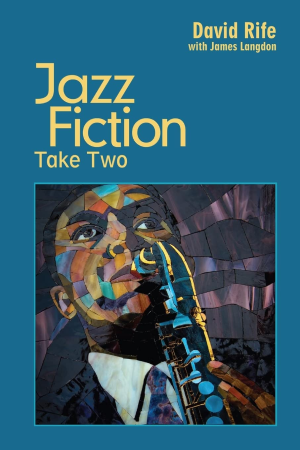
Excerpts from David Rife’s Jazz Fiction: Take Two – Vol. 12: The influence of Billie Holiday in the literature of jazz

In this edition, Rife writes about the influence of Billie Holiday in several short stories and novels.

...

Community Bookshelf, # 1

“Community Bookshelf” is a twice-yearly space where writers who have been published on Jerry Jazz Musician can share information about their recently authored books.

...

A Collection of Jazz Poetry — Summer, 2023 Edition

This edition features poetry chosen from hundreds of recent submissions, and from a wide range of voices known – and unknown – to readers of these collections.  The work is unified by the poets’ ability to capture the abundance of jazz music, and their experience with consuming it.

...

Reminiscing in Tempo: “What are 3 or 4 of your favorite jazz recordings of the 1940’s?”

. .   Photo William Gottlieb/Library of Congress Charlie Parker is frequently found on the lists of noted critics and musicians answering the question, “What are 3 or 4 of your favorite jazz record recordings of the 1940’s?”  This photograph by William Gottlieb was taken at Carnegie Hall in New York, c. 1947 . __________ … Continue reading “Reminiscing in Tempo: “What are 3 or 4 of your favorite jazz recordings of the 1940’s?””

...

Site Archive

Your Support is Appreciated

Jerry Jazz Musician has been commercial-free since its inception in 1999. Your generous donation helps it remain that way. Thanks very much for your kind consideration.

Click here to read about plans for the future of Jerry Jazz Musician.

In this Issue

Announcing the publication of Volume II of Kinds of Cool: An Interactive Collection of Jazz Poetry...The second edition of Kinds of Cool, an Interactive Collection of Jazz Poetry has just been published, and is now available for sale on Amazon.com. This edition is dedicated to publishing women poets from all over the world who share their personal passion for and relationship with jazz music, and the culture it interacts with. With a foreword by Allison Miller, one of the world’s most eminent jazz drummers, and photography and design by Rhonda R. Dorsett

Poetry

Andrzej Barabasz, CC BY-SA 4.0, via Wikimedia Commons
21 jazz poems on the 21st of June, 2026...An ongoing series designed to share the quality of jazz poetry continuously submitted to Jerry Jazz Musician. In this edition…An eclectic mix of poetic styles and subjects display a collective love for the music and culture at the core of this creative community.

The Sunday Poem

The Sunday Poem: “Refreshing My Education” by Mike Mignano

The Sunday Poem is published weekly, and strives to include the poet reading their work...

Mike Mignano reads his poem at its conclusion.


Click here to read previous editions of The Sunday Poem

Performance

The performance poet Emmett Wheatfall
A Letter from the Editor…On “The Weary Blues: Celebrating Langston Hughes and the Harlem Renaissance”A brief recap and photos of the February 7, 2026 Jerry Jazz Musician-produced performance of “The Weary Blues: Celebrating Langston Hughes and the Harlem Renaissance”

Interview

photo of Billie Holiday by William Gottlieb/Library of Congress
Interview with Paul Alexander, author of Bitter Crop: The Heartache and Triumph of Billie Holiday’s Last Year...The author talks about the courage and resilience of the legendary Lady Day, and his outstanding book – an inspirational and revealing portrait of an iconic American, that, like his subject, exudes compassion and creative soul.

Feature

Book Excerpt from Crossing Bar Lines: The Politics and Practices of Black Musical Space, by James Gordon Williams...In this entire chapter from his book, the author explains how the trumpeter Ambrose Akinmusire expresses his political views and lived geography through his improvisational music, notably his critique of police brutality that has, as he states, “become a leitmotif throughout my albums.”

Poetry

Yves Moch, CC BY-SA 3.0, via Wikimedia Commons
“Remembering Sonny Rollins” – a collection of poetry...Over the years, many poems have been published on Jerry Jazz Musician that were written in reverence of the man we refer to simply as “Sonny.” In the wake of his death, many more have been written. The unsolicited poems making up this collection is an example.

Short Fiction

Photo by Johannes Schröter, via Pexels
Short Fiction Contest-winning story #71 – “Where the Music Wasn’t Allowed,” by Jane McCarthy....The award-winning story is about a young immigrant growing up in Southern California to the sound of music seeping into his family’s home from an upstairs neighbor’s piano, shaping the boy’s understanding of memory, family, belonging, and the improvisational ethics of music.

Interview

photo by Warren Fowler
Interview with John Gennari, author of The Jazz Barn: Music Inn, the Berkshires, and the Place of Jazz in American Life...The author discusses how in the 1950s the Berkshires – historic home to the likes of Hawthorne, Melville, Wharton, Rockwell, and Tanglewood – became a crucial space for the performance, study, and mainstreaming of jazz, and eventually an epicenter of the genre’s avant-garde.

Short Fiction

“The Cartographer” – a short story by Timothy Collyer...The story – a finalist in the recently concluded 71st Short Fiction Contest – is a work of speculative fiction about the gentrification of memory. It follows a recovering alcoholic who is building a guerrilla augmented-reality map of Philadelphia’s lost jazz history—specifically the “Blue Note” era of the 1960s—while battling a corporate developer who wants to sanitize the data for tourists.

Feature

Memorable Quotes: Abraham Lincoln..."I like to see a man proud of the place in which he lives..."

Community

Ricky Esquivel/Pexels.com
Community Bookshelf #6...“Community Bookshelf” is a twice-yearly space where writers who have been published on Jerry Jazz Musician can share news about their recently authored books and/or recordings. This edition includes information about books published within the last six months or so (September, 2025 – March, 2026)

Poetry

Six poets write eight poems (in the midst of our times)...Poets within this community of writers are feeling this moment in time, and writing about it. This collection is another example.

Short Fiction

collage by Judith Beth Cohen
“The Eating Club” – a short story by Judith Beth Cohen...The story – a short-listed entry in the recently concluded 71st Short Fiction Contest – centers on an affair two writers share around gourmet meals.

Poetry

Peter Buitelaar, CC BY 2.0 , via Wikimedia Commons
Two Poems for Miles Davis

Feature

photo by Laura Stanley via Pexels.com.
Trading Fours, with Douglas Cole, No. 28: “Little Samba”...Trading Fours with Douglas Cole is an occasional series of the writer’s poetic interpretations of jazz recordings and film. This edition is based largely on a documentary – They Shot the Piano Player – about Tenório Junior, a Latin jazz musician who only produced one album (1964) before he “disappeared” in 1976.

Short Fiction

kaboompics.com/via Pexels
“The title is not included in the word count…” – a short story by Scott Cash...In this story – a finalist in the 71st Short Fiction Contest – self-ordained genius Kevin feels that life has been against him. But he thinks he has discovered a loophole and can exceed the 3,000 word limit for a writing contest by utilizing the title. When this is thwarted, he instead lands upon footnotes as a way to exceed the limit. This story is a celebration of writers and the act of writing.

Jazz History Quiz

Besides being one of the first to be influenced by Charlie Christian (pictured), in 1944 this electric guitarist employed Charlie Parker on his first recording date and eventually led an R&B-oriented group “The Rockin’ Highlanders” that featured the saxophonist Red Prysock. Who is he?

Poetry

Poems on Charlie “Bird” Parker (inspired by a painting by Al Summ) – an ekphrastic poetry collection...A collection of 25 poems inspired by the painting of Charlie Parker by the artist Al Summ.

Contributing Writers

Click the image to view the writers, poets and artists whose work has been published on Jerry Jazz Musician, and find links to their work

Coming Soon

New poetry collections, Jazz History Quiz, and lots of short fiction; poetry; photography; interviews; playlists; and much more in the works...

Interview Archive

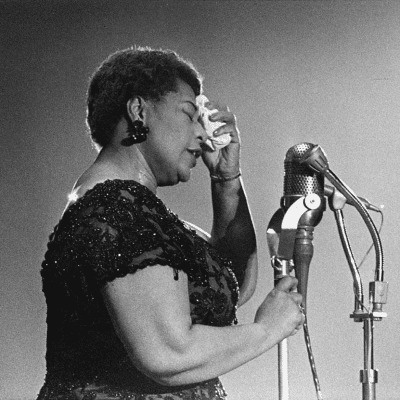
Ella Fitzgerald/IISG, CC BY-SA 2.0 , via Wikimedia Commons
Click to view the complete 25-year archive of Jerry Jazz Musician interviews, including those recently published with Judith Tick on Ella Fitzgerald (pictured),; Laura Flam and Emily Sieu Liebowitz on the Girl Groups of the 60's; Tad Richards on Small Group Swing; Stephanie Stein Crease on Chick Webb; Brent Hayes Edwards on Henry Threadgill; Richard Koloda on Albert Ayler; Glenn Mott on Stanley Crouch; Richard Carlin and Ken Bloom on Eubie Blake; Richard Brent Turner on jazz and Islam; Alyn Shipton on the art of jazz; Shawn Levy on the original queens of standup comedy; Travis Atria on the expatriate trumpeter Arthur Briggs; Kitt Shapiro on her life with her mother, Eartha Kitt; Will Friedwald on Nat King Cole; Wayne Enstice on the drummer Dottie Dodgion; the drummer Joe La Barbera on Bill Evans; Philip Clark on Dave Brubeck; Nicholas Buccola on James Baldwin and William F. Buckley; Ricky Riccardi on Louis Armstrong; Dan Morgenstern and Christian Sands on Erroll Garner; Maria Golia on Ornette Coleman.