
“Stars” – a short story by Ronald McGuire

July 22nd, 2024

.

.

“Stars” was a finalist in our recently concluded 65th Short Fiction Contest, and is published with the consent of the author.

.

.

___

.

.


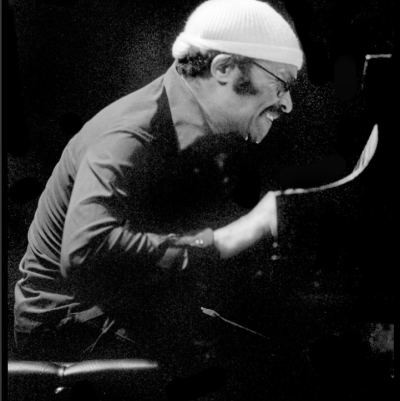
photo of Derek Bailey via Wikipedia/CC BY-SA 3.0
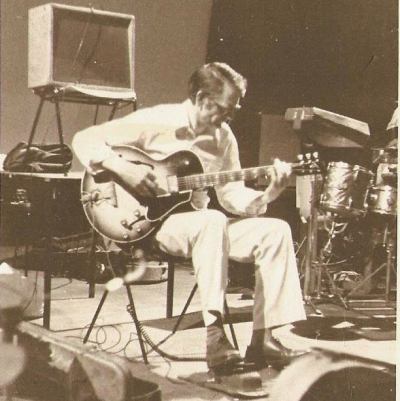
photo via Wikimedia Commons

.

Stars

by Ronald McGuire

.

…..He was the unlikeliest of rockstars. No producer believed in him, he didn’t look the part, tall and gangly, a mop of early-grey hair and a face that seldom smiled.

…..      But when he played his guitar, people paid attention. It was a beautiful instrument, a ‘36 Martin D-45, acquired second hand at what was nevertheless an extraordinary price. He mortgaged his future against its strings, and in time he was rewarded for his regard of its beauty.

…..   He had friends he believed in, and they believed in him. Together they formed a band, a band that changed everything. He wrote heartfelt ballads and soaring anthems. They toured the world until their name became household and their bonds became frayed.

…..        The drummer lost his way in a forest of bad decisions, wasting his wealth on vices easy for a poor kid from the sticks to pick up when the money piled high.

…..     The keyboardist lost interest; his voice was never heard. He knew how much better they could be if only they’d listen.

…..     The bassist felt disposable. It ate at him until his soul digested his spirit and all that remained was jealousy and anger.

…..       The rhythm guitarist, bored to indifference, wanted to burn it all down. He found beauty in destruction, the implosion of a high-rise.

…..       On the eve of their last performance, the guitar, the rockstar’s talisman, went missing.  He had other guitars, of course, but the Martin might as well have been his right hand. He’d put so much into it, had gotten so much from it, its absence filled his life with emptiness and anguish.

…..    Accusations flew, threats were made, and the audience went home angry and unfulfilled. The keyboardist gave his ultimatum, the rhythm guitarist kept his silence, the drummer had a drink, and the bass player made a confession. The guitar was gone, he told them, destroyed in a fit of jealous rage.

…..      They went their separate ways for years, and over time their animus grew as their songs faded. It didn’t take long in the grand scheme.

…..      The rockstar found a kind of peace, laced with sorrow and regret, different from the life he thought he’d have, the antithesis of stardom.

…..     He landed in a home near a cliff overlooking the northern sea, embraced by dark winters and cold isolation until he met his wife and started a family. He wrote music he thought would never be played, words never sung. Then, on a birthday like the others he didn’t celebrate, the boys in the band, seasoned by the years, arrived with an opportunity for forgiveness he could not ignore.

…..        It was the drummer’s doing, long after sobriety had taken hold. He knew the bassist had lied all those years ago when he found the rockstar’s guitar in the window of a thrift shop. The instrument showed its age, mistreated by lesser musicians who knew nothing of its provenance, or its power. The bandmates arrived together at the cottage on the cliff, their gift wrapped in a simple cotton cloth.

…..        Though it couldn’t be played, the rockstar wept when they handed him the instrument. He knew it was his the moment he touched it. He embraced the faded wood, missing frets, broken steel strings hanging down like tattered cobwebs in the corner of an ancient ruin. He clutched its neck like a long-lost lover.

…..    The rockstar placed the beaten relic in a rack in the corner for safekeeping, walked back into his room made for music, his old friends following, and took a seat on a low stool. Instruments sat akimbo, longing for someone to bring order to their chaos, to make use of their ivory, wood and brass, strings of gut and steel. They settled in, and began to play.

….. They wrote nothing, made no recording, earned no money, acquired nothing material from their efforts, yet gained everything they were lacking. Their reunion expunged the reasons for their collective absence, revealing again the reason they’d come together in the first place. They’d found their way back to their brotherhood, a family once again.

…..   Year after year after that day they gathered in the crowded room and played whatever they wanted, remembering all they’d done or failed to do.

…..Once they’d all passed from this life to the next, their children would do as they had done, gathering in the room, choosing the things they held most dear, making music for everyone and no one.

…..  The old guitar, restored to its former glory, held in its place of honor, began again to fade away. The rockstar had kept it close at hand, to cradle and strum in those soft-lit hours at the end of life, then set it down one last time. Its luster faded, the depth of its meaning lost on the next generation.

…..     Decades passed, then on a birthday celebrated like all the others, a great-grandchild of the rockstar spied the guitar in its corner, near forgotten. She was drawn to its aging beauty, compelled to touch it, at first gingerly, a light stroke of a single finger. A tone soft as velvet came forth, filling her senses. She caressed the fine twisted steel of its strings and heard another note that pleased her. She threw the strap over her shoulder, strummed a few chords, and sang a simple song, unaware generations of her family that lived in the music had come forward with the sound to witness her beginning.

…..     Some would say she was likely to be a star, she looked the part.

…..     She had a quick smile, a finespun voice, and a family history of music and love and overcoming. She grew to play guitar as a bird’s wings grow to play the air.

…..     Before long, her friends, cousins of a sort, followed suit, each taking up an instrument to complement the other, and they formed a band.

…..        A band that would change everything, not with stadiums filled with adoring fans, but with music and words filled with the power born of history and fate, love and forgiveness. The guitar carried her forward, elevated her artistry, and the spirits of the departed that dwelled in the music bore witness to it all, and waited with infinite patience for the next reunion.

.

.

___

.

.

 

Ronald McGuire is an author and journalist whose work has appeared in Winning Writers, The Dead Mule School of Southern Literature, Flash Fiction Magazine and Cinnabar Moth Literary Collections, among others. He holds degrees in Comparative Literature and Journalism from the University of Georgia. His first novel, Beyond Tomorrow’s Sun,  will be published December 2024 by Cinnabar Moth Publishing. Find out more at ronaldmcguire.com.

.

___

.

.

Click here to help support the continuing publication of Jerry Jazz Musician, and to keep it ad and commercial-free (thank you!)

.

Click here to read “Ballad,” Lúcia Leão’s winning story in the 65th Jerry Jazz Musician Short Fiction Contest

Click here to read more short fiction published on Jerry Jazz Musician

Click here to read The Sunday Poem

Click here for information about how to submit your poetry or short fiction

Click here for details about the upcoming 67th Jerry Jazz Musician Short Fiction Contest

Click here to subscribe to the Jerry Jazz Musician quarterly newsletter (it’s free)

.

.

.

___

.

.


Jerry Jazz Musician…human produced (and AI-free) since 1999

.

.

.

Share this:

Comment on this article:

Your email address will not be published. Required fields are marked *

Site Archive

Your Support is Appreciated

Jerry Jazz Musician has been commercial-free since its inception in 1999. Your generous donation helps it remain that way. Thanks very much for your kind consideration.

Click here to read about plans for the future of Jerry Jazz Musician.

In this Issue

Announcing the publication of Volume II of Kinds of Cool: An Interactive Collection of Jazz Poetry...The second edition of Kinds of Cool, an Interactive Collection of Jazz Poetry has just been published, and is now available for sale on Amazon.com. This edition is dedicated to publishing women poets from all over the world who share their personal passion for and relationship with jazz music, and the culture it interacts with. With a foreword by Allison Miller, one of the world’s most eminent jazz drummers, and photography and design by Rhonda R. Dorsett

Poetry

photo of Shelly Manne by William Gottlieb/Library of Congress
21 jazz poems on the 21st of May, 2026...An ongoing series designed to share the quality of jazz poetry continuously submitted to Jerry Jazz Musician. In this edition…An array of poetic styles communicate personal reverence for and experiences with jazz music, and its cherished musicians.

The Sunday Poem

photo via FBA Mastery

The Sunday Poem: “Traces” by Jason Youngclaus

The Sunday Poem is published weekly, and strives to include the poet reading their work...

Jason Youngclaus reads his poem at its conclusion.


Click here to read previous editions of The Sunday Poem

Interview

photo of Billie Holiday by William Gottlieb/Library of Congress
Interview with Paul Alexander, author of Bitter Crop: The Heartache and Triumph of Billie Holiday’s Last Year...The author talks about the courage and resilience of the legendary Lady Day, and his outstanding book – an inspirational and revealing portrait of an iconic American, that, like his subject, exudes compassion and creative soul.

Poetry

Yves Moch, CC BY-SA 3.0, via Wikimedia Commons
“Remembering Sonny Rollins” – a collection of poetry...Over the years, many poems have been published on Jerry Jazz Musician that were written in reverence of the man we refer to simply as “Sonny.” In the wake of his death, many more have been written. The unsolicited poems making up this collection is an example.

Short Fiction

Photo by Johannes Schröter, via Pexels
Short Fiction Contest-winning story #71 – “Where the Music Wasn’t Allowed,” by Jane McCarthy....The award-winning story is about a young immigrant growing up in Southern California to the sound of music seeping into his family’s home from an upstairs neighbor’s piano, shaping the boy’s understanding of memory, family, belonging, and the improvisational ethics of music.

Interview

photo by Warren Fowler
Interview with John Gennari, author of The Jazz Barn: Music Inn, the Berkshires, and the Place of Jazz in American Life...The author discusses how in the 1950s the Berkshires – historic home to the likes of Hawthorne, Melville, Wharton, Rockwell, and Tanglewood – became a crucial space for the performance, study, and mainstreaming of jazz, and eventually an epicenter of the genre’s avant-garde.

Poetry

photo by Tsutumu Takasu/via Flicker/CC BY 2.0
“Cajun Glory” – a prose poem by Robert Alan Felt

Community

Ricky Esquivel/Pexels.com
Community Bookshelf #6...“Community Bookshelf” is a twice-yearly space where writers who have been published on Jerry Jazz Musician can share news about their recently authored books and/or recordings. This edition includes information about books published within the last six months or so (September, 2025 – March, 2026)

Poetry

Six poets write eight poems (in the midst of our times)...Poets within this community of writers are feeling this moment in time, and writing about it. This collection is another example.

Short Fiction

“You Don’t Know What Love Is”- a short story by L.F. Graubard...A recovering junkie jazzman in a Starbucks time slips through the key years that fed his addiction — 1967 R&B and jazz gigs, ’69 biker bars, ’71 methadone hustles, ’79 script scams — before landing in the Narco Farm, where music, Sonny Rollins, and Secretariat crack his heart open. A fractured, noir confession about love, dope, and improbable grace.

Poetry

Peter Buitelaar, CC BY 2.0 , via Wikimedia Commons
Two Poems for Miles Davis

Feature

photo by Laura Stanley via Pexels.com.
Trading Fours, with Douglas Cole, No. 28: “Little Samba”...Trading Fours with Douglas Cole is an occasional series of the writer’s poetic interpretations of jazz recordings and film. This edition is based largely on a documentary – They Shot the Piano Player – about Tenório Junior, a Latin jazz musician who only produced one album (1964) before he “disappeared” in 1976.

Short Fiction

“From Ingenue to Earth Mother” – a short story by Lisa Grunberger...The story – a short -listed entry in the recently concluded 72nd Jerry Jazz Musician Short Fiction, centers on a couple who “get” each other from the beginning, but who can’t seem to make a life together.

Poetry

art by Marsha Hammel
“Learning the Alphabet of the Blues” – a poem by Mary K O’Melveny...A poem from Kinds of Cool: An Interactive Collection of Jazz Poetry, Vol. II

Short Fiction

Alejandro Aznar/via Pexels.com
“Down at the Crossroads” – a short story by David Rudd...In this story – a finalist in the recently concluded 71st Jerry Jazz Musician Short Fiction Contest – a jazz composer hears a lone fiddler play a tune that enters his head and won’t leave it, like a virulent earworm, wrecking his playing, his friendships, and indeed, his life, until he finally finds a way to remove it.

Feature

photo via Wikimedia Commons
Memorable Quotes: Two, by Edward R. Murrow…

Feature

photo via Wikipedia
“Two Famous Johns” – a true jazz story by Bob Hecht...The writer remembers an evening in New York’s Half Note in 1964 when he witnessed a John Coltrane performance that was also attended by the pop singer Johnny Mathis

Poetry

Haiku: Musings – by Connie Johnson...Exploring segments of the world of jazz – in three suites of vivid haiku poetry…

Jazz History Quiz

photo of "Hot Lips" Page by William Gottlieb
Jazz History Quiz #187...This trumpeter began his career in California, where he organized a big band that had a residency in China in 1934, and, during a trip through Kansas City in 1936, was invited to join Count Basie’s orchestra, replacing “Hot Lips” Page (pictured). Who is he?

Feature

“Bohemian Spirit” – A Remembrance of 1970’s Venice Beach, by Daniel Miltz...The writer recalls 1970’s Venice Beach, where creatives chased a kind of freedom that didn’t fit inside four walls…

Feature

Boris Yaro, CC BY 4.0, via Wikimedia Commons
“The Bowie Summer” – a personal memory, and how art can fundamentally reshape identity, by G.D. Newton-Wade

Poetry

Poems on Charlie “Bird” Parker (inspired by a painting by Al Summ) – an ekphrastic poetry collection...A collection of 25 poems inspired by the painting of Charlie Parker by the artist Al Summ.

Feature

Albert Ayler’s Spiritual Unity – A Classic of Our Time, and for All Time – an essay by Peter Valente...On the essence of Albert Ayler’s now classic 1964 album…

A Letter from the Publisher

The gate at Buchenwald. Photo by Rhonda R Dorsett
War. Remembrance. Walls.
The High Price of Authoritarianism– by editor/publisher Joe Maita
...An essay inspired by my recent experiences witnessing the ceremonies commemorating the 80th anniversary of liberation of several World War II concentration camps in Germany.

Interview

Interview with Tad Richards, author of Listening to Prestige: Chronicling its Classic Jazz Recordings, 1949 – 1972...Richards discusses his book – a long overdue history of Prestige Records that draws readers into stories involving its visionary founder Bob Weinstock, the classic recording sessions he assembled, and the brilliant jazz musicians whose work on Prestige helped shape the direction of post-war music.

Contributing Writers

Click the image to view the writers, poets and artists whose work has been published on Jerry Jazz Musician, and find links to their work

Coming Soon

An interview with Paul Alexander, author of Bitter Crop: The Heartache and Triumph of Billie Holiday's Last Year; New poetry collections, Jazz History Quiz, and lots of short fiction; poetry; photography; interviews; playlists; and much more in the works...

Interview Archive

Ella Fitzgerald/IISG, CC BY-SA 2.0 , via Wikimedia Commons
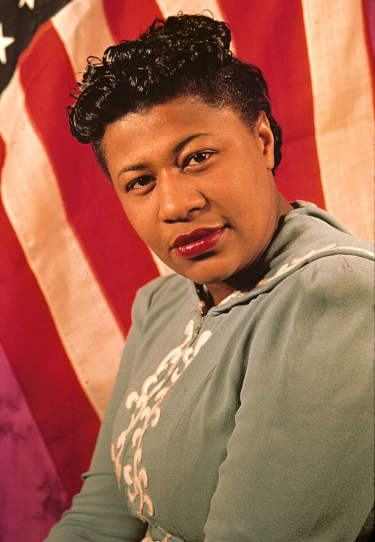
Click to view the complete 25-year archive of Jerry Jazz Musician interviews, including those recently published with Judith Tick on Ella Fitzgerald (pictured),; Laura Flam and Emily Sieu Liebowitz on the Girl Groups of the 60's; Tad Richards on Small Group Swing; Stephanie Stein Crease on Chick Webb; Brent Hayes Edwards on Henry Threadgill; Richard Koloda on Albert Ayler; Glenn Mott on Stanley Crouch; Richard Carlin and Ken Bloom on Eubie Blake; Richard Brent Turner on jazz and Islam; Alyn Shipton on the art of jazz; Shawn Levy on the original queens of standup comedy; Travis Atria on the expatriate trumpeter Arthur Briggs; Kitt Shapiro on her life with her mother, Eartha Kitt; Will Friedwald on Nat King Cole; Wayne Enstice on the drummer Dottie Dodgion; the drummer Joe La Barbera on Bill Evans; Philip Clark on Dave Brubeck; Nicholas Buccola on James Baldwin and William F. Buckley; Ricky Riccardi on Louis Armstrong; Dan Morgenstern and Christian Sands on Erroll Garner; Maria Golia on Ornette Coleman.