
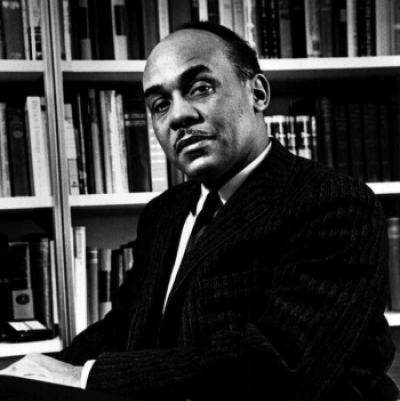
A Black History Month Profile: An interview with Ralph Ellison biographer Arnold Rampersad

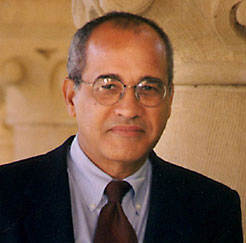
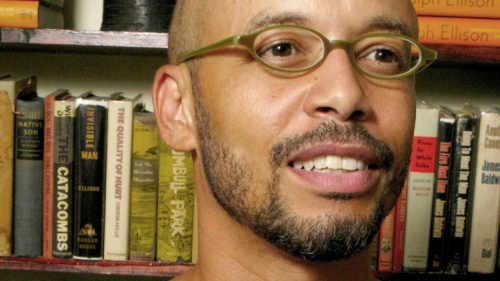
Ralph Ellison biographer Arnold Rampersad talks about the complex life of the author of Invisible Man, the celebrated work that focuses on racial and economic issues of mid-20th century America

...

February 15th, 2023
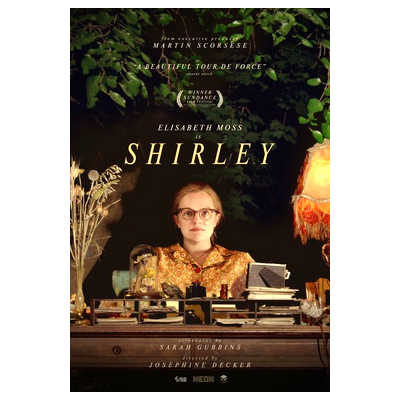
“Ralph Ellison’s 4-second Appearance in Shirley” — film criticism by John Kendall Hawkins

Hawkins examines the relationship between the characters portrayed in the 2020 film Shirley, and the missed opportunity to include Ralph Ellison in the story

...

July 13th, 2021

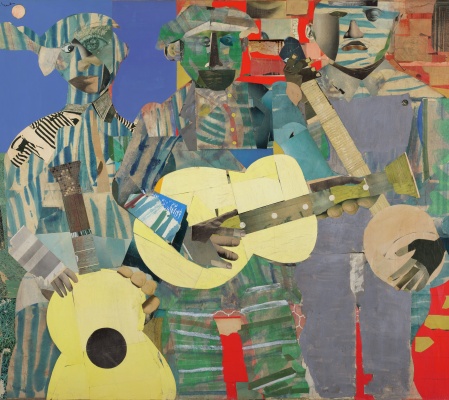
Interview with Mary Schmidt Campbell, author of An American Odyssey: The Life and Work of Romare Bearden

Mary Schmidt Campbell, author of .An American Odyssey: The Life and Work of Romare Bearden,discusses the remarkable life of this important American artist in a Jerry Jazz Musician interview.

...

March 9th, 2019

A Roundtable conversation — “Religion ‘around’ Langston Hughes, Billie Holiday and Ralph Ellison”

. .     . …..While Langston Hughes, Billie Holiday and Ralph Ellison are not known as being “religious” figures, they have, in a way, become “sacred” figures. Revered, iconic and inspirational, their essential work contributed mightily to the creative climate of twentieth-century America, and did so in the midst of complex and evolving religious … Continue reading “A Roundtable conversation — “Religion ‘around’ Langston Hughes, Billie Holiday and Ralph Ellison””

...

January 7th, 2019

Ralph Ellison’s record collection

In a wonderfully entertaining and informative 2004 New Yorker piece titled “Ralph Ellison’s Record Collection,” Richard Brody reminds us of the Invisible Man author’s passion for jazz music — what he referred to as “American music” — and of his somewhat controversial (for the time) opinion of the musicians coming up.  While often revering the music of Armstrong, Ellington, and Lester Young (and who can blame him?), of Charlie Parker’s music, he wrote “there is in it a great deal of loneliness, self-deprecation and self-pity,” and, in a letter to friend Albert Murray following a 1958 Newport Jazz Festival performance, described Miles Davis as “poor, evil, lost little Miles Davis.”  He famously characterized bebop as “a listener’s music” that “few people are capable of dancing to it” — although this critique was probably more of a lament of a lost culture. 

But the crux of the story is not Ellison’s opinion about music, rather the recordings he collected, reported by Brody as

...

September 12th, 2018

On the Influence of Albert Murray

One of my more interesting experiences as publisher of Jerry Jazz Musician was producing a series of interviews that focused on the work of the novelist Ralph Ellison. Invisible Man was a favorite novel of mine as a young man, but it wasn’t until I reread it in the 1990’s before I began to understand the enormity of its cultural significance. At that time, Ellison’s second (and unfinished) novel Juneteenth was being published, and a variety of books on Ellison were released at the same time – among them Living with Music, a collection of Ellison’s writings on jazz music edited by Columbia University scholar Robert O’Meally, and Trading Twelves: The Selected Letters of Ralph Ellison and Albert Murray.

...

October 2nd, 2013

Historic Harlem Tour

Although it only encompasses about six square miles, the New York City neighborhood of Harlem has played a central role in the development of American culture. Originally rural farmland, then an affluent suburb, since 1911 Harlemhas been predominantly an African American community. Its residents havehad a disproportionately large impact on all aspects of American culture,leaving their mark on literature, art, comedy, dance, theater, music, sports, religion and politics.

...

March 18th, 2013

The Ralph Ellison Project — Arnold Rampersad, author of Ralph Ellison: A Biography

Ralph Ellison is justly celebrated for his epochal novel Invisible Man, which won the National Book Award in 1953 and has become a classic of American literature. But Ellison’s strange inability to finish a second novel, despite his dogged efforts and soaring prestige, made him a supremely enigmatic figure. In Ralph Ellison: A Biography, Arnold Rampersad skillfully tells the story of a writer whose thunderous novel and astute, courageous essays on race, literature, and culture assure him of a permanent place in our literary heritage.

...

August 20th, 2007

The Ralph Ellison Project: Robert O’Meally, editor of Living With Music, discusses Invisible Man author Ralph Ellison

While Ralph Ellison will forever be best remembered as author of the classic American novel of identity, Invisible Man, he also contributed significant essays on jazz that stand as compelling testaments to his era. His work included an homage to Duke Ellington, stinging critiques of Charlie Parker and Miles Davis, and recognition of the changing-of-the-guard taking place at Harlem’s Minton’s in the 1940’s. He wrote on musical topics from flamenco to Charlie Christian, and from Jimmy Rushing to Mahalia Jackson.

...

August 20th, 2002

The Ralph Ellison Project: interview with Lawrence Jackson, author of Ralph Ellison: Emergence of Genius

Author, intellectual and social critic, Ralph Ellison was a pivotal figure in American literature and history, and arguably the father of African-American modernism. Universally acclaimed for Invisible Man, a masterpiece of modern fiction, and more recently for the posthumously edited and published Juneteenth, Ellison was recognized with a succession of honors, including the 1953 National Book Award.

Lawrence Jackson’s Ralph Ellison: Emergence of Genius is the first thoroughly researched biography of Ellison.

...

July 8th, 2002

Conversations with Gary Giddins: on Ralph Ellison

Village Voice writer Gary Giddins, winner of the National Book Critics Circle Award, and who is the country’s preeminent jazz critic, joins us in a June 21, 2002 conversation about Invisible Man author Ralph Ellison.

...

June 21st, 2002

Interview with Hazel Rowley, author of Richard Wright: The Life and Times

The child of the fundamentalist South with an eighth-grade education, a self-taught intellectual in the working-class Communist Party of the 1930s, a black man married to a white woman, and an expatriate in France after World War II, Richard Wright was always an outsider. He went well beyond the limits of the times in which he lived, and sought to reconcile opposing cultures in his work.

“How the hell did you happen?” the Chicago sociologist Robert Park once asked Wright. In Richard Wright: His Life and Times, biographer Hazel Rowley shows how, chronicling with the dramatic drive of a novel Wright’s extraordinary journey from a sharecropper’s shack in Mississippi to international renown as a writer, fiercely independent thinker, and outspoken critic of racism.

...

May 28th, 2002

The Ralph Ellison Project: Horace Porter, author of Jazz Country: Ralph Ellison in America

The first book to reassess Ralph Ellison after his death and the posthumous publication of Juneteenth, his second novel, Jazz Country: Ralph Ellison in America explores Ellison’s writings and views on American culture through the lens of jazz music.

In Jazz Country, Porter addresses Ellison’s jazz background, including his essays and comments about jazz musicians such as Louis Armstrong, Duke Ellington, and Charlie Parker. Porter further examines the influences of Ellington and Armstrong as sources of the writer’s personal and artistic inspiration and highlights the significance of Ellison’s camaraderie with two African American friends and fellow jazz fans — the writer Albert Murray and the painter Romare Bearden.

...

April 15th, 2002

The Ralph Ellison Project: filmmaker Avon Kirkland discusses the author of Invisible Man

Filmmaker Avon Kirkland’s career as a chemist was cut short by his desire to create social change. The path he chose led to filmmaking, and along the way he has profiled great men, among them Booker T. Washington and Thurgood Marshall.

His latest film is on Ralph Ellison, the great American writer whose classic book of identity, Invisible Man, stands as a monument in literature. Ellison’s wide range of intellectual breadth and profundity surprised even Kirkland, and is documented in Ralph Ellison: An American Journey, the Sundance Film Festival nominated film that has found an audience via PBS.

...

February 15th, 2002

The Ralph Ellison Project: Poet Michael Harper on Ralph Ellison

Brown University professor Michael Harper, the first Poet Laureate of the State of Rhode Island, shares his personal perspectives on Ralph Ellison.

...

January 24th, 2002

The Ralph Ellison Project: Stanley Crouch discusses Invisible Man author Ralph Ellison

Stanley Crouch is an essayist, poet, former musician, jazz critic and author of the novel Don’t the Moon Look Lonesome. He is outspoken, controversial, clever, and right more often than many seem willing to admit. He is also a very thoughtful admirer of Invisible Man author Ralph Ellison, whose work and friendship touched Crouch enough that, when asked if he considered Ellison a mentor, without hesitation answered “Yes!” Crouch takes part in a very lively conversation about Ellison and a variety of associated topics, including Charlie Parker, and music’s place in American ritual.

...

September 14th, 2001

The Ralph Ellison Project: Albert Murray, author of Trading Twelves: The Selected Letters of Ralph Ellison and Albert Murray

When Albert Murray arrived at Tuskeegee Institute in 1935, Ralph Ellison was an upperclassman who was, in Murray’s words, “dressed like a ‘Joe College’ right out of Esquire magazine.” According to Murray, Ellison “represented the type of aspirations that I had been expecting for myself.”

While their paths split geographically, the two kindled an emotional and intellectual friendship that gained momentum during the era of Ellison’s creative peak, when his timeless novel of identity Invisible Man was being written, distributed, reviewed, and rewards reaped upon. They honored successes, encouraged intellectual growth, and shared a deep love of music. They were best friends.

...

August 29th, 2001

The Ralph Ellison Project: Literary Executor John Callahan is interviewed about the author of Invisible Man

Being named literary executor of any writer’s estate would be quite an honor, let alone if the writer whose works you now caretake is Ralph Ellison, author of one of the 20th century’s greatest novels, Invisible Man. For long time Ellison friend John Callahan, “It was a challenge, and it was intimidating, exhilirating…”

Among the work left for Callahan was editing Ellison’s long awaited second novel, released as Juneteenth in 1999.

...

July 18th, 2001

Site Archive

Your Support is Appreciated

Jerry Jazz Musician has been commercial-free since its inception in 1999. Your generous donation helps it remain that way. Thanks very much for your kind consideration.

Click here to read about plans for the future of Jerry Jazz Musician.

In this Issue

A collection of poetic responses to the events of 2025...Forty poets describe their experiences with the tumultuous events of 2025, resulting in a remarkable collection of work made up of writers who may differ on what inspired them to participate, but who universally share a desire for their voice to be heard amid a changing America.

The Sunday Poem

photo by Garry Knight/CC BY 2.0

”Six String Sizzle” by Ian Mullins

The Sunday Poem is published weekly, and strives to include the poet reading their work...

Jerry Jazz Musician editor Joe Maita reads Ian Mullins’ poem at its conclusion


Click here to read previous editions of The Sunday Poem

Interview

photo by Warren Fowler
Interview with John Gennari, author of The Jazz Barn: Music Inn, the Berkshires, and the Place of Jazz in American Life...The author discusses how in the 1950s the Berkshires – historic home to the likes of Hawthorne, Melville, Wharton, Rockwell, and Tanglewood – became a crucial space for the performance, study, and mainstreaming of jazz, and eventually an epicenter of the genre’s avant-garde.

Poetry

photo of Red Allen by William Gottlieb/Library of Congress
21 jazz poems on the 21st of February, 2026...An ongoing series designed to share the quality of jazz poetry continuously submitted to Jerry Jazz Musician. This edition features poets – several new to readers of this website – writing about their appreciation for the music, how it shows up in their daily lives, and displaying their reverence for the likes of Billy Strayhorn, Joe Henderson, Ernestine Anderson, Miles Davis, Louis Armstrong and Red Garland.

Feature

photo by Laura Stanley via Pexels.com.
Trading Fours, with Douglas Cole, No. 28: “Little Samba”...Trading Fours with Douglas Cole is an occasional series of the writer’s poetic interpretations of jazz recordings and film. This edition is based largely on a documentary – They Shot the Piano Player – about Tenório Junior, a Latin jazz musician who only produced one album (1964) before he “disappeared” in 1976.

Poetry

photo by Lorie Shaull/CC BY 4.0
“Poetry written in the midst of our time” – Vol. 2...Poets within this community of writers are feeling this moment in time, and writing about it...

Poetry

photo via Wikimedia Commons
“Empire State of GRIME” – a poem by Camille R.E....The author’s free-verse poem is written as an informal letter to tourists from a native New Yorker, (and sparing no bitter opinion).

Short Fiction

photo via Freerange/CCO
Short Fiction Contest-winning story #70 – “The Sound of Becoming,” by J.C. Michaels...The story explores the inner life of a young Southeast Asian man as he navigates the tension between Eastern tradition and Western modernity.

Poetry

art by Martel Chapman
"Ancestral Suite" - A 3-Poem Collection by Connie Johnson...The poet pays homage to three giants of mid-century post-bop jazz – Booker Ervin, Lou Donaldson, and Little Jimmy Scott

Feature

“Bohemian Spirit” – A Remembrance of 1970’s Venice Beach, by Daniel Miltz...The writer recalls 1970’s Venice Beach, where creatives chased a kind of freedom that didn’t fit inside four walls…

Feature

Boris Yaro, CC BY 4.0, via Wikimedia Commons
“The Bowie Summer” – a personal memory, and how art can fundamentally reshape identity, by G.D. Newton-Wade

Poetry

photo via NOAA
“Taking The Littlenecks” – a prose poem by Robert Alan Felt...Expressing the joy and sorrow of life at age 71 with grace, wisdom, and appreciation.

Short Fiction

photo by Iryna Olar/pexels.com 
“The Fading” – a short story by Noah Wilson...The story – a finalist in the recently concluded 70th Short Fiction Contest – examines the impact of genetic illness on a family of musicians and artists.

Poetry

Poems on Charlie “Bird” Parker (inspired by a painting by Al Summ) – an ekphrastic poetry collection...A collection of 25 poems inspired by the painting of Charlie Parker by the artist Al Summ.

Short Fiction

Davidmitcha, CC BY-SA 3.0 , via Wikimedia Commons
“Blue Monday” – a short story by Ashlee Trahan...The story – a finalist in the recently concluded 70th Short Fiction Contest – is an imagining of a day in the life of the author’s grandfather’s friendship with the legendary Fats Domino.

Poetry

National Archives of Norway, CC BY 4.0 , via Wikimedia Commons
“Wonderful World” – a poem by Dan Thompson

A Letter from the Publisher

The gate at Buchenwald. Photo by Rhonda R Dorsett
War. Remembrance. Walls.
The High Price of Authoritarianism– by editor/publisher Joe Maita
...An essay inspired by my recent experiences witnessing the ceremonies commemorating the 80th anniversary of liberation of several World War II concentration camps in Germany.

Jazz History Quiz

photo by Mel Levine/pinelife, CC BY 2.0, via Wikimedia Commons
Jazz History Quiz #186...While he had a long career in jazz, including stints with, among others, Coleman Hawkins, Roy Eldridge, Sonny Stitt and Stan Getz, he will always be remembered primarily as the pianist in Charlie Parker’s classic 1947 quintet. Who is he?

Playlist

“Darn! All These Dreams!” – a playlist by Bob Hecht...In this edition, the jazz aficionado Bob Hecht’s 13-song playlist centers on one tune, the great Jimmy Van Heusen/Eddie DeLange standard, “Darn That Dream,” with the first song being a solo musician recording and each successive version adding an instrument.

Poetry

Wikimedia Commons
“Dorothy Parker, an Icon of the Jazz Age” – a poem by Jane McCarthy

Short Fiction

“The Mysterious Axeman’s Jazz” – a story by Ruth Knafo Setton...Upon returning from the horrors of World War II to post-war New Orleans, a trumpeter learns of a dark secret that reveals how his family fought their own evil, and uses jazz to bury the ghosts of war and reclaim the light through music.

Feature

photo via Wikimedia Commons
Memorable Quotes – Lawrence Ferlinghetti, on a pitiable nation

Short Fiction

photo by Bowen Liu
“Going” – a short story by D.O. Moore...A short-listed entry in the recently concluded 70th Jerry Jazz Musician Short Fiction Contest, “Going” tells of a traumatic flight experience that breaks a woman out of her self-imposed confines and into an acceptance that she has no control of her destiny.

Community

Nominations for the Pushcart Prize L (50)...Announcing the six writers nominated for the Pushcart Prize v. L (50), whose work appeared on the web pages of Jerry Jazz Musician or within print anthologies I edited during 2025.

Interview

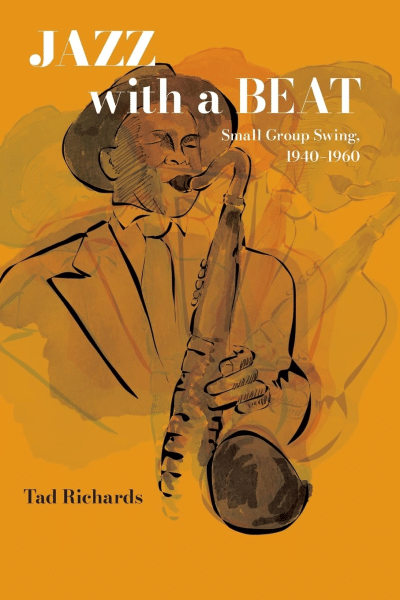
Interview with Tad Richards, author of Listening to Prestige: Chronicling its Classic Jazz Recordings, 1949 – 1972...Richards discusses his book – a long overdue history of Prestige Records that draws readers into stories involving its visionary founder Bob Weinstock, the classic recording sessions he assembled, and the brilliant jazz musicians whose work on Prestige helped shape the direction of post-war music.

Poetry

“Still Wild” – a collection of poems by Connie Johnson...Connie Johnson’s unique and warm vernacular is the framework in which she reminds readers of the foremost contributors of jazz music, while peeling back the layers on the lesser known and of those who find themselves engaged by it, and affected by it. I have proudly published Connie’s poems for over two years and felt the consistency and excellence of her work deserved this 15 poem showcase.

Feature

Albert Ayler’s Spiritual Unity – A Classic of Our Time, and for All Time – an essay by Peter Valente...On the essence of Albert Ayler’s now classic 1964 album…

Community

Community Bookshelf #5...“Community Bookshelf” is a twice-yearly space where writers who have been published on Jerry Jazz Musician can share news about their recently authored books and/or recordings. This edition includes information about books published within the last six months or so (March, 2025 – September, 2025)

Contributing Writers

Click the image to view the writers, poets and artists whose work has been published on Jerry Jazz Musician, and find links to their work

Coming Soon

An interview with Paul Alexander, author of Bitter Crop: The Heartache and Triumph of Billie Holiday's Last Year; New poetry collections, Jazz History Quiz, and lots of short fiction; poetry; photography; interviews; playlists; and much more in the works...

Interview Archive

Ella Fitzgerald/IISG, CC BY-SA 2.0 , via Wikimedia Commons
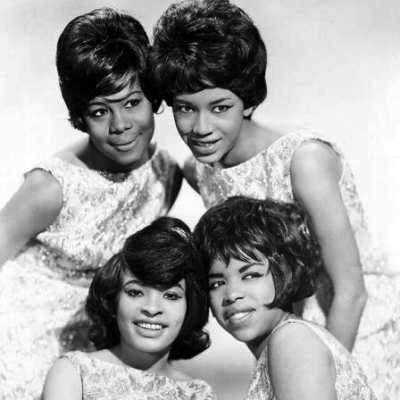
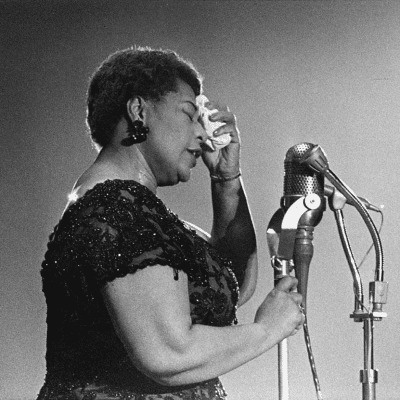
Click to view the complete 25-year archive of Jerry Jazz Musician interviews, including those recently published with Judith Tick on Ella Fitzgerald (pictured),; Laura Flam and Emily Sieu Liebowitz on the Girl Groups of the 60's; Tad Richards on Small Group Swing; Stephanie Stein Crease on Chick Webb; Brent Hayes Edwards on Henry Threadgill; Richard Koloda on Albert Ayler; Glenn Mott on Stanley Crouch; Richard Carlin and Ken Bloom on Eubie Blake; Richard Brent Turner on jazz and Islam; Alyn Shipton on the art of jazz; Shawn Levy on the original queens of standup comedy; Travis Atria on the expatriate trumpeter Arthur Briggs; Kitt Shapiro on her life with her mother, Eartha Kitt; Will Friedwald on Nat King Cole; Wayne Enstice on the drummer Dottie Dodgion; the drummer Joe La Barbera on Bill Evans; Philip Clark on Dave Brubeck; Nicholas Buccola on James Baldwin and William F. Buckley; Ricky Riccardi on Louis Armstrong; Dan Morgenstern and Christian Sands on Erroll Garner; Maria Golia on Ornette Coleman.