
.
.
“Stone Walls of Connecticut” was a finalist in our recently concluded 65th Short Fiction Contest, and is published with the consent of the author.
.
.
___
.
.
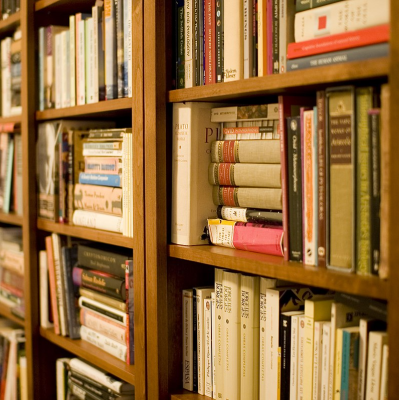
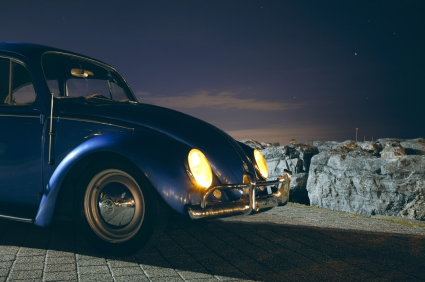
photo via Negative Space
.
.
Stone Walls of Connecticut
by Michele Herman
.
…..Sunday evening, late winter: a lull within a lull. We were in my father’s green Beetle on our way to the Good Earth. The car was fitted with an adjustable spotlight that stuck up through the roof. Dad drilled a hole and installed one each time he bought a new car so he could see addresses when he was making house calls at night. Driving into town, sitting in my usual spot right behind him, my brother Charlie next to me behind Mom, I felt safely tucked inside a giant miner’s hat.
…..At my friend BethAnn’s house they had Sunday dinner and said grace. At my house we recited one thing we learned that day, and on Sundays we went out for Chinese. In her house, they put butter on bologna sandwiches. In our house we were against the John Birch Society. Dad said that even though they had a phone number you could call and get a recording called “Let Freedom Ring,” they hated freedom. He said I should stay away from people whose cars had a bumper sticker that read “Support Your Local Police,” because this was their secret code for anti-Communism and anti-Semitism. He said I would understand it better when I was older, and I believed him, even though everyone else I knew either never heard of the John Birch Society or seemed to tolerate it just fine.
…..The streetlights came on and I watched them change color as they passed the tinted strip at the top of the windshield. Some turned purple while others turned yellow, which meant there was a different kind of gas sealed inside the bulb.
…..We passed Falcone Way, and even Charlie knew to keep his trap shut. In our house, we weren’t allowed to buy Hunt’s catsup, Sunoco gas, or anything made by Knott’s Berry Farm. And we were never to play with Falcone kids, which was a problem because our town was so saturated with Falcones that they had both a Way and a Drive. John Birchers all.
…..I was hungry, but I would have happily kept riding around town watching the outdoors grow dim while the indoors slowly switched on. Our town was built on a series of ridges, and we lived up high, in an old house – a restored Victorian, Mom called it. Most other people lived in houses she called raised ranches.
…..We were studying chickens and eggs in science, which made for lots of new knowledge. Every morning a different kid got to scratch a hole at the top of an egg with a compass point so we could all peer in. We studied how a blob of orange yolk slowly turned into a chick. If you cracked the egg on your day, you ruined the whole thing.
…..Most of the kids were too careful and took forever to get a hole made. Some didn’t mind if they cracked the egg as long as they got a laugh. A couple of the boys were so annoying that you just knew they liked having an excuse to mess up.
…..The inside of the car was hard for Charlie. His teachers complained that he didn’t pay attention. I thought we all paid attention; it was just that we paid attention to different things. He had brought his superball and was starting to play with it, which he knew he wasn’t supposed to do in the car. Superballs were a new invention. Little boys all over town were yelling “Rrrricochet Rrrrabit!” and slamming their balls with all their might, gleefully watching them ping against Formica and plate glass and take off anew. They never seemed to lose velocity, though Dad told us that wasn’t true – even marbled multi-color superballs like Charlie’s obeyed the laws of physics.
…..At first he just tossed it in little arcs from one hand to the other. But he kept spreading his hands wider and tossing the ball harder. It was only a matter of time before temptation got the better of him and the ball hit the ceiling or the back of Mom’s seat or worse. What if it hit Dad right on the bald spot? I shook my head. I shook my finger.
…..In the front seat they hadn’t noticed. They were murmuring parent talk and then falling silent. Mom used to be a dancer when she still lived in the city and now was doing the choreography for a local dance troupe and looking for a space for their spring recital. Dad was half-listening the way he did when he heard the word dance or art.
…..I got an idea. Both of them were always telling us how we had to weigh our actions against the greater good. I motioned for Charlie to toss me the ball. He was delighted until I sat on it.
…..“Hey, Merry just -” he started, and then he realized that he couldn’t get me in trouble without getting himself in much bigger trouble.
…..There was a chain of command. Dad insisted on a smooth ride. He delegated to Mom, Mom to me. “Ixnay, Merry,” she said. I tried never to let things escalate to the point where she called me by my official name, which was Merriam. Charlie was officially Webster, but went by his middle name, because it was just too hard to call a little kid Webster. He had a fit if you called him Web.
…..As a consolation I organized a street-name game to keep him busy. “I’m rocks and you’re people,” I said.
…..“I don’t want to be people,” he said. “People are hard. I want to be rocks.”
…..“Spoken like a boy,” said Mom.
…..So I gave him rocks and I took people, and in about two minutes I had eight points: Ellen, Noah’s, Cindy, Scott, Anderson, Frank, Murray, Clara. He got West Rocks and Midrock.
…..I knew he would catch up soon. Our town was full of rocks. It was a hard place to pitch a tent or plant a tulip bulb. Even if you tried to leave by driving to the far eastern edge of town, you hit the rocky beaches of Long Island Sound.
…..My favorite thing about the rocks was the stone walls. We lived in an old part of town that still had a farm and a lot of woods, and almost every property was marked by a stone wall. Ours was crude – just round rocks of any size piled loosely on top of each other. But the ones closer to main roads were masterpieces. Before the eggs we had done a unit on geology, so I knew they were mostly granite, and that granite came from magma deep in the earth. The only thing that held the walls together was the way they were fitted. Sometimes there would be a big round rock like the ones around our house, but it would be perfectly embedded in smaller, flatter stones and somehow the edges and the top of the wall were perfectly squared off. Bits of quartz and feldspar and mica sparkled in the sun. Sometimes at night if a streetlamp shone in just the right way, I could catch a flash of mica, my favorite.
…..The next street was Johnstone. We both called “mine!”
…..Charlie grabbed onto Mom’s seat and stuck his body into the space between her and Dad to plead his case.
…..Dad was growing his sideburns to please Mom. They reminded me of newly seeded grass on the side of a hill. He said what all fathers who grew up in the Depression said at times like this. “Whoever said life is fair?”
…..It was a long drive into town. I got Heather and Hazel; Charlie got Rockledge and Stone Crop. I gave him Blue Mountain. He made a case for Starlight, claiming stars were made of minerals, but Dad chimed in and said they were mostly helium and hydrogen. Charlie’s belly growled and we all laughed. We were on the last big ridge now, approaching the flat part of town, and the streets were named for other things.
…..“Next time,” I said, “we’re doing trees and birds.”
…..We were all quiet for a while, thinking our own thoughts. Then out of nowhere Dad said, in his urgent doctor voice, “Grab the red notebook.” I caught sight of him in the mirror. He was doing his scary eagle eye, the way he did when something was amiss in the physical or chemical world, something too subtle for anyone else to notice. It was different from the face we called his smart face, the one he made when people behaved stupidly, when a patient came in and said “hey doc, I got better so I threw away the rest of the ampicillin.” He yelled so loud at the stupid things people do that you’d think it would put an end to stupidity on the planet once and for all.
…..“What red notebook?” Mom asked. I thought she knew exactly what red notebook but didn’t want to give him the satisfaction.
…..“Gas gauge is broken,” he announced. “It hasn’t budged all day.”
…..Charlie and I knocked heads leaning forward but there was nothing to see except the needle sitting at about the one-quarter mark.
“Take it in to Barney’s tomorrow,” said Mom.
“Just grab the notebook out of the glove compartment, now. I need you to do a little math.”
For a while, he had been conducting an experiment. He was a big believer in high-test gas and he wanted to prove that it was better even in a little car like a Beetle.
…..Mom opened the glove compartment and fished out the little notebook. Dad had doctor’s handwriting but he was tidy at the same time, and I could see his precise columns full of numbers. Mom sighed a gigantic sigh. She liked to say that she and math did not get along.
…..“Just pull over, for Christ sake,” she said. “It’s dark. I can’t make heads or tails of this.”
…..“All I need you to do is find the most recent date at the bottom on the left-hand side and read me the number on the right.”
…..“Why don’t you just pull over and do it yourself?”
…..“Fine, if you’d like to be the one to find a tow truck here on Aiken Street on a Sunday night at the dinner hour.”
…..And right on schedule, like lab-test results, the bug made a series of pitiful sputtering sounds and the engine went dead.
…..Usually he talked us through any procedures he did involving driving. We already knew how to find the dipstick and check the oil. But now he didn’t say anything, not even “I told you so.” He was too busy turning things off on the dashboard and turning on the spotlight, which ran on a separate battery, and steering. We were almost at the bottom of the steep hill of Aiken Street, which met up with Route 7, which was the road that became Main Street, where the Good Earth was. Route 7 ran alongside a skinny river and was a mix of old houses, factories and stores. There was a plumbing place called the Royal Flush, a Chicken Delite, the local paper’s headquarters. It was a road that I liked during the day but that made me lonely at night. It also had an entrance to the Merritt Parkway, which Charlie liked to call the Merry Parkway, and a bunch of gas stations. There was a light at the bottom of the hill and it was just turning green. Even Charlie was sitting completely still. I put my hand on his bony knee and he put his on mine. We both squeezed.
…..Dad rolled down the window fast and stuck his arm out in a right-hand turn signal and while the light was still green he turned us hard onto Route 7.
…..“Good thing there’s a gas station right here,” chimed Charlie.
…..“Hush, Charlie,” said Mom. What loomed ahead on the right, within easy coasting distance, was the yellow diamond sign shot through with that beckoning red devil’s arrow: the forbidden Sunoco station. On the far side of Route 7, across two lanes of traffic in each direction, just beyond the Parkway exit ramp, was the Esso, with its round and friendly backward 3 for an E.
…..“Oh, Lord, it was a quiet Sunday evening and the fates had nothing better to do,” said Mom.
…..“Just pull into the Sunoco,” she begged. “Just this once. The final solution will not come just because you have two dollars’ worth of John Birch gas in your little tank. I think the democracy will hold.”
…..Dad surveyed his mirrors, then stuck his arm out behind Mom’s seat to look out the other side. As his head turned from this side to that, I thought the sideburns now looked like a pair of marching boots.
…..Charlie couldn’t help himself. He started to chant “Go, bug, go.”
…..“Quiet, Charlie,” said Dad. “Don’t break my concentration.”
…..“Don’t be a big shot,” Mom pleaded. “You know that ramp. You can’t see the traffic coming off that ramp. You complain about that ramp all the time.”
…..Sometimes I could read my father’s mind a little. Looking at the back of his head, I knew exactly what he was thinking: I am not foolhardy. Foolhardy is the last thing I am. He took another set of measurements in each direction, plotting velocities and tangents.
….. He stuck out his arm again and made a series of signals that somehow combined a left turn with a cop’s hand-up stop sign and a wagging “don’t you dare” finger. We were on flat ground and barely moving forward.
….. “Everybody stay put,” he commanded. He shifted into neutral, grabbed Mom’s hand and placed it on the steering wheel. She drove a Peugeot. Her hand with its small diamond wedding band and chapped skin looked all wrong on his steering wheel.
…..“Steer,” he said.
…..He opened his door, a tightly fitted, light little thing like the rest of the car; Dad didn’t like waste. We were the first family I knew to have a garbage disposal. He wouldn’t even buy pajamas that had a collar. He got out, slammed the door, leaned his weight against its side and pushed. She steered; what choice did she have? The Esso station, on the river side of Route 7 just a little bit beyond the Sunoco, sat on slightly lower ground. I read the familiar signs: Sperry Semiconductor, Jolly Roger Restaurant, To New Haven Enter Ahead.
…..“We don’t want your smelly old gas anyway, Mister John Birch Sunoco,” said Charlie, blowing a raspberry.
…..As we passed along the shoulder of the road, Dad supplementing the last of the car’s momentum with his pushing, the attendant at the Sunoco station looked up and noticed us. He actually scratched his head like Dagwood Bumstead. Charlie and I were still clutching each other’s knees. With my other hand I grabbed hold of the bug’s hanging vinyl strap.
…..It was very quiet on the road at this hour. Dad always said this was the most dangerous time of day, when visibility was poor but drivers didn’t realize it yet. It felt strange to be moving in a car with no motor noise and with Dad driving on the outside instead of the inside. Mom was leaning way over, clutching the steering wheel tight with both hands, her pocketbook still on her lap. A car came off the exit ramp, a blue Impala, the kind that looked like a grinning mouth full of braces, and the three of us sucked in our breath, but it turned the other way. Any second, he was going to have to instruct her on how to start the turn across Route 7. I dug my fingers into Charlie’s knee. He said ow and pushed me off.
…..Dad’s eyes were darting everywhere. I could see his breath through the open window. It was getting cold in the car. Mom was doing a good job, I thought. But Dad put his left hand on the little front window and reached in with his right. His arm groped around until it found the steering wheel.
…..“Have it your way,” Mom said, and straightened herself out. We were smack in the middle of Route 7, perpendicular to the traffic. I saw the white line disappear under us, as if we were a fraction: Mom and Dad over Charlie and me.
…..Dad had to start running because the road dipped slightly at the entrance to the Esso. I was contorting my whole body, foot pressing hard on an imaginary brake, all my muscles tightened to help Dad steer us to safety. We could always count on Charlie for sound effects – the K-K-K’s of machine-gun fire, long spitty bursts of car crashes. But when you really think you’re going to crash, you don’t make a sound.
…..With the car headed straight for the pumps and Dad’s face bright red and sweating under the fluorescent lights, Charlie and I both ran out of air and took a huge breath at the same time. Mom said “sh,” which I took for just another shushing sound until it stretched into “shit.” I had never heard her swear before. I was less shocked by the word than by how long she had kept it in. I imagined putting Dad’s stethoscope up to her chest and hearing the soft pumping sound of all the curses circulating inside her.
…..We didn’t crash. The ground leveled off, we slowed, Dad hopped back in, and then the car stopped, perfectly parallel to the front pump.
…..The attendant came out. Before he could say anything, Dad said what he always said: “Fill ‘er up high test.” He was gleeful. “Do I always steer us out of trouble, or do I always steer us out of trouble?” he asked no one in particular.
.
…..Charlie ordered pepper steak but said the meat tasted different than usual and kept spitting it out half-chewed. I had egg foo yung with slippery brown gravy. For my daily fact, I said that the yolk sac is a layer of tissue that grows over the yolk and protects the embryo from shock. On the way home we all complained the way we always did about that strange tight feeling in our jaws, which Dad said was from something harmless called MSG and would pass. He took a different route up different streets lined with different raised ranches, and Charlie got four more rock points but I still won. When we got home he marched up to his room in a sulk.
…..It was the mid-60’s, a time of marching. Dad believed he was keeping us safe from the march of the John Birch Society, with its plans to infiltrate the PTAs and Masonic Lodges of our town, fanning out to towns all over America. Every year he marched in our town Memorial Day parade with a new placard he made in his workshop in the basement. “If you really want to support your local police, read the Constitution.” The paper always described it as a political act. But I thought it was something else entirely, something like a form of survival.
…..It was the mid-60’s and things were bouncing off walls and a lot of people who had no temper at all a couple of years before were fuming all the time. There was even a new store called The Rage. It was downstairs from Ye Olde Ice Cream Parlor. Upstairs everything was pink and white and smelled like sugar. Everything downstairs was lit by black lights that made your teeth glow purple and smelled of burning incense. Downstairs was antiwar decals and shoulder bags with fringe a foot long and bell bottoms so wide you could hide a full-grown chicken in the legs.
…..As we drove I tried to get glimpses of the other families living inside the other houses.
…..BethAnn said that Volkswagens were both ridiculous and unsafe. She pronounced it the American way. In my family we said Folks-vahgen. BethAnn wanted to know what was wrong with supporting your local police, and I couldn’t really explain.
…..When there were no lights on in the living rooms, I waited for a good street lamp to light up a stone wall. You could look at a stone wall in a couple of ways. You could say that each stone was pinned into place for eternity by the ones around it. Or you could say that each stone depended on the ones around it. If the light was right and you looked hard enough, each stone gave off its own shine.
.
.
___
.
.

Michele Herman’s first novel, Save the Village (Regal House, 2022), was a finalist for the Eric Hoffer Prize. She’s also author of two poetry chapbooks from Finishing Line Press: Victory Boulevard (2018) and Just Another Jack: The Private Lives of Nursery Rhymes (2022). She was the 2024 recipient of the Subnivean Fiction Prize, judged by Gish Jen. In 2023, one of her poems was an honorable mention for the Robinson Jeffers Prize and another was a finalist in the Wergle Flomp Humor Poetry Contest. Her work has appeared in recent issues of Carve, Ploughshares, The Hudson Review, The Sun and many other journals. She’s a devoted teacher at The Writers Studio, a developmental editor, a writing coach, an award-winning translator of Jacques Brel songs, and an occasional columnist at The Village Sun and LitHub.
.
___
.
.
Click here to help support the continuing publication of Jerry Jazz Musician, and to keep it ad and commercial-free (thank you!)
.
Click here to read “Ballad,” Lúcia Leão’s winning story in the 65th Jerry Jazz Musician Short Fiction Contest
Click here to read more short fiction published on Jerry Jazz Musician
Click here to read The Sunday Poem
Click here for information about how to submit your poetry or short fiction
Click here for details about the upcoming 67th Jerry Jazz Musician Short Fiction Contest
Click here to subscribe to the Jerry Jazz Musician quarterly newsletter (it’s free)
.
.
.
___
.
.

Jerry Jazz Musician…human produced (and AI-free) since 1999
.
.
.