



.
.
New Short Fiction Award
Three times a year, we award a writer who submits, in our opinion, the best original, previously unpublished work.
Jon Zelazny of Los Angeles, California is the winner of the 57th Jerry Jazz Musician New Short Fiction Award, announced and published for the first time on July 6, 2021.
.
.
_____
.
.p
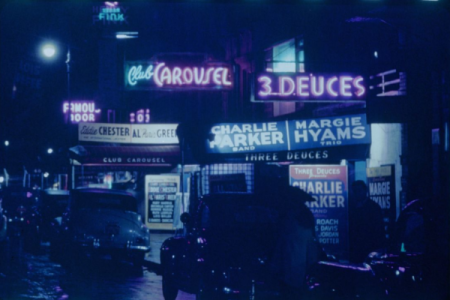
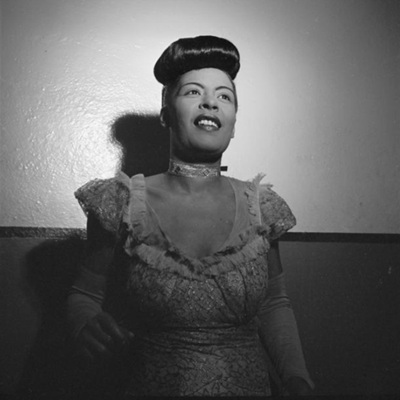
52nd Street, 1948/photo by William Gottlieb/Library of Congress
.
Constant At The 3 Deuces
by Jon Zelazny
.
…..In the closing weeks of 1949, the consensus of New York’s cognoscenti was unanimous: the American debut of London’s Sadler’s Wells Ballet was the triumph of the post-war era. The praise and attention lavished upon the visiting artists was unrelenting; the Yanks’ sudden passion for tutus, Tchaikovsky, and entrechat quatres bordered on obsession. And yet, three weeks into their engagement, with four performances at The Met remaining, their company’s esteemed music director and conductor Constant Lambert was bored to tears.
…..He appreciated the sold-out houses, rapturous applause, and swanky midnight dinners, but even the most gratifying routines could become a bloody treadmill, and nothing would ever really top that first curtain call of October 9th. Nor was he much enamored of the Big Apple. The Met itself was a dream of a venue, but the city’s pace of life was simply too relentless. And what did parties and famous faces mean to him these days? He’d done the rounds, as a wunderkind composer back in the Roaring Twenties, when people were so young and crazy and bursting with life, you couldn’t help but dive in. Thickened in middle-aged now, with his matinee idol looks a decade gone, Constant had been unceremoniously fired from the company he helped found, then brought back as a hired hand to whip the orchestra into touring readiness. Weary to the bone, he looked twenty years older than his current age of forty-three, and didn’t care to dash about for anyone. Rising at noon, he spent his New York afternoons composing limericks, or writing amusingly kvetchy letters to his wife Isabel, who he missed acutely. Their London flat was a pigsty, but God, they’d such fun, drinking and laughing their days away. And the looming prospect of riding America’s rails for six weeks touring the provinces made him faintly ill.
.
…..One night, desperately unable to sleep, he got up and dressed, went down to the street and flagged a cab. “52nd Street,” he told the driver.
…..It wasn’t far. Five minutes barreling north. “Where to, bud?”
…..The stout Englishman eyed the passing night spots and their bright flashing neon signs, but nothing stood out. “Where’s the snappiest music these days?”
…..The chap threw him an odd look, then abruptly pulled over opposite a nightclub entrance. “3 Deuces. Probably your best bet. More like ‘3 Spades’ though, if you know what I mean.”
…..Constant did not, but paid his fare and, with some difficulty, let himself out. The dapper, silver-headed walking stick he’d always toted as an affect was now a very necessary cane, and simply disembarking had him short of breath. Gathering his strength, he eyed a stand-up easel announcing The Bud Powell Trio. Sharply-attired folk loitered, with a particularly attractive young Negro couple by the door. Constant nodded hello as he tried to discern the activity within. “Are they any good?” he inquired, tapping the advert with the tip of his stick.
…..The young fellow told his girl to go buy him some cigarettes, then looked the rumpled butterball of a white man up and down. “You like jazz, man?” He was tall, cool, knowing.
…..“At best, it stands with the great works of any era. At worst, you can dance to it.”
…..The cool cat seemed impressed. By his accent, his gravel voice, and courtly bearing. “Don’t you worry, pop,” he chuckled. “This here ain’t no dance-a-thon.”
…..“Then I shall take the plunge. My name is Lambert.”
…..“Rollins.” Amused, he held the door and the foreigner hobbled in. A feral-looking doorman snapped his fingers for the dollar entry fee, but Rollins snapped back, indicating that the great white hunter was his guest.
…..The club was far smaller than Constant expected, just a long, narrow barroom that ended in an equally narrow performance space, where an audience of perhaps two dozen stood or sat nearly atop the performing jazzmen, a trio comprised of a pianist, upright bassist, and drummer. Three sailors and a pair of tipsy swells aside, everyone else in the room was black.
…..The music was a long, mantra-like excursion, and in less than two minutes Constant realized the pianist was a virtuoso beyond compare, and his sidemen not far behind. Why would such impossibly talented fellows play in this cramped speakeasy instead of the great palaces? Intrigued, he nudged his way to the bar, then rejoined Mr. Rollins with glasses of good Scotch.
…..As they toasted, the Bud Powell Trio broke into dueling fourths, all three players taking delight in the others’ solos. When it ended, their genteel drummer announced a set break. Patrons began to shuffle to and fro, and Rollins grinned at his guest. “What do you think?”
….. “Marvelous. Such energy. A bit mired in the past stylistically perhaps.”
….. “Say what? This the music of now, my man. The right now.”
…..“Is it so different from what Mr. Armstrong was offering a quarter century ago?”
….. His host laughed. “Oh, you one a’ them intellectual hepcats!” Constant laughed along, though wasn’t familiar with the term. “All respect to Brother Louis,” Rollins continued, “but beboppers don’t go for that chitlin’ shit.”
…..Constant lit a fag. He adored the Negro idiom, even when exact meanings eluded him. “He first came to London in ‘33. I saw him twice.”
…..“Damn. You old.”
…..“I wrote a glowing review for The Evening Standard.”
…..“No shit? You a critic, man?”
…..“I’ve done my time in the literary trenches. Got a book out of it at least.”
…..Rollins was suddenly more interested. “You gots to stick around, then. Bud Powell is it.”
…..Constant smiled. “An ardent fan.”
…..“I plays with him. He up there with Bird ‘n Diz. Hell, Monk hisself schooled him.”
…..More patois. Did Berlitz offer a phrase book for jive? A small table opened up, and they claimed it. Constant gratefully eased himself down while Rollins greeted the surrounding tables like the mayor, seemingly known to all. His girl returned with his cigs, irked over something, but the ballet man could barely decipher a word she said. When the combo reemerged from a back corridor, Rollins took Mr. Powell aside and excitedly indicated their visiting V.I.P., but the bandleader paid him no mind.
…..Undaunted, Rollins returned to the table and spoke into Constant’s ear. “Buncha us goin’ up to Bud’s afters, man. Feature, you wanna tag along?”
…..The composer was surprised, but flattered. It’d certainly be a change of pace. He smiled and nodded. The final set wore his patience some, though one number featured an agreeably sultry rhythm of African and Latin American texture. It was near three AM before the players called it a night, and 3 Deuces slowly disgorged its restless occupants back to the still-thronging sidewalk.
…..“All the good clubs done closed,” Rollins lamented, surveying the street. “Mostly strip joints now.”
…..“You’re an excellent guide, Mr. Rollins. I wish we’d met weeks ago.”
…..“My friends call me Sonny.”
…..“Because you’re so bright?”
…..Rollins mock-winced. “That joke old even for you!”
…..Three big cars arrived, enough to ferry the music men, and their dates, plus a lame old limey somehow absorbed by them while barely attracting a glance. Crammed in the back of a metallic blue Hudson, Sonny Rollins introduced his pals Tommy and Fats. At the wheel was Mr. Powell’s urbane drummer, Max.
…..The convoy headed north up one of the main avenues, block after block, store after store, with more people still up and about than any other city Constant had ever seen. Eventually, the lights and faces disappeared, and they rolled on past houses and buildings endlessly dark and empty. Coming upon an all-night liquor store, Sonny asked Max to pull over. He and Fats hopped out and returned some minutes later bearing bottles concealed in brown paper.
…..With the stop, they were last to arrive at the party, which they could already hear from the open windows of an upstairs flat as they climbed out of the Hudson. Constant considered the neighborhood. A few night owls out and about, but it was mostly quiet. “Where are we, Sonny?”
…..“Harlem.”
…..Harlem. A mythic place in his imagination: the great American nexus of music, literature, and painting. He expected it to look more like Paris, but it was the same as the rest of New York. Unhappily, there was no lift to the second floor. Constant balked at the stairs, but reckoned he’d come too far to beg off now. With difficulty, he made it up under his own steam, then limped, winded, down the corridor to a doorway where Sonny stood with the amazing Bud Powell.
…..“Bud, this here Mr. Lambert. Biggest music critic in London!”
…..Powell regarded the bulky, rumpled white man blankly. He was older than Sonny and his other friends, but not by much. “You know a dog suck my dick?”
…..Constant smiled at still another unfamiliar phrase, but Sonny winced. “C’mon, Bud, it’s cool.” He steered his friend inside, and Constant followed. The railroad flat’s furnishings were bare bones, but the living room was full of young folk, all laughing, drinking, and jiving. Powell passed through them like a spirit. He sat down at a battered upright piano and began to play. The effect was immediate: his guests all lowered their voices to give the genius some head space.
…..Sonny brought in tall bottles of beer and topped everyone off while Constant took a metal folding chair. Some youngsters were now peering and whispering about him. He waved jovially and turned his focus to the music. Powell was experimenting with clusters of dense triplets. Max the drummer joined in, rhythmically palming a hollow wooden box, until the pianist suddenly dropped his hands mid-phrase and spun on his stool toward Constant. “You a critic, man? What’s my weakness?”
…..All eyes shifted to the stranger, but the maestro didn’t bat an eye. “Melody.” Everyone turned back to Bud. “I know they can be cloying,” the Brit sympathized. “But an audience needs something to hang on to.”
…..The room was dead quiet. Who was this droopy walrus, with his funny movie-type voice?
…..Powell nodded. Intense, deadpan. “I show you what I do with melody.”
…..He began playing again. Only it wasn’t jazz, but a lush rendition of “Over the Rainbow,” the timbre all honey and MGM Technicolor. As the first verse closed, Powell began riffing off the familiar tune, taking faster, evermore complex improvisational detours, until his hands were moving over every octave, the main theme left forgotten in the dust. His acolytes whooped and cheered as his solo reached a climax, then he returned to the melody for a subtle close. Constant had rarely been as taken by anything in his life. “Bravo, Mr. Powell. Somewhere, Art Tatum is smiling.”
…..For the first time that night, Powell actually smiled himself. “Art is God.”
…..“And all Art is one.”
…..Powell chuckled, and thus relieved, the party resumed. The pianist arose from his stool, pulled a chair up beside Constant. “You know who else live by melody? My mama. I’s playin’ in a band, playin’ righteous stride and swing, but as the gigs went on, man, I started feelin’ like a marionette, doin’ that jive the same old way, like the boss man say. Then comes this cat, invites me to join his new combo. Modern jazz, he call it. ‘Come express what’s in your heart, brother. We ‘bout freedom, and pure emotion.’ That sound good to me, but Mama say, ‘Boy, you gone quit your job, what put food on your table, and clothes on your back?’ Mama practical that way. So I stays with my swing group, playin’ all them melodies the black folks like, only every day I’s dying a little more inside. Way I feature it, Mr. Lambert, a composer ain’t supposed to do what’s easy. What make people happy. Fuck people, man! Composer supposed to find whatever it is God want him to say. That’s his only job.”
…..The sentiment struck Constant like a sustaining chord. “You’re a wise young fellow, Bud. That’s a lesson some of us never learn.”
…..A new guest suddenly entered from the kitchen. He was big and loud and nattily attired, and went around the room laughing and teasing people, which they sort of laughed along with. When his gaze found the two composers, he acted all bamboozled, like a minstrel show coon. “Holy smoke! Cousin Bud, who dis lumpy ol’ cracker?”
…..The pianist seemed to shrivel. Constant was about to rise when Sonny stepped in. “Hey, Lon, this here Mr. Lambert. He writin’ a big article ‘bout Bud for all them English papers.”
…..“Article on Bud,” the man whooped. “Why he ain’t write no article ‘bout me?”
…..Sonny tried to grin him on. “He okay, Lon. We’s just sort of winding down here, see?”
…..“Windin’ down? Hell, my girl brung chicken, with biscuits ‘n gravy! Pour me one of them damn beers, Maxwell. Let’s get this jitterbug goin’!” The jazzmen and their gals tried to settle back, but the newcomer seemed intent on sucking up all the oxygen in the room. Lon was talking about someone who owed him money, only the cat had a gat, see, and blah blah blah.
…..Powell was muttering something. Constant turned to him. “I beg your pardon?”
…..“You know a dog suck my dick?”
…..Constant looked to Sonny. He’d heard it too. Looked concerned.
…..“A dog suck my dick,” Powell repeated. Then he said it again, a little louder, and a few more people heard him. Cousin Lon saw his audience was being distracted and he didn’t like it.
…..“What’s that, cuz?”
…..“Dog suck my dick.”
…..Lon threw his hands up. “Oh, we on that again?” He came and enunciated as though Powell were deaf. “Ain’t no fuckin’ dog, cuz! You know that.”
…..Sonny stepped closer. “Lon, man; he just need— ”
…..The tough whirled. “Siddown, Negro! You ain’t family!”
…..“You know a dog sucked my dick? A dog. A dog what suck my dick.”
…..Lon shook his head. “You know what they do in field hand days with a nigger gone simple? Dunk his head in the watering trough a couple ten times. How that sound, cuz?”
…..“A dog suck my dick.”
…..Sonny moved closer still. “Lon, man, you scarin’ him.”
…..“That be the motherfuckin’ point, Sonny. Help me get him in the kitchen.”
…..“Don’t touch— ”
…..“Don’t fuck with me, horn blower.”
…..“A dog sucked my dick!”
…..Easing off his chair, Constant sidestepped what looked to be the last seconds before the punch-up, and slid onto the piano stool. His mind’s eye was a perfect blank as his fingers reached the keys, but immediately on contact they began playing the opening of The Rio Grande.
…..Such a cliché, the mind immediately going to one’s “greatest hit,” yet it felt entirely true, the natural extension of his very musical core. Behind him, it took the room several seconds to discern this new presence filling the air, though it quickly proved exactly the needed distraction. Powell went silent, and Sonny backed away from cousin Lon, who just stared in bewilderment. Constant played on, and all conversation slowly ceased, the party becoming his audience. He hadn’t played the solo version in ages, but the arrangement came to his fingers in the moment. Gaining confidence, he began gravelly singing Sache Sitwell’s lyrics and calling out the orchestral colors: “By the Rio Grande/They dance no sarabande/On level banks like lawns above the glassy, lolling tide—Trumpets! Ta ta-ta ta ta-ta! Timpani! Bum bum bum bum—Nor sing they forlorn madrigals”
…..Should he continue? Why not? No one was protesting. He wasn’t sure he knew all fourteen minutes off the top of his head; thank God the Philharmonia had re-recorded it a year ago. The celebratory opening gave way to the more forlorn middle, and still the assembled beboppers remained silent, so on he went. A pungent scent arose: someone had unwrapped a stash of good local kif, and the youngsters were sparking up hand-rolled cigarettes.
…..As the final chordal sustain faded, Constant slowly revolved on the stool to face them, and was appropriately flattered by their wonderstruck faces. Considering he’d written the piece in partial tribute to the American Negro sound, it was the first time he’d ever performed it for a black audience.
…..“Who wrote that?” Sonny asked.
…..“He did,” Powell answered. He seemed to have regained his senses, and pointedly offered his guest a puff from his peace pipe. The obstreperous cousin Lon had mercifully departed.
…..Constant hesitated. He’d never been partial to the stuff. Then again, when in Rome… Taking it, he indicated thanks to all, and inhaled deeply.
…..The party segmented. The girls stuck to themselves, the boys huddled with their guest, everyone talking of composers and players, or what they’d done during the war. At some point around sunup, Constant excused himself to find the loo. Returning through the tiny kitchen, he found Sonny picking at the remains of Lon’s roast chicken. The younger man raised his beer bottle in salute. “You saved us a whole pack of trouble there, man.”
…..Constant nodded toward the living room. “He’s half-mad, then?”
…..“Ain’t his fault. Happened in Philly a few years back. Cop whacked him upside the head so hard, it fucked up his brain. Bud been in and out of them ‘psychiatric wards’ how many times, and still he ain’t fixed. I dunno; shootin’ ‘lectricity through a brother’s head? Don’t seem right.”
…..“What does he mean about the dog?”
…..“Damn ‘f I know. Some shit he reverts to when things get heavy. I mean, that ain’t even possible what he’s sayin’, right?”
…..“I should go, Sonny. I’ve an appointment this morning. Thank you so much for inviting me here. Is there anything I can do for you in return?”
…..“Yeah, man. Buy our record when it comes out. And tell your friends.”
.
…..He did have an appointment, but couldn’t for the life of him recall what it was. The kif had clouded things a bit, and he was tired to the bone, but damn it, this was Harlem. God knew when or if he’d be back, or whether he’d ever have another chance to make a sacred pilgrimage.
…..Hailing a cab, he told the driver his destination, and the fellow deposited him at the hopelessly Dickensian corner of 142nd Street and Lenox Avenue, where Constant stared up at the boarded-up second floor windows of the original Cotton Club. One of those places where life-changing, history-making art had been unveiled for a lucky few: Duke Ellington’s Mood Indigo, Sophisticated Lady, and A Rhapsody of Negro Life. It must have been like seeing Stravinski’s Rite of Spring debut at the Theatre de Champs-Elysees. Or Margot Fonteyn dancing at The Met, for that matter. That Constant himself had had a hand in such a moment was astounding. And dismaying… for who remembered the faceless conductors of such things? He’d put in a hell of a lot of work for the dubious distinction of footnote status.
…..Someone poked him in the back. He turned to find a shanty Irish copper breezily twirling his cosh. “Are y’ lost, grandad?”
.
…..Back in mid-town, he quaffed his usual steak ‘n eggs with a Bloody Mary at the diner, then shuffled on down the block, barely able to see straight, and came upon a very irate David Webster waiting in his building’s foyer. “Good morning, Mr. Lambert. Did you forget your lecture this morning to the Kips Bay Ladies’ Auxiliary?”
…..Ah, yes. He knew there’d been something. “Sorry, old boy. Things come up, you know.”
…..“I have the distinct impression, Lambert, you’re already half in the bag. I should warn you there is a growing consensus among the board that things might go easier were you to return to London immediately following our New York appearances.”
…..“Ah. Sacking me again, eh? How many times does this make, Mr. Webster?”
…..“Our final decision, sir, depends in some measure on your attitude.”
…..Constant squinted knowingly at him. “Did you know a dog sucked my dick?”
…..The executive’s mouth fell open in shock. “What did you say?”
…..“A dog sucked my dick. And you can do the same, you ridiculous little poof.”
.
…..Thirty hours later, he was back home with Isabel and his beloved kitties. Mercifully unbound of the slave shackles of company service. A free man, eager to compose.
.
.
___
.
.
photo by Abraham Ross

A graduate of Syracuse University, and the U.S. Army Airborne School, Jon Zelazny spent his early career in Hollywood, most notably a decade in creative support of acclaimed German director Uli Edel. His short stories have been published in Opossum, The Binnacle, Literary e-clectic, Econo Clash Review, Switchblade, and Thuglit.
More fun facts at jonzelazny.com
.
.
___
.
.
.
.
.













Brilliant! Have loved the amazing talents of Mr. Zelazny for decades.
Yeah, man. Buy his writings as they come out. And tell your friends.
Bravo, Mr. Z
What a great story! Thank you.
Loved it! I am new to the talents of Jon but his words bring me right into the story and make me feel like I am experiencing the same emotions as the characters. Can’t wait to read more works!