
Poetry by Susan Dale

August 22nd, 2006

____________________________


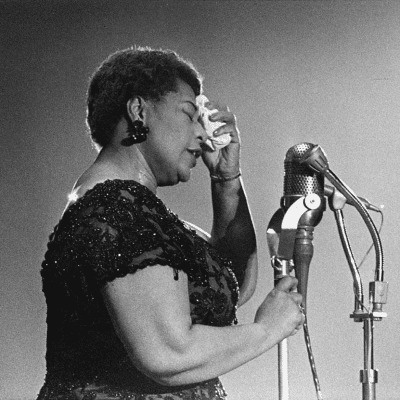
Nancy Wilson

Guess who I saw today

The last one left

To sing the scales from butterscotch tease

To the willows that wept

A slippery taunt, toffee sweet

A palette in verse

That black satin doll

Fancy Miss Nancy


Rhythms Of Life

The ferment of storm to seas
The seas’ mad tides
Our savage hearts to spawn
In the wild shoals of swollen rivers
Druid fires – spiraling discs
Raspy winds and blind/blue passions
Connections of time to stars
Of time to an avalanche
Shouts of wind
Drumbeats, flames, vapors rising
To the bright feet of the sun
Stampeding over our languid afternoons
The torrential songs of spring’s rebirth
Hands of alleluias – songs of alleluias
Bringing forth the rhythms of life
Shrieking, shouting, whistling,
Wailing, weeping
Howling, hailing, clapping, cursing
Mourning, raging, stomping, stamping
Keening with pain-to-the-bones acceptance

Rhythms that weave us in and out,
Among the tatters and tangles we trawl through
And trample over
To get to our days
Unraveling in the shadows of sundown
Revived in our dawns of alleluias
Galloping to glory
To our fervors

Beating the air with frantic wings
With restless wings
Beaming our beings
To the rhythms of life
The wings that shear through clouds
Through métiers of moonlight
Down a milky-way path
To step us onto the staircase
That spirals us to the stars


Billie


A deep savannah of velvet triumphs, Lady Day
Hiding in your ashes before dawn
Drowning in sad-soul rivers

In secret tunnels filled with night eyes
Were your roots planted
To dazzle your way
Through hazes of hideaway days

You carried the ferocity of strange fruit
To the healing bitterness of smoky niteries

In the dark you closed your windows to rain crying
But your soul picked clean anyway
By hawk-pimps that slithered in
With black shadows of night

Your songs scarred by white powders of pain

Upright, with regal grace
Gardenias that bled in your hair
And in your face a far-away look
Of borrowed time

What in your life, Billie, lives in hiding
Inside your furs
From the cold and the needle tracks?
How many hours did you listen for a lullaby
Or for compassion left by the side of a road?

Your songs soft as pearl light
Of aureoles murmuring through
Fronds of weeping willow trees

Imprints of pain piercing the dark

In hot-tub waters soaking off addictions
The liquid measure of your songs
Woman song___ spreading, teasing, cajoling

The weight of substance with the gentleness of feathers
The child that got his own and spent it, Lady Day


Requiem For the Music


Jazz was the first to go
Left as mysteriously as it came
Dark as night, soft as cotton
Slipping through the gray moss
Of the venerable old oaks that lined
The path where jazz was last heard
To be replaced with, and bleached out By Caucasian white-paste glib
Smooth and sliding over the notes
That once traveled from soul to mouth
To trumpet, to sax, to harmonica
To sing to our hearts

From soul to fingers, to piano,
To drums, to bass, to guitar
It was only, for god’s sake
The very crux of their beings
They gave us to be replaced by
The electronics that brushed away
The human imput, mixed as the music was,
Dubbed and dabbed at,
Voiced over … loops and digital
Slick tricks on recorders
Glibly sliding over the graves
Of Holiday, Armstrong, Coltrane, Ella and Miles.

Folk music? Last heard in Frisco
But left on a bell-ringing trolley
Down star-spangled hills
We followed behind in cable cars
Trying to catch up
But the music disappered in the fog That covered The Golden Gate
Back we went, lost as we were
To Haight Ashbury
But all that remained in the coffee shops
Were the echoes of notes
Once booming big with the protests
Of segregation and the Vietnam war

Dylan, Peter, Paul and Mary
Were blowing in the wind
Crosby, Stills and Nash
Last seen in O-H-I-O
Arlo Gutherie caught the train
They call the City of New Orleans
And Credence Clearwater, with all the Subtlety of a locomotive coming down the tracks,
Claimed he was no fortunate son.
Simon? Last seen on the bridge of Troubled waters, where he saw the Music going down for the third time
Gone is that cagey Wolfman Jack
Who played love songs for your sweetheart
Because you loved your sweetheart,
And Wolfman loved the music.
Wolfman?
He was bought by a radio station
That merged until it got to the Giantic size that required a thousand dollars a song to be paid
For requests on CD’s that cost
ten thousand dollars to make
CD’s owned by the record companies
That merged with TV Stations
Featuring only those under their contracts
TV stations merged with the newspapers That owned the movie companies
That never loved the movies
And didn’t love the music
But loved only the money that forged
And formatted the pop music
Which was the last to leave


Miles


Angry young lion with tawny mane
And your fierce eyes of rain that fell with swords
Your notes to gallop across continents
Stone bones and trumpet tongue
Lapping up lights
A pinnacle of the higest notes
And a hard, harsh night hushed
When your notes tripped down a path of whispers
Pensive sorrows; dark enigmas of heroin veins
Nostrils of cocaine, and an avalanche of notes
Painting funny valentines
Notes to penetrate our sleepy silences
Your roots of steel trawling through frenzied screams
And serpent’s dreams
From piercing eyes sewn with anger
Thread of tears, notes galloping to glory
Your profound pauses when time stood still
And you ravished the air with primal yearnings
And primeval howls
You tiptoed up a spiral staircase
To Stella by starlight
The tremor of far-away thunder
The golden pollen of your notes
Pulsating, pulsing, hanging in the air
Glowing soft as yesterdays
Pauses to dream in
The lightening of your life
The silences you came up on and shattered
You, the fierce dragon that ravaged kingdoms
With your foamy crescendos
At the far edges of far out
The hard lights, the diffused lights
And your shattered dreams
You, the sleek cat that blew torrential storms
And nobody, but nobody gonna’ pull your strings
You, the falcon prince of bleating notes, Miles


 

Share this:

2 comments on “Poetry by Susan Dale”

Comment on this article:

Your email address will not be published. Required fields are marked *

Site Archive

Your Support is Appreciated

Jerry Jazz Musician has been commercial-free since its inception in 1999. Your generous donation helps it remain that way. Thanks very much for your kind consideration.

Click here to read about plans for the future of Jerry Jazz Musician.

In this Issue

Announcing the publication of Volume II of Kinds of Cool: An Interactive Collection of Jazz Poetry...The second edition of Kinds of Cool, an Interactive Collection of Jazz Poetry has just been published, and is now available for sale on Amazon.com. This edition is dedicated to publishing women poets from all over the world who share their personal passion for and relationship with jazz music, and the culture it interacts with. With a foreword by Allison Miller, one of the world’s most eminent jazz drummers, and photography and design by Rhonda R. Dorsett

Poetry

Andrzej Barabasz, CC BY-SA 4.0, via Wikimedia Commons
21 jazz poems on the 21st of June, 2026...An ongoing series designed to share the quality of jazz poetry continuously submitted to Jerry Jazz Musician. In this edition…An eclectic mix of poetic styles and subjects display a collective love for the music and culture at the core of this creative community.

The Sunday Poem

The Sunday Poem: “Lennie Tristano” by Erren Kelly

The Sunday Poem is published weekly, and strives to include the poet reading their work...

Erren Kelly reads his poem at its conclusion.


Click here to read previous editions of The Sunday Poem

Performance

The performance poet Emmett Wheatfall
A Letter from the Editor…On “The Weary Blues: Celebrating Langston Hughes and the Harlem Renaissance”A brief recap and photos of the February 7, 2026 Jerry Jazz Musician-produced performance of “The Weary Blues: Celebrating Langston Hughes and the Harlem Renaissance”

Interview

photo of Billie Holiday by William Gottlieb/Library of Congress
Interview with Paul Alexander, author of Bitter Crop: The Heartache and Triumph of Billie Holiday’s Last Year...The author talks about the courage and resilience of the legendary Lady Day, and his outstanding book – an inspirational and revealing portrait of an iconic American, that, like his subject, exudes compassion and creative soul.

Feature

Book Excerpt from Crossing Bar Lines: The Politics and Practices of Black Musical Space, by James Gordon Williams...In this entire chapter from his book, the author explains how the trumpeter Ambrose Akinmusire expresses his political views and lived geography through his improvisational music, notably his critique of police brutality that has, as he states, “become a leitmotif throughout my albums.”

Poetry

Yves Moch, CC BY-SA 3.0, via Wikimedia Commons
“Remembering Sonny Rollins” – a collection of poetry...Over the years, many poems have been published on Jerry Jazz Musician that were written in reverence of the man we refer to simply as “Sonny.” In the wake of his death, many more have been written. The unsolicited poems making up this collection is an example.

Short Fiction

Photo by Johannes Schröter, via Pexels
Short Fiction Contest-winning story #71 – “Where the Music Wasn’t Allowed,” by Jane McCarthy....The award-winning story is about a young immigrant growing up in Southern California to the sound of music seeping into his family’s home from an upstairs neighbor’s piano, shaping the boy’s understanding of memory, family, belonging, and the improvisational ethics of music.

Interview

photo by Warren Fowler
Interview with John Gennari, author of The Jazz Barn: Music Inn, the Berkshires, and the Place of Jazz in American Life...The author discusses how in the 1950s the Berkshires – historic home to the likes of Hawthorne, Melville, Wharton, Rockwell, and Tanglewood – became a crucial space for the performance, study, and mainstreaming of jazz, and eventually an epicenter of the genre’s avant-garde.

Short Fiction

“The Cartographer” – a short story by Timothy Collyer...The story – a finalist in the recently concluded 71st Short Fiction Contest – is a work of speculative fiction about the gentrification of memory. It follows a recovering alcoholic who is building a guerrilla augmented-reality map of Philadelphia’s lost jazz history—specifically the “Blue Note” era of the 1960s—while battling a corporate developer who wants to sanitize the data for tourists.

Feature

Memorable Quotes: Abraham Lincoln..."I like to see a man proud of the place in which he lives..."

Community

Ricky Esquivel/Pexels.com
Community Bookshelf #6...“Community Bookshelf” is a twice-yearly space where writers who have been published on Jerry Jazz Musician can share news about their recently authored books and/or recordings. This edition includes information about books published within the last six months or so (September, 2025 – March, 2026)

Poetry

Six poets write eight poems (in the midst of our times)...Poets within this community of writers are feeling this moment in time, and writing about it. This collection is another example.

Short Fiction

collage by Judith Beth Cohen
“The Eating Club” – a short story by Judith Beth Cohen...The story – a short-listed entry in the recently concluded 71st Short Fiction Contest – centers on an affair two writers share around gourmet meals.

Poetry

Peter Buitelaar, CC BY 2.0 , via Wikimedia Commons
Two Poems for Miles Davis

Feature

photo by Laura Stanley via Pexels.com.
Trading Fours, with Douglas Cole, No. 28: “Little Samba”...Trading Fours with Douglas Cole is an occasional series of the writer’s poetic interpretations of jazz recordings and film. This edition is based largely on a documentary – They Shot the Piano Player – about Tenório Junior, a Latin jazz musician who only produced one album (1964) before he “disappeared” in 1976.

Short Fiction

kaboompics.com/via Pexels
“The title is not included in the word count…” – a short story by Scott Cash...In this story – a finalist in the 71st Short Fiction Contest – self-ordained genius Kevin feels that life has been against him. But he thinks he has discovered a loophole and can exceed the 3,000 word limit for a writing contest by utilizing the title. When this is thwarted, he instead lands upon footnotes as a way to exceed the limit. This story is a celebration of writers and the act of writing.

Jazz History Quiz

Besides being one of the first to be influenced by Charlie Christian (pictured), in 1944 this electric guitarist employed Charlie Parker on his first recording date and eventually led an R&B-oriented group “The Rockin’ Highlanders” that featured the saxophonist Red Prysock. Who is he?

Poetry

Poems on Charlie “Bird” Parker (inspired by a painting by Al Summ) – an ekphrastic poetry collection...A collection of 25 poems inspired by the painting of Charlie Parker by the artist Al Summ.

Contributing Writers

Click the image to view the writers, poets and artists whose work has been published on Jerry Jazz Musician, and find links to their work

Coming Soon

New poetry collections, Jazz History Quiz, and lots of short fiction; poetry; photography; interviews; playlists; and much more in the works...

Interview Archive

Ella Fitzgerald/IISG, CC BY-SA 2.0 , via Wikimedia Commons
Click to view the complete 25-year archive of Jerry Jazz Musician interviews, including those recently published with Judith Tick on Ella Fitzgerald (pictured),; Laura Flam and Emily Sieu Liebowitz on the Girl Groups of the 60's; Tad Richards on Small Group Swing; Stephanie Stein Crease on Chick Webb; Brent Hayes Edwards on Henry Threadgill; Richard Koloda on Albert Ayler; Glenn Mott on Stanley Crouch; Richard Carlin and Ken Bloom on Eubie Blake; Richard Brent Turner on jazz and Islam; Alyn Shipton on the art of jazz; Shawn Levy on the original queens of standup comedy; Travis Atria on the expatriate trumpeter Arthur Briggs; Kitt Shapiro on her life with her mother, Eartha Kitt; Will Friedwald on Nat King Cole; Wayne Enstice on the drummer Dottie Dodgion; the drummer Joe La Barbera on Bill Evans; Philip Clark on Dave Brubeck; Nicholas Buccola on James Baldwin and William F. Buckley; Ricky Riccardi on Louis Armstrong; Dan Morgenstern and Christian Sands on Erroll Garner; Maria Golia on Ornette Coleman.