
.
.
“Afloat” was a short-listed entry in our recently concluded 64th Short Fiction Contest, and is published with the consent of the author.
.
.
___
.
.
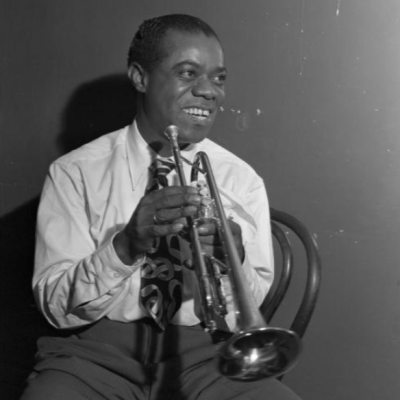
Defense Visual Information Distribution Service/via Picryl.com

.
Afloat
by Brian Greene
.
1.
…..Chuck, 42, had a daydream vision he used to get himself to sleep nights. He’d employed this calming technique, off and on, since his childhood. In his vision, he saw a huge luxury ship (but he always thought of it as a boat), something like the size of the vessel on the TV show The Love Boat. Chuck’s dream boat was staffed by an able crew and contained all the amenities anyone could ever need or want to bring them ease, comfort, and enjoyment. Pools, movie theaters, bowling alleys, TVs in every cabin, great food you could eat in public areas or your own private space . . . Chuck was on the boat in his daydream, and he got to hand-pick the other passengers. The boat sailed infinitely. Chuck didn’t bother his reveries with details like how needed supplies got onto the vessel if it never docked; those things were just always there.
…..As a teenager, Chuck especially liked to think of his cousin Jill being on the boat with him. Jill’s mother – a sweet woman who was Chuck’s favorite relative – died suddenly from complications related to what was supposed to be a safe surgery, when Jill and Chuck were both 15. Jill never cried at her mother’s funeral, seemed happy at the reception held at her family’s home, bouncing around and acting like a wait-person, asking everyone what food and drinks they wanted. But by a few months later, the former honor roll student was making Cs and Ds. She quit the cheerleading team. She got caught with a bottle of vodka in her purse on high school grounds. Her dad – who Chuck never liked – pulled her out of the school and was trying to teach her at home. Jill’s mom had been Chuck’s mom’s sister. Chuck’s mom told Chuck, “She needs help. Mental health help. But that man doesn’t believe in mental health help. That poor girl.” Chuck had always liked Jill. She could be on his boat, but her dad couldn’t.
…..Other people who Chuck pictured being on the imaginary boat varied over the years. But it was always a combination of his favorite family members, friends, and, later into his life, co-workers. Plus, there were often people he didn’t know well but felt sorry for, like a high school teacher he had who was just out of college and abruptly resigned from his appointment after students filled his suggestion box with notes about his bad breath. People always treated each other respectfully on Chuck’s dream boat. Nobody ever had to get their feelings hurt. And people were always safe from harm, mentally and bodily.
.
2.
…..Chuck had a son, Timmy, then aged 16. Timmy split time each week between Chuck’s three-bedroom apartment and Chuck’s ex-wife’s 1600 square foot house four miles away. Chuck and his ex split up six years prior, and their divorce had been final for about four-and-a-half years by this time. Chuck’s ex remarried a little over two years before. She and her new husband had recently welcomed a baby daughter, Timmy’s half sibling. Chuck did some dating through these years, but hadn’t gotten into a lasting relationship.
…..Like Chuck had been as a youth, Timmy was an excellent baseball player who enjoyed the sport for most of his young years. Chuck taught his son the basics of the game in their old side yard when Chuck and his ex were still together. Through Little League years and for his middle school, Timmy was a solid starting pitcher with an effective fastball-curve combination, also a reliable hitter who usually averaged around .280. In his 9th grade year, his first at high school, Timmy made the school’s team but wasn’t used much. The club had other hurlers whose fastballs were a few miles per hour faster than Timmy’s, and who had more pitches in their repertoire, like change-ups and splitters. Timmy was only utilized as a long reliever in games whose outcomes were already decided. Chuck, who’d mostly played third base in his experiences with the sport, suggested they hire a pitching coach to help Timmy further develop his game. Or that Timmy forget about pitching and focus on his hitting, try out for a spot as a starting position player. But during these talks, Timmy just said, in a morose-sounding voice that sounded foreign to Chuck:
…..“I’m just not any good.”
…..Chuck protested, pointed out all Timmy’s past accomplishments on the diamond. But Timmy couldn’t be encouraged, and in 10th grade he didn’t try out for the school team.
…..Timmy’s grades at school started dropping in his sophomore year. He entered that year with a 3.3 GPA and did okay in the first semester, although he got a D in American History. Timmy’s History teacher called Chuck and his ex-wife into her office near the end of the grading period and showed them an assignment Timmy was supposed to finish in the last week, but never did.
…..“He just had to answer these three questions. No more than two or three sentences per answer. If he had turned this in, his grade would have gone up to a C. I gave him two extensions on the due date, but he just never turned it in.”
…..In the second semester of that school year, Timmy was carrying one C, two Ds, and one F. He also had a painful breakup with a girl he started dating the previous summer. Sometimes he stayed in bed until early afternoon on a weekend day. He was prone to yelling more than was normal for him. He shoved his stepdad against a wall and screamed at him when the man insisted that he get out of bed at noon on a Sunday, and help the family with house chores.
…..At Chuck’s ex-wife’s suggestion, Timmy started getting psychological counseling that year. He saw a therapist weekly. After a handful of these sessions, the counselor held a joint parent session with Chuck and his ex, to give them his impressions of Timmy’s condition.
…..“He feels like a blob inside. He feels like he doesn’t have anything to offer the world.”
…..At home by himself after that conversation, Chuck cried for hours. He wasn’t much of a crier generally. At the next joint parent session, about a month later, Chuck asked the counselor:
…..“What the worst-case scenario here? How bad off could he be?”
…..“A potential concern down the road could be borderline personality disorder. But it’s too soon to say that. For now, my diagnosis is severe depression. A psychiatrist from my practice can prescribe medication for him, at my referral.”
…..On Chuck’s boat, mental illness didn’t exist. Everybody was stable emotionally and psychologically. Timmy didn’t have to prove his worth on a baseball diamond or in any school classrooms. He just had to float. Chuck’s ex-wife, her new husband, and their baby weren’t welcome on the boat.
…..Chuck started using his boat daydream to get to sleep on a nightly basis around the time Timmy first started saying he was no good at baseball. He had to re-employ the vision over the many times when he woke back up in the wee hours and suffered from insomnia.
.
3.
…..There was a neighborhood bar that Chuck liked. It was less than a mile from his apartment. On Tuesday nights, when Timmy was with Chuck’s ex, Chuck and his best friend Caleb went to that bar for trivia night, and were always part of a team. Chuck had Timmy Friday nights and until mid-afternoon on Saturdays. Many Saturday evenings, he went into the watering hole alone. He sat at the bar and usually got into conversations with a few other regulars.
…..One person Chuck particularly liked talking to there was a server named Vicky. She usually worked on Saturday nights. Vicky mentioned to Chuck, some months before, that her daughter Rebecca was having troubles with other kids at the middle school she attended as an eighth grader.
…..“She’s being bullied. It started on Instagram, of course. Rebecca has some acne on her face, like every kid her age does. A girl made fun of her on Insta about her zits. Rebecca tried to just ignore it, but it became a herd thing, where some other girls piled on her. Rebecca’s always been the kind of kid who walks to the beat of her own drummer. She has a few close friends, but isn’t in any cliques or anything like that. These other kids are all in a big clique together. Rebecca can come off as aloof. It’s not that she’s really thinking she’s superior to other people. She’s just independent. I feel like these kids wanted to take her down a peg. It worked. She started becoming terrified to go to school. She’s always loved school. My husband and I keep finding her crying in her bedroom.”
…..Chuck asked Vicky what she and her husband were doing about the issue, whether they’d reached out to any school authorities, or considered transferring Rebecca to another school.
…..“I have personally been in about a thousand meetings. With the principal and vice principal, the school counselor, people on the school board, my own psychotherapist. We got Rebecca into counseling. I’ve tried talking to some of the other kids’ parents. The Insta bullying stopped, but this group of little shits is still picking on her. I think they might just be doing it on Tik Tok or Snapchat now. Moving her to a different school isn’t the solution, we don’t think. It would just be a different school in town – we can’t afford to move – so the story would just follow her. I don’t know what to do. This might make you think I’m a psycho, but I’ve had dreams where I’ve been trying to murder those kids.”
…..Chuck eventually told Vicky about Timmy’s current problems. He hadn’t mentioned this to many other people, just his mother and one long distance friend, plus Caleb. When most people asked him about his son, he usually said something like, “He’s rolling along. He’s a teenager, so you know how that can be. But he’s okay.” Vicky listened patiently as Chuck told her about Timmy’s baseball career, his school grades, his moodiness and bouts and anger. Tears streamed down her cheeks when he repeated the counselor’s blob comment. She hugged Chuck and said, “The world can be so cruel. We have to fight for our kids.” She smelled good, some kind of sandalwood perfume enveloping Chuck as they embraced. They started updating each other on their children’s states of being any time they talked at the bar.
…..On Chuck’s boat, Timmy and Rebecca were friends who rarely left each other’s sides. They laughed together a lot as the vessel floated along. He pictured Rebecca having a full library of books on the boat, sometimes reading them aloud to Timmy, both of them fully content. Vicky was on the boat, but her husband wasn’t.
.
4.
…..Chuck was still living in the same apartment he moved into when he and his ex separated six years before. It was in a co-op building that housed around 15 units. Most of the residents were owners of their apartments, but Chuck rented from the owner of his, this person living on the other side of the country. There was nothing special about the living space to Chuck, but he kept renewing the lease every year simply because doing that was easier than going through the hassle of moving. But now Chuck was going to have to get out. About two months ago, he got a Notice to Vacate email and hard copy letter from the owner, stating that she had decided to re-take residence of the apartment when Chuck’s current lease ran out in four months. So Chuck got plenty of notice about his need to move out. But he hadn’t started doing anything about it yet. When he thought about things like looking for apartments or houses, packing and unpacking all of his and Timmy’s belongings, all the calls to be made to the utility companies to get his name off the electric and internet and gas and water and sewage bills, and then having to sign up again for all those accounts in a new place . . . he just felt tired.
…..Most mornings lately, when Chuck first woke up, the first two thoughts to come to his mind were about Timmy and his need to move. He put off getting out of bed for as long as he possibly could, before needing to get ready for work. He used to like to rise up extra early and drink a half a pot of coffee while reading or listening to music before work, sometimes while also running on the treadmill he kept in the dining room area. Now he skipped all of that and only got up when he needed to leave the apartment in about 10 minutes. He made a point of taking his showers at night. He started going to bed by 9:00 most evenings. The sooner he got under the covers, the sooner he was on the boat.
…..And the longer Chuck stayed in bed in the mornings, the longer he was on the boat. Timmy was doing just fine on the boat. He smiled a lot there, like he did in some of the old pictures of him that Chuck still had on his phone. And he had the mutually loyal and enjoyable friendship with Rebecca. They were like especially close siblings to each other now. On the boat, Chuck never had to move. Nobody did. The boat was a permanent home for Chuck, Timmy, Vicky, Rebecca, and everyone else Chuck invited to be on there.
.
5.
…..Chuck got a call from his ex on a morning just after Timmy left the apartment for school.
….“This is hard for me to have to say to you. But you need to know. I went through Timmy’s closet here last night and I found about a case’s worth of empty cans of hard cider. I have no idea how he gets them.
…..“He never goes out with friends here, so it means he’s been sitting in his bedroom and drinking by himself. We need to get him into substance abuse treatment. I’m looking into places for that. We’ll probably need to pull him out of school for a time and just let him focus on his well-being and getting treatment.”
…..After they disconnected, Chuck started to walk toward Timmy’s bedroom and the closet there. But then he changed course and started toward the laptop he kept on the dining room table. He took the day off work that day to focus on residence hunting. He worked up the energy and was determined this would be the day he got down to business about the move. He’d scroll through realtors’ listings of available housing within his budget, make phone calls, send emails, probably run out and check out some of the places. Maybe, when Timmy got home from school, they’d go out and look at some apartments and houses together.
…..But before he ever reached the laptop, he turned away from the dining room and went to his bedroom. He got under the covers. Soon, he was on the boat. He and Timmy, and his other invited guests. Hard cider wasn’t available on the boat. As of now, no alcoholic drinks ever were. Nobody needed them. There was no such thing as alcohol dependency on the boat. Timmy was happy to drink Yoo-Hoos, the way he used to. He and Rebecca downed bottles of Yoo-Hoo while she read books to him. They were both okay. Chuck got himself more and more comfortable in his bed.
.
.
___
.
.

Brian Greene writes short stories, personal essays, and journalism pieces on various arts. He lives in Durham, North Carolina.
Click here to visit his writing blog.
.
___
.
.
Click here to read “The Old Casino,” J.B. Marlow’s winning story in the 64th Jerry Jazz Musician Short Fiction Contest
Click here to read more short fiction published on Jerry Jazz Musician
Click here to read The Sunday Poem
Click here for details about the upcoming 65th Jerry Jazz Musician Short Fiction Contest
Click here for information about how to submit your poetry or short fiction
Click here to subscribe to the Jerry Jazz Musician quarterly newsletter (it’s free)
Click here to help support the continuing publication of Jerry Jazz Musician, and to keep it ad and commercial-free (thank you!)
.
.
___
.
.

Jerry Jazz Musician…human produced (and AI-free) since 1999
.
.
.