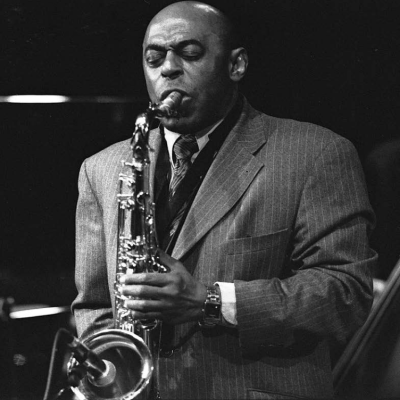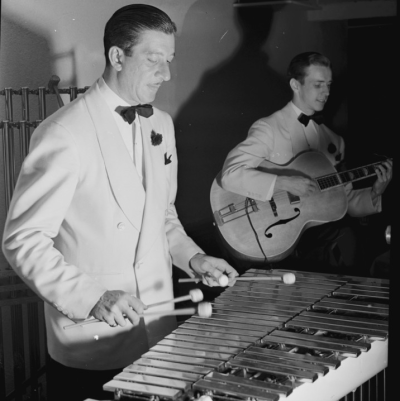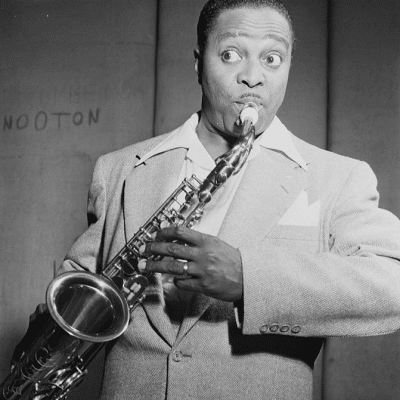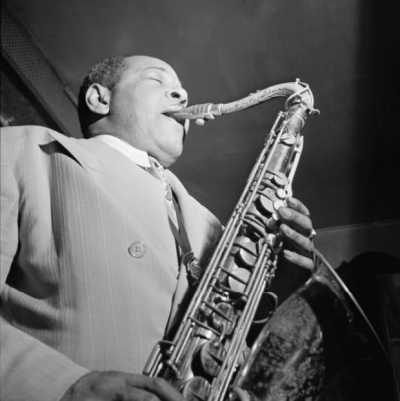

“Whiplash” — teaching success the old fashioned way, through humiliation

March 24th, 2015

_____


I finally got around to watching Whiplash over the weekend, accurately described by The Guardian’s Peter Bradshaw as the “Full Metal Jacket of jazz drumming.” Other than being recommended by several friends and casually knowing it involved a young musician attending a music conservatory, I did no research of the film prior to watching and had no expectation for it.  I was struck by the brilliance of the performances – both acting and musical – but taken aback by the bizarre, near sadistic relationship between teacher (Terence Fletcher, played by Academy Award winner J.K. Simmons) and student (Andrew Neyman, played by Miles Teller).

It was great, but ultimately dispiriting art. How could anyone who purports to love music as much as Fletcher treat students of it with such cruelty? The overly harsh lessons (the scene in which three drummers audition for hours for first chair was actually uncomfortable to watch) seemed preposterous at times, but bad (even evil) teachers do indeed exist.

Fletcher excuses his behavior on the famous 1937 Club Reno encounter between Count Basie drummer Jo Jones and a young Charlie Parker, who lost his way during a jam session, causing Jones to throw a cymbal at Parker’s feet. (During the film Fletcher insists it was thrown at Parker’s head — and did so at his own musicians now and then). The resulting embarrassment led Parker to work harder, to come back great – and of course he did. Fletcher then insists that if it weren’t for Parker’s public humiliation, Parker never would have become “Bird,” and great art would not have been made. So…by “pushing people out of necessity”, and because in Fletcher’s world “there are two no more harmful words in the English language than ‘good job,'” Fletcher takes on the role of  “Jo Jones” to the band’s Charlie Parker, driving them to greatness through humiliation.

The film is not based on a true story, but, apparently it was inspired by the experiences director Damine Chazelle faced as a drummer. Go see it if you haven’t already done so…

Click here for a review by A.O. Scott of the New York Times.

Share this:

4 comments on ““Whiplash” — teaching success the old fashioned way, through humiliation”

  1. Interesting, though I don’t know if I agree with Fletcher’s teaching techniques. Bird had his own issues, enough of them to question his conclusions.

  2. Interesting, though I don’t know if I agree with Fletcher’s teaching techniques. Bird had his own issues, enough of them to question his conclusions.

  3. I think it’s sad that some jazz teachers at the high school level actually do teach this way. Humiliating students in class, personal attacks on the student’s character — not based in fact or reality, false accusations without evidence, harassment of students by texting. They get away with it, despite parent complaints. Why? They are award-winning teachers, and principals want award-winning teachers. But at what cost?

    It is not a joke when students in the program are pushed to the brink, and become hospitalized for breakdowns. It is not a joke when the teacher suggests all his students should watch this movie, then acts like Fletcher, without throwing cymbals. Where are the checks and balances at the secondary school level for this kind of teacher? I’m pretty sure this behavior would not be tolerated in an academic class.

  4. I think it’s sad that some jazz teachers at the high school level actually do teach this way. Humiliating students in class, personal attacks on the student’s character — not based in fact or reality, false accusations without evidence, harassment of students by texting. They get away with it, despite parent complaints. Why? They are award-winning teachers, and principals want award-winning teachers. But at what cost?

    It is not a joke when students in the program are pushed to the brink, and become hospitalized for breakdowns. It is not a joke when the teacher suggests all his students should watch this movie, then acts like Fletcher, without throwing cymbals. Where are the checks and balances at the secondary school level for this kind of teacher? I’m pretty sure this behavior would not be tolerated in an academic class.

Comment on this article:

Your email address will not be published. Required fields are marked *

Site Archive

Your Support is Appreciated

Jerry Jazz Musician has been commercial-free since its inception in 1999. Your generous donation helps it remain that way. Thanks very much for your kind consideration.

Click here to read about plans for the future of Jerry Jazz Musician.

In this Issue

Announcing the publication of Volume II of Kinds of Cool: An Interactive Collection of Jazz Poetry...The second edition of Kinds of Cool, an Interactive Collection of Jazz Poetry has just been published, and is now available for sale on Amazon.com. This edition is dedicated to publishing women poets from all over the world who share their personal passion for and relationship with jazz music, and the culture it interacts with. With a foreword by Allison Miller, one of the world’s most eminent jazz drummers, and photography and design by Rhonda R. Dorsett

Poetry

photo of Shelly Manne by William Gottlieb/Library of Congress
21 jazz poems on the 21st of May, 2026...An ongoing series designed to share the quality of jazz poetry continuously submitted to Jerry Jazz Musician. In this edition…An array of poetic styles communicate personal reverence for and experiences with jazz music, and its cherished musicians.

The Sunday Poem

Herbert Behrens / Anefo, CC0, via Wikimedia Commons

The Sunday Poem: “in the courtyard” by deb Ewing

The Sunday Poem is published weekly, and strives to include the poet reading their work...

deb Ewing reads her poem at its conclusion.


Click here to read previous editions of The Sunday Poem

Interview

photo of Billie Holiday by William Gottlieb/Library of Congress
Interview with Paul Alexander, author of Bitter Crop: The Heartache and Triumph of Billie Holiday’s Last Year...The author talks about the courage and resilience of the legendary Lady Day, and his outstanding book – an inspirational and revealing portrait of an iconic American, that, like his subject, exudes compassion and creative soul.

Poetry

Yves Moch, CC BY-SA 3.0, via Wikimedia Commons
“Remembering Sonny Rollins” – a collection of poetry...Over the years, many poems have been published on Jerry Jazz Musician that were written in reverence of the man we refer to simply as “Sonny.” In the wake of his death, many more have been written. The unsolicited poems making up this collection is an example.

Short Fiction

Photo by Johannes Schröter, via Pexels
Short Fiction Contest-winning story #71 – “Where the Music Wasn’t Allowed,” by Jane McCarthy....The award-winning story is about a young immigrant growing up in Southern California to the sound of music seeping into his family’s home from an upstairs neighbor’s piano, shaping the boy’s understanding of memory, family, belonging, and the improvisational ethics of music.

Interview

photo by Warren Fowler
Interview with John Gennari, author of The Jazz Barn: Music Inn, the Berkshires, and the Place of Jazz in American Life...The author discusses how in the 1950s the Berkshires – historic home to the likes of Hawthorne, Melville, Wharton, Rockwell, and Tanglewood – became a crucial space for the performance, study, and mainstreaming of jazz, and eventually an epicenter of the genre’s avant-garde.

Poetry

photo by Tsutumu Takasu/via Flicker/CC BY 2.0
“Cajun Glory” – a prose poem by Robert Alan Felt

Community

Ricky Esquivel/Pexels.com
Community Bookshelf #6...“Community Bookshelf” is a twice-yearly space where writers who have been published on Jerry Jazz Musician can share news about their recently authored books and/or recordings. This edition includes information about books published within the last six months or so (September, 2025 – March, 2026)

Poetry

Six poets write eight poems (in the midst of our times)...Poets within this community of writers are feeling this moment in time, and writing about it. This collection is another example.

Short Fiction

“You Don’t Know What Love Is”- a short story by L.F. Graubard...A recovering junkie jazzman in a Starbucks time slips through the key years that fed his addiction — 1967 R&B and jazz gigs, ’69 biker bars, ’71 methadone hustles, ’79 script scams — before landing in the Narco Farm, where music, Sonny Rollins, and Secretariat crack his heart open. A fractured, noir confession about love, dope, and improbable grace.

Poetry

Peter Buitelaar, CC BY 2.0 , via Wikimedia Commons
Two Poems for Miles Davis

Feature

photo by Laura Stanley via Pexels.com.
Trading Fours, with Douglas Cole, No. 28: “Little Samba”...Trading Fours with Douglas Cole is an occasional series of the writer’s poetic interpretations of jazz recordings and film. This edition is based largely on a documentary – They Shot the Piano Player – about Tenório Junior, a Latin jazz musician who only produced one album (1964) before he “disappeared” in 1976.

Short Fiction

photo J. & L. Caswall Smith
“Bitty’s Last Request” – a short story by Jill Bronfman...In the story – a finalist in the recently concluded 71st Short Fiction Contest – a very old dancer visits her young relative with stories to tell about the old days in the clubs.

Poetry

art by Marsha Hammel
“Learning the Alphabet of the Blues” – a poem by Mary K O’Melveny...A poem from Kinds of Cool: An Interactive Collection of Jazz Poetry, Vol. II

Short Fiction

Alejandro Aznar/via Pexels.com
“Down at the Crossroads” – a short story by David Rudd...In this story – a finalist in the recently concluded 71st Jerry Jazz Musician Short Fiction Contest – a jazz composer hears a lone fiddler play a tune that enters his head and won’t leave it, like a virulent earworm, wrecking his playing, his friendships, and indeed, his life, until he finally finds a way to remove it.

Feature

photo via Wikimedia Commons
Memorable Quotes: Two, by Edward R. Murrow…

Feature

photo via Wikipedia
“Two Famous Johns” – a true jazz story by Bob Hecht...The writer remembers an evening in New York’s Half Note in 1964 when he witnessed a John Coltrane performance that was also attended by the pop singer Johnny Mathis

Poetry

Haiku: Musings – by Connie Johnson...Exploring segments of the world of jazz – in three suites of vivid haiku poetry…

Jazz History Quiz

photo of "Hot Lips" Page by William Gottlieb
Jazz History Quiz #187...This trumpeter began his career in California, where he organized a big band that had a residency in China in 1934, and, during a trip through Kansas City in 1936, was invited to join Count Basie’s orchestra, replacing “Hot Lips” Page (pictured). Who is he?

Feature

“Bohemian Spirit” – A Remembrance of 1970’s Venice Beach, by Daniel Miltz...The writer recalls 1970’s Venice Beach, where creatives chased a kind of freedom that didn’t fit inside four walls…

Feature

Boris Yaro, CC BY 4.0, via Wikimedia Commons
“The Bowie Summer” – a personal memory, and how art can fundamentally reshape identity, by G.D. Newton-Wade

Poetry

Poems on Charlie “Bird” Parker (inspired by a painting by Al Summ) – an ekphrastic poetry collection...A collection of 25 poems inspired by the painting of Charlie Parker by the artist Al Summ.

Feature

Albert Ayler’s Spiritual Unity – A Classic of Our Time, and for All Time – an essay by Peter Valente...On the essence of Albert Ayler’s now classic 1964 album…

A Letter from the Publisher

The gate at Buchenwald. Photo by Rhonda R Dorsett
War. Remembrance. Walls.
The High Price of Authoritarianism– by editor/publisher Joe Maita
...An essay inspired by my recent experiences witnessing the ceremonies commemorating the 80th anniversary of liberation of several World War II concentration camps in Germany.

Interview

Interview with Tad Richards, author of Listening to Prestige: Chronicling its Classic Jazz Recordings, 1949 – 1972...Richards discusses his book – a long overdue history of Prestige Records that draws readers into stories involving its visionary founder Bob Weinstock, the classic recording sessions he assembled, and the brilliant jazz musicians whose work on Prestige helped shape the direction of post-war music.

Contributing Writers

Click the image to view the writers, poets and artists whose work has been published on Jerry Jazz Musician, and find links to their work

Coming Soon

An interview with Paul Alexander, author of Bitter Crop: The Heartache and Triumph of Billie Holiday's Last Year; New poetry collections, Jazz History Quiz, and lots of short fiction; poetry; photography; interviews; playlists; and much more in the works...

Interview Archive

Ella Fitzgerald/IISG, CC BY-SA 2.0 , via Wikimedia Commons
Click to view the complete 25-year archive of Jerry Jazz Musician interviews, including those recently published with Judith Tick on Ella Fitzgerald (pictured),; Laura Flam and Emily Sieu Liebowitz on the Girl Groups of the 60's; Tad Richards on Small Group Swing; Stephanie Stein Crease on Chick Webb; Brent Hayes Edwards on Henry Threadgill; Richard Koloda on Albert Ayler; Glenn Mott on Stanley Crouch; Richard Carlin and Ken Bloom on Eubie Blake; Richard Brent Turner on jazz and Islam; Alyn Shipton on the art of jazz; Shawn Levy on the original queens of standup comedy; Travis Atria on the expatriate trumpeter Arthur Briggs; Kitt Shapiro on her life with her mother, Eartha Kitt; Will Friedwald on Nat King Cole; Wayne Enstice on the drummer Dottie Dodgion; the drummer Joe La Barbera on Bill Evans; Philip Clark on Dave Brubeck; Nicholas Buccola on James Baldwin and William F. Buckley; Ricky Riccardi on Louis Armstrong; Dan Morgenstern and Christian Sands on Erroll Garner; Maria Golia on Ornette Coleman.