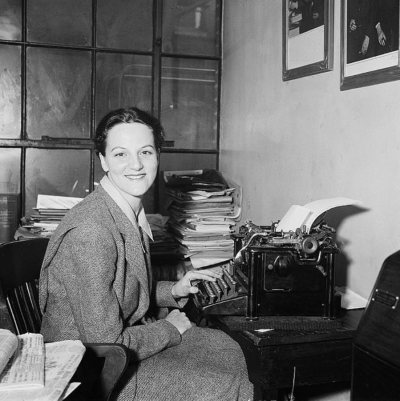

“The Launch” — a short story by Amy Tagle

June 8th, 2018


 “The Launch,” a story by Amy Tagle, was a finalist in our recently concluded 47th Short Fiction Contest.  It is published with the permission of the author.


The Launch

by

Amy Tagle


_____


“How dare you play it like that!”

I look up from my sight-reading piece, certain I had correctly executed all of the rhythms and notes, all of the articulations and embellishments. My questioning eyes found a passionate face, lined with wrinkles that were now quivering in angst.

“I don’t care if you play a couple wrong notes here and there, but to play it so flat like that… so dull… that is inexcusable.”

“Play it again.”

I started again, trying to sense the life behind the ink, and I felt like the blind fool who says “I see” to his deaf daughter over the disconnected phone line. Somewhere around measure three it happened — a flash of a vision — I felt the impression of a budding flower and the warmth of the sun bursting through the clouds. All of a sudden, I went beyond the mechanics of which pinkies to use, for it was no longer my brain engaging with the music, but my very soul.

In truth, it was a rather withered phrase, no Benny Goodman solo; that is certain. When I completed it, Mr. Lenny leaned back, relieved, and he sighed, “I knew you had it in you.” It was almost as if he would’ve fired me on the spot if I didn’t have it in me. Or, whatever the word is when you quit your student, who happens to be paying you $40 an hour. No more was said, and we continued on, learning etudes and orchestral excerpts to prepare for my college auditions.

I went about my routine, playing the fight song for the Tigers at pep rallies and furiously rushing to complete some ridiculous essay questions on transcendentalism. Really, Thoreau? I couldn’t wait to get my “I survived Mr. Thompson’s AP English class” t-shirt.

Despite all the busyness of saving my reed yet again from our punch-drunk mascot and composing my bequeathals for the band banquet, my mind kept returning to what Mr. Lenny said. I had “it”, but I did not know how to access it again or why it only showed itself on certain occasions.

I felt “it” when our high school chorale performed the haunting lyrics of Black is the Colour of my True Love’s Hair. (Yes, I was that nerd that was in band and choir.)

I felt “it” when I heard Jasper improvise wild figures during Jazz class, but I didn’t think that counted, since I was not the one performing.

Frustrated, I put the problem aside and focused on my auditions for music schools across the state. I felt like I was auctioning myself off to the highest bidder. Far from the promise of the hoped-for scholarships, I was met with dismal responses: “You’ll probably make it, but you’ll be at the bottom of the section,” or, my personal favorite, “You can leave now.”

I was starting to panic. My family could not afford to send me to college without a scholarship! Maybe my pre-calculus teacher from junior year was right; she nearly had a conniption when I told her I wasn’t going to take a math class during my senior year. “What are you DOING with your life?!” she practically sobbed, kneeling by my desk. I remember staring at her, totally confident in my response, laughing internally at this crazy lady. I declared, “I’m doing music!”

Who was the crazy lady now?

Everything was falling apart. Even prom was a disaster. I had the perfect date, but I totally froze up on the dance floor. I just kept saying, “I don’t know the steps to this one.” I even said that when the Macarena came on. EVERYONE knows the steps to the Macarena. There aren’t even really steps. I could conduct a 250 piece marching band, but I could not get my arms to move to the sounds of Los del Río.

My date eventually floated away in the crowd of dancers, and I made my escape past the ice sculptures and into the ironically warm night.

The band banquet was scheduled for a couple weeks later. It was always my favorite event of the year, but this one was the night before my last college audition. Between the pressure building from trying to find a place to go to school and the anxiety I felt from the prom disaster, I told my best friend Katie I wouldn’t go. She looked up from her phone, her thumbs of thunder pausing mid-text. Her eyes narrowed as she quipped, “I’ll pick you up at 7.” Apparently, she was deaf to my protests and vehement denials, because she showed up at my door precisely at 7. I opened the door, revealing myself in jeans, a T-shirt, and converse shoes.

She grabbed my hand and pulled me to my room where she threw random dresses and jewelry at me. I finally gave in. My only stipulation was that I would NOT, under any circumstances, dance, and that I was going to keep the same shoes. I had to cling to my victories, however small.

As I left my room, my gaze lingered on my half-assembled clarinet, which would now receive no practice for tomorrow’s audition. Oh well. I guess I could always work for my uncle, making money by selling people instruments instead of playing one myself.

The banquet was amazing… up until the dancing. My toes danced inside my high tops, itching to get out there, but something kept me rooted to the table. That is, until I was approached by Lance.

His fingers tapped out some complex rhythm on the table in front of me as he asked me to dance. I saw the muscles of his forearms twitch to the beat. I had never noticed his forearms before. Not that I would have. Friends don’t let friends date drummers.

Yet this wasn’t a date. It was a dance. Before I knew it, I was gliding across the floor, being led by the insanely cool and cute drumline captain. We got through the Cha Cha slide and a cumbia, but then a song came on with a soaring melody and syncopated beat I had never heard before. I started to head back to the table, but found my path blocked by Lance, who had already found a way to move to this particular groove. I started to say the same line from the dreaded prom night, and he cut me off.

“Look, you will be fine. Just stop worrying so much. Let go of trying to be right all the time. Feel the music flowing with your body.”

I heard his words, but still felt immobilized. I thought back to Mr. Lenny’s words, and how he also had chastened me for being flawless. I closed my eyes and tried to feel anything flowing through me except anxiety. I felt Lance put his hand on my shoulder encouragingly. Wasn’t I supposed to try my best? What was wrong with doing things correctly? I was trained to do so since I was knee high to a grasshopper. I thought back to those times where I felt “it.” Each time, a rule had been broken, an expectation defied, a status quo surprised. Annoyingly, Thoreau’s words popped into my head, “We are constantly invited to be who we are… You must live in the present, launch yourself on every wave, find your eternity in each moment.” I took a deep breath, and as I exhaled, I felt something release within me.

It started with a basic head bob, and then my hips started to sway. I felt the rising melody and my hands rose with it, gently conducting and caressing the music. I was no longer dancing with a person or even with myself. I was dancing with the music itself. I began jam out, eyes still closed, forgetting all around me. My foot slipped on a discarded napkin, and my eyes jolted open as I found myself in Lance’s arms. He smiled broadly at me and whispered, “I knew you had it in you.” We danced until dawn, and I had never felt so free. Thanks, Thoreau!

The next day at the audition, I felt a new sensation take over me as I played the familiar pieces. I was more daring with phrases, less conservative with nuances. Clarinets are the ninjas of dynamics, after all. I didn’t know whether or not I would get a scholarship; all I knew was that I had just played better than I had ever in my whole life. I had finally found “it.”


_____


Amy Tagle is a Kodály certified music teacher in San Antonio, Texas. She graduated from Texas State University San Marcos with a major in Music Education and a minor in Medieval and Renaissance Studies. She published an undergraduate honors thesis entitled “Aural Skills Pedagogy: From Academic Research to the Everyday Classroom.” Amy has a deep passion for the written word and is pursuing her dream of writing. This is her first published fiction piece.


Share this:

13 comments on ““The Launch” — a short story by Amy Tagle”

  1. A really good short story full of descriptive mind and passion for the beautiful clarinet. I was so happy when you finally found “it”

  2. Proud of you Amy, but not surprised by your many gifts. Made me think about my music days many years ago.

  3. Great story! You can tell this was done by a true musician! It’s got heart, soul, and a beautiful appreciation of music.

  4. Amy, this is a treasure! You are an artist. The “IT” in you is alive. I could sense it throughout the course. Your warm energy and smile was a beacon of light. You are a gift to us all!

Comment on this article:

Your email address will not be published. Required fields are marked *

Site Archive

Your Support is Appreciated

Jerry Jazz Musician has been commercial-free since its inception in 1999. Your generous donation helps it remain that way. Thanks very much for your kind consideration.

Click here to read about plans for the future of Jerry Jazz Musician.

In this Issue

Announcing the publication of Volume II of Kinds of Cool: An Interactive Collection of Jazz Poetry...The second edition of Kinds of Cool, an Interactive Collection of Jazz Poetry has just been published, and is now available for sale on Amazon.com. This edition is dedicated to publishing women poets from all over the world who share their personal passion for and relationship with jazz music, and the culture it interacts with. With a foreword by Allison Miller, one of the world’s most eminent jazz drummers, and photography and design by Rhonda R. Dorsett

Community

A collection of poetic responses to the events of 2025...Forty poets describe their experiences with the tumultuous events of 2025, resulting in a remarkable collection of work made up of writers who may differ on what inspired them to participate, but who universally share a desire for their voice to be heard amid a changing America.

The Sunday Poem

Mallory1180, CC BY-SA 4.0 , via Wikimedia Commons

"Second Set" by Patricia Joslin

The Sunday Poem is published weekly, and strives to include the poet reading their work...

Patricia Joslin reads her poem at its conclusion


Click here to read previous editions of The Sunday Poem

Interview

photo by Warren Fowler
Interview with John Gennari, author of The Jazz Barn: Music Inn, the Berkshires, and the Place of Jazz in American Life...The author discusses how in the 1950s the Berkshires – historic home to the likes of Hawthorne, Melville, Wharton, Rockwell, and Tanglewood – became a crucial space for the performance, study, and mainstreaming of jazz, and eventually an epicenter of the genre’s avant-garde.

Community

Ricky Esquivel/Pexels.com
Community Bookshelf #6...“Community Bookshelf” is a twice-yearly space where writers who have been published on Jerry Jazz Musician can share news about their recently authored books and/or recordings. This edition includes information about books published within the last six months or so (September, 2025 – March, 2026)

Poetry

painting by Linnaea Mallette
21 jazz poems on the 21st of March, 2026...An ongoing series designed to share the quality of jazz poetry continuously submitted to Jerry Jazz Musician. This edition features poets – several new to readers of this website – writing about their appreciation for the music, and the diversity and aesthetics of its sound. Along the way, readers will encounter poems that include the great musicians Horace Parlan, Shelly Manne, Keith Jarrett, Zoot Sims, Sun Ra, and Garland Wilson.

Feature

photo by Laura Stanley via Pexels.com.
Trading Fours, with Douglas Cole, No. 28: “Little Samba”...Trading Fours with Douglas Cole is an occasional series of the writer’s poetic interpretations of jazz recordings and film. This edition is based largely on a documentary – They Shot the Piano Player – about Tenório Junior, a Latin jazz musician who only produced one album (1964) before he “disappeared” in 1976.

Poetry

art by Marsha Hammel
“Learning the Alphabet of the Blues” – a poem by Mary K O’Melveny...A poem from Kinds of Cool: An Interactive Collection of Jazz Poetry, Vol. II

Interview

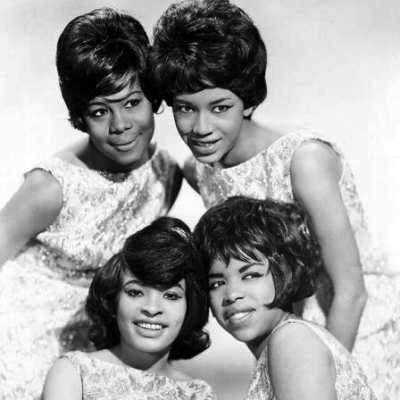
A Women’s History Month Profile: Interview with Laura Flam and Emily Sieu Liebowitz, authors of But Will You Love Me Tomorrow?: An Oral History of the 60’s Girl Groups...Little is known of the lives of many of the young Black women who – in the Girl Groups of the ‘60’s – sang, wrote, created, and popularized their generation-defining music, and even less about the challenges they faced while performing during such a complex era, one rife with racism, sexism, and music industry corruption. In this February, 2024 Jerry Jazz Musician interview, Laura Flam and Emily Sieu Liebowitz discuss their book’s endeavor at giving them an opportunity to voice their meaningful experiences.

Poetry

photo via Wikimedia Commons
“Empire State of GRIME” – a poem by Camille R.E....The author’s free-verse poem is written as an informal letter to tourists from a native New Yorker, (and sparing no bitter opinion).

Short Fiction

photo via Freerange/CCO
Short Fiction Contest-winning story #70 – “The Sound of Becoming,” by J.C. Michaels...The story explores the inner life of a young Southeast Asian man as he navigates the tension between Eastern tradition and Western modernity.

Poetry

art by Martel Chapman
"Ancestral Suite" - A 3-Poem Collection by Connie Johnson...The poet pays homage to three giants of mid-century post-bop jazz – Booker Ervin, Lou Donaldson, and Little Jimmy Scott

Feature

“Bohemian Spirit” – A Remembrance of 1970’s Venice Beach, by Daniel Miltz...The writer recalls 1970’s Venice Beach, where creatives chased a kind of freedom that didn’t fit inside four walls…

Poetry

Linnaea Mallette/publicdomainpictures.net
A 2026 jazz poetry calendar...12 individual poets contribute a jazz-themed poem dedicated to a particular month, resulting in a 2026 calendar of jazz poetry that winds through the year with a variety of poetic styles and voices who share their journeys with the music, tying it into the month they were tasked to interpret. Along the way you will encounter the likes of Sonny Stitt, Charles Mingus, Jaco Pastorius, Wynton Kelly, John Coltrane, and Nina Simone.

Feature

Boris Yaro, CC BY 4.0, via Wikimedia Commons
“The Bowie Summer” – a personal memory, and how art can fundamentally reshape identity, by G.D. Newton-Wade

Poetry

photo via NOAA
“Taking The Littlenecks” – a prose poem by Robert Alan Felt...Expressing the joy and sorrow of life at age 71 with grace, wisdom, and appreciation.

Short Fiction

photo by Iryna Olar/pexels.com 
“The Fading” – a short story by Noah Wilson...The story – a finalist in the recently concluded 70th Short Fiction Contest – examines the impact of genetic illness on a family of musicians and artists.

Poetry

Poems on Charlie “Bird” Parker (inspired by a painting by Al Summ) – an ekphrastic poetry collection...A collection of 25 poems inspired by the painting of Charlie Parker by the artist Al Summ.

Short Fiction

Los Angeles Daily News, CC BY 4.0 , via Wikimedia Commons
“The Pet Shop” – a short story by Sherry Shahan...The story – a finalist in the recently concluded 70th Short Fiction Contest, – is about an octogenarian couple who accept a part-time caretaker position at Crazy Goose Burlesque when the theater is temporarily shuttered due to archaic public indecency laws.

Poetry

Laura Manchinu (aka La Manchù), CC BY 2.0 , via Wikimedia Commons

A Letter from the Publisher

The gate at Buchenwald. Photo by Rhonda R Dorsett
War. Remembrance. Walls.
The High Price of Authoritarianism– by editor/publisher Joe Maita
...An essay inspired by my recent experiences witnessing the ceremonies commemorating the 80th anniversary of liberation of several World War II concentration camps in Germany.

Jazz History Quiz

photo by Mel Levine/pinelife, CC BY 2.0, via Wikimedia Commons
Jazz History Quiz #186...While he had a long career in jazz, including stints with, among others, Coleman Hawkins, Roy Eldridge, Sonny Stitt and Stan Getz, he will always be remembered primarily as the pianist in Charlie Parker’s classic 1947 quintet. Who is he?

Playlist

photo by Robert Hecht
“Spring is Here!” – a playlist by Bob Hecht...With perhaps Lorenz Hart’s most sardonic lyric — which is saying something! — this song remains one of the greats, and has been interpreted in many ways, from the plaintive and melancholy to the upbeat and hard swinging, such as John Coltrane’s version. Check out this bouquet of ten tracks to celebrate this great season!

Poetry

Wikimedia Commons
“Dorothy Parker, an Icon of the Jazz Age” – a poem by Jane McCarthy

Short Fiction

“Lies, Agreed Upon” – a short story by M.R. Lehman Wiens...The story – a finalist in the recently concluded 70th Short Fiction Contest – uncovers a man’s long hidden past, and a town’s effort to keep its involvement in it buried.

Feature

photo via Wikimedia Commons
Memorable Quotes – Lawrence Ferlinghetti, on a pitiable nation

Short Fiction

photo by Bowen Liu
“Going” – a short story by D.O. Moore...A short-listed entry in the recently concluded 70th Jerry Jazz Musician Short Fiction Contest, “Going” tells of a traumatic flight experience that breaks a woman out of her self-imposed confines and into an acceptance that she has no control of her destiny.

Community

Nominations for the Pushcart Prize L (50)...Announcing the six writers nominated for the Pushcart Prize v. L (50), whose work appeared on the web pages of Jerry Jazz Musician or within print anthologies I edited during 2025.

Interview

Interview with Tad Richards, author of Listening to Prestige: Chronicling its Classic Jazz Recordings, 1949 – 1972...Richards discusses his book – a long overdue history of Prestige Records that draws readers into stories involving its visionary founder Bob Weinstock, the classic recording sessions he assembled, and the brilliant jazz musicians whose work on Prestige helped shape the direction of post-war music.

Poetry

“Still Wild” – a collection of poems by Connie Johnson...Connie Johnson’s unique and warm vernacular is the framework in which she reminds readers of the foremost contributors of jazz music, while peeling back the layers on the lesser known and of those who find themselves engaged by it, and affected by it. I have proudly published Connie’s poems for over two years and felt the consistency and excellence of her work deserved this 15 poem showcase.

Feature

Albert Ayler’s Spiritual Unity – A Classic of Our Time, and for All Time – an essay by Peter Valente...On the essence of Albert Ayler’s now classic 1964 album…

Contributing Writers

Click the image to view the writers, poets and artists whose work has been published on Jerry Jazz Musician, and find links to their work

Coming Soon

An interview with Paul Alexander, author of Bitter Crop: The Heartache and Triumph of Billie Holiday's Last Year; New poetry collections, Jazz History Quiz, and lots of short fiction; poetry; photography; interviews; playlists; and much more in the works...

Interview Archive

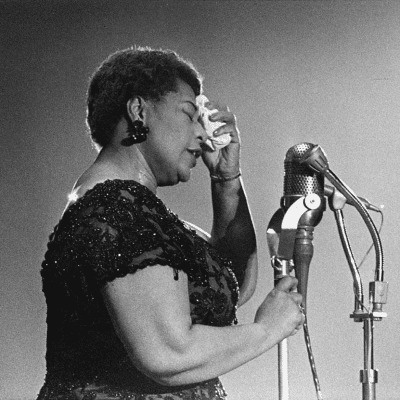
Ella Fitzgerald/IISG, CC BY-SA 2.0 , via Wikimedia Commons
Click to view the complete 25-year archive of Jerry Jazz Musician interviews, including those recently published with Judith Tick on Ella Fitzgerald (pictured),; Laura Flam and Emily Sieu Liebowitz on the Girl Groups of the 60's; Tad Richards on Small Group Swing; Stephanie Stein Crease on Chick Webb; Brent Hayes Edwards on Henry Threadgill; Richard Koloda on Albert Ayler; Glenn Mott on Stanley Crouch; Richard Carlin and Ken Bloom on Eubie Blake; Richard Brent Turner on jazz and Islam; Alyn Shipton on the art of jazz; Shawn Levy on the original queens of standup comedy; Travis Atria on the expatriate trumpeter Arthur Briggs; Kitt Shapiro on her life with her mother, Eartha Kitt; Will Friedwald on Nat King Cole; Wayne Enstice on the drummer Dottie Dodgion; the drummer Joe La Barbera on Bill Evans; Philip Clark on Dave Brubeck; Nicholas Buccola on James Baldwin and William F. Buckley; Ricky Riccardi on Louis Armstrong; Dan Morgenstern and Christian Sands on Erroll Garner; Maria Golia on Ornette Coleman.