
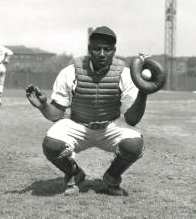
The Negro League baseball photographs of Charles “Teenie” Harris — A Photo Exhibit

In 2004, I had the privilege of interviewing Neil Lanctot, whose history of baseball’s Negro Leagues entitled Negro League Baseball: The Rise and Ruin of a Black Institution had just been published.

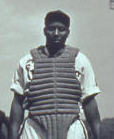
While preparing for the interview, the work of the noted Pittsburgh Courier photographer Charles “Teenie” Harris came to my attention. Among his many contributions to America’s archives are his photographs of the Negro Leagues, taken during the League’s pre-war and wartime era, mostly in Pittsburgh’s Forbes Field, where the Pittsburgh Crawfords played many of their games.

With baseball’s All Star Game scheduled for Tuesday evening in Minneapolis, it feels like a good time to revisit some baseball (and American) history, and there is no better way than to view some of Harris’ amazing work.  

With grateful appreciation to Pittsburgh’s Carnegie Museum of Art — who granted us permission to use these historic images — we present a photo gallery of rarely seen Harris photos,

...

July 13th, 2014
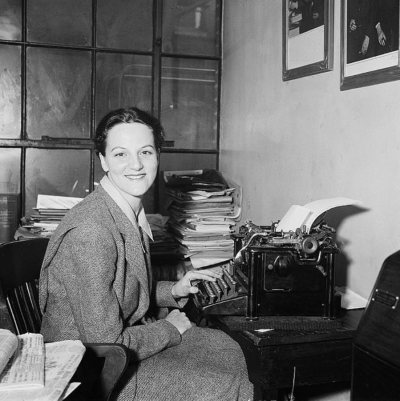
Brad Snyder, author of A Well Paid Slave: Curt Flood’s Fight for Free Agency in Professional Sports

Upon being traded to the Philadelphia Phillies in 1969, Curt Flood, an All-Star center fielder for the St. Louis Cardinals, wanted nothing more than to stay with St. Louis. But his only options were to report to Philadelphia or retire. Instead, Flood sued Major League Baseball for his freedom, hoping to invalidate the reserve clause in his contract, which bound a player to his team for life.

...

February 25th, 2008

David Maraniss, author of Clemente: The Passion and Grace of Baseball’s Last Hero

On New Year’s Eve 1972, following eighteen magnificent seasons in the major leagues, Roberto Clemente died a hero’s death, killed in a plane crash as he attempted to deliver food and medical supplies to Nicaragua after a devastating earthquake. Author David Maraniss now brings the great baseball player brilliantly back to life in Clemente: The Passion and Grace of Baseball’s Last Hero.

...

April 4th, 2006

Great Encounters #22: Cassius Clay, Malcolm X, and Sam Cooke — the Clay/Sonny Liston fight, Miami, 1964

Excerpted from Dream Boogie: The Triumph of Sam Cooke, by Peter Guralnick

Jerry Brandt got them all tickets for the Clay-Liston fight in Miami on February 25. Allen brought his wife, Betty, Sam took Barbara, and J.W. came by himself, with Allen arranging for accommodations at Miami’s resplendent Fountainebleau Hotel. Allen had already registered and was in his room when Sam arrived, only to be told that there had been a mix-up about the reservations. It was not as blatant as Shreveport,

...

October 29th, 2005

Ben Green, author of Spinning the Globe: The Rise, Fall, and Return to Greatness of the Harlem Globetrotters

Before Wilt Chamberlain, Bill Russell, Julius Erving, or Michael Jordan — before Magic Johnson and Showtime — the Harlem Globetrotters revolutionized basketball and spread the game around the world. In Spinning the Globe: The Rise, Fall, and Return to Greatness of the Harlem Globetrotters, author Ben Green tells the story of this extraordinary franchise and iconic American institution.

...

September 26th, 2005

Great Encounters #20: When the Minneapolis Lakers played the Harlem Globetrotters; Chicago, 1948

Excerpted from Spinning the Globe: The Rise, Fall, and Return to Greatness of the Harlem Globetrotters, by Ben Green

In 1948, George Mikan, the six-foot-ten center of the Minneapolis Lakers, was dominating the sport like no other big man ever had. When Mikan had first arrived at DePaul University in 1942, he was a clumsy, slow-footed freshman who was so blind (with 20/300 vision) that, even wearing Mr. Magoo glasses, he had to ask teammates to read the game clock. But first-year DePaul coach Ray Meyer recognized the youngster’s fierce competitiveness, and put him through a rigorous, unorthodox, training program: he made him shoot thousands of hook shots with either hand, hired a female dance instructor to improve his footwork,

...

August 30th, 2005

Great Encounters #12: The interconnecting paths of heavyweight champions Jack Johnson and Joe Louis

Excerpted from Unforgivable Blackness: The Rise and Fall of Jack Johnson by Geoffrey Ward

Johnson was back in Chicago in the summer of 1934, appearing in Dave Barry’s Garden of Champions, a sort of sideshow at the Century of Progress International Exposition organized by a veteran referee to compete with such attractions as the Midget Village, Sally Rand’s Balloon Dance, and the Aunt Jemima Cabin. For a dollar, children could throw punches at Jack Johnson while he ducked and laughed and popped his eyes. One evening, he fought an exhibition there against Tom Sharkey, whose sparring partner he had briefly been back in 1901. It was supposed to be a nonviolent sparring session,

...

December 29th, 2004

Interview with Geoffrey Ward, author of Unforgivable Blackness: The Rise and Fall of Jack Johnson

Jack Johnson was the first black heavyweight champion in history, the celebrated — and most reviled — African American of his age. Prizewinning biographer Geoffrey Ward tells Johnson’s story in Unforgivable Blackness, which reveals a far more complex and compelling life than the newspaper headlines he inspired could ever convey.

...

November 15th, 2004

Larry Jansen interview

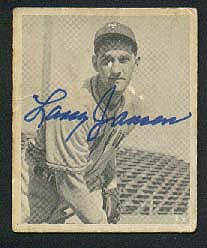
“I just wish I could pitch for one year!”, former Major League pitcher Larry Jansen says when asked about today’s salaries. But you get the sense he wouldn’t trade today’s money for a single memory of his life long career in baseball. Jansen was a 1950 All-Star pitcher (he induced Joe Dimaggio to hit a fly ball), a two time 20 game winner, and the winning pitcher in perhaps the greatest baseball game ever played, Game 3 of the 1951 playoff between the New York Giants and Brooklyn Dodgers.

...

April 9th, 1999

Site Archive

Your Support is Appreciated

Jerry Jazz Musician has been commercial-free since its inception in 1999. Your generous donation helps it remain that way. Thanks very much for your kind consideration.

Click here to read about plans for the future of Jerry Jazz Musician.

Community

Calling All Poets…Submissions guidelines for the anthology “Black History in Poetry”...We are currently seeking poetry from writers of all backgrounds for Black History in Poetry, an anthology scheduled for publication in the Summer of 2026. The anthology will be a means of celebrating and honoring notable Black Americans by offering poetry that teems with imagery, observation, emotion, memory, testimony, insight, impact, and humanity. Our aim is to give readers a way to visualize Black history from a fresh perspective.

In This Issue

21 jazz poems on the 21st of October, 2025...An ongoing series designed to share the quality of jazz poetry continuously submitted to Jerry Jazz Musician. This edition features poems inspired by the late Chuck Mangione, several on other trumpeters, the blues, and nods to Monk, Ornette Coleman, Coltrane, and Sonny Rollins.

Poetry

Ukberri.net/Uribe Kosta eta Erandioko agerkari digitala, CC BY 2.0, via Wikimedia Commons
In Memoriam: “Color Wheels” – a poem (for Jack DeJohnette) by Mary O’Melveny

Poetry

Monk, as seen by Gottlieb, Dorsett and 16 poets – an ekphrastic poetry collection...Poets write about Thelonious Monk – inspired by William Gottlieb’s photograph and Rhonda R. Dorsett’s artistic impression of it.

Publisher’s Notes

A dispatch from Portland, 2025 – and Boston, 1969...Peaceful protest is nothing new to America. It is happening every day in Portland, where I live. It is what makes our country great. And those of us who grew up in the 1960’s probably have a history of protest – some turning violent – ourselves. The poet Russell Dupont shares text and photos from his experience while photographing the October, 1969 March against the [Vietnam] War in Boston, when plainclothes Federal officers attempted to confiscate his camera.

The Sunday Poem

photo via pickpic

”Beyond Scale” by Pamela Nocerino

The Sunday Poem is published weekly, and strives to include the poet reading their work.... Pamela Nocerino reads her poem at its conclusion


Click here to read previous editions of The Sunday Poem

A Letter from the Publisher

The gate at Buchenwald. Photo by Rhonda R Dorsett
War. Remembrance. Walls.
The High Price of Authoritarianism– by editor/publisher Joe Maita
...An essay inspired by my recent experiences witnessing the ceremonies commemorating the 80th anniversary of liberation of several World War II concentration camps in Germany.

Interview

Interview with Tad Richards, author of Listening to Prestige: Chronicling its Classic Jazz Recordings, 1949 – 1972...Richards discusses his book – a long overdue history of Prestige Records that draws readers into stories involving its visionary founder Bob Weinstock, the classic recording sessions he assembled, and the brilliant jazz musicians whose work on Prestige helped shape the direction of post-war music.

Poetry

"Swing Landscape" by Stuart Davis
“Swing Landscape” – a poem by Kenneth Boyd....Kenneth Boyd writes poetry based on jazz paintings. “Swing Landscape” is written for a Stuart Davis painting of the same name.

Short Fiction

Short Fiction Contest-winning story #69 – “My Vertical Landscape,” by Felicia A. Rivers...Touched by the stories of the Philadelphia jazz clubs of the 1960s, a graffiti artist transforms an ugly wall into something beautiful – meaningful, even.

Poetry

photo via Wikimedia Commons
Jimi Hendrix - in four poems

Short Fiction

“Alas, for My Poor Heart” – a short story by Daryl Rothman...The story – a short-listed entry in the recently concluded 69th Short Fiction Contest – concerns art and its truest meanings—where you just might have to look twice at what the shadow and light of a piece says about that within your soul.

Essay

“Escalator Over the Hill – Then and Now” – by Joel Lewis...Remembering the essential 1971 album by Carla Bley/Paul Haines, inspired by the writer’s experience attending the New School’s recent performance of it

Poetry

“Still Wild” – a collection of poems by Connie Johnson...Connie Johnson’s unique and warm vernacular is the framework in which she reminds readers of the foremost contributors of jazz music, while peeling back the layers on the lesser known and of those who find themselves engaged by it, and affected by it. I have proudly published Connie’s poems for over two years and felt the consistency and excellence of her work deserved this 15 poem showcase.

Short Fiction

“Heroics” – a short story by Michele Herman...The story – a short-listed entry in the recently concluded 69th Short Fiction Contest – is about brothers coping with an angry father whose solution for dealing with a family crisis is to take them to a Howard Johnson’s for ice cream.

Feature

Jazz History Quiz #184...Maurice Ravel (pictured) acknowledged basing his Bolero on an improvisation of this clarinetist, who was also influential in the careers of Benny Goodman and Nat Cole, who made famous this musician’s theme song, “Sweet Lorraine.” Who is he?

Interview

Interview with Sascha Feinstein, author of Writing Jazz: Conversations with Critics and Biographers...The collection of 14 interviews is an impressive and determined effort, one that contributes mightily to the deepening of our understanding for the music’s past impact, and fans optimism for more.

Feature

Trading Fours, with Douglas Cole, No. 26: “Bougainvillea Sutra”...An occasional series of the writer’s poetic interpretations of jazz recordings and film. In this edition, his inspiration comes from the guitarist John Scofield’s 2013 EmArcy album Uberjam Deux, and specifically the track titled “Scotown.”

Short Fiction

photo by Simon Webster
“Smoke Rings and Minor Things” – a short story by Jane McCarthy...The story – a short-listed entry in the recently concluded 69th Short Fiction Contest – is a meditation on missed chances, minor keys, and the music that outlives the room it was played in.

Essay

“J.A. Rogers’ ‘Jazz at Home’: A Centennial Reflection on Jazz Representation Through the Lens of Stormy Weather and Everyday Life – an essay by Jasmine M. Taylor...The writer opines that jazz continues to survive – 100 years after J.A. Rogers’ own essay that highlighted the artistic freedom of jazz – and has “become a fundamental core in American culture and modern Americanism; not solely because of its artistic craftsmanship, but because of the spirit that jazz music embodies.”

Publisher’s Notes

Creatives – “This is our time!“…A Letter from the Publisher...A call to action to take on political turmoil through the use of our creativity as a way to help our fellow citizens “pierce the mundane to find the marvelous.”

Community

photo of Dwike Mitchell/Willie Ruff via Bandcamp
“Tell a Story: Mitchell and Ruff’s Army Service” – an essay by Dale Davis....The author writes about how Dwike Mitchell and Willie Ruff’s U.S. Army service helped them learn to understand the fusion of different musical influences that tell the story of jazz.

Feature

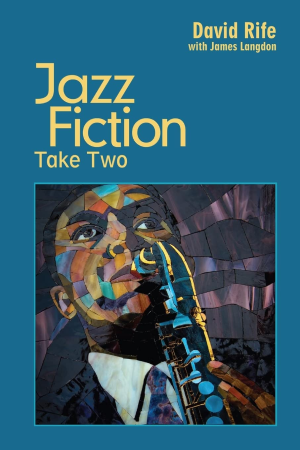
Excerpts from David Rife’s Jazz Fiction: Take Two– Vol. 16: Halloween on Mars? Or…speculative jazz fiction...A substantial number of novels and stories with jazz music as a component of the story have been published over the years, and the scholar David J. Rife has written short essay/reviews of them. In this 16th edition featuring excerpts from his outstanding literary resource, Rife writes about azz-inflected speculative fiction stories (sci-fi, fantasy and horror)

Poetry

“With Ease in Mind” – poems by Terrance Underwood...It’s no secret that I’m a fan of Terrance Underwood’s poetry. I am also quite jealous of his ease with words, and of his graceful way of living, which shows up in this collection of 12 poems.

Feature

William Gottlieb/Library of Congress
“Lester Young Cools a Village” – by Henry Blanke...On the origins of cool, and the influence (and greatness) of Lester Young.

Interview

photo Louis Armstrong House Museum
Interview with Ricky Riccardi, author of Stomp Off, Let’s Go: The Early Years of Louis Armstrong...The author discusses the third volume of his trilogy, which includes the formation of the Armstrong-led ensembles known as the Hot Five and Hot Seven that modernized music, the way artists play it, and how audiences interact with it and respond to it.

Poetry

“November Affair” – a poem (for November) by Jerrice J. Baptiste...Jerrice J. Baptiste’s 12-month 2025 calendar of jazz poetry winds through the year with her poetic grace while inviting us to wander through music by the likes of Charlie Parker, Hoagy Carmichael, Frank Sinatra, Antonio Carlos Jobim, Sarah Vaughan, Melody Gardot and Nina Simone. She welcomes November with a sensual, romantic poem that inspires a listening to Andre Previn and Doris Day’s 1962 recording of “My One and Only Love.”

Essay

“Is Jazz God?” – an essay by Allison Songbird...A personal journey leads to the discovery of the importance of jazz music, and finding love for it later in life.

Poetry

What is This Path – a collection of poems by Michael L. Newell...A contributor of significance to Jerry Jazz Musician, the poet Michael L. Newell shares poems he has written since being diagnosed with a concerning illness.

Playlist

“Look Ma, No Net!” – a playlist of nonets, by Bob Hecht...In this episode of our progressive instrumentation playlists, we add a ninth instrument to the mix to form a Nonet!

Art

photo by Giovanni Piesco
The Photographs of Giovanni Piesco: Art Farmer and Benny Golson...Beginning in 1990, the noted photographer Giovanni Piesco began taking backstage photographs of many of the great musicians who played in Amsterdam’s Bimhuis, that city’s main jazz venue which is considered one of the finest in the world. Jerry Jazz Musician will occasionally publish portraits of jazz musicians that Giovanni has taken over the years. This edition features the May 10, 1996 photos of the tenor saxophonist, composer and arranger Benny Golson, and the February 13, 1997 photos of trumpet and flugelhorn player Art Farmer.

Community

Community Bookshelf #5...“Community Bookshelf” is a twice-yearly space where writers who have been published on Jerry Jazz Musician can share news about their recently authored books and/or recordings. This edition includes information about books published within the last six months or so (March, 2025 – September, 2025)

Contributing Writers

Click the image to view the writers, poets and artists whose work has been published on Jerry Jazz Musician, and find links to their work

Coming Soon

Interview with John Gennari, author of The Jazz Barn:  Music Inn, the Berkshires, and the Place of Jazz in American Life; Also, a new Jazz History Quiz, and lots of short fiction; poetry; photography; interviews; playlists; and much more in the works......  Also, a new Jazz History Quiz, and lots of short fiction; poetry; photography; interviews; playlists; and much more in the works...

Interview Archive

Ella Fitzgerald/IISG, CC BY-SA 2.0 , via Wikimedia Commons
Click to view the complete 25-year archive of Jerry Jazz Musician interviews, including those recently published with Judith Tick on Ella Fitzgerald (pictured),; Laura Flam and Emily Sieu Liebowitz on the Girl Groups of the 60's; Tad Richards on Small Group Swing; Stephanie Stein Crease on Chick Webb; Brent Hayes Edwards on Henry Threadgill; Richard Koloda on Albert Ayler; Glenn Mott on Stanley Crouch; Richard Carlin and Ken Bloom on Eubie Blake; Richard Brent Turner on jazz and Islam; Alyn Shipton on the art of jazz; Shawn Levy on the original queens of standup comedy; Travis Atria on the expatriate trumpeter Arthur Briggs; Kitt Shapiro on her life with her mother, Eartha Kitt; Will Friedwald on Nat King Cole; Wayne Enstice on the drummer Dottie Dodgion; the drummer Joe La Barbera on Bill Evans; Philip Clark on Dave Brubeck; Nicholas Buccola on James Baldwin and William F. Buckley; Ricky Riccardi on Louis Armstrong; Dan Morgenstern and Christian Sands on Erroll Garner; Maria Golia on Ornette Coleman.