
“Whistlin’ the Bird” — Two True Jazz Stories by Bob Hecht

Part 1: Confirmation (1969)


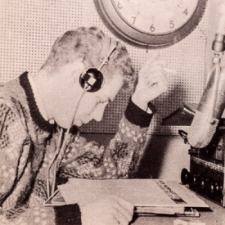
     It wouldn’t be the first time my penchant for whistling jazz tunes got me in trouble…nor the last.

     I’d been crazy about whistling from my boyhood. Perhaps I inherited my obsession from my late father. He wasn’t a jazz fan like I am, and I barely even remember him whistling—he wasn’t around much when I was a boy and he died when I was twelve—but my mom later told me he was an outstanding whistler. “He could do triple tonguing and everything,” she said.

     So maybe it was in my DNA. But at any rate, after his death I determinedly taught myself to whistle. I have a good ear and decent sense of pitch, so I found I could easily get in sync with whatever music I was hearing. And then I practiced and practiced, whistling along with jazz compositions and solos for years until I got

...

September 17th, 2018

“Jazz and Democracy” — by Bob Hecht

     As someone who both adores the best qualities that jazz has to offer, and abhors our current national politics of polarization, I’m often struck by how the two realms of jazz and politics so dramatically conflict, in their respective expressions of two great American inventions.

     It’s not supposed to be like that, though, because jazz and democracy,  theoretically at least, share so many core principles.

     Jazz, I believe, contains the best of democratic values. In jazz, everyone has a ‘voice’ and a

...

August 1st, 2018

A true jazz story — “The Sober Years” by Robert Hecht

From a small balcony above the stage of the Maybeck Recital Hall in Berkeley, I’m looking down on the jazz duo of bassist Red Mitchell and pianist Roger Kellaway, while tapping my foot to the earthy, swinging beat they are laying down.

It’s a Sunday afternoon in 1992 at this unique venue. The recital hall is part of a house originally built by the famed architect Bernard Maybeck in the early twentieth century. (Maybeck designed the Palace of Fine Arts in San Francisco, along with many other notable buildings in that city.) The hall accommodates only about 50 people, and it’s a warm, redwood-paneled room with beautiful leaded glass windows on three sides. It actually feels a lot like being in a little chapel—but the religion being worshipped here is that of acoustic jazz, primarily of the pianistic variety.

For several years now, ‘The Maybeck’ as it’s familiarly called, has hosted a who’s-who of

...

July 5th, 2018

A true jazz story: “Woody ‘n Me” — by Robert Hecht

I’m driving up Raymond Boulevard toward downtown Newark. In the darkness the huge lighted sign atop the Public Service Electric & Gas Company serves as a beacon for approaching the city. Yet tonight something is off with the sign, and I laugh out loud as I see that its ‘L’ has burned out…and that it is now offering ‘PUBIC SERVICE’ to the community!

I am on my way to work at radio station WHBI where I am a staff announcer but also produce a nightly jazz show. On the car seat next to me is my

...

May 21st, 2018

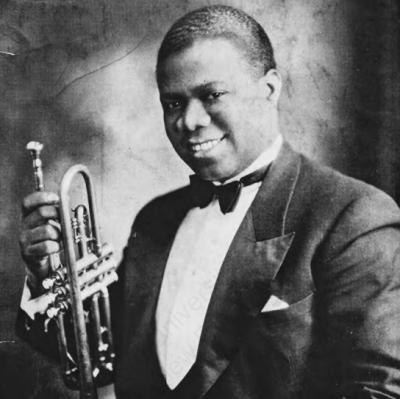
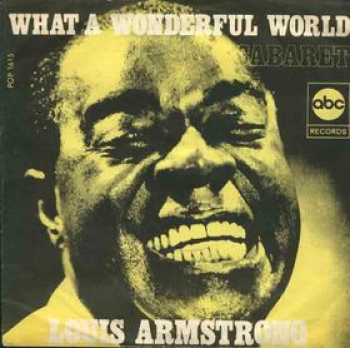
Three takes on Louis Armstrong

One afternoon at the age of ten, lightning strikes.

Alone in our ramshackle wood-frame house in Hartford, I decide to listen to some of my parents’ 45 RPM records. I watch one slide down the fat spindle and plop onto the turntable to receive the tone arm and needle. The music starts and like a bolt captures not just my ears but my whole being. It’s a guy with a gravelly voice singing something about

...

April 17th, 2018
“In Your Own Sweet Way” — A Bill Evans Memory, by Robert Hecht

     It was the kind of New York night not fit for man nor beast. Sleet and wind whipping about, snow banks and ice everywhere. With my ‘49 Dodge slipping and sliding on the Village streets, I make my way to the Vanguard to catch the midnight set. The small sign outside the entrance inconspicuously announces: “Bill Evans Trio.” This is the 1962 edition of the trio, reformed after bassist Scott LaFaro’s death the year before; and this is the club where Bill had played his last sets with

...

January 25th, 2018
“Bird Lives” — a memory of Charlie Parker’s Kansas City, by Robert Hecht

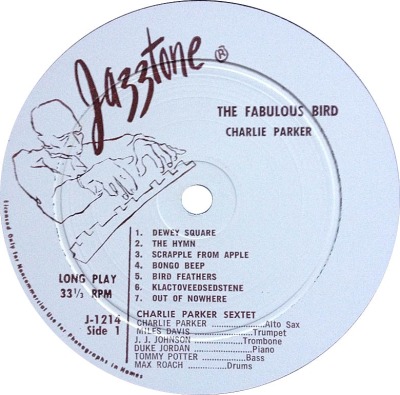
     The night I truly ‘got’ the shining genius of Charlie Parker I was in my girlfriend’s apartment on the Lower East Side. The year was 1961. I was nineteen, she was much older and hipper, and had turned me on not only to some great music but to getting high as well. She had all the essential jazz records, including the one on the turntable that night. It was The Fabulous Bird, on the old Jazztone label, consisting of reissues of some of Bird’s phenomenal 1947 Dial sessions. She had a very low-fi stereo—I can still see the nickel she had scotch-taped to the tone arm to keep it in the grooves. But the fidelity didn’t matter, in part at least because this evening I had just smoked a

...

January 3rd, 2018

Site Archive

Your Support is Appreciated

Jerry Jazz Musician has been commercial-free since its inception in 1999. Your generous donation helps it remain that way. Thanks very much for your kind consideration.

Click here to read about plans for the future of Jerry Jazz Musician.

In this Issue

Announcing the publication of Volume II of Kinds of Cool: An Interactive Collection of Jazz Poetry...The second edition of Kinds of Cool, an Interactive Collection of Jazz Poetry has just been published, and is now available for sale on Amazon.com. This edition is dedicated to publishing women poets from all over the world who share their personal passion for and relationship with jazz music, and the culture it interacts with. With a foreword by Allison Miller, one of the world’s most eminent jazz drummers, and photography and design by Rhonda R. Dorsett

Poetry

photo of Shelly Manne by William Gottlieb/Library of Congress
21 jazz poems on the 21st of May, 2026...An ongoing series designed to share the quality of jazz poetry continuously submitted to Jerry Jazz Musician. In this edition…An array of poetic styles communicate personal reverence for and experiences with jazz music, and its cherished musicians.

The Sunday Poem

photo via FBA Mastery

The Sunday Poem: “Traces” by Jason Youngclaus

The Sunday Poem is published weekly, and strives to include the poet reading their work...

Jason Youngclaus reads his poem at its conclusion.


Click here to read previous editions of The Sunday Poem

Interview

photo of Billie Holiday by William Gottlieb/Library of Congress
Interview with Paul Alexander, author of Bitter Crop: The Heartache and Triumph of Billie Holiday’s Last Year...The author talks about the courage and resilience of the legendary Lady Day, and his outstanding book – an inspirational and revealing portrait of an iconic American, that, like his subject, exudes compassion and creative soul.

Poetry

Yves Moch, CC BY-SA 3.0, via Wikimedia Commons
“Remembering Sonny Rollins” – a collection of poetry...Over the years, many poems have been published on Jerry Jazz Musician that were written in reverence of the man we refer to simply as “Sonny.” In the wake of his death, many more have been written. The unsolicited poems making up this collection is an example.

Short Fiction

Photo by Johannes Schröter, via Pexels
Short Fiction Contest-winning story #71 – “Where the Music Wasn’t Allowed,” by Jane McCarthy....The award-winning story is about a young immigrant growing up in Southern California to the sound of music seeping into his family’s home from an upstairs neighbor’s piano, shaping the boy’s understanding of memory, family, belonging, and the improvisational ethics of music.

Interview

photo by Warren Fowler
Interview with John Gennari, author of The Jazz Barn: Music Inn, the Berkshires, and the Place of Jazz in American Life...The author discusses how in the 1950s the Berkshires – historic home to the likes of Hawthorne, Melville, Wharton, Rockwell, and Tanglewood – became a crucial space for the performance, study, and mainstreaming of jazz, and eventually an epicenter of the genre’s avant-garde.

Poetry

photo by Tsutumu Takasu/via Flicker/CC BY 2.0
“Cajun Glory” – a prose poem by Robert Alan Felt

Community

Ricky Esquivel/Pexels.com
Community Bookshelf #6...“Community Bookshelf” is a twice-yearly space where writers who have been published on Jerry Jazz Musician can share news about their recently authored books and/or recordings. This edition includes information about books published within the last six months or so (September, 2025 – March, 2026)

Poetry

Six poets write eight poems (in the midst of our times)...Poets within this community of writers are feeling this moment in time, and writing about it. This collection is another example.

Short Fiction

“You Don’t Know What Love Is”- a short story by L.F. Graubard...A recovering junkie jazzman in a Starbucks time slips through the key years that fed his addiction — 1967 R&B and jazz gigs, ’69 biker bars, ’71 methadone hustles, ’79 script scams — before landing in the Narco Farm, where music, Sonny Rollins, and Secretariat crack his heart open. A fractured, noir confession about love, dope, and improbable grace.

Poetry

Peter Buitelaar, CC BY 2.0 , via Wikimedia Commons
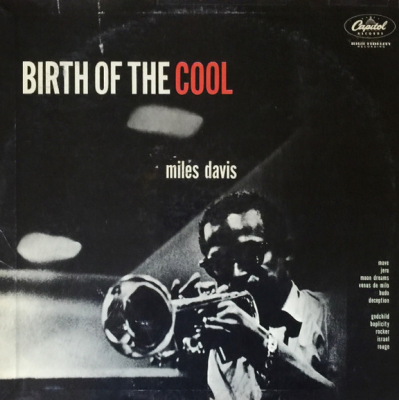
Two Poems for Miles Davis

Feature

photo by Laura Stanley via Pexels.com.
Trading Fours, with Douglas Cole, No. 28: “Little Samba”...Trading Fours with Douglas Cole is an occasional series of the writer’s poetic interpretations of jazz recordings and film. This edition is based largely on a documentary – They Shot the Piano Player – about Tenório Junior, a Latin jazz musician who only produced one album (1964) before he “disappeared” in 1976.

Short Fiction

“From Ingenue to Earth Mother” – a short story by Lisa Grunberger...The story – a short -listed entry in the recently concluded 72nd Jerry Jazz Musician Short Fiction, centers on a couple who “get” each other from the beginning, but who can’t seem to make a life together.

Poetry

art by Marsha Hammel
“Learning the Alphabet of the Blues” – a poem by Mary K O’Melveny...A poem from Kinds of Cool: An Interactive Collection of Jazz Poetry, Vol. II

Short Fiction

Alejandro Aznar/via Pexels.com
“Down at the Crossroads” – a short story by David Rudd...In this story – a finalist in the recently concluded 71st Jerry Jazz Musician Short Fiction Contest – a jazz composer hears a lone fiddler play a tune that enters his head and won’t leave it, like a virulent earworm, wrecking his playing, his friendships, and indeed, his life, until he finally finds a way to remove it.

Feature

photo via Wikimedia Commons
Memorable Quotes: Two, by Edward R. Murrow…

Feature

photo via Wikipedia
“Two Famous Johns” – a true jazz story by Bob Hecht...The writer remembers an evening in New York’s Half Note in 1964 when he witnessed a John Coltrane performance that was also attended by the pop singer Johnny Mathis

Poetry

Haiku: Musings – by Connie Johnson...Exploring segments of the world of jazz – in three suites of vivid haiku poetry…

Jazz History Quiz

photo of "Hot Lips" Page by William Gottlieb
Jazz History Quiz #187...This trumpeter began his career in California, where he organized a big band that had a residency in China in 1934, and, during a trip through Kansas City in 1936, was invited to join Count Basie’s orchestra, replacing “Hot Lips” Page (pictured). Who is he?

Feature

“Bohemian Spirit” – A Remembrance of 1970’s Venice Beach, by Daniel Miltz...The writer recalls 1970’s Venice Beach, where creatives chased a kind of freedom that didn’t fit inside four walls…

Feature

Boris Yaro, CC BY 4.0, via Wikimedia Commons
“The Bowie Summer” – a personal memory, and how art can fundamentally reshape identity, by G.D. Newton-Wade

Poetry

Poems on Charlie “Bird” Parker (inspired by a painting by Al Summ) – an ekphrastic poetry collection...A collection of 25 poems inspired by the painting of Charlie Parker by the artist Al Summ.

Feature

Albert Ayler’s Spiritual Unity – A Classic of Our Time, and for All Time – an essay by Peter Valente...On the essence of Albert Ayler’s now classic 1964 album…

A Letter from the Publisher

The gate at Buchenwald. Photo by Rhonda R Dorsett
War. Remembrance. Walls.
The High Price of Authoritarianism– by editor/publisher Joe Maita
...An essay inspired by my recent experiences witnessing the ceremonies commemorating the 80th anniversary of liberation of several World War II concentration camps in Germany.

Interview

Interview with Tad Richards, author of Listening to Prestige: Chronicling its Classic Jazz Recordings, 1949 – 1972...Richards discusses his book – a long overdue history of Prestige Records that draws readers into stories involving its visionary founder Bob Weinstock, the classic recording sessions he assembled, and the brilliant jazz musicians whose work on Prestige helped shape the direction of post-war music.

Contributing Writers

Click the image to view the writers, poets and artists whose work has been published on Jerry Jazz Musician, and find links to their work

Coming Soon

An interview with Paul Alexander, author of Bitter Crop: The Heartache and Triumph of Billie Holiday's Last Year; New poetry collections, Jazz History Quiz, and lots of short fiction; poetry; photography; interviews; playlists; and much more in the works...

Interview Archive

Ella Fitzgerald/IISG, CC BY-SA 2.0 , via Wikimedia Commons
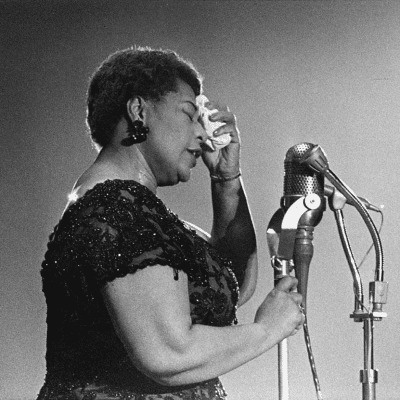
Click to view the complete 25-year archive of Jerry Jazz Musician interviews, including those recently published with Judith Tick on Ella Fitzgerald (pictured),; Laura Flam and Emily Sieu Liebowitz on the Girl Groups of the 60's; Tad Richards on Small Group Swing; Stephanie Stein Crease on Chick Webb; Brent Hayes Edwards on Henry Threadgill; Richard Koloda on Albert Ayler; Glenn Mott on Stanley Crouch; Richard Carlin and Ken Bloom on Eubie Blake; Richard Brent Turner on jazz and Islam; Alyn Shipton on the art of jazz; Shawn Levy on the original queens of standup comedy; Travis Atria on the expatriate trumpeter Arthur Briggs; Kitt Shapiro on her life with her mother, Eartha Kitt; Will Friedwald on Nat King Cole; Wayne Enstice on the drummer Dottie Dodgion; the drummer Joe La Barbera on Bill Evans; Philip Clark on Dave Brubeck; Nicholas Buccola on James Baldwin and William F. Buckley; Ricky Riccardi on Louis Armstrong; Dan Morgenstern and Christian Sands on Erroll Garner; Maria Golia on Ornette Coleman.