



.
.
New Short Fiction Award
Three times a year, we award a writer who submits, in our opinion, the best original, previously unpublished work.
Felicia Rivers of Philadelphia, Pennsylvania is the winner of the 69th Jerry Jazz Musician New Short Fiction Award, announced and published for the first time on August 12, 2025.
.
.
___
.
.
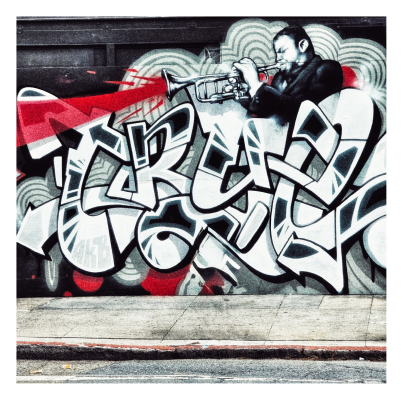
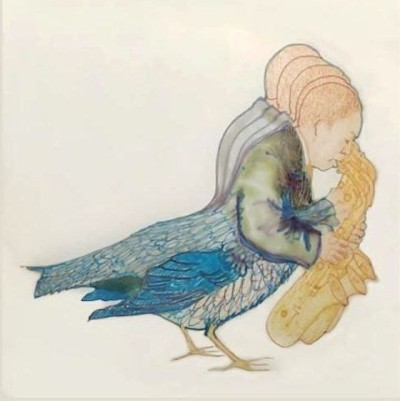
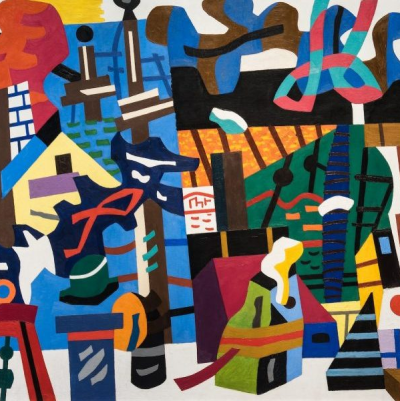
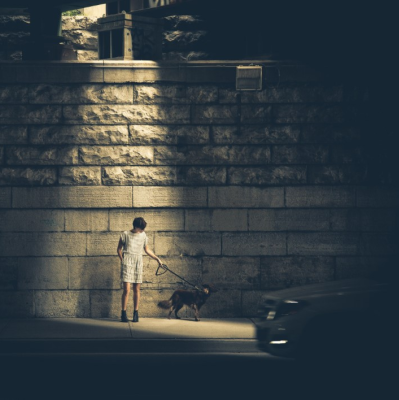
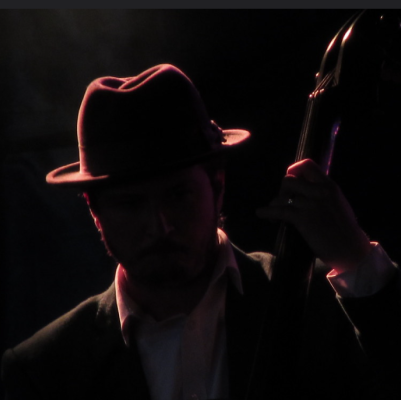
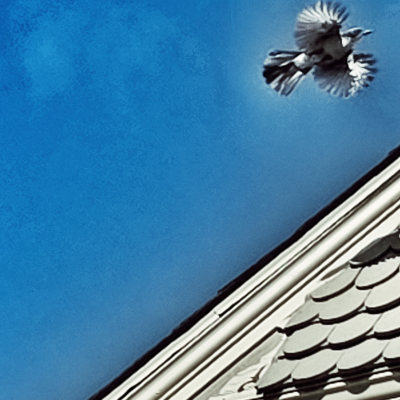
Art by danlelone/North Beach, SF
.
My Vertical Landscape
by Felicia A. Rivers
.
…..So, you want to know about my work? My process? Well.
…..For me, there’s nothing like a blank wall.
…..Some see all that space—a blank wall, an empty page, a stark, white canvas, and feel uncomfortable, afraid, even, as if that emptiness is a taunt, a challenge. Or a question they can’t answer. What if I can’t fill it? What if what I create is crap? What if the world decides I have nothing worthwhile to say? What if? Some can’t handle the questions, so they just walk away.
…..Now, I have my share of problems, but facing a blank wall isn’t one of them.
…..I walk this city, on the lookout for a blank wall. And when I discover it, hidden in an alley or behind an overgrown lot in some old, ignored neighborhood, I feel a thrill at the sight of all that beautiful space, man! It’s like a vertical landscape. The light on its face is the sky and the angular shadows cast by the surrounding buildings make up its territory, mountains and valleys and shit, rising and falling. Standing there, in front of that wall, I have this sense that I have come home.
…..I never rush. Why should I? Frankly, I have a lot of time on my hands. I have a job. Graphic design. It pays the bills. And I’m fast. Could almost do that job in my sleep—heh! It’s a blessing, my abundance of free time. So, yeah. I find my wall, and when I find her—walls always seem like “Shes” to me—I take my own sweet time getting to know her. I visit her on the regular. Rain, shine, in the morning, evening. Observing the light, getting a feel for the surroundings, the sounds, the people, for the spirit in the air. Spirit in the air? Heh! That sounds crazy, right? But if you spend enough time in a place, you begin to feel its character, that vibe, that something unique to the place, floating in the air, emanating from the ground. Maybe it’s a manifestation of all the people connected to the place and all the things that have happened there. So, I swing by, stand, sit, soaking it all in.
…..What about the neighbors?
…..Here I am, this tall, skinny black guy with splashes of paint on his clothes hanging around, staring at a wall. Some ignore me, just another bit of weird encountered on their daily travels from point A to B. Some watch from a distance, suspicious, wondering about my real intentions, weighing whether I’m something that needs to be dealt with. But some take the time to stop and ask me what I’m doing, and they’re my favorites. I like when people ask me what I’m up to, because I have a chance to get a sense of what they care about. What this neighborhood values. What lies at the heart of the neighborhood, of the people. And when they ask, I tell them I’m just an artist who’s going to paint a wall. I’ve painted more than a few around the city. All different neighborhoods. And I’ve been told I’ve thrown up some sick paint around the city. So, I have my fans.
…..How did I get started? That’s a bit complicated, I guess.
…..See, I come from a dynasty of sorts. Three generations of artists. All kinds. Jazz pianist grandfather. He played Harlem, San Francisco with heavyweights like Coltrane, Monk, and Parker. Grandmother designed clothes—she called herself ‘just a seamstress’—heh! —for Ella Fitzgerald, Sarah Vaughan, and Coltrane’s wife Alice. My father and mother are painters. They met at the Academy. Both have work hanging in the Philadelphia Museum of Art, the Whitney, the Dusable. Sister—she’s the star of our generation—has sculptures in MOMA and the Guggenheim. And brother’s last two books received respectable reviews—and sold enough for him and his wife to buy a rowhouse on Delancey. The McCall Family.
…..And then there’s me. Where do I fit in to that steady stream of family success and reputation-building? Family expectations? Family aspirations? It’s a Family affair. All I want to do is bring the walls of Philly to life. So, it’s them and me, looking at each other across this great cultural chasm, all of us thinking, But what can you do about family?
…..Anyway. Once I get the lay of the land, I just kind of open my mind to find out who she is, who she was meant to be. I never assume. I never try to force my own agenda upon her. I just let her tell me her story. Hell, sometimes, I can almost hear her voice, like she’s whispering in my ear—no, I don’t actually hear voices; I’m not that crazy—whispering to me as I sit, my back against her warmth, sunlight on my face. Sometimes, the vision of who she will be comes to me whole. But usually, she teases me, doling out her being in pieces, components of a puzzle that I must patiently assemble. I draw her, piece by piece, in my mind, in my sketchbook, then I just let her settle in me for a bit.
…..That’s the mental stuff. Next comes the physical work. I prepare her with a few coats of Gesso as a base and rough outline. It takes a bit of time, because I use ladders, not scaffolding. Hey, I’m just one guy and it’s not like I have City Mural Mission funding behind me. Sometimes, if the neighbors ask, I’ll tell them about my vision for her. Those who talk to me usually listen to my plans with either excitement or a wait-and-see neutrality. But there’s always that one person, that one self-styled Mayor of the Neighborhood, who argues with me, championing their own vision of the wall, this wall they’ve been walking by without thought or imagination forever. But I’ve been doing this for a while now. I know how to listen, nod, look sagely off into the distance—the contemplative artist—and then—snap! Act like I’ve had an epiphany and tell them how I’m going to incorporate their brilliant suggestion in the wall. The key is to do it in a way that defangs their argument while retaining who my wall was meant to be. So, I throw up the basics while managing the people who ignore me, or embrace me, or try to bully me. I must be doing it right because no one has called the police on me yet. Not in these neighborhoods. Not about a man with my skin.
…..See, the neighborhoods where my walls live are not in any gentrification plans. Not yet. They don’t have a promising view of Center City or warehouses suitable for conversion into lofts. They’re just little Black neighborhoods growing generation after generation, where the people generally live and let live—as long as you don’t bring any trouble. So, I can paint without the fear of being hassled—beyond the Mayors of the Hoods, of course.
…..Once I have primed the wall, and before the kids find all that beautiful blankness too irresistible to tag, I sketch out my vision in broad strokes. I’m staking a claim. Although that’s a bit arrogant on my part, because the wall will keep talking to me and the vision isn’t locked in until she says it’s locked in.
…..Then the true work begins. The paint.
…..You know what’s funny? The night before I begin painting, I always dream of my wall. Every single time. After the sitting. After the listening. After the sketching. I dream of her, beautiful and complete. All of the shifting visions, it’s like everything comes into focus and solidifies. And in my dream, I actually walk into her, as if she is a real place, some magical world that I’ve captured. Or that has captured me. And in that dream, I’ve truly come home. Not some fantasy of home, but an emotional sensation of warmth that spreads from my heart to my head, my limbs, and out to my fingertips and toes. That sense of comfort gives me such peace and acceptance, such wholeness, that sometimes I wake up in tears, because I’ve never felt such pain when leaving a place in the real world.
…..Don’t get me wrong. I’m not lost or broken, in need of some fantasy world to feel right. I have my job and this work. And as I said, I have fans. I have friends, artists in the scene who support my work. I’ve heard I’m even getting some recognition from the City Mural Mission. Maybe one day I’ll come in from the cold, collaborate with them at some point. The extra coin would be welcome. Life is fine. Life is good.
…..The last mural I threw up was in my own old neighborhood. The developers haven’t gotten to it yet, but it’s gentrification-adjacent. Coffeehouses and brewpubs on Girard Avenue? Yeah. There was a fire in an abandoned rowhouse across the street from the old Vaux Junior High, and the city demolished it, leaving a nice blank wall on a back corner. As my GrandPop would say: Splendid.
…..Everyone knows me in the neighborhood, and they liked the idea of me transforming an ugly wall with fossil impressions of old rooms and stairways into something beautiful. Meaningful, even. Folks kept me company while I waited for my wall to tell me about herself. Miss Myra brought me lemonade and butter cookies, and Mr. Russell reminisced about the Philadelphia jazz clubs of the Sixties. I didn’t mind. It’s all part of the process. I listened and waited for two weeks before the body and soul of the wall revealed herself to me, which is longer than usual. Maybe it was because I was on home turf, allowing my familiarity with the streets and its people to interfere. Maybe I was editing myself, so close to home. Maybe I was just tired.
…..But then it came to me: Jazz Club.
…..It had to be Mr. Russell and his monologues about the jazz clubs mingling with the old stories of my GrandPop because suddenly, the club bloomed in my mind and the sketch almost flew from my fingers. And later, when my wall opened her doors in my dream, I walked into a club that was so familiar—hey, I just realized, maybe Mr. Russell had his own vision for that wall. Sneaky old man. This was not a club of today. The women wore stylish silk dresses, their hair capped with gleaming—what did Miss Myra call them? —whimsies and their necks encircled with pearls. The men wore crisp suits, jewel-toned squares peeking from their breast pockets. Jazz swirled in the air, syncopated to the smoke and scent of perfume, and within a blue-white spotlight on the stage behind the bar, John Coltrane wailed “Mr. P” through his saxophone. From across the room, through the blue haze, a beautiful woman stared at me, her dark eyes shining preternaturally in the darkness. I returned her stare, then eased through the crowd toward her, drawn. She smiled at me, a promising, somehow predatory smile. And I awakened, wanting her. Yeah. Wow.
…..I paint quickly. After all that waiting and listening, after the wall speaks to me, after the dream, the paint almost flows onto the wall by itself. I don’t let anyone paint with me. I can’t bear the distraction. The underlayer goes up almost without thought. I’m up and down the ladder. And when I finally begin painting—that vision—it’s as if I am pulling the essence of the wall to the surface, rather than putting paint to brick and cement.
…..The undercoat of that wall was indigo, the color of the club, and when the people began to emerge, they, too, were washed, captured, in that captivating hue. Coltrane blowing magic from a gleaming blue horn, along with the trumpet and trombone. The pianist hunched over blue-white keys. Billie Holiday brilliant in her silver dress, white gardenias in her hair, barely kissed by the blue light as she stood languid at the microphone, set apart from the scene, mind and body. And in the background, a secret: the dark-eyed woman with the feral teeth, smiling her predatory smile. Smiling for me.
…..Miss Myra and Mr. Russell crowed about the finished wall. I crowed a little myself. That wall got a big writeup in the City Paper. That was cool. Now, here I am acquainting myself with another wall. This wall. But this is different. I already know who this wall is. See, an artist—a friend—a sister, really—died a bit ago. She was making her art way up on a rooftop, and she fell. They think she just fell. Bad death. Bad loss. Lost to the community. Lost too soon. That’s what my GrandPop said when his friend Coltrane died. Lost too soon, God Damnit. Lost too soon. He composed a piece as tribute. To a brilliant light snuffed out. Too soon. That’s what he named it. And that’s what I’m doing here.
.
.
___
.
.
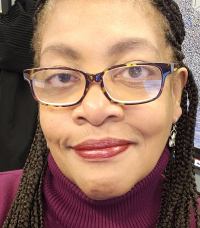
Felicia A. Rivers lives in the Greene Townes west of Philadelphia. Her work has appeared in various publications, including Seaside Gothic, Torch, Menagerie, and a tiny Philadelphian street sheet that had a short, but happy life. She holds an MFA from Bennington College and is working on her first novel.
.
.
___
.
.
Click here to help support the continuing publication of Jerry Jazz Musician, and to keep it ad and commercial-free (thank you!)
.
Click here to read “Saharan Blues on the Seine,” Aishatu Ado’s winning story in the 68th Jerry Jazz Musician Short Fiction Contest
Click here to read more short fiction published on Jerry Jazz Musician
Click here to read The Sunday Poem
Click here for information about how to submit your poetry or short fiction
Click here for details about the upcoming 69th Jerry Jazz Musician Short Fiction Contest
Click here to subscribe to the Jerry Jazz Musician quarterly newsletter (it’s free)
.
.
.
___
.
.

Jerry Jazz Musician…human produced since 1999
.
.
.

















Great short story, Aunt Fe. I also saw quite a bit of lovely dedications /homages to two family members as well. I know they’re very proud of you too. ❤️
Enjoyed this and got a little bit inspired too. There should be more stories about the street art world.
Great short story and made my eyes tear up thinking about talking to your dad about jazz and John Coltrane and listening to Ella Fitzgerald with granny. Please keep up the great work and look forward to your future works.
Love this story and the way it sparked my imagination, envisioning the murals. Very captivating and would love to read more!
Beautifully written!
Excellent Read. Hope the author releases more .
Congratulations!! Your skill in painting a picture and telling a story with words is amazing! I initially thought this a was real story, completely forgetting it’s fiction… a job well done
Such a “splendid” story. Wonderful read. Evoked memories of sitting around the table hearing the jazz stories of days gone past. Looking forward to more!
Lovely prose–I felt like I was right there with the muralist.