



.
.
New Short Fiction Award
Three times a year, we award a writer who submits, in our opinion, the best original, previously unpublished work.
John Hyde Barnard of Los Angeles, California is the winner of the 39th Jerry Jazz Musician New Short Fiction Award, announced and published for the first time on July 3, 2015.
.
.
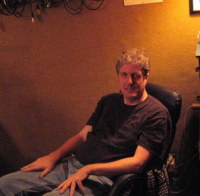
John Hyde Barnard
.
*
.
John Hyde Barnard was born on one of the coldest days ever recorded in February. His formative years were spent in idyllic settings in a small town some sixty miles south of Buffalo, New York. At an early age he discovered the charm, magic and conversation of music and has spent his lifetime pursuing its allusive beauty. There have been many good days and then there are days. On one of the better days he wrote “The Lot.”
.
_____
.
.
The Lot
by
John Hyde Barnard
.
__________
.
He brought the cigarette up to his lips. As he took a hit the orange glow briefly lit his face and faded back into shadow as he slowly exhaled a cloud of blue smoke. He crushed the butt on the windowsill, sparks and dying embers leaving a trail that quickly became black and cold. As he flicked the butt into the night air he glanced over the rooftops. It seemed the horizon was a shade lighter. Had he been sitting there that long?
Unable to sleep since arriving at the apartment some hours earlier, he sat at the open window: musing, arguing, longing and laughing with his thoughts. He had not discovered an epiphany or revelation, only a comfort with the warm night. It was the first warm night of the season; the unmistakable promise of spring perfumed the air. Cold winter nights had frozen such olfactory reminders from the senses but now those scents were released into the restless night, carrying reminders of memories, places, and expectations.
As he glanced at the dark outlines made by the roofs of the tenements and beyond at the still sparkling lit city, he smiled to himself, rubbed his face and realized he was finally tired. Had he been up that long?
There was a definite pale cast on the horizon; the night was fading. A stillness permeated the air with an intense expectation. Something was going to happen. The silence of the moment was total, noticeable, like a breath being held. Then something caught his eye. On the horizon. Was it really? Wait, there, yes, he saw it.
The first ray of sunlight blared its presence on a high ‘C,’ then another and another until a harmony of light awoke the day. On cue, pigeons rose from the rooftops of the surrounding buildings like a curtain going up, fluttering and flapping as they gathered and swam across the sky toward an appointed round. It then became very still as the morning light revealed the lot.
Brick tenements bordered the lot on three sides, and at one end a high wood fence with bills torn and ragged, testimonials to coming attractions, imploring, titillating, tantilizingvertisements, along with the bravado of cryptic gang tags and the proclamations of who loves who and who loved who. At the base of the fence and scattered about the lot were a few old newspapers, cans, broken bottles of distilled spirits, butts and a variety of discarded refuse from the humanity that had traversed its environs. It was a place where an idea had yet to fulfill itself – an empty lot.
Grass edged much of the lot, clinging to the foundations of the tenements, leaving the open area to hardier elements, such as gravel. Until recently snow had covered the ground and when the lot did reveal itself for short times during the winter the grass was yellowed and wind swept, embarrassed at being exposed.
But on this morning, the green grass stood individually for the first time. The only evidence of winter was a clump of snow tucked away in the far corner where the sun’s penetration had the least effect. Speckled with soot and dulled with melting, it bled a trickle of diamonds that snaked its way across the lot. This tributary sparkled and danced until it disappeared into an alley that was walled in by the connecting of two of the tenements at right angles to each other.
From his vantage point the entrance to the alley was a black shadow against the glare of the morning light, an entrance that seemed to promise but revealed little. But it was the alley where he heard the first faint tap of hard leather souls stepping casually toward the open lot. At first he wasn’t sure but as the steps became defined and nearer he could not look away from the dark mouth of the alley. The steps walked closer and closer, clearer and clearer, paced in an even subtle tempo, each step bringing an excitement to the moment. Then the dark mouth of the alley gave up its puzzle.
The stranger stepped into the lot, shades down, a lit fag dripping from his lips. His shoes were patent leather, his socks white and his jeans cuffed. A white T-shirt gloved his torso, the sleeves rolled up on taut muscled tattooed arms. On his left shoulder the rolled up sleeve of his t-shirt held a pack of unfiltered cigarettes. Over his other shoulder he carried a bass fiddle.
He proceeded to the center of the lot and carefully set the bass down on its one short peg leg, then leaned into the neck of the bass and like two old lovers, put his arms around its waist and neck. He stood motionless for a breath, a bead of sweat on his temple.
Then he began to play.
The notes walked up on a cool breeze, a casual stride that brought the attention of the lot to each smooth tone. The pulse was steady as the stranger grinned slightly, nodding as his neck leaned out from his shoulders into the bass, the rhythm taking hold of the morning as the sun began its climb into the day. It was a sight to behold, in the middle of the lot, one cool player steppin’ easy with the soul of every one who has felt the goodness of a mornin’.
Lord, the man could play with a subtle focus, each note a true statement, each tone a clear reflection of the morning. Walkin’ and talkin’ without a word as the music drifted up into the clear blue sky.
Then, as if by some voodoo magic, for it must have been, a set of drums was there, not suddenly, or with a puff of smoke or a blinding light, but, rather, just there as if it was supposed to be. Could it have been that one’s attention was so absorbed in the bass player that little notice was given to someone setting up? Yet one would have noticed. The bass player, until the drummer was there, was the only presence in the lot. That was until the drummer, dressed in the finest, from his shoes to his tailored three piece suit, appeared right on cue, just as the bass player was about to bring the turn around and re-establish the head.
Hunched over the small set, the drummer stared intently at the bass player’s back, yet his gaze focused somewhere distant. With a kick and a smooth brushstrokeroll, the drummer began to lightly ride the cymbals, making them breathe with a pulse and a swing that seemed to take the bass and lift it like a plane flying off the end of a runway.
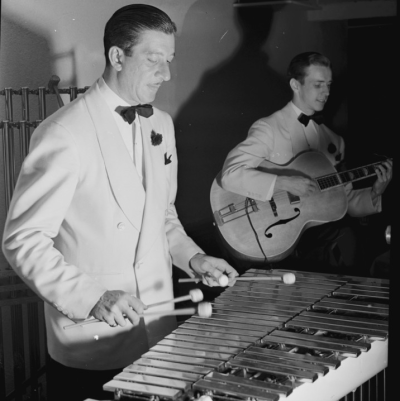
He sat behind circles, touching and stroking the music, containing the desire as he paced the mood, finding the excitement as he teased and taunted with a hypnotic redundancy that held a breath until a gasp of expectation broke the spell. Together he and the bass player played, dancing an intricate dance as the sun climbed further into the new day’s sky. The two of them settled into a walk, evenly paced with careful steps that rode up and down on the current of the morning air. And just then, at the moment when notes filled the air and the cymbal’s ride, like a lazy watch ticking time in rhythm, skipped and stretched — a chord, short and attacked and then, released with ease as fingered ten notes smiled in harmony across the lot, a piano player was now in the brew.
He sat over the black and white sentinels, lined up in an order of accession and dissension. An audible grunt and moan in passing time as he put a knot in the throat and swelled the chest and touched where only sincerity can reach. His coat was rumpled but of an expensive cut and his dress pants, with a fine silk line of black running the length of the leg, pumped in perfect time. His white starched cuffs were dressed with a diamond that caught the sun’s early rays and exploded them into flashes that moved to the mechanical fingers dancing a song that came out pure and dirty. The piano shone black, grand and stately with the hood raised allowing a glimpse of the hammers and felts that rose and fell with uncaring efficiency.
The morning breeze softly swayed curtains in the windows that were opening to the music, and the trio became one tight cluster in the middle of the lot. Folded arms leaning on sills, wife-beater T-shirts, unshaven smiles of curiosity that sipped cups of steaming coffee, kissed first cigarettes of the day, looked down from open windows of the tenements above the lot. A wife looking over her shoulder peered out of a window as she whipped eggs, nodding to the rifts that floated up from the lot on a warm gentle breeze. And the sun began to creep up on the day, climbing the arc toward the zenith.
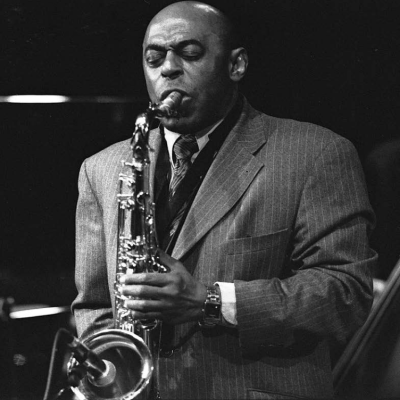
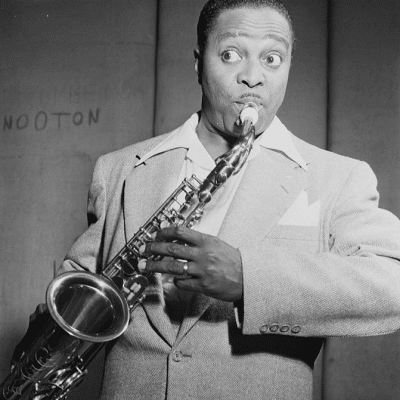
As the trio grooved, a shadow stepped from the alley, slowly, with a nonchalant shuffle. He had the side ways, late night bar walk as he casually made his way to the trio. The slight smile revealed one gold tooth that would catch a ray and toss it back. Everything was thin about him; his lapels, his hands, his shoes, his tie, his smile and his neck circled by a string with a hook on it that latched onto a gold tenor he constantly fingered. When he had made his way to the trio he adjusted the reed, wet it and then squeezed off a line of insanity that flew into the music like a hawk diving into a flock, scattering notes and rhythm and then, just as suddenly, he arched way up high and settled into a floating patter, riding the thermals with barely open eyes as he drifted like a slow hand inching up a short skirted thigh in a dark bar. Man! Was he good!
The piano player creaked a smile as beads of sweat began to dot his brow, as the drummer made the cymbals breath like a race horse in the stretch and while the bass kept a steady walk as he punched the air like a boxer entering the ring, the sax man breathed out a spring melody. They were tightcoolplayin smooooth and the ears around the lot nodded in time as the sun inched closer to the top. The lot became brighter, the grass greener, the air warmer and the day longer as the band grew. When the sun reached zenith the trio, four piece, sextet, had grown to a ten piece struttin’ tempo that kept pace with the day. People were out and about, on the escapes, along the wall; talkin’, laughin’, clappin’ in a cacophony that mixed with the pulse of the band. The lot was filling as the day got longer and the music kept gettin’ up.
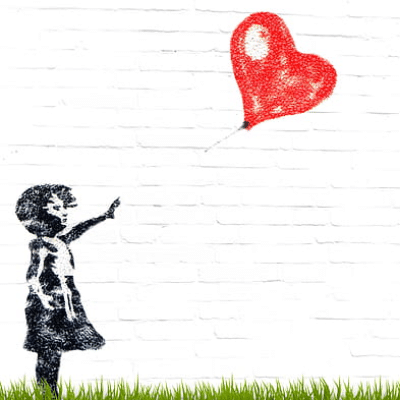
When the sun yawned and the shadows began to crawl across the lot the band beat a pace that drew the crowd to its feet and by the time the sun walked off behind the roofs the lot was a mass of grooving, dancin’ humanity. The street light up on an old splinter of a pole near the alley cast a halo and the varying shades and colors from the tenement windows lent a sexy pallor to the place. But it was the bright orange balloon that floated above the tenements that transformed the night into a downtown, slicked back Ritz affair complete with candle light, tables for two, tux and tails. The dark night sky edging the lot erased the world and focused the moon’s shine like a giant spot aimed at the band.
From his vantage point above the lot, the excitement of smoke and sweat changed the scene into a living impressionist painting as the band, now grown to lines of horns, a blues driving guitar player, a B3screemingleslie and a pastel of blurred strings slammed a pace that would expand with each passing 16, driving down a clear full moon night to an appointment that would not be denied. Couples danced to the beat like fine tuned machines, bumping and grinding, lost in the moonlight’s intoxication. As the appointed hour drew near the lot moved as one bodytobody, partydancinhipshakin ain’t gonna’ stop now, horn blarin’, beat pounden’ deaf roarin,’ fullmoon hanging straight up…stop!
A frozen second,… breath held, quiet, not a pin, like someone died while everyone’s eyes turned to the alley. The moon even looked, its light eerily streaking down the alley, trying to see. There was nothing and then there was.
He stood there, all in a blinding, bleached, squinty, pure hot white. A smile, then a snap of a finger, a clap of the hands, and… “All right.”
The electricity shocked back on, the place erupted and the singer ran to the front of the band like a cat in heat along an alley fence, the moon following him with its light as he grabbed the mike, went to one knee, screamed and begged all the pretty girls to ‘please, please, just a little!’ and they wanted to, were willing to and the band rocked on! The lot surged this way and that way, movin’ to the left, now movin’ to the right, then comin’ together close and tight dancin’ through the night. The band screamed higher and higher, laughter and tears, taking the crowd with them each step of the way. It was a glorious, ‘healin,’ night of being found and discovering. And the moon shone down and slid toward the new day and as it smiled fatter, the band began to slow.
The singer sang a blues that took a soul and walked it, hand in hand, through sorrow and misery, until it brought it to love and understanding. And the dancers began to pair off and dance real slow, some just standin’ in place, holdin’ each other close while others snuck off to the corners and escapes and made out and kissed and made love and moaned. The singer brought it back to his knees, sang please and then ‘amen’ and then, was gone.
The band came around and around in a slow careful cadence to the blueriff that mellowed the night like a slow sippin’ red wine, and it went down easy until the moon was just peekin’ behind a roof and the band played on, as the players were ten, seven, six, the trio.
He looked off in the direction over the rooftops and stopped. He squinted his eyes and blinked. He glanced at the horizon and could now discern a definite pale cast. The night was fading. Had he been up that long? He smiled to himself, rubbed his face and realized that he was finally tired. He looked over the dark outlines made by the roofs of the tenements and beyond at the still sparkling lit city. He sat there staring, lost in his thoughts, for how long, he wasn’t sure. Then something caught his eye. On the horizon. Was it really, wait, there, yes, he saw it; the first ray of sunlight.
He looked down at the lot. A bass player, alone, standing in the middle of the lot, cradling his bass fiddle like two dancers who had danced every dance and were too tired to go home, plucked at the big ‘E’ string and stopped as the note rose like a curl of smoke. It drifted off into the new day until its voice was lost in the morning air. After a motionless pause he gently lifted the bass and casually walked toward the alley where he disappeared, footsteps echoing away down the wet stones.
The empty lot became very still.
Then it began to rain,
harder and harder
and harder…
.
.
_____
.
.
.
.
.




I was in the groove with the music of this story. Nice going, John. Libbie Jo Snyder
I was in the groove with the music of this story. Nice going, John. Libbie Jo Snyder
Wow. I loved this short story. I liked the part about the rain at the end.
Wow. I loved this short story. I liked the part about the rain at the end.
John, so beautifully written! …each word speaks, plays, rises, drifts, touches down, slides, taking flight…and again… so visual….musical notes painting a visceral symphonic scene. Congrats!
John, so beautifully written! …each word speaks, plays, rises, drifts, touches down, slides, taking flight…and again… so visual….musical notes painting a visceral symphonic scene. Congrats!
Great short story! Lived every image. Hope to read more from the author.
Great short story! Lived every image. Hope to read more from the author.
Really felt and totally like this piece of work it’s well stated and written felt like i was there ….present
i am wanting for more……GOOD WORK!!!!!!
Really felt and totally like this piece of work it’s well stated and written felt like i was there ….present
i am wanting for more……GOOD WORK!!!!!!
Amazing story, John. Your words came to live and the vivid imagery placed me right there, looking into that lot. Great work!
Amazing story, John. Your words came to live and the vivid imagery placed me right there, looking into that lot. Great work!
Wow.Beautiful mind movie I just got reading this! Thanks, John.
Wow.Beautiful mind movie I just got reading this! Thanks, John.
I came across this very well crafted piece of art this morning & was surprised.
This is the type of descriptive work that Hollywood is missing. This writer clearly has a Vision….
I came across this very well crafted piece of art this morning & was surprised.
This is the type of descriptive work that Hollywood is missing. This writer clearly has a Vision….
Well, now, this be pure John. Astute and flowing–a total atmosphere, with time and images like notes, one to the next–building on real characters and real city-at-night life, moving through the changes we all know–or ones we’ve seen/heard/felt/remembered, backed up by the kinds of details that could only be there from living it, like a sailor who can tell you about every lead line, bunt and clew, while in the mists an island–a beautiful island of morning appears. Bravo, John, a pleasure… Tony Dubovsky
Well, now, this be pure John. Astute and flowing–a total atmosphere, with time and images like notes, one to the next–building on real characters and real city-at-night life, moving through the changes we all know–or ones we’ve seen/heard/felt/remembered, backed up by the kinds of details that could only be there from living it, like a sailor who can tell you about every lead line, bunt and clew, while in the mists an island–a beautiful island of morning appears. Bravo, John, a pleasure… Tony Dubovsky
From Tom: Nice Job John. Great imagery. I heard the music and saw the colors. Leaves the reader wanting more. Congrats!
From Tom: Nice Job John. Great imagery. I heard the music and saw the colors. Leaves the reader wanting more. Congrats!
I saw their faces and heard the music….thanks for the moments, memories, and the distillation of love
I saw their faces and heard the music….thanks for the moments, memories, and the distillation of love
ho lee gosh! you write like nobody’s business John! wow wow and triple wow. Most stellar!
ho lee gosh! you write like nobody’s business John! wow wow and triple wow. Most stellar!
Magnifique! I can’t recall when I’ve seen the magic of music and creativity captured more vividly in words; this story breaks down the wall between prose and poetry. Would like to read more by this writer.
Magnifique! I can’t recall when I’ve seen the magic of music and creativity captured more vividly in words; this story breaks down the wall between prose and poetry. Would like to read more by this writer.
This writer, Daniel Marcus, has found the words I had been searching for to describe my feelings after reading John’s marvelous story. Submit to the New Yorker!
Peter Burke
WOW! This is an absolutely marvelous story – clever, superbly written, deep. I’ve read it over and over, each time discovering another word or phrase that brings a smile. These weren’t just words on a screen – I was seeing these things, hearing the sounds. The imagery is profound: “spring perfumed the air….sunlight blared its presence on a high ‘C’….the winter grass was embarrassed by being exposed…the moonlight’s intoxication.” And my favorite: “he drifted like a slow hand inching up a short skirted thigh in a dark bar….”
This guy’s a professional musician. He’s obviously gifted to be a professional writer, too. More please!!