
.
.
“Piano Girl,” a story by Shannon Brady, was a finalist in our recently concluded 52nd Short Fiction Contest. It is published with the permission of the author
.
.
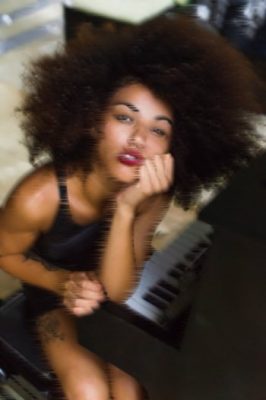
photo Omar Vasques via Pexels
.
Piano Girl
by Shannon Brady
.
…..Arlena Sawyer’s mother had spent all seventeen years of her life warning her against what seemed like every last thing under God’s creation. With her thin, trilling voice she had done her best to hammer fear and caution into her only daughter’s head like the beak of a woodpecker into a tree.
…..Some of it was all well and good, really, Arlena had to admit. Never, ever be dishonest, that was a fine rule; it covered stealing, lying, and cheating all very nicely. Give thanks for the food you eat, because you never know when your next bite will be coming. This decade wasn’t prosperous for everyone, after all. Never raise your hand to do another living thing harm, which seemed fairly self-explanatory. She had no father, as the man who’d sired her and her older brothers lived in willful ignorance of the Seventh Commandment, but she honored her mother just as much as she could. However, there were parts of being a good Christian girl (as her mother put it) that simply made no sense to her.
…..“Did I march for suffrage just to pass the vote into the Devil’s hands?!” Mother would rail, tearing up the weeds in their garden with a warrior’s wrath. “Those tramps are what’s wrong with America today! That vulgar paint and all that skin, those dances, and that — that noise!”
…..Arlena could not picture, at the close of her life, ascending to Heaven and kneeling before God, only to be tossed down into the fiery pit over a bobbed haircut or skirts that showed off her shins. It wasn’t as if they went up by the dear girls’ thighs, after all. The sips of liquor she shared on the sly with Wes burned, but they couldn’t be any more sinful than communion wine. She flexed her long, pale fingers in front of her, and could nearly feel the thin steering wheel of a Model T underneath it. She looked in her mirror and imagined how bold and bright her small blue eyes could be with the makeup the other girls put around theirs. How red and soft her lips.
…..(She knew somebody who might dearly love to see her in such things; even if a peacock’s show of femininity would make her unfamiliar to that sweet person, she could still picture it.)
…..But still, she knelt in the garden too, smiled, and said, “Oh, don’t worry one bit about them, Mother! All we can do is pray for them, and be thankful that we know better.”
…..It made Arlena happy to make the old woman smile like that, truly it did. But not quite as much as the idea that she knew better than them all. Her mother would fall for her smiling mask. The girls openly flaunting their disdain for the yoke around the neck of their collective sex, she would admire and wish well. As for herself…
…..“You better keep thanking your lucky stars that my clothes fit you,” Wes hissed in her ear, before laughing and playfully pushing at her shoulder. He shouted for what felt like all of downtown New York City to hear, “Don’t wander off too far, Arthur! Get lost around here and I’ll never find you again!”
…..“You’re not drunk yet, you little punk. Save all that foolishness,” Arlena laughed, thankful for her low voice, and tugged her borrowed ivy cap tighter around her hair. Her brother’s golden curls were free to flop around in the night wind all they pleased, but hers had to be kept carefully hidden.
…..Wes was only humoring her, she was well aware. Despite knowing exactly what went on in the clubs that he slipped off to at night, he had laughed to the skies when she had summoned the gumption to tell him that she wanted more or less the same thing. But as long as he was still willing to help her and keep his mouth shut, it didn’t matter at all to her.
…..“Be careful, Wesie,” Arlena warned as they parted ways. She continued down the avenue and he turned down a side street. “Run at the first sign of trouble and don’t wait for me.”
…..He shot her a winning smile over his shoulder. “You worry too much, Artie. On our way home, tell me about the band, and I’ll tell you what we’re going to say to Mother.”
…..Worry for her brother would always be at the back of Arlena’s mind. But right now, it was smothered under the buzz of the city streets, the music that she could hear from all sides. Arlena had always thought herself a rather plain girl. But looking like a slightly shorter and more slender version of his elder brothers, a silver knife blade next to a pair of bayonets, “Arthur” was a handsome young man. Mention him to old Mrs. Sawyer and she would think nothing of him. Perhaps it would incite more talk of how Arlena needed to become the wife of a handsome young man like that, but nothing she hadn’t deflected before.
…..Groups of girls in their bright swishing dresses smiled and giggled at Arlena as she passed by, and though she returned a smug grin she dared not tip her cap to them. She only wanted to be noticed by one person.
…..When she reached the Snowdrop Club, she took her usual place: prowling along the back and sidelines. Nobody paid her any attention, absorbed in themselves, their drinks, and their pleasure. It wasn’t one of the larger jazz clubs that New York City had to offer, in neighborhoods a little further downtown, whose names repeatedly appeared in the newspapers and on her mother’s scathing tongue; it was little more than a hole in the wall that required a password (“Rainey”) to get in. As much as the air buzzed with long-repressed excitement, warm with every moving body in the small dim space and sweet with the scent of spiced rum, Arlena could very well have passed it over in search of a more interesting place to spend her evenings, somewhere like the clubs Wes frequented.
…..Well, maybe not exactly his, for she’d prefer somewhere where a nice girl might teach her how to dance, quick and clever, like the pairs at the contests. Her mother, surprisingly, still had a photograph of herself and Arlena’s father dancing their young hearts out once upon a time. They’d won no money, but went home flush-faced and happy anyhow. It did give Arlena’s heart a little pang, knowing that unless the whole world turned upside down right out of the blue, she and Wes (and maybe their brother Karl, she’d come to suspect recently, but he lived too far away to ask) would never get to do the same thing with the ones they loved.
…..But Arlena still smiled at the thought, for the face it brought into her mind. Her darling wasn’t much of a dancer, anyway.
…..She had been leaning against the wood paneled wall, sipping delicately on a glass of scotch, listening to the chatter of the small crowd (mostly men and boys, but a few assorted girls, none of whom paid her much more than a glance). She tried not to look too eager, but she could not stop her eyes from flicking up to the empty part of the stage and its only occupant: a sleek black baby grand, whose name she’d been told a couple times but struggled to remember. The club hadn’t been open long, the band was fine enough, but she felt as if she’d been waiting for hours for —
…..For a moment, the band fell silent as if in reverence, turning every last club goer to the stage and muffling the chatter.
…..“Ladies and gentlemen, your flower of the hour! Miss Violet Snowe!”
…..Even after so many nights, Arlena’s heart still flew straight up into her throat.
…..Vi swept out of the backstage shadows like the unfurling wings of an angel, not a single spot or wrinkle on her gleaming white tux. Her dark eyes and wide smile sparkled as she swaggered across the stage through a sea of applause. She did not need to introduce herself any further, only sit down at the piano with one more swing of her hips. Her fingers, long and nimble, rested on the keys for a second before running down them in a playful riff.
…..Arlena felt a blissful chill down her spine, remembering how those fingers felt along her cheek, her neck, her hips. Even before they had first exchanged words, Vi had never tended to pay any member of her audience any especial attention; she was more cautious than she let on and she did not want to attract any unwanted men to her. But this time she spared a split second to wink at Arlena, so quick that she almost didn’t notice it, before she dove into her piano performance with gusto.
…..“When I, last night, had a big big fight,” she sang,
…..“Everything seemed to go on wrong
…..I looked up, to my surprise
…..The gal I was with was gone!”
…..Arlena almost laughed, and instead took a generous pull from her scotch. If she never heard anything but Vi’s voice for the rest of time, well, she would be quite satisfied with that. Over the next verse it rang out over the high-ceiling-ed room, more powerful and beautiful than anything Arlena could have imagined; it was the feeling of standing in a church with its myriad voices raised in rapturous song, amplified beyond her wildest dreams.
…..Violet Snowe did not play for Arlena Sawyer alone. It was for her own bliss more than anything, she whose entire life revolved around jazz music. But Arlena knew that she was the only one who had fallen in love with not merely the voice, or the hands, but the whole woman.
…..“They say I do it, ain’t nobody caught me!” Vi boasted with a toss of her head, making her short, tied-up curls snap back and forth. “Sure got to prove it on me!
…..Went out last night with a crowd of my friends
…..Must have been women ‘cause I don’t like no men!”
…..Arlena could not help scanning the faces of the audience at that bold claim, mouth set in a tight line. As white as her own, eyes alight with excitement. Smiling…but how was she to tell whether they were genuine or not? Her mother smiled the same way seconds before snapping into a violent rage — poor Karl had shut down and fled because of it — and she had long suspected that the latter was the truest expression of her feelings. A smile was more false and disarming than anything else, and though she would never say so for fear of being called paranoid, she did not enjoy seeing so many directed at her darling.
…..How was she to know how many of them truly cared for the girl with the golden brown skin, dressed in a man’s clothes with no pretensions of masculinity, and how many only liked her so long as she and her presentation were solely for their entertainment? Surely there were only kids here not because they appreciated Vi’s art, but because they got a kick out of doing and seeing (consuming) things that made their mothers’ blood curdle. But she figured even knowing that Vi was to make love to another girl — a white one, no less — for no one’s pleasure but theirs, could easily make them turn on her.
…..Once, all that was needed to soothe her fears was the soft and sensuous wave of Vi’s piano, with her singing to ride it. Once, she had to admit, she might have been as careless and unthinking as the rest of these people. Now…now that her thoughts revolved around Vi, cold reality had sunk into her marrow and wouldn’t come out. Arlena tugged uncomfortably at the tails of her brother’s vest. Vi was a braver girl than she was, that was for damn sure.
…..“It’s true I wear a collar and tie
…..Make the wind blow all the while
…..Don’t you say I do it, ain’t nobody caught me
…..You sure got to prove it on me!”
…..Arlena looked at Vi’s lips as the words fell from them, smooth and clear as a river. Full, soft, painted pale pink…and intimately familiar with parts of Arlena’s body that nobody else had ever seen, let alone touched. She could only hope that her own touch brought Vi the kind of bliss that she’d felt, the kind that had shattered her world and made her realize that she’d had no clue what happiness really was before. Such trust had to be earned, such a precious gift treasured and fought for. Not even her brother would understand why Vi was so dear to her. So her happiness had to be her secret, and she would do anything she had to to keep it that way.
…..Vi understood, despite having no family to fear or love. She chose her own songs and always seemed to know when Arlena would be listening to her. So even though it was Ma Rainey’s words instead of Vi’s, and no matter how many people filled the room, it was a conversation between just the two of them.
…..“Say I do it, ain’t nobody caught me! Sure got to prove it on me!”
…..Soon enough, Arlena told herself, taking another sip of scotch, the world would be no one but them.
…..She wondered if Vi could taste that scotch on her breath, pinning her down on the sheets of her quickly unmade bed and kissing her like her life depended on it. The passion made Arlena smile against her lips, long since wiped of lipstick to keep from leaving incriminating stains. Vi acted as devil-may-care as she herself did, but it was good to feel the reminder that Arlena’s true love was far from unmatched.
…..Wes’ vest and shirt were hanging sloppily off of her torso, and his belt, tie, and hat had been flung across the room. Arlena wrapped her arms around Vi’s shoulders and the small of her back — bare, she’d been reduced to her undershirt and dress pants — and whispered, “Feel like being flipped?”
…..Vi giggled. “Oh, by you, hon? Anytime.”
…..So with a swift movement of Arlena’s arms, it was Vi staring up at the (in places dripping) ceiling of the dark bedroom, and Arlena nibbling and sucking at her collarbones. She dearly wanted to kiss her neck instead, nothing more romantic than a neck kiss, but even on Vi’s skin something might show there. No matter, though: it was still enough to elicit pleased whimpers from her.
…..“Easy now, c’mon,” Vi breathed, after narrowly biting back a moan. “No one saw you coming back here, so don’t let no one hear now!”
…..Arlena nearly smirked. She ran one gentle fingertip down Vi’s jawline, and enjoyed seeing the fear evaporate from her precious darling’s eyes as she got lost in Arlena’s own. To hell with her mother, and her brothers, and with God Himself, if any of them would deny her and Vi this love. It was a melody of the two of them, that only they knew how to play. Maybe it had taken Arlena a little longer to understand it, but what was a few faulty notes on the path to perfecting a song?
…..“They’ll never know, darlin’. Haven’t you heard?” Arlena murmured, before her lips found their way up to Violet’s again. “They got to prove it on us.”
.
___
.

Shannon Brady is a fiction writer who lives with her family on Long Island. She attended SUNY Purchase College and holds a bachelor’s degree in Creative Writing. She is currently working on her first novel.
.
.
.