

News regarding the poet John Stupp

December 4th, 2019


.

.

John Stupp

.

___

.


…..I have had the privilege of publishing John Stupp’s poetry for several years now.  Every time he gifts me with an email stuffed with submissions, I eagerly open it like a kid unwrapping the shiniest package under the tree.  His creativity is really, honestly, that special.

…..John has a remarkable ability to clearly command his reader’s attention with wit, wisdom, perception, and character.   His work is consistently filled with the grit and richness of his beloved Pittsburgh — its scenic (and sordid) environs, its economic hardship, and its cultural significance.  He admires hard work, worshiping the likes of steel workers, guitarists, boxers, and the every day Major-Leaguer who wasn’t quite the superstar.

…..His most effective poetry is written simply, yet evokes complex feelings.  For example, like this one:

.

The Ride Home

He must
have been separated
from a herd of boys
thus he was lost
in his early ‘20’s
blue jeans and an old J & L mill jacket
from Goodwill
in the old days this bus went to Aliquippa
Henry Mancini’s home town
but not now
he tried out several seats
as we left Pittsburgh
but nothing satisfied
then scratched his legs
over and over until they bled
this went on for miles
to him it didn’t matter if the sun was out or not
it wasn’t
it didn’t matter if we made steel anymore or not
we don’t
it didn’t matter if there were good jobs left in this valley
there weren’t
when the driver put him off
I saw how he kept walking behind the bus
getting smaller and smaller
I thought
all day there was snow on the Ohio River
and the storm clouds were low
but not now
because God was watching over him and not us

.

.


…..And try this one, which combines his love for jazz and his dog, enveloped in a lively, endearing wit:

.

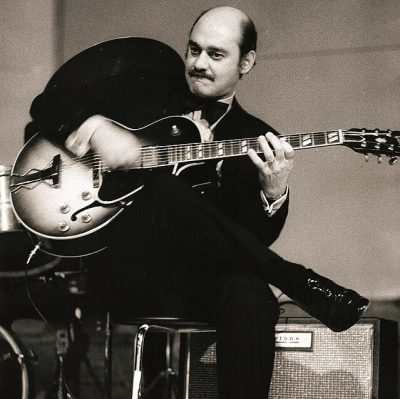
I Tell Him it’s OK

My dog
is a jazz dog
after listening to Tal Farlow
and Eddie Costa
he is not much impressed with my playing
keeps looking at his watch
until I finish
after a couple hours
when I put the guitar down
he jumps on my lap
and loves my silent hands

.

.

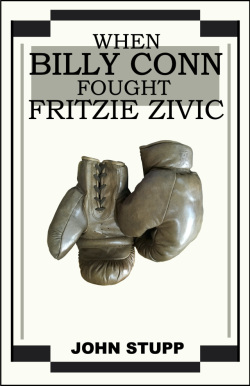
…..John has informed me that his fourth book of poetry, When Billy Conn Fought Fritzie Zivic, is being published by Red Flag Poetry Press, and will be available in January. The publisher’s website says that John’s book “tells the story of boxing in its pre-television days between the First and Second World Wars and into the 1950’s through poetry. Men like Harry Greb, Billy Conn, and Fritzie Zivic, and the steel city of Pittsburgh come alive in these pages. Poetry is as much history and deeds, as truth and beauty. Remember when Pittsburgh was a tough town? This is it.”

…..This is indeed a book worthy of your consideration.   For information, including how to order it, click here.


.

.


.

..

___

.

.


John Stupp’s third poetry collection.Pawleys Island.was published in 2017. His manuscript.Summer Job.won the 2017 Cathy Smith Bowers Poetry Prize and was published in August 2018.  From 1975-1985 he worked professionally as a mediocre jazz guitarist.  He lives near Pittsburgh, Pennsylvania.

.

.

.


Share this:

3 comments on “News regarding the poet John Stupp”

  1. I am most pleased to read Mr. Maita’s supportive words for John Stupp’s new chapbook. I have had the good fortune to read the chapbook in its manuscript form and can attest to its excellence. The book is filled with the interesting characters, command of everyday lexicon, and insight into the psychology of everyday people that make Mr. Stupp’s work always worth reading. If you like sports, if you like poetry about people struggling and working to survive, if you appreciate a writer with a good ear for everyday speech, you should get a copy of Mr. Stupp’s new book. You will be pleased with your purchase. The book is lively, musical in its rhythms and word choices, and displays great empathy for the average joe’s battles to overcome the daily vicissitudes of life. You will also learn a lot about the history of boxing.

Comment on this article:

Your email address will not be published. Required fields are marked *

Site Archive

Your Support is Appreciated

Jerry Jazz Musician has been commercial-free since its inception in 1999. Your generous donation helps it remain that way. Thanks very much for your kind consideration.

Click here to read about plans for the future of Jerry Jazz Musician.

In this Issue

Announcing the publication of Volume II of Kinds of Cool: An Interactive Collection of Jazz Poetry...The second edition of Kinds of Cool, an Interactive Collection of Jazz Poetry has just been published, and is now available for sale on Amazon.com. This edition is dedicated to publishing women poets from all over the world who share their personal passion for and relationship with jazz music, and the culture it interacts with. With a foreword by Allison Miller, one of the world’s most eminent jazz drummers, and photography and design by Rhonda R. Dorsett

Poetry

Andrzej Barabasz, CC BY-SA 4.0, via Wikimedia Commons
21 jazz poems on the 21st of June, 2026...An ongoing series designed to share the quality of jazz poetry continuously submitted to Jerry Jazz Musician. In this edition…An eclectic mix of poetic styles and subjects display a collective love for the music and culture at the core of this creative community.

The Sunday Poem

The Sunday Poem: “Refreshing My Education” by Mike Mignano

The Sunday Poem is published weekly, and strives to include the poet reading their work...

Mike Mignano reads his poem at its conclusion.


Click here to read previous editions of The Sunday Poem

Performance

The performance poet Emmett Wheatfall
A Letter from the Editor…On “The Weary Blues: Celebrating Langston Hughes and the Harlem Renaissance”A brief recap and photos of the February 7, 2026 Jerry Jazz Musician-produced performance of “The Weary Blues: Celebrating Langston Hughes and the Harlem Renaissance”

Interview

photo of Billie Holiday by William Gottlieb/Library of Congress
Interview with Paul Alexander, author of Bitter Crop: The Heartache and Triumph of Billie Holiday’s Last Year...The author talks about the courage and resilience of the legendary Lady Day, and his outstanding book – an inspirational and revealing portrait of an iconic American, that, like his subject, exudes compassion and creative soul.

Feature

Book Excerpt from Crossing Bar Lines: The Politics and Practices of Black Musical Space, by James Gordon Williams...In this entire chapter from his book, the author explains how the trumpeter Ambrose Akinmusire expresses his political views and lived geography through his improvisational music, notably his critique of police brutality that has, as he states, “become a leitmotif throughout my albums.”

Poetry

Yves Moch, CC BY-SA 3.0, via Wikimedia Commons
“Remembering Sonny Rollins” – a collection of poetry...Over the years, many poems have been published on Jerry Jazz Musician that were written in reverence of the man we refer to simply as “Sonny.” In the wake of his death, many more have been written. The unsolicited poems making up this collection is an example.

Short Fiction

Photo by Johannes Schröter, via Pexels
Short Fiction Contest-winning story #71 – “Where the Music Wasn’t Allowed,” by Jane McCarthy....The award-winning story is about a young immigrant growing up in Southern California to the sound of music seeping into his family’s home from an upstairs neighbor’s piano, shaping the boy’s understanding of memory, family, belonging, and the improvisational ethics of music.

Interview

photo by Warren Fowler
Interview with John Gennari, author of The Jazz Barn: Music Inn, the Berkshires, and the Place of Jazz in American Life...The author discusses how in the 1950s the Berkshires – historic home to the likes of Hawthorne, Melville, Wharton, Rockwell, and Tanglewood – became a crucial space for the performance, study, and mainstreaming of jazz, and eventually an epicenter of the genre’s avant-garde.

Short Fiction

“The Cartographer” – a short story by Timothy Collyer...The story – a finalist in the recently concluded 71st Short Fiction Contest – is a work of speculative fiction about the gentrification of memory. It follows a recovering alcoholic who is building a guerrilla augmented-reality map of Philadelphia’s lost jazz history—specifically the “Blue Note” era of the 1960s—while battling a corporate developer who wants to sanitize the data for tourists.

Feature

Memorable Quotes: Abraham Lincoln..."I like to see a man proud of the place in which he lives..."

Community

Ricky Esquivel/Pexels.com
Community Bookshelf #6...“Community Bookshelf” is a twice-yearly space where writers who have been published on Jerry Jazz Musician can share news about their recently authored books and/or recordings. This edition includes information about books published within the last six months or so (September, 2025 – March, 2026)

Poetry

Six poets write eight poems (in the midst of our times)...Poets within this community of writers are feeling this moment in time, and writing about it. This collection is another example.

Short Fiction

collage by Judith Beth Cohen
“The Eating Club” – a short story by Judith Beth Cohen...The story – a short-listed entry in the recently concluded 71st Short Fiction Contest – centers on an affair two writers share around gourmet meals.

Poetry

Peter Buitelaar, CC BY 2.0 , via Wikimedia Commons
Two Poems for Miles Davis

Feature

photo by Laura Stanley via Pexels.com.
Trading Fours, with Douglas Cole, No. 28: “Little Samba”...Trading Fours with Douglas Cole is an occasional series of the writer’s poetic interpretations of jazz recordings and film. This edition is based largely on a documentary – They Shot the Piano Player – about Tenório Junior, a Latin jazz musician who only produced one album (1964) before he “disappeared” in 1976.

Short Fiction

kaboompics.com/via Pexels
“The title is not included in the word count…” – a short story by Scott Cash...In this story – a finalist in the 71st Short Fiction Contest – self-ordained genius Kevin feels that life has been against him. But he thinks he has discovered a loophole and can exceed the 3,000 word limit for a writing contest by utilizing the title. When this is thwarted, he instead lands upon footnotes as a way to exceed the limit. This story is a celebration of writers and the act of writing.

Jazz History Quiz

Besides being one of the first to be influenced by Charlie Christian (pictured), in 1944 this electric guitarist employed Charlie Parker on his first recording date and eventually led an R&B-oriented group “The Rockin’ Highlanders” that featured the saxophonist Red Prysock. Who is he?

Poetry

Poems on Charlie “Bird” Parker (inspired by a painting by Al Summ) – an ekphrastic poetry collection...A collection of 25 poems inspired by the painting of Charlie Parker by the artist Al Summ.

Contributing Writers

Click the image to view the writers, poets and artists whose work has been published on Jerry Jazz Musician, and find links to their work

Coming Soon

New poetry collections, Jazz History Quiz, and lots of short fiction; poetry; photography; interviews; playlists; and much more in the works...

Interview Archive

Ella Fitzgerald/IISG, CC BY-SA 2.0 , via Wikimedia Commons
Click to view the complete 25-year archive of Jerry Jazz Musician interviews, including those recently published with Judith Tick on Ella Fitzgerald (pictured),; Laura Flam and Emily Sieu Liebowitz on the Girl Groups of the 60's; Tad Richards on Small Group Swing; Stephanie Stein Crease on Chick Webb; Brent Hayes Edwards on Henry Threadgill; Richard Koloda on Albert Ayler; Glenn Mott on Stanley Crouch; Richard Carlin and Ken Bloom on Eubie Blake; Richard Brent Turner on jazz and Islam; Alyn Shipton on the art of jazz; Shawn Levy on the original queens of standup comedy; Travis Atria on the expatriate trumpeter Arthur Briggs; Kitt Shapiro on her life with her mother, Eartha Kitt; Will Friedwald on Nat King Cole; Wayne Enstice on the drummer Dottie Dodgion; the drummer Joe La Barbera on Bill Evans; Philip Clark on Dave Brubeck; Nicholas Buccola on James Baldwin and William F. Buckley; Ricky Riccardi on Louis Armstrong; Dan Morgenstern and Christian Sands on Erroll Garner; Maria Golia on Ornette Coleman.