



;
;
“Ghost Music” was a short-listed entry in our recently concluded 64th Short Fiction Contest, and is published with the consent of the author.
.
.
___
.
.
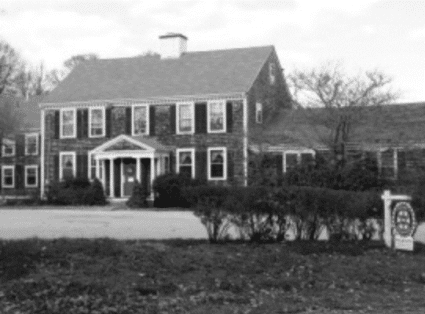
photo of the Nimrod restaurant/Falmouth, MA/via Patch.com
.
Ghost Music
by Stan Ellis
,
…..The trumpet melody glided on a cloud of clarinet and trombone notes. All three instruments dipped and soared over a rhythmical sea of piano, bass, and drums.
…..Since the days of Satchmo, the trumpet had been considered the king, the supreme sweet cream in the coffee of jazz, while the trombone was the hot spicy rum added to the mix. The clarinet became the smooth chaser of cognac.
…..Trumpeter Moe Seiler could feel the audience become more intoxicated with every note. When the band had finished “Sweet Georgia Brown,” all the customers knew they had just visited a bit of old New Orleans. Jumping off the stage, Moe and Max Whittlefield headed for the old watering hole, the bar.
…..“Hey, Moe,” the little drummer shouted out. “That was some hot set.”
…..The tall trumpeter smiled at his companion. “Ya, Whittle, it sure was, and you’re the fire who kept us boiling. That solo at the end of ‘Sweet Georgia Brown’ lit a blaze under the audience too.”
…..“Thanks, Moe. When you hit some of them high notes, I thought I’d see some glasses break on the tables.”
…..Both men laughed as they sat on the wooden bar stools. Whittle put his first finger and thumb on his tongue to get them moist. Moe knew what that meant, and so did Edward J., the bartender.
…..“Hey, Whittle, don’t you dare,” the barkeep’s brash voice cut through the room full of loud, noisy customers. Too late! The drumsticks were in Whittle’s hands. He began to tap out a swing rhythm on the shiny polished wood.
…..“Whittle, I’ve warned you before. I spend a lot of time wiping that wood down.”
…..The rhythm got louder and so did Edward J’s voice.
…..“No more drinks for you, knot head. YOU’RE SHUT OFF!”
…..“Aw, Ed,” the drummer pleaded. “I’m just messing’ around with ya. Come on, man.”
…..“Have a heart, Ed,” Moe piped in. “You know he doesn’t really mean to hurt the bar.”
…..“AH! What do ya want,”the disgruntled bartender’s razor sharp voice cut through the smoke filled air. “Couple of beers, right, Whittle?”
…..The little drummer vigorously shook his head, his eyes opening wider with each acknowledging movement.
…..“All you musicians are crazy,” Edward J. continued as he slid two mugs of Leinenkugel down the bar to the waiting musicians.
…..“I will admit the music you guys play is pretty fiery, and keeps the crowd happy and drinking.”
…..“It’s easy when you play every night,” Moe responded as he grabbed the mug. “The instrument and you become one.”
…..“ONE,” Edward J. shouted and gave a snort and laugh. “That’s why old Whittle looks like a drum stick.”
…..Whit scowled and had every intention of continuing his barroom serenade. Edward J. was too quick, and he threw his bar rag over the hovering sticks.
…..“You’re pretty fast ain’t cha, J?”
…..“Have to be with a nervous-nelly, like you. Drummers are all alike! Tap, tap, tap, tap!” The three men laughed.
…..“I used to play drums with Satchmo in Chicago. Man, what a gas.”
…..“Remind me again, Whit,”Moe asked. “What year was that?”
…..“1934. I was in my early teens.”
…..“Well, Whit, I’m sure glad you came to Cape Cod to play,” Moe said, downing another slug of beer.
…..“We sure are lucky to have all you guys here,”Edward J said as he wiped down the wood again. “Moe, it seems you bring musicians from all over the country to play jazz here on the Cape. Folks from all over come to hear the music.”
…..“Thanks, Ed, it’s what I like to do.”
…..“This place’s really a grand old restaurant,” Whit exclaimed, one hand holding on to the mug of foamy brew, the other resting on his now silent sticks on the bar.
…..“Its been around since the 1700s,” J. responded. “But it wasn’t always here. The main building was a private house sitting down by the bay. Rumor has it that it was dragged up here on logs pulled by horses.”
…..“Wow!”
…..“Yup” J. exclaimed. “Ya know that big round hole in the men’s room wall? That came from a cannonball.”
…..“Everyone here knows the story,” Moe broke in. “We don’t need to hear it again.”
…..“Well, it seems our skinny little drummer here isn’t privy to the tale.”
…..“Right, Moe,” Whittle quickly said. “Go on and tell your tale, J.”
…..The sudden silence around the bar filled Edward J. with enough wind to continue his sea adventure on full speed ahead. The bartender cleared his throat and took a deep breath. He was ready to tell his tale.
…..“At the end of the War of 1812 the English sloop, NIMROD, patrolled the waters off Falmouth looking to capture several cannons situated on shore.The 18 gun ship bombarded Falmouth all day and into the night, but to no avail. She only succeeded in making a mess of some buildings. Ya see, the town folk had been warned to skedaddle out of there. Finally, that ship gave up and moved on to another town to plunder and pillage to their hearts content.”
…..Another “Wow” emerged from Whittle’s lips. “An honest piece of history right here in the men’s room.”
…..“True enough,” boomed a deep voice from the end of the bar. Captain Jack McGraw gulped down his glass of whisky. “Hell, that’s enough talk, let’s get that music playin’ again. The hours late and soon we’ll all be sleepy and fade away. Another glass of hootch for me, and a round for the whole joint.”
…..A solid cheer went up from the crowd that echoed throughout the old building, bouncing off each wall and disappearing into the gray dawn.
…..Moe tapped the little drummer on the shoulder and pointed to the window. “It’s the hour just before dawn and we have to go back on.”
…..The band all filed on stage and began a favorite of the crowd’s, “The World Is Waiting For The Sun Rise.”
…..Moe blew his horn with all the force and fire he could muster. The other members responded, and the music grew until the building seemed to hover above the ground. The notes faded in and out as if dancing on the morning breeze, flitting about the trees and finally blending with the sounds of a new day.
…..Two men observed the empty plot of land, now filled with timbers from a bygone era; doors, windows, brick and stone, all waiting for a ride to their final resting place.
…..“You know, Ron, my hearing is failing fast. I’m hearing music, but I don’t know from where.”
…..“I hear it too, Bill. Dixieland stuff. Us locals say it’s ghost music.”
…..“What do you mean ghost music?”
…..“This was the site of the NIMROD RESTAURANT. Great food and better music; JAZZ. Lots of local musicians played in the pub and some big names dropped by to add to the festivities. Music every night of the week, the best on old Cape Cod. It just seems to stay here, and if the wind is right you can hear it between dusk and dawn.”
…..“Scary”
…..“No, not really, Bill. It’s a happy sound to me. That music should have stayed here along with the old historic building.”
…..“I’m new around these parts. I read all the controversy in the papers about the NIMROD and its historic significance. How come the town let it be destroyed?”
…..“It’s like hundreds of old historic buildings, Bill. The story is always pretty much the same. A restaurant owner retires and sells the whole shebang to some company that feels the building isn’t worth restoring. Too much cashola. Next thing you know the building becomes uninhabitable. The wood rots, the windows are broken, and the local rodent and bug population move in. Finally the town provides the owners with permission to demolish the place. Too dangerous for the good of the town folks, and the day comes when the death knell rings. Another piece of history goes to the dump.”
…..Bill and Ron walk on in silence while the sun begins to climb. The sounds of engines, horns and sirens fill the morning with the everyday, stressful, uninspiring music of a local Cape town. But if you listen, really listen, as you walk by the old NIMROD, you just might hear the happy sounds of JAZZ.
Now that you’ve heard my story
Hand me another shot of booze
If anyone should ask you
Tell ‘em I got the Saint James Infirmary Blues
.
.
___
.
.

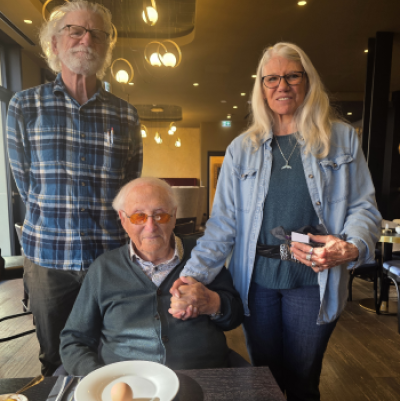
A drummer, singer, and educator, playing music in clubs for over sixty years. The Nimrod Restaurant was one of my favorite venues to perform at on the Cape.
.
___
.
.
Click here to read “The Old Casino,” J.B. Marlow’s winning story in the 64th Jerry Jazz Musician Short Fiction Contest
Click here to read more short fiction published on Jerry Jazz Musician
Click here to read The Sunday Poem
Click here for information about how to submit your poetry or short fiction
Click here for details about the upcoming 65th Jerry Jazz Musician Short Fiction Contest
Click here to subscribe to the Jerry Jazz Musician quarterly newsletter (it’s free)
Click here to help support the continuing publication of Jerry Jazz Musician, and to keep it ad and commercial-free (thank you!)
.
.
___
.
.

Jerry Jazz Musician…human produced (and AI-free) since 1999
.
.
.














An awe-inspiring story that both excites one’s imagination, and runs goose bumps down your spine. It brings to the forefront the beauty and complexity of Jazz, combined with the intrigue of its history; while at the same time, breaks your sad heart at the senseless loss, perpetrated by apathy and greed.