
A collection of Short Fiction — May, 2019

May 12th, 2019

.

.


.

We had many excellent entrants in our recently concluded 50th Short Fiction Contest.  In addition to publishing the winning story on March 11, with the consent of the authors, we have published several of the short-listed stories, all of which can be read by following the links below.

.

.

_____

.

.


.


Short Fiction Contest-winning story #50 

“And so we left for Paris,” by Sophie Jonas-Hill

.

___

.

 .And so we left for Paris, you in the green jacket I’d made you with the picture collar and turned back cuffs, and I in my blue pinstripe, which made me look like a handsome young man.
…..“You look like a boy,” you said, laughing as we stumbled to our carriage on the train.
….. “I suppose it would be easier if I were.”

.

Click here to continue reading the story


.

.

*

.

.

.

“How Love Happens,” by Brian Greene

.

___

.

…..On my second date with Samantha, I told her, “We shouldn’t fall for each other.”

…..Samantha was a hostess at a seafood restaurant in my hometown. I worked there as a waiter for the summer season, after my second year away at college. Samantha had also just finished her first year of college, at a local school. She was from the area, and a year younger than me.

.

Click here to continue reading the story

.

.

*

.

.


.

“The Cardinal Club,” by Carole Ackelson

.

___

,

…..Glo squares her shoulders, pushing through the dented metal door. The doorman barely glances over, waving her past, more intent on the front page of the newspaper emblazoned with the words WAR OVER! She holds the fur coat closer, a present from a Canadian soldier on his way overseas less than a year ago, hoping she doesn’t seem shabby. It seems long ago, what with the war practically over. Mend and make do nearly ruined her closet. She pushes all thoughts but music from her mind. All they do is distract, and Glo must be at the top of her game. Glo’s obsidian eyes take in the fierce competition. A line of young ladies snakes around tables all the way to the bar.

.

Click here to continue reading the story

.

.

*

,

.


.

“Live a Little,” by Anisha Johnson

.

___

.

….. Stelle eyed herself in the bathroom mirror, nodded firmly at her reflection, and tore her wig off.

…..Her new shingle cut was so sharp it could have sliced through paper like scissors, and it gleamed the same glossy hue as ink. She smoothed the pads of her thumbs against her head to straighten the curls that had bloomed beneath the wig, and examined herself with satisfaction. She was a painting of dark hair and dark eyes and moony skin, with perfectly crimson lips and a figure that was concave and convex in all the right places. Her skirt came to an abrupt end just above her knees and her elbow-length gloves were even downier than down. Perfect.

.

Click here to continue reading the story

.

.

*

,

.

.

“The Music is Not Your Nightmare,” by Molly Ertel

.

___

.

…..She aimed her horn at my left ear and blasted it for 16 seconds that lasted the rest of my life. Even though the trumpet was pressed to her lips, I could see the smirk her mouthpiece couldn’t quite hide.

…..I’d been the one judging her out of the corner of my eye in the hallway before the show thinking, “Who is that slob of a woman wearing a muumuu and a backwards ball cap?” I assumed she was a friend of a friend of a friend that they let in for free, out of pity. When they announced her name, she, Janie Burch, lumbered onto the stage flaunting my disdain.

.

Click here to continue reading the story

.

.

*

.

.

.

“D-Natural Blues,” by Salvatore Difalco

.

___

.

Galinsky was killing my buzz. I could not see his face behind a fuming joint, clenched between his tarry teeth, but I could see his hands—one holding a deck of playing cards, one opened gesturally. They wove with the languid rhythm of a Greek rhetorician as Galinsky droned on about the pratfalls of legalized cannabis: how the government had screwed up a good thing, how the government was greedy, how the government had put the kibosh on a thriving subculture—a tribe to which we after all, at this game, belonged. The black market had provided a beautiful service, in his words, without all the red tape and documentation blah blah blah. I could barely see the other boys behind a gray-blue indica haze, each squinting into their own throbbing hum, probing their own low-level well of despair. The moody jazz muttering over the speakers—muted Miles—spoke for them.

.

Click here to continue reading the story

.

.

*

.

.

.

“Strings of Solace,” by Kimberly Parish Davis

.

___

.

Carly squeezed her little car into a metered parking space and got out. She hoped the long walk to the campus would give her a chance to clear her mind and get her nerves under control. She was walking around to get her stuff out of the trunk when her right foot slid out from under her and she hit the pavement. Hard. She pushed herself up and dusted her butt off as she looked around to make sure no one had seen her fall.

.

Click here to continue reading the story

.

*

.

.

“Before the Sky Was Blue,” by J. Lee Strickland

.

___

.

…..It is tempting to say that this story took place a long time ago, but that would not be accurate. The place where this story unfolds did not suffer Time as we know it—the linear time of beginnings and endings, of what once was, of what might never be.

…..In that place, each day was like every other—days of sun, days of rain, calm days, and days when the wind blew and the trees of the forest danced. The seasons slid seamlessly one into another, more places than times—Winter, a place where the fishes gathered; Spring, a place of flowers; Summer, a place to dig savory white roots from the soil, and Fall, a place where ripe fruit hung so low, in such abundance, that one picked one’s fill sitting on the ground without moving.

.

Click here to continue reading the story

.

.

_____

.

.


Details about our upcoming Short Fiction Contest

.

.

.


.


Share this:

Comment on this article:

Your email address will not be published. Required fields are marked *

Site Archive

Your Support is Appreciated

Jerry Jazz Musician has been commercial-free since its inception in 1999. Your generous donation helps it remain that way. Thanks very much for your kind consideration.

Click here to read about plans for the future of Jerry Jazz Musician.

In this Issue

Announcing the publication of Volume II of Kinds of Cool: An Interactive Collection of Jazz Poetry...The second edition of Kinds of Cool, an Interactive Collection of Jazz Poetry has just been published, and is now available for sale on Amazon.com. This edition is dedicated to publishing women poets from all over the world who share their personal passion for and relationship with jazz music, and the culture it interacts with. With a foreword by Allison Miller, one of the world’s most eminent jazz drummers, and photography and design by Rhonda R. Dorsett

Poetry

Andrzej Barabasz, CC BY-SA 4.0, via Wikimedia Commons
21 jazz poems on the 21st of June, 2026...An ongoing series designed to share the quality of jazz poetry continuously submitted to Jerry Jazz Musician. In this edition…An eclectic mix of poetic styles and subjects display a collective love for the music and culture at the core of this creative community.

The Sunday Poem

The Sunday Poem: “Dizzy in Greece” by George Kalamaras

The Sunday Poem is published weekly, and strives to include the poet reading their work...

George Kalamaras reads his poem at its conclusion.


Click here to read previous editions of The Sunday Poem

Performance

The performance poet Emmett Wheatfall
A Letter from the Editor…On “The Weary Blues: Celebrating Langston Hughes and the Harlem Renaissance”A brief recap and photos of the February 7, 2026 Jerry Jazz Musician-produced performance of “The Weary Blues: Celebrating Langston Hughes and the Harlem Renaissance”

Interview

photo of Billie Holiday by William Gottlieb/Library of Congress
Interview with Paul Alexander, author of Bitter Crop: The Heartache and Triumph of Billie Holiday’s Last Year...The author talks about the courage and resilience of the legendary Lady Day, and his outstanding book – an inspirational and revealing portrait of an iconic American, that, like his subject, exudes compassion and creative soul.

Feature

Book Excerpt from Crossing Bar Lines: The Politics and Practices of Black Musical Space, by James Gordon Williams...In this entire chapter from his book, the author explains how the trumpeter Ambrose Akinmusire expresses his political views and lived geography through his improvisational music, notably his critique of police brutality that has, as he states, “become a leitmotif throughout my albums.”

Poetry

Yves Moch, CC BY-SA 3.0, via Wikimedia Commons
“Remembering Sonny Rollins” – a collection of poetry...Over the years, many poems have been published on Jerry Jazz Musician that were written in reverence of the man we refer to simply as “Sonny.” In the wake of his death, many more have been written. The unsolicited poems making up this collection is an example.

Short Fiction

Photo by Johannes Schröter, via Pexels
Short Fiction Contest-winning story #71 – “Where the Music Wasn’t Allowed,” by Jane McCarthy....The award-winning story is about a young immigrant growing up in Southern California to the sound of music seeping into his family’s home from an upstairs neighbor’s piano, shaping the boy’s understanding of memory, family, belonging, and the improvisational ethics of music.

Interview

photo by Warren Fowler
Interview with John Gennari, author of The Jazz Barn: Music Inn, the Berkshires, and the Place of Jazz in American Life...The author discusses how in the 1950s the Berkshires – historic home to the likes of Hawthorne, Melville, Wharton, Rockwell, and Tanglewood – became a crucial space for the performance, study, and mainstreaming of jazz, and eventually an epicenter of the genre’s avant-garde.

Short Fiction

“The Cartographer” – a short story by Timothy Collyer...The story – a finalist in the recently concluded 71st Short Fiction Contest – is a work of speculative fiction about the gentrification of memory. It follows a recovering alcoholic who is building a guerrilla augmented-reality map of Philadelphia’s lost jazz history—specifically the “Blue Note” era of the 1960s—while battling a corporate developer who wants to sanitize the data for tourists.

Feature

Memorable Quotes: Abraham Lincoln..."I like to see a man proud of the place in which he lives..."

Community

Ricky Esquivel/Pexels.com
Community Bookshelf #6...“Community Bookshelf” is a twice-yearly space where writers who have been published on Jerry Jazz Musician can share news about their recently authored books and/or recordings. This edition includes information about books published within the last six months or so (September, 2025 – March, 2026)

Poetry

Six poets write eight poems (in the midst of our times)...Poets within this community of writers are feeling this moment in time, and writing about it. This collection is another example.

Short Fiction

collage by Judith Beth Cohen
“The Eating Club” – a short story by Judith Beth Cohen...The story – a short-listed entry in the recently concluded 71st Short Fiction Contest – centers on an affair two writers share around gourmet meals.

Poetry

Peter Buitelaar, CC BY 2.0 , via Wikimedia Commons
Two Poems for Miles Davis

Feature

photo by Laura Stanley via Pexels.com.
Trading Fours, with Douglas Cole, No. 28: “Little Samba”...Trading Fours with Douglas Cole is an occasional series of the writer’s poetic interpretations of jazz recordings and film. This edition is based largely on a documentary – They Shot the Piano Player – about Tenório Junior, a Latin jazz musician who only produced one album (1964) before he “disappeared” in 1976.

Short Fiction

“Where even music breaks down” – a short story by Gary Bolick...In this story – a short-listed entry in our recently concluded 71st Short Fiction Contest – a young man who was “given away” by his father to be raised and nurtured by his uncle opens a box left to him after the death of his uncle. In it he finds letters and a tape of astounding music his father made, offering the son a glimpse at the loneliness and alienation his father endured.

Jazz History Quiz

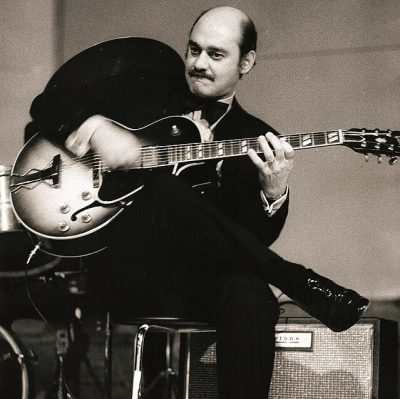
Besides being one of the first to be influenced by Charlie Christian (pictured), in 1944 this electric guitarist employed Charlie Parker on his first recording date and eventually led an R&B-oriented group “The Rockin’ Highlanders” that featured the saxophonist Red Prysock. Who is he?

Poetry

Poems on Charlie “Bird” Parker (inspired by a painting by Al Summ) – an ekphrastic poetry collection...A collection of 25 poems inspired by the painting of Charlie Parker by the artist Al Summ.

Contributing Writers

Click the image to view the writers, poets and artists whose work has been published on Jerry Jazz Musician, and find links to their work

Coming Soon

New poetry collections, Jazz History Quiz, and lots of short fiction; poetry; photography; interviews; playlists; and much more in the works...

Interview Archive

Ella Fitzgerald/IISG, CC BY-SA 2.0 , via Wikimedia Commons
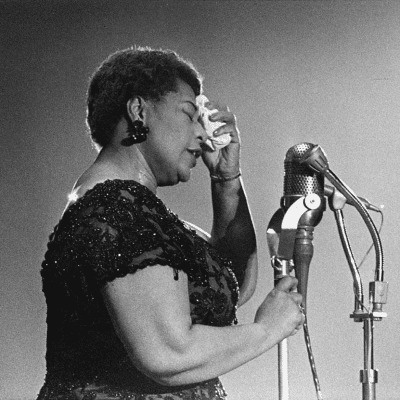
Click to view the complete 25-year archive of Jerry Jazz Musician interviews, including those recently published with Judith Tick on Ella Fitzgerald (pictured),; Laura Flam and Emily Sieu Liebowitz on the Girl Groups of the 60's; Tad Richards on Small Group Swing; Stephanie Stein Crease on Chick Webb; Brent Hayes Edwards on Henry Threadgill; Richard Koloda on Albert Ayler; Glenn Mott on Stanley Crouch; Richard Carlin and Ken Bloom on Eubie Blake; Richard Brent Turner on jazz and Islam; Alyn Shipton on the art of jazz; Shawn Levy on the original queens of standup comedy; Travis Atria on the expatriate trumpeter Arthur Briggs; Kitt Shapiro on her life with her mother, Eartha Kitt; Will Friedwald on Nat King Cole; Wayne Enstice on the drummer Dottie Dodgion; the drummer Joe La Barbera on Bill Evans; Philip Clark on Dave Brubeck; Nicholas Buccola on James Baldwin and William F. Buckley; Ricky Riccardi on Louis Armstrong; Dan Morgenstern and Christian Sands on Erroll Garner; Maria Golia on Ornette Coleman.