
Who was your childhood hero? Page 3

April 5th, 2009

Childhood Heroes —  We all had them

Excerpted from exclusive Jerry Jazz Musician interviews, our guests talk of theirs.

______________________________________________

Donzaleigh Abernathy

Anthony Bianco

Kevin Boyle

Vincent Cannato

John Chilton

Stephanie Stein Crease

Stanley Crouch

John D’Emilio

Gerald Early

Sascha Feinstein

James Gavin

John Gennari

Ben Green

Carla Kaplan

Robin D.G. Kelley

William Howland Kenney

John Kruth

Neil Lanctot

Gene Lees

Peter Levinson

Eric Nisenson

Horace Porter

Dunstan Prial

Brian Priestley

Doug Ramsey

Tom Smothers

Richard Sudhalter

John Szwed

Lee Tanner

Martin Torgoff

McCoy Tyner

Geoffrey Ward

George Wein

Jerry Zolten

______________________________________________

Heroes
Index

Heroes Page
1
 2
 3

______________________________________________

JJM When you were a kid, who was your childhood hero?

JK Bob Dylan and John Lennon were heroes of mine. I also liked a lot of writers. I loved Jack London and Allen Ginsberg.

JJM Was there a particular book that inspired you to want to become a writer?

JK In this instance, the book that really told me that I could write, was Michael Ondaatje’s Coming Through Slaughter. It is a fictionalization of trumpeter Buddy Bolden. While my book on Rahsaan is not a work of fiction, I don’t believe a fiction writer could have created him.

Rahsaan Roland Kirk biographer

John Kruth

______________________________________________


Poet

Sascha Feinstein

JJM Who was your hero?

SF I had and have too many to name. If pushed, I’d say the anonymous sculptors of the Ellora Caves in India. Without ego, they created the most astonishing work in the world.

JJM What poet was most inspirational to you when you found yourself having an interest in poetry?

SF Yeats. He’s now human to me, but when I really became interested in poetry, he was mythic–I mean, mythic like Thor.

______________________________________________

JJM Who were your childhood heroes?

EN I would have to say Miles Davis and John Coltrane.

JJM If you could pick an event in jazz that you could have witnessed, what would it have been?

EN I would have loved to have seen the first time Charlie Parker and Dizzy Gillespie played 52nd Street together. Would have been great to be there about 1946. Imagine going down the street and Art Tatum is at one club, Charlie Parker is at another, Coleman Hawkins is across the street, Billie Holiday is around the corner…I mean, my God!


Sonny Rollins biographer

Eric Nisenson

______________________________________________

Cultural critic

Stanley Crouch

JJM Who was your childhood hero?

SC I don’t know, different ones at different times. One time I was obsessed with Dizzy Gillespie and another time Thelonious Monk and Charles Mingus. They were mostly musicians as I recall. As for writers, I liked Yeats for a long time. During his pre black nationalist period I was really enamored with Leroi Jones as a writer, which I came to despise later, when, as far as I was concerned, he just sold out to clap-trap. I became excited about Ralph Ellison in the middle 60’s because James Cortez introduced me to both Shadow and Act and Invisible Man.

______________________________________________

JJM Who was your childhood hero?

GE As a kid, growing up, there were a lot of athletes I admired, particularly Ali, and guys like Wilt Chamberlain, Bill Russell, Jim Brown, Willie Mays, Hank Aaron. I admired them because in the press, at that time, about the only section in the paper that you could turn to and see black men talked about in a really positive way was if you went to the sports page. These men became my models, not because I wanted to become an athlete, but because I wanted to be as good at something in life as they were as athletes. As I grew older, I became interested in jazz music, and I listened to it a lot. I became interested in it because I heard it and admired the ability of the people who played it. Once again, I sort of adopted them as role models, not because I wanted to be a musician, but because I wanted to be able to do as well in life as these people did, and exhibit the same level of dedication.

JJM Was there a writer that you looked up to?

GE There were several writers that I admired when I was growing up. George Orwell was one of them. I really liked 1984 and Animal Farm. I also very much admired Richard Wright, particularly his autobiography Black Boy. He wrote very well about the adolescent experience, and I was able to identify with the hero of his autobiography. I liked James Baldwin also, not that I was able to understand him when I was a teenager, but I just like the way he wrote and the way he put together words. I thought he was a great stylist. I also admired several sports writers of the day. I used to read sports magazines pretty regularly. I loved Red Smith’s columns, I used to read them pretty religiously. I used to read Robert Lipsyte of the New York Times.


Cultural critic

Gerald Early

______________________________________________

Gil Evans biographer

Stephanie Stein Crease

JJM Who was your childhood hero?

SSC I have to say that music was a huge influence in my life and that’s what comes to mind more than a particular person. My parents had very eclectic tastes and there was always music on when you walked in the door– My Fair Lady, opera, Billy Holiday, Beethoven, anything. I remember seeing Porgy and Bess as a small child, and that had a huge impact on me. When I was a little older, my brother started bringing home these Miles Davis/Gil Evans records, and their Porgy and Bess just fascinated me. I was a big reader too.

JJM  One last question. Who would you say your heroes were?

TS  The first comedian I saw who had a great impact on me was George Gobel. I saw him in the early 50’s on the “Ed Sullivan Show.” He didn’t tell jokes, he just had this wonderful timing. He had a guitar, and talked about losing his bowling ball. He went to the police station, and told the cops someone stole his bowling ball, and described it. He was describing how it was round, and had holes in it. They asked him if the holes were on the top or the bottom. I was falling on the floor. It was very funny stuff. He was the first guy that got me interested in comedy. Also, Laurel and Hardy I loved very much, the way they have stood up to the test of time. Genuine, wonderful air, a lot of air in there, silent spots. Jack Benny was the same thing. Political heroes…Ralph Nader still stands out in my mind as a man who has stayed the course and not been swayed by a lot of things. Ted Turner is a hero of mine. I like where his head is at. He has a sense of putting his money where his mouth is. He puts on those Goodwill Games, and tries to do the best he can to make things better. I like him. Otherwise, the good people we all recognize, and the good ones right thinking people know. It is getting harder and harder to find the white hats though, because everyone is wearing gray. Earlier in our lives, it was pretty clear. We tend to demonize people and we are quick to apologize for expressing views.

Comedian

Tom Smothers

______________________________________________

Critic, writer

Gene Lees

JJM Who was your childhood hero, Gene?

GL One of them was a cartoonist named Alex Raymond, who drew Flash Gordon. Another was Hal Foster, who drew Prince Valient. Another was probably cowboy star Ken Maynard. When I was about 12, I would say Bing Crosby. At 15, it was Frank Sinatra. I was very drawn to artists because I was going to be a commercial artist. My childhood heroes tended to be painters and graphic illustrators, like Gil Elvgren, who did commercial art and posters. Elvgren did pictures of pretty girls, and was also a pretty good artist. Also, Edgar Rice Burroughs, for the novels he wrote. I also enjoyed Ray Bradbury and science fiction writers. Tyrone Power because of “The Mark of Zorro.” I loved the romantic movies of the time, and of course I went to all of the cowboy westerns, and Saturday afternoon serials.

______________________________________________

JJM  Who was your childhood hero?

PL  My childhood hero was probably Stan Musial, the outfielder of the St. Louis Cardinals. He was my hero from about 1942 to 1952, then I transferred my allegiance to Benny Goodman and Harry James, and then Frank Sinatra.


Nelson Riddle biographer Peter Levinson

______________________________________________

Ralph Ellison in America  author

Horace Porter

JJM Who was your childhood hero?

HP I grew up in Georgia around the time of the heyday of Dr. Martin Luther King, so I would say King and John Kennedy were my heroes. I also identified with Roger Maris and Jim Brown, but if I were to choose a national figure, I think it would be Dr. King.


______________________________________________

JJM Who was your boyhood hero?

JG  As far as music goes my boyhood heroes were women. The first one that I remember being quite infatuated with was Peggy Lee. My introduction to all this music that I now love, and that I have written about for quite a few years, were the Andrews Sisters. I was born in 1964, and in 1974, when I was ten, Bette Midler had her hit record, “Boogie Woogie Bugle Boy,” when she was doing her camp nostalgia routine that made her a star. I heard “Boogie Woogie Bugle Boy,” and it knocked me out. It opened a window to the past for me, and as most kids are at that age, I was looking for my own little world to escape into, and the past seemed like a very safe place to go. There are no surprises, you know exactly what is going to happen. My parents got me an Andrews Sisters record, and that was the reason why we are having this conversation now. That completely turned me on to songs and to the music of the swing era and the great singers it produced. Chet Baker wasn’t a part of that era. Chet Baker came later.


Chet Baker biographer

James Gavin

______________________________________________

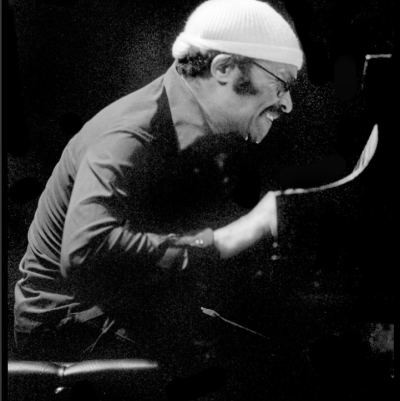
Pianist McCoy Tyner

JJM Who were your heroes?

MT When I was growing up, Bud Powell, Thelonious Monk were basically the people who inspired me on the piano. Later on, I found out about Art Tatum and others. Bud and Thelonious were the main people who inspired me. Bud Powell, fortunately, moved around the corner from me when I was about 15. It was in the mid 50’s, and his brother, Richie, was with the Max Roach/Clifford Brown band. Richie had an apartment around the corner and Bud moved in. I was very fortunate to have a gentleman that inspired me right around the corner, in my neighborhood.

JJM Was he your first memory of listening to a piano performance as a child?

MT I had an R&B band in junior high school, and some of the older musicians got me involved in the modern concept. I think Bud was one of the first, but I wouldn’t say he was the first. He and Thelonious culminated around the same time. I can’t say who I heard first.

______________________________________________

JJM  Who was your childhood hero?

RS  Scratch a kid from Boston and you find a once-upon-a-time Red Sox fan. My fondest dream (realized, in fact, on several occasions) was to sit in the stands along the first base line at Fenway Park and watch Ted Williams belt one (or two, or three) into the bleachers, scowl at the crowd, and disappear into the dugout. Heaven on earth. Even all the brouhaha surrounding his death, and the unseemly family squabbling over his bats, hasn’t in the least dimmed the luster of those long-ago afternoons. Splendid splinter? Dumb nickname, nonpareil ballplayer.

Hoagy Carmichael biographer

Richard Sudhalter

______________________________________________

Jazz photographer

Lee Tanner

JJM Who was your childhood hero?

LT They were baseball players for sure. My favorites were Lou Gehrig and Joe DiMaggio. When I first started listening to jazz, the player who really got me excited was soprano saxophonist Sidney Bechet, who was very popular in Boston, where I grew up.

JJM Who were your photographic mentors?

LT I would say Herman Leonard initially, and then Bill Claxton as time went on, were the ones who really got me interested in photography. Leonard was publishing in Metronome Magazine in the mid-forties, and then Claxton’s photos started appearing on the Pacific Jazz Records LP covers a few years later. In addition, my introduction to jazz photography came in Life Magazine in 1944. Photographer Gjon Mili hosted an all-night jam session in his New York studio which included just about everybody in jazz, Basie, Ellington, Dizzy, Lester Young. The resulting photographs are classics. A bit later, Mili made a superb short film called “Jammin’ the Blues” that included Lester Young, Illinois Jacquet and Harry Edison.


______________________________________________

JJM  Who was your childhood hero, Carla?

CK  The question stumps me a little, quite frankly, because I don’t think I had a childhood hero. I was raised by very progressive parents who taught me that most great achievements are collective works. They felt that people who do great things are “rounding up” collaborative and collective efforts around them, giving them a final step forward. That is not to say certain individuals don’t do extraordinary things, but there is always a group of people behind them that ultimately inspires acts of heroism. Having said that, I grew up admiring some pretty extraordinary people like Rosa Parks, Emma Goldman, and Paul Robeson. But I didn’t have a single childhood hero, ever.

Zora Neale Hurston: A Life in Letters editor

Carla Kaplan

______________________________________________

Miles Davis biographer John Szwed

JJM  Who was your childhood hero?

JS  For a brief time, we lived across from a movie theatre that showed afternoon movies. My mother would let me go there and I would watch shorts in which musicians like Tommy and Jimmy Dorsey or Artie Shaw performed. I remember the way they looked, the way they stood on stage, the way they dressed…I thought they were great models for how musicians should perform and how men should be.

______________________________________________

JJM  Who was your childhood hero?

JZ  Probably any number of black rock and rollers who were coming up at the time. I related to rhythm and blues musicians more than anyone else, and it is hard to name only one because I loved them all.

I grew up in Pittsburgh in the mid-fifties and early sixties, and was listening to black radio. There was one disc jockey in particular, Porky Chedwick, who I admired because he played music by people who were my heroes. He never told us who the musicians that he played were, he just played the records, which of course added an even greater mystery to the music. He played a lot of doo-wop, New Orleans and jump blues. While I didn’t always know who I was listening to, I just knew I loved it.

Dixie Hummingbirds biographer Jerry Zolten

______________________________________________

New York City historian Vincent Cannato

JJM Who was your childhood hero?

VC Oh, that question…I was never good at questions like these. Quite honestly, I can’t say that I really had any heroes. I suppose the easiest answer is probably my parents, my grandfather and family around me.


______________________________________________

JJM  Who was your childhood hero?

GW   Boy. That depends on which childhood. My first, second or third?

JJM  I assume you are in your third now…

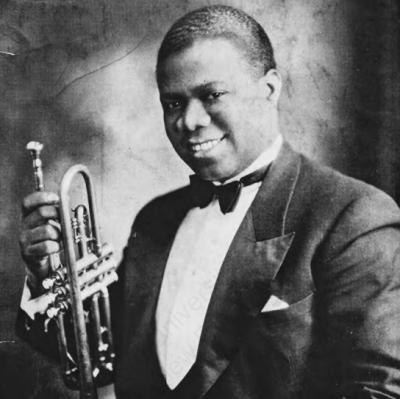
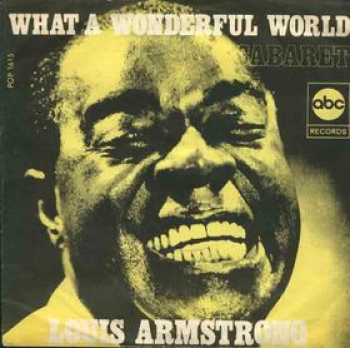
GW  Yes, that’s right. Ted Williams was one, but before him, I used to root for Joe Louis. Many of my real heroes as a child were radio stars like Eddie Cantor, Bing Crosby, and Al Jolson. I cut my teeth on their music at a very young age. Then, I got involved with jazz, and loved the bands of Benny Goodman, Tommy Dorsey, Jimmie Lunceford and Duke Ellington. When I discovered Louis Armstrong, he changed my life.

JJM  If you could have attended one event in jazz history, what would it have been?

GW  That is quite a question. Some of them I may have created! I wish I was in Chicago when Louis Armstrong recorded the Hot Fives and Hot Sevens and nobody had ever heard anything like that before. That might have been incredible, because that is still some of the greatest music ever played. That was the beginning of great solo playing in jazz. Before that it was ensembles with no great soloists. Louis emerged at that time and changed everything. Everything that has happened since goes right back to Louis Armstrong, so, I would have liked that.

Newport Jazz Festival creator George Wein

______________________________________________

Bayard Rustin biographer John D’Emilio

JJM  Who was your childhood hero?

JD’E  I would say that it was probably Jesus. I grew up in a very Catholic environment, and was a religious kid. I prayed incessantly, it seems. He would have been a heroic figure for me at that time.

JJM  I have asked hundreds of people this question over the years, and this is probably the first time anyone answered Jesus.

JD’E  Well, given who I am now, and given the current cultural and political climate, I even hesitate to say Jesus was my hero because it conjures up images of right wing fanatics. But, for a kid growing up in the Bronx in a very small world, Jesus was a wonderfully heroic figure who provided me with a huge amount of comfort.

______________________________________________

JJM Who was your childhood hero?

JC  I had two gigantic musical heroes. One was Sidney Bechet, whose music was the first recorded jazz I ever heard on the radio. Very soon afterwards I heard Louis Armstrong, and never looked back. He remains my absolute all-time hero. It inspired me to start collecting his records when I was about twelve.

Roy Eldridge biographer John Chilton

______________________________________________

Reverend Ralph David Abernathy’s daughter Donzaleigh Abernathy

JJM  Who was your childhood hero?

DA  Oh my. I would have to say it was my grandmother, my mother’s mother.

JJM  Why was she your hero?

DA  My grandmother was three-quarters Cherokee Indian, and that was the dominating culture in her life. Even though she was my grandmother, her background was so entirely different from mine. I remember her as being a little lady who lived on an incredible farm of about three hundred fifty acres. When I visited her as a little girl, I was struck by the fact that for as far as I could see, everything belonged to my grandmother. According to Tuskegee Institute, her husband — my grandfather — had been the most successful black farmer in the state of Alabama during the forties. After my grandfather died, she lived alone in her big house with a gorgeous wrap around porch. It was absolutely heavenly. Visiting her was always an amazing experience. It made me want to grow up and be a nature woman like my grandmother, and have land, animals, and a big farm on which I could grow anything and take care of everybody with what I grew on the farm’s earth.

______________________________________________

JJM  Who was your childhood hero?

NL  I grew up in New England so I followed the Red Sox and admired whoever their star player was at the time, although in retrospect it seems as if they were always failing. I can’t say I followed one particular player, and none could be considered my childhood hero.

Negro League Baseball: The Rise and Ruin of a Black Institution author Neil Lanctot

______________________________________________

Can’t Find My Way Home: America in the Great Stoned Age, 1945 – 2000 author Martin Torgoff

JJM  Who was your childhood hero?

MT  For the longest time I was obsessed with baseball, and I would have to say that my childhood hero was Mickey Mantle. He represented this heroic, almost god-like figure out on the baseball field, who just kept playing and playing fantastically no matter how injured he was. He was a real powerful example about how people could continue to excel despite liabilities. He played through the pain, as they say, and I have come to see that that is really what life is about, too — you play through the pain. Of course, as we found out later, Mantle’s major liability was that he was a budding and ferocious alcoholic. But in terms of childhood “Field of Dreams” kind of stuff, I would have to say that Mantle was it for me.

______________________________________________

JJM  Who was your childhood hero?

GW  Franklin Roosevelt.

JJM  Any particular reason?

GW  Yes, I had polio when I was a kid, and I grew up in a Democratic household. That combination made him be my hero, and I ended up being his biographer.

Geoffrey Ward, author of Unforgivable Blackness: The Rise and Fall of Jack Johnson

______________________________________________

Anthony Bianco, author of Ghosts of 42nd Street: A History of America’s Most Infamous Block

JJM  Who was your childhood hero?

AB  I would have to say it was Willie Mays, which is a classic one.

JJM   Yes. He was mine as well.

AB   I was a sports fan, and Sports Illustrated was the first magazine I subscribed to, and I did so at a very early age. But I lived in Minnesota, so I had no real hometown reason to root for Willie Mays — I just really liked the way he played. He was an overwhelming talent with such style. I lived in Rochester, Minnesota, and it did not have a single black family — not one — so that was part of my fascination with him too.

JJM  I just remember watching him on television when I was a little kid, and in that era there were only nine games televised a year — those against the Dodgers in Los Angeles — and this underexposure may have elevated our sense of fascination with him as well.

AB  It is hard to believe that is how few games were shown, isn’t it?

JJM  Yes, and when I was exposed to him, I remember being in awe of his play in center field and at the plate, and thinking that he was even more incredible to watch than he was to read about. I think this underexposure may have elevated the appeal of guys like Mays and Mantle.

AB  There were no questions of steroids then, at least not that we knew of. Steroid use calls into question the basic achievements of someone like Barry Bonds, but you never had that kind of question mark over a player like Willie Mays. He probably didn’t even lift weights.


______________________________________________

JJM  Who was your childhood hero?

KB  I have two different answers. One is a very conventional answer, which is probably the classic American boy answer — the baseball player. I grew up in Detroit, and was a huge baseball fan. I loved the game, and would lay awake at night, listening to the Tigers games on the radio. While I played baseball, I was one of those kids who couldn’t hit. So my baseball hero was the shortstop for the Tigers at the time, a guy by the name of Eddie Brinkman, who couldn’t hit at all either.

JJM  I remember him. He hit about .190 one year, didn’t he?

KB  Exactly, but he was a terrific fielder. So Brinkman the baseball player is my conventional answer. My other answer, which is also probably quite conventional, is my parents. I really worshipped them, and they were definitely boyhood heroes of mine. By my answers you can probably tell that I wasn’t exactly a wild, radical kid…

Arc of Justice author Kevin Boyle

______________________________________________

Paul Desmond biographer Doug Ramsey

JJM Who was your childhood hero?

DR Off the top of my head I would have to say Douglas MacArthur.

JJM Why?

DR Because at the time I became a conscious, sentient human being, World War II was in full swing, and MacArthur was leading the forces in the South Pacific. I was seven or eight years old then, just beginning to read the newspaper, and I diligently followed what was happening in the Pacific. Additionally, as silly as this may sound, since both our first names are Douglas, I felt some sort of connection. I’m not sure that he lasted as my hero forever, but he was the first person outside my family and immediate circle of friends whom I admired.

______________________________________________

JJM  Who was your childhood hero?

WK  I was a Boston boy, and in those days the Boston Braves were one of the two in-town teams – the Red Sox being the other. They were a team that had pitching more than anything else, so much so that the phrase “Warren Spahn and Johnny Sain and pray for rain” caught on. I would say that Spahn was my hero at the time.

Jazz on the River author William Howland Kenney

______________________________________________

Harlem Globetrotters biographer Ben Green

JJM  Who was your childhood hero?

BG  I was crazy about sports, and was a big Mickey Mantle fan, so he would have been high on my list.

JJM  Did you grow up in New York?

BG  No. I was an Air Force brat until I was nine. At that time we moved to Tallahasse, Florida, where I have been ever since. I lived right behind the Florida State University football field, and I started hanging out with the players, many of whom quickly became my heroes.

______________________________________________

JJM  Who was your childhood hero?

BP  I guess the first music that really got to me in a big way was the piano music of Chopin. As I was learning to play the piano as a youngster of eight, my father was an amateur pianist who was more or less self-taught. Eventually I discovered that I could play a lot better than him, and Chopin’s music is what somehow especially got to me.


Chasin’ The Bird : The Life and Legacy of Charlie Parker author Brian Priestley

______________________________________________

The Producer: John Hammond and the Soul of American Music author Dunstan Prial 

JJM  Who was your childhood hero?

DP  Paul Newman.

JJM  Why?

DP  Hud. Cool Hand Luke. Do I need any other explanation? Those characters are the iconoclastic anti-heroes. I like that sort of stuff.

______________________________________________

JJM  Who was your childhood hero?

JG  I was a big sports fan when I was a kid, and I was fanatical about the Red Sox when Carl Yastrzemski played for them. I had never seen anyone look so majestic at the plate or on the field. What probably drew me to him was that he was flawed and underrated compared to other players of his generation. What I remember more than anything was how hard the Red Sox fans were on him. They would boo him pretty aggressively, but he responded to that with a lot of poise and dignity.


Blowin’ Hot and Cool: Jazz and Its Critics author John Gennari

______________________________________________

Thelonious Monk: The Life and Times of an American Original author Robin D. G. Kelley 

JJM  Who was your childhood hero?

RK   My mother, Ananda Sattwa, was – and is – my hero in so many ways. She introduced me to jazz music. As a single mother with virtually no income, she used to take me on the subway for trumpet lessons with Jimmy Owens when I was about seven years old. She did everything possible to give us an education while living in a tenement house on 57th Street and Amsterdam Avenue in Harlem. And, I have to say that I feel like I got a better cultural education and better nurturing than a lot of kids who attended the most exclusive private schools. That was extremely important. My mother just finished up her Ph.D. in Ethnic Studies at U.C. Berkeley.

JJM  You spoke at her graduation ceremony, didn’t you?

RK  That’s right. I was the keynote speaker and had the privilege of “hooding” her, which is kind of a medieval thing where a recipient of a Ph. D. is given a hood. It was a great honor for me. I am very proud of her, and I still talk to her every day. My mother handed me Monk – she gave me Monk. I wouldn’t know anything about Monk if it wasn’t for my mother.

______________________________________________

*

Heroes
Index

Heroes Page
1
 2
 3

Share this:

Comment on this article:

Your email address will not be published. Required fields are marked *

Site Archive

Your Support is Appreciated

Jerry Jazz Musician has been commercial-free since its inception in 1999. Your generous donation helps it remain that way. Thanks very much for your kind consideration.

Click here to read about plans for the future of Jerry Jazz Musician.

In this Issue

A collection of poetic responses to the events of 2025...Forty poets describe their experiences with the tumultuous events of 2025, resulting in a remarkable collection of work made up of writers who may differ on what inspired them to participate, but who universally share a desire for their voice to be heard amid a changing America.

Poetry

photo by William Gottlieb/Library of Congress
21 jazz poems on the 21st of January, 2026...An ongoing series designed to share the quality of jazz poetry continuously submitted to Jerry Jazz Musician. This edition features poets – several new to readers of this website – writing about their relationship with the music and its historic figures, including Chuck Mangione, John Coltrane, Barney Kessel, Count Basie, Bill Evans, Hubert Laws, and Steve Lacy.

The Sunday Poem

”Tuesday, June 24, 2025” by Russell Dupont

The Sunday Poem is published weekly, and strives to include the poet reading their work...

Russell Dupont reads his poem at its conclusion


Click here to read previous editions of The Sunday Poem

Feature

Press Release for “The Weary Blues: Celebrating The Harlem Renaissance and Langston Hughes...I recently wrote about a new endeavor of mine – producing a show in Portland celebrating the poetry of Langston Hughes and the Harlem Renaissance. What follows is the complete press release for the February 7 performance at the Alberta Abbey in Portland, Oregon.

Short Fiction

photo via Freerange/CCO
Short Fiction Contest-winning story #70 – “The Sound of Becoming,” by J.C. Michaels...The story explores the inner life of a young Southeast Asian man as he navigates the tension between Eastern tradition and Western modernity.

Feature

Linnaea Mallette/publicdomainpictures.net
A 2026 jazz poetry calendar...12 individual poets contribute a jazz-themed poem dedicated to a particular month, resulting in a 2026 calendar of jazz poetry that winds through the year with a variety of poetic styles and voices who share their journeys with the music, tying it into the month they were tasked to interpret. Along the way you will encounter the likes of Sonny Stitt, Charles Mingus, Jaco Pastorius, Wynton Kelly, John Coltrane, and Nina Simone.

Poetry

“To Renee Nicole Good, a poet” – a poem by Erren Geraud Kelly

Feature

Boris Yaro, CC BY 4.0, via Wikimedia Commons
“The Bowie Summer” – a personal memory, and how art can fundamentally reshape identity, by G.D. Newton-Wade

Poetry

photo via Shutterstock
“The Music of Lana’i Lookout” – a poem by Robert Alan Felt...The 17th anniversary of president-elect Barack Obama's scattering of his beloved grandmother's ashes is at the center of the poem, and serves as a reminder that moral personal character of leadership is what makes a country great.

Poetry

Poems on Charlie “Bird” Parker (inspired by a painting by Al Summ) – an ekphrastic poetry collection...A collection of 25 poems inspired by the painting of Charlie Parker by the artist Al Summ.

Community

Letter from the Editor: “A Jerry Jazz Musician Experience”...Sharing a bit of what I’ve been up to of late, and make you aware of a new endeavor of mine…

Poetry

National Archives of Norway, CC BY 4.0 , via Wikimedia Commons
“Wonderful World” – a poem by Dan Thompson

A Letter from the Publisher

The gate at Buchenwald. Photo by Rhonda R Dorsett
War. Remembrance. Walls.
The High Price of Authoritarianism– by editor/publisher Joe Maita
...An essay inspired by my recent experiences witnessing the ceremonies commemorating the 80th anniversary of liberation of several World War II concentration camps in Germany.

Poetry

Wikimedia Commons
“Dorothy Parker, an Icon of the Jazz Age” – a poem by Jane McCarthy

Short Fiction

photo via publicdomainimages.net
“Welcome to America” – a short story by John Tures...The story – a short-listed entry in the recently concluded 70th Short Fiction Contest – is a combination of two true linked stories, both of which involved the same person. In one, he’s a witness to history. In the second, he’s an active participant in history, even becoming a hero. But one can’t understand the second until they know the first.

Feature

photo via Wikimedia Commons
Memorable Quotes – Lawrence Ferlinghetti, on a pitiable nation

Short Fiction

“Frusick: Making Sweeter Music” – a short story by J. W. Wood...In the 22nd century, a medical professional takes a bunch of kids to meet one of the last musicians left in England, and has an epiphany when he hears live music for the first time …

Community

Nominations for the Pushcart Prize L (50)...Announcing the six writers nominated for the Pushcart Prize v. L (50), whose work appeared on the web pages of Jerry Jazz Musician or within print anthologies I edited during 2025.

Interview

Interview with Tad Richards, author of Listening to Prestige: Chronicling its Classic Jazz Recordings, 1949 – 1972...Richards discusses his book – a long overdue history of Prestige Records that draws readers into stories involving its visionary founder Bob Weinstock, the classic recording sessions he assembled, and the brilliant jazz musicians whose work on Prestige helped shape the direction of post-war music.

Poetry

"Swing Landscape" by Stuart Davis
“Swing Landscape” – a poem by Kenneth Boyd....Kenneth Boyd writes poetry based on jazz paintings. “Swing Landscape” is written for a Stuart Davis painting of the same name.

Playlist

“A Perfect 10” – a playlist of tentets by Bob Hecht...Bob adds another instrument to his progressive playlist feature, and shares what a variety of arrangers have been able to accomplish writing for a tentet.

Jazz History Quiz

Jazz History Quiz #185...This posthumously-awarded Grammy winning musician/composer was the pianist and arranger for the vocal group The Hi-Lo’s (pictured) in the late 1950’s, and after working with Donald Byrd and Dizzy Gillespie became known for his Latin and bossa nova recordings in the 1960’s. He was also frequently cited by Herbie Hancock as a “major influence.” Who is he?

Poetry

photo via Wikimedia Commons
Jimi Hendrix - in four poems

Playlist

A sampling of jazz recordings by artists nominated for 2026 Grammy Awards – a playlist by Martin Mueller...A playlist of 14 songs by the likes of Samara Joy, Brad Mehldau, Dee Dee Bridgewater, Branford Marsalis, the Yellowjackets and other Grammy Award nominees, assembled by Martin Mueller, the former Dean of the New School of Jazz and Contemporary Music in New York.

Poetry

Ukberri.net/Uribe Kosta eta Erandioko agerkari digitala, CC BY 2.0, via Wikimedia Commons
In Memoriam: “Color Wheels” – a poem (for Jack DeJohnette) by Mary O’Melveny

Essay

“Escalator Over the Hill – Then and Now” – by Joel Lewis...Remembering the essential 1971 album by Carla Bley/Paul Haines, inspired by the writer’s experience attending the New School’s recent performance of it

Poetry

“Still Wild” – a collection of poems by Connie Johnson...Connie Johnson’s unique and warm vernacular is the framework in which she reminds readers of the foremost contributors of jazz music, while peeling back the layers on the lesser known and of those who find themselves engaged by it, and affected by it. I have proudly published Connie’s poems for over two years and felt the consistency and excellence of her work deserved this 15 poem showcase.

Feature

photo of Barry Harris by Mirko Caserta
“With Barry Harris at the 11th Street Bar” – a true jazz story by Henry Blanke...The writer - a lifelong admirer of the pianist Barry Harris - recalls a special experience he had with him in 2015

Interview

Interview with Sascha Feinstein, author of Writing Jazz: Conversations with Critics and Biographers...The collection of 14 interviews is an impressive and determined effort, one that contributes mightily to the deepening of our understanding for the music’s past impact, and fans optimism for more.

Feature

Trading Fours, with Douglas Cole, No. 27: “California Suite”...Trading Fours with Douglas Cole is an occasional series of the writer’s poetic interpretations of jazz recordings and film. This edition is dedicated to saxophone players and the mood scenes that instrument creates.

Essay

“J.A. Rogers’ ‘Jazz at Home’: A Centennial Reflection on Jazz Representation Through the Lens of Stormy Weather and Everyday Life – an essay by Jasmine M. Taylor...The writer opines that jazz continues to survive – 100 years after J.A. Rogers’ own essay that highlighted the artistic freedom of jazz – and has “become a fundamental core in American culture and modern Americanism; not solely because of its artistic craftsmanship, but because of the spirit that jazz music embodies.”

Community

photo of Dwike Mitchell/Willie Ruff via Bandcamp
“Tell a Story: Mitchell and Ruff’s Army Service” – an essay by Dale Davis....The author writes about how Dwike Mitchell and Willie Ruff’s U.S. Army service helped them learn to understand the fusion of different musical influences that tell the story of jazz.

Feature

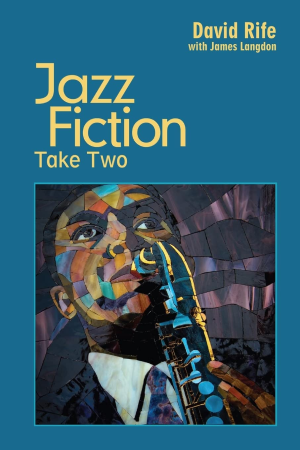
Excerpts from David Rife’s Jazz Fiction: Take Two– Vol. 16: Halloween on Mars? Or…speculative jazz fiction...A substantial number of novels and stories with jazz music as a component of the story have been published over the years, and the scholar David J. Rife has written short essay/reviews of them. In this 16th edition featuring excerpts from his outstanding literary resource, Rife writes about azz-inflected speculative fiction stories (sci-fi, fantasy and horror)

Poetry

“With Ease in Mind” – poems by Terrance Underwood...It’s no secret that I’m a fan of Terrance Underwood’s poetry. I am also quite jealous of his ease with words, and of his graceful way of living, which shows up in this collection of 12 poems.

Poetry

What is This Path – a collection of poems by Michael L. Newell...A contributor of significance to Jerry Jazz Musician, the poet Michael L. Newell shares poems he has written since being diagnosed with a concerning illness.

Art

photo by Giovanni Piesco
The Photographs of Giovanni Piesco: Art Farmer and Benny Golson...Beginning in 1990, the noted photographer Giovanni Piesco began taking backstage photographs of many of the great musicians who played in Amsterdam’s Bimhuis, that city’s main jazz venue which is considered one of the finest in the world. Jerry Jazz Musician will occasionally publish portraits of jazz musicians that Giovanni has taken over the years. This edition features the May 10, 1996 photos of the tenor saxophonist, composer and arranger Benny Golson, and the February 13, 1997 photos of trumpet and flugelhorn player Art Farmer.

Community

Community Bookshelf #5...“Community Bookshelf” is a twice-yearly space where writers who have been published on Jerry Jazz Musician can share news about their recently authored books and/or recordings. This edition includes information about books published within the last six months or so (March, 2025 – September, 2025)

Contributing Writers

Click the image to view the writers, poets and artists whose work has been published on Jerry Jazz Musician, and find links to their work

Coming Soon

Interview with John Gennari, author of The Jazz Barn:  Music Inn, the Berkshires, and the Place of Jazz in American Life; Also, a new Jazz History Quiz, and lots of short fiction; poetry; photography; interviews; playlists; and much more in the works...

Interview Archive

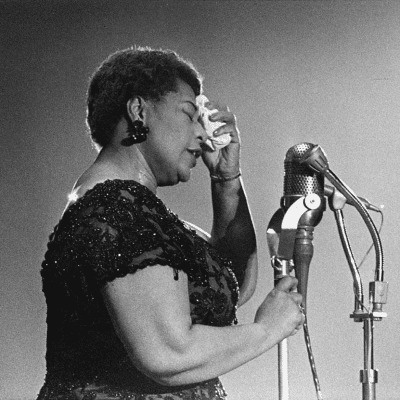
Ella Fitzgerald/IISG, CC BY-SA 2.0 , via Wikimedia Commons
Click to view the complete 25-year archive of Jerry Jazz Musician interviews, including those recently published with Judith Tick on Ella Fitzgerald (pictured),; Laura Flam and Emily Sieu Liebowitz on the Girl Groups of the 60's; Tad Richards on Small Group Swing; Stephanie Stein Crease on Chick Webb; Brent Hayes Edwards on Henry Threadgill; Richard Koloda on Albert Ayler; Glenn Mott on Stanley Crouch; Richard Carlin and Ken Bloom on Eubie Blake; Richard Brent Turner on jazz and Islam; Alyn Shipton on the art of jazz; Shawn Levy on the original queens of standup comedy; Travis Atria on the expatriate trumpeter Arthur Briggs; Kitt Shapiro on her life with her mother, Eartha Kitt; Will Friedwald on Nat King Cole; Wayne Enstice on the drummer Dottie Dodgion; the drummer Joe La Barbera on Bill Evans; Philip Clark on Dave Brubeck; Nicholas Buccola on James Baldwin and William F. Buckley; Ricky Riccardi on Louis Armstrong; Dan Morgenstern and Christian Sands on Erroll Garner; Maria Golia on Ornette Coleman.