
Who was your childhood hero? Page 2

April 5th, 2009

Childhood Heroes —  We all had them

Excerpted from exclusive Jerry Jazz Musician interviews, our guests talk of theirs.

______________________________________________

Amy Albany

Alfred Appel

Joshua Berrett

Ralph Blumenthal

A’lelia Bundles

Francis Davis

Jeroen de Valk

Michael Dregni

Matt Glaser

Gary Glazner

Farah Griffin

Sam Hamill

Nat Hentoff

Ashley Kahn

Arthur Kempton

Avon Kirkland

John Leland

Diane McWhorter

Diane Wood Middlebrook

Max Morath

Dan Morgenstern

Gerald Nachman

Joshua Prager

Ben Ratliff

Joshua Redman

Ishmael Reed

David Robertson

Scott Simon

David Skover

Penny Von Eschen

Emily Yellin

William Zinsser

______________________________________________

Heroes
Index

Heroes Page
1
 2
 3

______________________________________________

Mitchell and Ruff biographer

William
Zinsser

JJM Who was your childhood hero?

WZ Everybody on the New York Giants during the early 1930’s. Mel Ott, Bill Terry, Carl Hubbell were among them. My other first heroes were the sportswriters, mainly the baseball writers for the New York Herald-Tribune and the New York Times. Also, the New York Sun, a paper that was obsessed with baseball.

______________________________________________

JJM Who was your childhood hero?

JDV I admired Ben Webster, who was living in Amsterdam then, as I did. I wanted to play the saxophone as sensual as he did. My second book (just published in the USA by Berkeley Hills Books) is about Ben and contains interviews with dozens of people who knew him.

Chet Baker biographer

Jeroen de Valk

______________________________________________

Ken Burns advisor

Matt Glaser

JJM Matt, who was your childhood hero?

MG Einstein. I’m not sure why but I had a poster of him in my room while I was growing up. I like the idea of the eccentric genius, revolutionizing something about the human experience. He was a guy who was loved and had a kindly face, but was obviously into esoteric secrets.

JJM Wouldn’t it make sense that a musician has a mathematician for a hero?

MG Oh, absolutely. In fact, I often draw parallels between Louis Armstrong and Albert Einstein. Both men were warm, avuncular figures who were known and loved the world over, and both men had deep aspects to their work that hardly anyone appreciated. Both men were working at the same time and revolutionized the human understanding of time – Einstein in the scientific sense and Armstrong changing the human experience of time through his music.


______________________________________________

JJM Who was your childhood hero?

DWM  Wonderwoman!

JJM  No!…Why was Wonderwoman your hero?

DWM  I think because I was really smitten by the idea of goddesses and gods. I used to have one of those childhood fantasies where I was really a goddess. My mother named me very fancifully – my middle name is Helen, my first name is Diane. She was thinking of the moon goddess. I was a first child too, so I was an indulged, contented child with a certain sense of entitlement, so I used to have this fantasy that I was actually a goddess. Wonderwoman came about as close as they got. I used to buy those thick Wonderwoman comic books…

Billy Tipton biographer

Diane Wood Middlebrook

______________________________________________

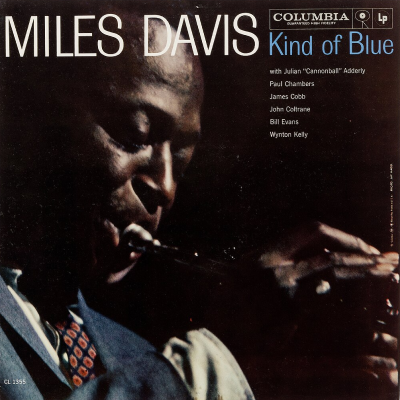
Making of Kind of Blue author

Ashley Kahn

JJM Who was your childhood hero?

AK That would be a tie between Willie Mays and Tom Seaver.

JJM Was there a particular biography you read as a child that provoked your interest in writing?

AK Not really any biography – I think where I began to consider taking up the pen (typewriter or whatever) was actually the science fiction bag: from short stories to classics like H. G. Wells and Jules Verne, and later Ray Bradbury, Frank Herbert and my all-time fave – Phillip K. Dick. When I got to college I was turned on to the razor-sharp elites of New York storytelling (S. J. Perelman, Dorothy Parker, A. J. Liebling) and still blame them with convincing me that a thesaurus is for reading as well as writing.


______________________________________________


JJM Who was your hero, Joshua?

JR My musical hero?

JJM Well, that or your boyhood hero…

JR I think my mom was my hero. My mom took great care of me and she was a person I looked up to. I didn’t really have heroes like clear role models, like people or figures that I idolized…I think the first record I ever bought was a Sonny Rollins record, Saxophone Colossus, and from that point on Sonny Rollins became a hero of mine. I was nine or ten or so at the time, and my mom paid for the record…


Saxophonist

Joshua Redman

_____________________________________________

Critic, writer

Francis Davis

JJM Who was your childhood hero?

FD  It wasn’t a writer during childhood, it probably would have been Bobby Darin. I used to sing when I was a kid. When “Mack the Knife” and all those great songs came out, I was at my most impressionable stage. I sang in the high school choir, and I wanted to be Bobby Darin. I think when you are 14 or so, you don’t always want to be like somebody, you want to be them. I knew Bobby Darin through songs like “Splish Splash” and “Queen of the Hop,” and thought of him as rock and roll. He was also singing standards, and I think even now there is some department store chain that uses Bobby Darin’s recording of “More” in the background. Bobby Darin really swung!

JJM “Beyond the Sea” is one of my favorites too…

FD He sung with such fabulous momentum, and even though I wasn’t listening to jazz yet, at that time there wasn’t as much distinction between pop and jazz as there is now, and maybe I was picking up on the tail end of that. Even though I hadn’t heard any jazz, I think I responded to the jazz like qualities of Bobby Darin, his phrasing, his rhythm…

_____________________________________________

JJM Who was your childhood hero?

AK As a very young child, no one, other than people I would see in the movies, which tended to be cowboys. Later on, Jackie Robinson became a hero, because I am old enough, at age 65, to remember when he broke into baseball. Joe Louis preceded him, whose fights I could hear in Jacksonville, Florida. His victories were a source of great pride.


Filmmaker

Avon Kirkland

_____________________________________________

New York Times writer, author of The Stork Club, Ralph Blumenthal

JJM Who was your childhood hero?

RB I guess I grew up, like most boys my age, with sports and war heroes. My sports heroes were Joe Dimaggio, Mickey Mantle. The Dodgers were my first favorite team until the disastrous 1953 pennant race.

JJM You stopped liking them then?

RB I was a fair weather fan. I immediately deserted the Dodgers and gave up and went to the Yankees. I was born in 1941, and I grew up sensing the war all around me.  Even though I was little, I had heroes like MacArthur, Patton, Roosevelt – people who were doing great things for the country. Those were the people I looked up to when I was young.

JJM When did you know you wanted to be a writer?

RB I guess in college. I went to City College of New York. I wandered into the newspaper office one day, and joined the paper, The Campus. That was it. I was smitten. I just loved the idea of knowing things before other people, getting under the skin of the administration, and being looked up to. It was fun feeling the power of a writer, of a journalist. Before that I had been an English major and always liked writing, but once I joined the paper that was it for me.

_____________________________________________

JM Who was your childhood hero?

GG My childhood hero was the character that wore PF Flyers, who could run and jump and save people. As a child I believed that was true, and I tried to jump over a brick wall in New York. Of course, I smashed into it and the reality of the world became apparent.

JJM Why do you suppose he was your hero?

GG I just thought it was so cool that you could put on these shoes – sneakers as we called them – and go save people and jump over buildings.  It was fun to see all the great things they showed this kid doing.

Beat poet

Gary Glazner

_____________________________________________

Musician, critic

Max Morath

JJM Who was your boyhood hero?

MM I had several heroes of different stripes. My musical hero when I was a kid was Art Tatum, and of course along with Tatum, my piano playing heroes were Fats Waller, Teddy Wilson, Billy Kyle, and by the time I was a teenager, Nat Cole. Because I started out as a physics, math and science maven, I was interested in people like Thomas Edison and Marconi, the founder of radio. That was one of the directions I was going until I got into this business.

_____________________________________________

JJM Who was your childhood hero?

FG  It changed a lot. I don’t know if I had just one hero. My dad is probably my most consistent hero more so than any number of the more well known people who came in and out. So, I would have to say my father.

Billie Holiday historian

Farah Griffin

_____________________________________________

Pulitzer Prize winning author

Diane McWhorter

JJM Who was your childhood hero, Diane?

DM This may seem rather unbelievable. It was J. Edgar Hoover. In junior high and high school, I wanted to be an FBI agent. I wanted to break into that “boys club” because they didn’t allow women agents at that point. Hoover was a big hero in the south. I remember we had a family ritual every Sunday night, where we would all sit down together and watch the TV show The FBI, with Efrem Zimbalist, Jr.

JJM Your choice is especially amazing after having read so much about him in your book, it is hard to imagine why anyone would consider him a hero!

DM I guess the scales fell from my eyes!

_____________________________________________

JJM One last question, David. Who was your childhood hero?

DS   I am really not sure that I had a childhood hero as such. I recall that, at a very young age (around six years old), I was asked by one of my parents’ adult friends whom or what I wanted to be when I grew up, and that I replied: “A judge.” As I remember the scenario, my questioner responded with some great surprise: “Not Superman? Not a fireman?” “No,” I reiterated, “a judge.” “And, why would you want to become a judge?” “Because,” I said, “judges are wise, and I want to be wise.” Who knows how I had obtained that idea? But I held onto it for a very long time. It never occurred to me until much later that I might be exercising my jurisprudential creativity as a constitutional law scholar and author on America’s free speech culture. Still, surely my current roles take no less wisdom — and no less intelligence and compassion, as well — than the judicial image that inspired my earliest aspirations.


Lenny Bruce biographer

David Skover

_____________________________________________

JJM  Who was your childhood hero?

EY   I would have to say it was Eudora Welty. I grew up in the South, and in high school I began reading her short stories and absolutely loved them. I ended up going to the University of Wisconsin, and only discovered later that she also went there and majored in English, just as I did. Another hero of mine was Catwoman. When I was a little bitty kid, I wanted to be her. I think I ended up somewhere between the two.

Our Mothers’ War: American Women at Home and at the Front During World War II author Emily Yellin

_____________________________________________

Joshua Berrett, author of Louis Armstrong and Paul Whiteman: Two Kings of Jazz

JJM  Who was your childhood hero?

JB  My childhood hero? Wow. I suppose this is a time for honored confessions. I would say that it might have been Beethoven. I was born in South Africa, and was very much nurtured by the “dead white European male’s” tradition. When I began teaching in this country, and woke up to the realities of a more global, cosmopolitan world, I embraced jazz in many ways.

Also, I grew up during the waning years of apartheid in South Africa, and I was very beholden to the United Party — which was the diametric opposite of the Nationalist Party. One of the United Party figures who affected my very early life was Jan Christian Smuts.


_____________________________________________

JJM  Who was your childhood hero?

JL  I loved sports as a kid, and I grew up in the late sixties/early seventies, which was really an anti-hero period. The players I liked were the anti-hero athletes like Joe Namath, Joe Pepitone, Muhammad Ali, and Walt Frazier. I loved the Corleone family in The Godfather, and if there was anyone I wanted to grow up to be, it was Michael Corleone, the Al Pacino character.

JJM  The sports figures you mentioned could be classified as “hip athletes,” couldn’t they?

JL  Yes, they could.

Hip:  The History author John Leland

_____________________________________________

Jazz historian, Living With Jazz author Dan Morgenstern

JJM Who was your childhood hero?

DM  As a boy, I saw the films Robin Hood and Captain Blood. Robin Hood was a terrific movie – I must have seen it three times – and I still like it. As a result, I was an Errol Flynn fan, who I thought was a dashing figure. As for a musician I admired, I saw Fats Waller perform when I was not quite nine years old, and he made a huge impression on me. So, my hero would be a cross between Fats and Errol Flynn. (I also had a big crush on Olivia De Havilland at the time, but that probably doesn’t qualify her as a hero. She’s still very much alive and still looks great, so I had a good eye, I guess.)


_____________________________________________

JJM Who was your childhood hero?

MD My childhood heroes were Rod Carew, the second baseman for the Minnesota Twins, and the famous bicycle racer Eddie Merckx, who I admired during the time I lived in Belgium as a kid. My literary heroes were Spiderman and, a little later, James Joyce. But my biggest hero of all was my dad.


Django Reinhardt biographer Michael Dregni

_____________________________________________

Satchmo Blows Up the World author Penny Von Eschen

JJM  Who was your childhood hero?

PVE  My honest answer is that my childhood hero was a baseball player, Rod Carew, the great hitter who played second base for the Minnesota Twins, and then later became the first baseman for the California Angels. The only possible meaning I have for this is that he was my first archive. I was a great baseball fan when I was in about fifth grade, so much so that I knew every player on the National and American League rosters — and everyone coming up from the minors as well. I grew up in Minnesota and was a big Twins fan during a time they were quite good, and collected all the newspaper articles about Carew, their best player.


____________________________________________

JJM  Who was your childhood hero?

NH   I grew up during the Great Depression, and at the time my father was a traveling salesman who would often come home with five bucks in his pocket after working all week. At least Franklin Delano Roosevelt seemed to be doing something about these tough times, and because of that, I would have to say that he was my childhood hero.

I used to listen to the radio a lot — Jack Armstrong, the All-American Boy was among my favorite shows — and I remember the day that the guy from the finance company came and took our radio away because we couldn’t make the payment. I figured F.D.R. could help out.

JJM   That must have been a devastating experience.

NH  It was sobering, yes, but what devastated me was how badly my parents felt.

Journalist Nat Hentoff

___________________________________________

The Echoing Green: The Untold Story of Bobby Thomson, Ralph Branca and the Shot Heard Round the World author Joshua Prager

PH Who was your childhood hero?

JP I had a few baseball heroes when I was a kid. One was Graig Nettles, the Yankee third baseman. I was always making myself dive like he did. Lou Gehrig was another. I used to sleep under a picture of him. I always admired him — not just for his baseball skills — but also for the type of person I was told he was. My favorite author when I was a little kid was Roald Dahl. I loved reading his books. As I got older, I found out he was a rabid anti-Semite, so I guess there is a lesson in there somewhere. Maybe it is best not to learn too much about your heroes.

_____________________________________________

PM  Who was your childhood hero?

DR  I would have to say my most admired figure
in my early youth – I was born and grew up in the 1950s and early 1960s
at Anniston, Alabama, among the most bitterly fought sites of the civil rights
era in my state – was my city’s local journalist, Cody Hall. Cody, the
editor at the Anniston Star newspaper, very bravely, and at considerable
financial and social risks, took an editorial stand in his paper urging a
non-violent acceptance of racial integration by the city’s white residents,
and insisting upon the rule of law in prosecuting those who committed violence
upon the freedom riders and civil rights workers who traveled to Anniston
in those early years. His stand was taken also at a considerable physical
risk; the FBI later gathered evidence that the local Ku Klux Klan was assembling
explosives in order to bomb Cody’s office and the Star’s printing plant.
What is more, Cody wrote eloquently, learnedly, and passionately. He was
a combat veteran of World War Two, and was one of the last generation of
the truly great journalists in the “Good Night, And Good Luck” tradition.
I was honored to have known him.

W.C. Handy biographer
David
Robertson

Heroes
Index

Heroes Page
1
 2
 3

Share this:

Comment on this article:

Your email address will not be published. Required fields are marked *

Site Archive

Your Support is Appreciated

Jerry Jazz Musician has been commercial-free since its inception in 1999. Your generous donation helps it remain that way. Thanks very much for your kind consideration.

Click here to read about plans for the future of Jerry Jazz Musician.

In this Issue

Announcing the publication of Volume II of Kinds of Cool: An Interactive Collection of Jazz Poetry...The second edition of Kinds of Cool, an Interactive Collection of Jazz Poetry has just been published, and is now available for sale on Amazon.com. This edition is dedicated to publishing women poets from all over the world who share their personal passion for and relationship with jazz music, and the culture it interacts with. With a foreword by Allison Miller, one of the world’s most eminent jazz drummers, and photography and design by Rhonda R. Dorsett

Editor’s Notes

“Where I’ve Been” – a brief update... A trip through Alaska, Yukon, Alberta, and British Columbia…

Poetry

photo of Sidney Bechet by William Gottlieb
21 jazz poems on the 21st of July, 2026...An ongoing series designed to share the quality of jazz poetry continuously submitted to Jerry Jazz Musician.

The Sunday Poem

The Sunday Poem: “That Southern Sound,” by Anthony Ward

The Sunday Poem is published weekly, and strives to include the poet reading their work...

Jerry Jazz Musician editor Joe Maita reads Anthony Ward’s poem at its conclusion.


Click here to read previous editions of The Sunday Poem

Performance

The performance poet Emmett Wheatfall
A Letter from the Editor…On “The Weary Blues: Celebrating Langston Hughes and the Harlem Renaissance”A brief recap and photos of the February 7, 2026 Jerry Jazz Musician-produced performance of “The Weary Blues: Celebrating Langston Hughes and the Harlem Renaissance”

Short Fiction

photo by Daniel's Richard/via Pexels.com
Short Fiction Contest-winning story #72 – “La Fontaine,” by Ashlee Trahan...A broken familial relationship in post-WWII France finds a semblance of closure in a crumbling countryside estate.

Poetry

photo by Caleb Minear/via Pexels
“Summer Song” – a poem by Mary K O’Melveny

Community

photo by Rhonda R. Dorsett
In Memoriam: Michael L. Newell, 1945 – 2026...News regarding the passing of the poet Michael L. Newell, whose work has been published on Jerry Jazz Musician since 2015.

Poetry

“Dreaming in a Spacecraft” – A prose poem inspired by the voyage of Artemis II, by Robert Alan Felt...

Interview

photo of Billie Holiday by William Gottlieb/Library of Congress
Interview with Paul Alexander, author of Bitter Crop: The Heartache and Triumph of Billie Holiday’s Last Year...The author talks about the courage and resilience of the legendary Lady Day, and his outstanding book – an inspirational and revealing portrait of an iconic American, that, like his subject, exudes compassion and creative soul.

Feature

“My Favorite Things” – a true jazz story by Uri Marc Nusinow...Discovering a classic (and life changing) jazz recording…

Poetry

photo by Nathan J. Hilton/via Pexels
“Pax Vobiscum” – a poem by Michael L. Newell

Feature

Book Excerpt from Crossing Bar Lines: The Politics and Practices of Black Musical Space, by James Gordon Williams...In this entire chapter from his book, the author explains how the trumpeter Ambrose Akinmusire expresses his political views and lived geography through his improvisational music, notably his critique of police brutality that has, as he states, “become a leitmotif throughout my albums.”

Poetry

Yves Moch, CC BY-SA 3.0, via Wikimedia Commons
“Remembering Sonny Rollins” – a collection of poetry...Over the years, many poems have been published on Jerry Jazz Musician that were written in reverence of the man we refer to simply as “Sonny.” In the wake of his death, many more have been written. The unsolicited poems making up this collection is an example.

Interview

photo by Warren Fowler
Interview with John Gennari, author of The Jazz Barn: Music Inn, the Berkshires, and the Place of Jazz in American Life...The author discusses how in the 1950s the Berkshires – historic home to the likes of Hawthorne, Melville, Wharton, Rockwell, and Tanglewood – became a crucial space for the performance, study, and mainstreaming of jazz, and eventually an epicenter of the genre’s avant-garde.

Short Fiction

“The Cartographer” – a short story by Timothy Collyer...The story – a finalist in the recently concluded 71st Short Fiction Contest – is a work of speculative fiction about the gentrification of memory. It follows a recovering alcoholic who is building a guerrilla augmented-reality map of Philadelphia’s lost jazz history—specifically the “Blue Note” era of the 1960s—while battling a corporate developer who wants to sanitize the data for tourists.

Feature

Allen Ginsberg in 1979; photo by Michiel Hendryckx, CC BY-SA 3.0, via Wikimedia Commons
Memorable Quotes: Allen Ginsberg

Community

Ricky Esquivel/Pexels.com
Community Bookshelf #6...“Community Bookshelf” is a twice-yearly space where writers who have been published on Jerry Jazz Musician can share news about their recently authored books and/or recordings. This edition includes information about books published within the last six months or so (September, 2025 – March, 2026)

Poetry

photo via pxhere.com
“Midnight Blue” – a poem by Connie Johnson

Short Fiction

“The Camera Has Its Reasons” – a short story by Tony Van Witsen...In this story – a short listed entry in the recently concluded 72nd Short Fiction Contest – an imperious, dictatorial movie director working in the 1930s encounters something he’s never seen before: the only woman cinematographer working in Hollywood.

Poetry

Peter Buitelaar, CC BY 2.0 , via Wikimedia Commons
Two Poems for Miles Davis

Feature

photo by Laura Stanley via Pexels.com.
Trading Fours, with Douglas Cole, No. 28: “Little Samba”...Trading Fours with Douglas Cole is an occasional series of the writer’s poetic interpretations of jazz recordings and film. This edition is based largely on a documentary – They Shot the Piano Player – about Tenório Junior, a Latin jazz musician who only produced one album (1964) before he “disappeared” in 1976.

Short Fiction

kaboompics.com/via Pexels
“The title is not included in the word count…” – a short story by Scott Cash...In this story – a finalist in the 71st Short Fiction Contest – self-ordained genius Kevin feels that life has been against him. But he thinks he has discovered a loophole and can exceed the 3,000 word limit for a writing contest by utilizing the title. When this is thwarted, he instead lands upon footnotes as a way to exceed the limit. This story is a celebration of writers and the act of writing.

Jazz History Quiz

Besides being one of the first to be influenced by Charlie Christian (pictured), in 1944 this electric guitarist employed Charlie Parker on his first recording date and eventually led an R&B-oriented group “The Rockin’ Highlanders” that featured the saxophonist Red Prysock. Who is he?

Poetry

Poems on Charlie “Bird” Parker (inspired by a painting by Al Summ) – an ekphrastic poetry collection...A collection of 25 poems inspired by the painting of Charlie Parker by the artist Al Summ.

Contributing Writers

Click the image to view the writers, poets and artists whose work has been published on Jerry Jazz Musician, and find links to their work

Coming Soon

New poetry collections, Jazz History Quiz, and lots of short fiction; poetry; photography; interviews; playlists; and much more in the works...

Interview Archive

Ella Fitzgerald/IISG, CC BY-SA 2.0 , via Wikimedia Commons
Click to view the complete 25-year archive of Jerry Jazz Musician interviews, including those recently published with Judith Tick on Ella Fitzgerald (pictured),; Laura Flam and Emily Sieu Liebowitz on the Girl Groups of the 60's; Tad Richards on Small Group Swing; Stephanie Stein Crease on Chick Webb; Brent Hayes Edwards on Henry Threadgill; Richard Koloda on Albert Ayler; Glenn Mott on Stanley Crouch; Richard Carlin and Ken Bloom on Eubie Blake; Richard Brent Turner on jazz and Islam; Alyn Shipton on the art of jazz; Shawn Levy on the original queens of standup comedy; Travis Atria on the expatriate trumpeter Arthur Briggs; Kitt Shapiro on her life with her mother, Eartha Kitt; Will Friedwald on Nat King Cole; Wayne Enstice on the drummer Dottie Dodgion; the drummer Joe La Barbera on Bill Evans; Philip Clark on Dave Brubeck; Nicholas Buccola on James Baldwin and William F. Buckley; Ricky Riccardi on Louis Armstrong; Dan Morgenstern and Christian Sands on Erroll Garner; Maria Golia on Ornette Coleman.