
“Silent City” — a short story by Adam Murray

November 19th, 2014

Although only one story wins our thrice yearly Short Fiction Contest, since we typically receive well over 100 entrants, often times there are several worthy of publication. Our last competition, our 37th, was won by Kenneth Levine.  His short story “Homage” — about the effect Chet Baker’s drug addiction had on a father and son relationship —  was published on November 4.

A finalist in the competition was Adam Murray’s “Silent City,” an excellent story about “how we can’t have the things we can no longer have because they no longer exist.”  In this case, what we can’t have again is the 1940’s jazz laboratory known as Minton’s Playhouse.  When I sent an email to Murray requesting his permission to allow me to publish “Silent City,” he wrote back and agreed, informing me that he had written this story specifically for Jerry Jazz Musician and “from there just kinda’ crossed my fingers.” In that same email, Murray wrote; “I’m currently homeless in Australia and penned this piece with my back to the brickwork behind a little jazz joint here called Ellington’s, digging on the swing, the night and the street, so your acceptance is a fitting coda for me. I’d be honoured to appear in your publication with like minded souls and voices.”

Murray’s email is an extraordinary reminder to me about the quality of character involved in the arts — someone who will often sacrifice so much and go to such great lengths to create it. His experience writing this piece while homeless, with his back to the brick wall of a jazz joint, “digging on the swing,” is evidence (as if we need more) of how tentative creative artists are financially everywhere in the world, and how even more tentative our world would be without them.

I am so very appreciative of all who participate in our Short Fiction Contest. Murray’s piece — and his personal journey — is all the the inspiration I need to keep this modest platform for aspiring writers open for business.   Click here for details on how you can submit your story for consideration in our next competition.


*

Adam Murray describes himself…

I’m a noir/science fiction genre writer who left Melbourne where I lived in jazz bars to spend the last 2 years sequestrated in the rainforest of Indonesia.   In a bamboo hut, in jungle seclusion I used a vintage typewriter to write while roasting squirrel and cobra on an open fire and bathing in a volcanic river. I have returned to Australia where I now live on the streets and use every means possible to publish my growing body of work, which includes 2 novels, a book of poetry and an anthology of short stories and prose.

Adam Murray’s website


_____


SILENT CITY

by Adam Murray

  He met her there. At Frank’s. Below the pizzeria floorboards, in the wine cellar. Underground. A real femme fatale devil doll seesawing a high six heel on a wooden chair that rode her pencil hem just over a stocking knee.

Her bent elbow riding it, holding an Old Gold straight up she watched him enter and cocked an eyebrow under bangs of mahogany that matched her lips perfectly. The other hand limp on a glass of Jack Daniels, slender fingers bell caging the hooch, a gull wing collar and a diamond brooch in the shape of the Tournée Du Chat Noir cat.

She was the first dame he’d seen in a long time with that feline look in her eyes. And the last. A woman harder than the hatchet goons camping on Frank’s payroll. She was someone that barely skated the ruse of her place in a world of gin mills and crude thugs, barely containing her hunger to easily rule them all.

Sure, with some smooth suave and a few dozen cheap lines he laid her and she died for that. In concrete pumps she sunk into the layers of obsidian, orange peels, sick fish, bloated dogs and pistols pounded flat on anvils. Yeah, she sunk but good. And he beat the heat because he hightailed it back to nowhere, total anonymity in another gaping metropolis. But hell, now he could never go back to Motor City, Detroit. Not ever.

Man, a broad like that could really love and she could have owned the city. Well she was Frank’s business partner, the brains and beauty of the bootleg operation. Gone, real gone. And for what? A moments intense explosive ecstasy from the limp piece of deli meat he pisses through. He tightens his fists feeling everything slip through his fingers. Everything. Nothing.

And then he’s somewhere else in this flat lining city where everything smells like whiskey and sin and the monster in a man’s eyes dances with neon perversion. He’s thinking about how we can’t have the things we can no longer have because they no longer exist. He’d push back the door of this little jazz joint in Harlem, Minton’s Playhouse, a jazz laboratory for experimental musicians. Maybe ten years ago, Parker, Gillespie, Thelonious Monk, Charlie Christian and Kenny Clarke used to jam here. Midnight lubrication at 3 cents a shot and a Jew girl from the slums. Faces torn by strange lusts on a summer night where everything is flung wide open and everybody suffers without showing it. Abdicated flesh under a yellow bulb, crushed butts smouldering in a green glass ashtray on the Steinway baby grand and his second-hand Studebaker curb mounted. He’d sit back to the bar dangling a beer and experience the rhythm of things we can’t explain but feel through music. The first place in the world he felt truly at peace, at home, himself.

Well after they tore it down because the American Federation of Musicians had a strike over a royalty payments disagreement and a lot of the black jazz pioneers were enlisted in the war it all just became Sinatra in every house, in every mall, everywhere. Sure, he couldn’t listen to jazz no more. Sinatra, and everything suddenly sounded like Christmas and that was the whole point. A CIA plant in the home of every American crooning them into a false sense of security. Yep Sinatra, a government plot making every day Christmas. So we ate, drank, shopped and spent like it and look at us now, bloated with sedentary life and dropping like flies from over-consumption of absolutely everything. Sinatra, Christmas, mind control, Roswell, consumerism, hell it was all the same thing.

And Minton’s, just like that, gone.

Like they surgically cut something out of him by demolishing the jump joint. Like somehow the defeat of the black jazz big band and bebop movement had become his defeat too. Old Minton’s gone forever and he’s always longed to get back to that feeling but never could. How can he get back to that now it’s gone right? It’s impossible. Like some kinda’ space vortex between him and his previous happiness and contentment and all those sounds he’s never heard since. That time in his life, those feelings inspired in him, well they’re gone too. It’s all so futile and increasingly barren.

Some things you can never reclaim once they’re taken from you, that’s what this life is, irreclaimable actions and events that move us forward away from them into an uncertain future. Future, sure, what was that? Flying cars and robot butlers and pills to make you live forever. Yeah, live forever moving forward further and further away from the time that made you happiest. Progress and progression. Living, what a farce. For the birds, dig?

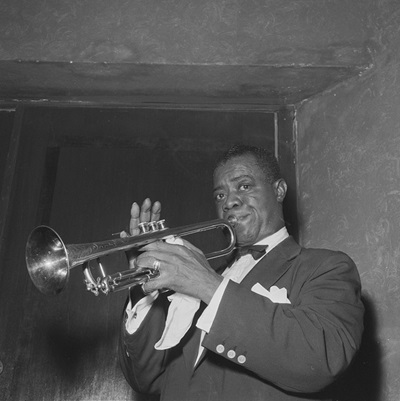
So he guesses he’ll stay here awhile living without living in this flophouse, in front of this typewriter with Armstrong on the wireless and a gallon of Mad Dog rotgut in the electric icebox. Sure, because it’s Satchmo now but pretty soon it’ll all be bubblegum.

Jazz is like that to him, irretrievably lost, like the dame that sunk in cement shoes, gone. So he walks the night rain of cemetery city in a fedora and a wool three piece listening to the songs of the street, watching the tuneless animals move without feeling. Waiting for a throaty ride on a tenor sax, wearing himself down with longing. Past boarded up cinemas and bars, into the unforgiving emptiness inside him where once swing music used to arouse his bones. Forward, into the silent void.


_________


Short Fiction Contest Details

Short Fiction by commissioned jazz writer Arya Jenkins



Share this:

4 comments on ““Silent City” — a short story by Adam Murray”

  1. Great piece. Just one correction on the photo in front of Minton’s that was misidentified on ParisMatch’s site. The man on the far right is Teddy Hill, my grandfather and the manager of Minton’s at the time. It’s not Willie Bryant.

  2. Great piece. Just one correction on the photo in front of Minton’s that was misidentified on ParisMatch’s site. The man on the far right is Teddy Hill, my grandfather and the manager of Minton’s at the time. It’s not Willie Bryant.

Comment on this article:

Your email address will not be published. Required fields are marked *

Site Archive

Your Support is Appreciated

Jerry Jazz Musician has been commercial-free since its inception in 1999. Your generous donation helps it remain that way. Thanks very much for your kind consideration.

Click here to read about plans for the future of Jerry Jazz Musician.
In This Issue
photo by William Gottlieb/design by Rhonda R. Dorsett
21 jazz poems on the 21st of November, 2025...An ongoing series designed to share the quality of jazz poetry continuously submitted to Jerry Jazz Musician. This edition features poems communicating the emotional appeal of jazz music, as well as nods to the likes of Miles Davis, Regina Carter, Maynard Ferguson, Ornette Coleman, and Max Roach.

The Sunday Poem

Tore Sætre, CC BY-SA 4.0, via Wikimedia Commons

”Analog,” by Susanna Schantz

The Sunday Poem is published weekly, and strives to include the poet reading their work.... Susanna Schantz reads her poem at its conclusion


Click here to read previous editions of The Sunday Poem

Poetry

Wikimedia Commons
“Dorothy Parker, an Icon of the Jazz Age” – a poem by Jane McCarthy

Short Fiction

photo via Freerange/CCO
Short Fiction Contest-winning story #70 – “The Sound of Becoming,” by J.C. Michaels...The story explores the inner life of a young Southeast Asian man as he navigates the tension between Eastern tradition and Western modernity.

Community

Calling All Poets…Submissions guidelines for the anthology “Black History in Poetry”...We are currently seeking poetry from writers of all backgrounds for Black History in Poetry, an anthology scheduled for publication in the Summer of 2026. The anthology will be a means of celebrating and honoring notable Black Americans by offering poetry that teems with imagery, observation, emotion, memory, testimony, insight, impact, and humanity. Our aim is to give readers a way to visualize Black history from a fresh perspective.

Poetry

Poems on Charlie “Bird” Parker (inspired by a painting by Al Summ) – an ekphrastic poetry collection...A collection of 25 poems inspired by the painting of Charlie Parker by the artist Al Summ.

Community

Letter from the Editor: “A Jerry Jazz Musician Experience”...Sharing a bit of what I’ve been up to of late, and make you aware of a new endeavor of mine…

Poetry

National Archives of Norway, CC BY 4.0 , via Wikimedia Commons
“Wonderful World” – a poem by Dan Thompson

Feature

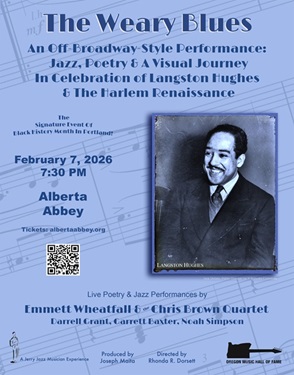
Press Release for “The Weary Blues: Celebrating The Harlem Renaissance and Langston Hughes...I recently wrote about a new endeavor of mine – producing a show in Portland celebrating the poetry of Langston Hughes and the Harlem Renaissance. What follows is the complete press release for the February 7 performance at the Alberta Abbey in Portland, Oregon.

A Letter from the Publisher

The gate at Buchenwald. Photo by Rhonda R Dorsett
War. Remembrance. Walls.
The High Price of Authoritarianism– by editor/publisher Joe Maita
...An essay inspired by my recent experiences witnessing the ceremonies commemorating the 80th anniversary of liberation of several World War II concentration camps in Germany.

Feature

Memorable Quotes: Horace Greeley, on character...“Fame is a vapor, popularity an accident, and riches..."

Community

Nominations for the Pushcart Prize L (50)...Announcing the six writers nominated for the Pushcart Prize v. L (50), whose work appeared on the web pages of Jerry Jazz Musician or within print anthologies I edited during 2025.

Interview

Interview with Tad Richards, author of Listening to Prestige: Chronicling its Classic Jazz Recordings, 1949 – 1972...Richards discusses his book – a long overdue history of Prestige Records that draws readers into stories involving its visionary founder Bob Weinstock, the classic recording sessions he assembled, and the brilliant jazz musicians whose work on Prestige helped shape the direction of post-war music.

Poetry

"Swing Landscape" by Stuart Davis
“Swing Landscape” – a poem by Kenneth Boyd....Kenneth Boyd writes poetry based on jazz paintings. “Swing Landscape” is written for a Stuart Davis painting of the same name.

Playlist

“A Perfect 10” – a playlist of tentets by Bob Hecht...Bob adds another instrument to his progressive playlist feature, and shares what a variety of arrangers have been able to accomplish writing for a tentet.

Jazz History Quiz

Jazz History Quiz #185...This posthumously-awarded Grammy winning musician/composer was the pianist and arranger for the vocal group The Hi-Lo’s (pictured) in the late 1950’s, and after working with Donald Byrd and Dizzy Gillespie became known for his Latin and bossa nova recordings in the 1960’s. He was also frequently cited by Herbie Hancock as a “major influence.” Who is he?

Poetry

photo via Wikimedia Commons
Jimi Hendrix - in four poems

Playlist

A sampling of jazz recordings by artists nominated for 2026 Grammy Awards – a playlist by Martin Mueller...A playlist of 14 songs by the likes of Samara Joy, Brad Mehldau, Dee Dee Bridgewater, Branford Marsalis, the Yellowjackets and other Grammy Award nominees, assembled by Martin Mueller, the former Dean of the New School of Jazz and Contemporary Music in New York.

Poetry

Ukberri.net/Uribe Kosta eta Erandioko agerkari digitala, CC BY 2.0, via Wikimedia Commons
In Memoriam: “Color Wheels” – a poem (for Jack DeJohnette) by Mary O’Melveny

Short Fiction

“Alas, for My Poor Heart” – a short story by Daryl Rothman...The story – a short-listed entry in the recently concluded 69th Short Fiction Contest – concerns art and its truest meanings—where you just might have to look twice at what the shadow and light of a piece says about that within your soul.

Essay

“Escalator Over the Hill – Then and Now” – by Joel Lewis...Remembering the essential 1971 album by Carla Bley/Paul Haines, inspired by the writer’s experience attending the New School’s recent performance of it

Poetry

“Still Wild” – a collection of poems by Connie Johnson...Connie Johnson’s unique and warm vernacular is the framework in which she reminds readers of the foremost contributors of jazz music, while peeling back the layers on the lesser known and of those who find themselves engaged by it, and affected by it. I have proudly published Connie’s poems for over two years and felt the consistency and excellence of her work deserved this 15 poem showcase.

Feature

photo of Barry Harris by Mirko Caserta
“With Barry Harris at the 11th Street Bar” – a true jazz story by Henry Blanke...The writer - a lifelong admirer of the pianist Barry Harris - recalls a special experience he had with him in 2015

Short Fiction

publicdomainpictures.net
“Corkscrew” – a short story by Mike Wilson...The story – a short-listed entry in the recently concluded 69th Short Fiction Contest – is about a night when everything goes wrong and everyone is annoying, an unexpected turn of events teaches a sarcastic lawyer that the old adage is true – a cynic is just a disappointed romantic.

Interview

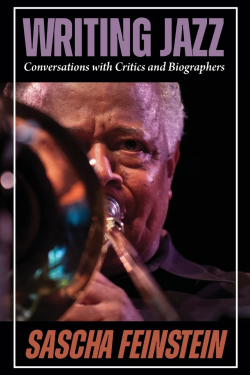
Interview with Sascha Feinstein, author of Writing Jazz: Conversations with Critics and Biographers...The collection of 14 interviews is an impressive and determined effort, one that contributes mightily to the deepening of our understanding for the music’s past impact, and fans optimism for more.

Feature

Trading Fours, with Douglas Cole, No. 27: “California Suite”...Trading Fours with Douglas Cole is an occasional series of the writer’s poetic interpretations of jazz recordings and film. This edition is dedicated to saxophone players and the mood scenes that instrument creates.

Short Fiction

photo by Simon Webster
“Smoke Rings and Minor Things” – a short story by Jane McCarthy...The story – a short-listed entry in the recently concluded 69th Short Fiction Contest – is a meditation on missed chances, minor keys, and the music that outlives the room it was played in.

Essay

“J.A. Rogers’ ‘Jazz at Home’: A Centennial Reflection on Jazz Representation Through the Lens of Stormy Weather and Everyday Life – an essay by Jasmine M. Taylor...The writer opines that jazz continues to survive – 100 years after J.A. Rogers’ own essay that highlighted the artistic freedom of jazz – and has “become a fundamental core in American culture and modern Americanism; not solely because of its artistic craftsmanship, but because of the spirit that jazz music embodies.”

Community

photo of Dwike Mitchell/Willie Ruff via Bandcamp
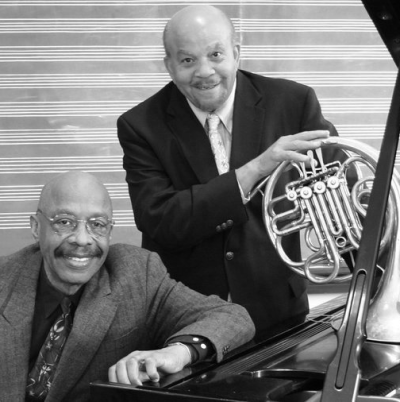
“Tell a Story: Mitchell and Ruff’s Army Service” – an essay by Dale Davis....The author writes about how Dwike Mitchell and Willie Ruff’s U.S. Army service helped them learn to understand the fusion of different musical influences that tell the story of jazz.

Feature

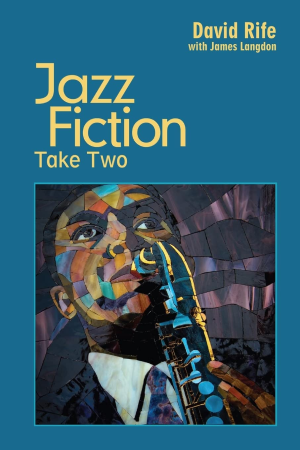
Excerpts from David Rife’s Jazz Fiction: Take Two– Vol. 16: Halloween on Mars? Or…speculative jazz fiction...A substantial number of novels and stories with jazz music as a component of the story have been published over the years, and the scholar David J. Rife has written short essay/reviews of them. In this 16th edition featuring excerpts from his outstanding literary resource, Rife writes about azz-inflected speculative fiction stories (sci-fi, fantasy and horror)

Poetry

“With Ease in Mind” – poems by Terrance Underwood...It’s no secret that I’m a fan of Terrance Underwood’s poetry. I am also quite jealous of his ease with words, and of his graceful way of living, which shows up in this collection of 12 poems.

Poetry

What is This Path – a collection of poems by Michael L. Newell...A contributor of significance to Jerry Jazz Musician, the poet Michael L. Newell shares poems he has written since being diagnosed with a concerning illness.

Art

photo by Giovanni Piesco
The Photographs of Giovanni Piesco: Art Farmer and Benny Golson...Beginning in 1990, the noted photographer Giovanni Piesco began taking backstage photographs of many of the great musicians who played in Amsterdam’s Bimhuis, that city’s main jazz venue which is considered one of the finest in the world. Jerry Jazz Musician will occasionally publish portraits of jazz musicians that Giovanni has taken over the years. This edition features the May 10, 1996 photos of the tenor saxophonist, composer and arranger Benny Golson, and the February 13, 1997 photos of trumpet and flugelhorn player Art Farmer.

Community

Community Bookshelf #5...“Community Bookshelf” is a twice-yearly space where writers who have been published on Jerry Jazz Musician can share news about their recently authored books and/or recordings. This edition includes information about books published within the last six months or so (March, 2025 – September, 2025)

Contributing Writers

Click the image to view the writers, poets and artists whose work has been published on Jerry Jazz Musician, and find links to their work

Coming Soon

Interview with John Gennari, author of The Jazz Barn:  Music Inn, the Berkshires, and the Place of Jazz in American Life; Also, a new Jazz History Quiz, and lots of short fiction; poetry; photography; interviews; playlists; and much more in the works...

Interview Archive

Ella Fitzgerald/IISG, CC BY-SA 2.0 , via Wikimedia Commons
Click to view the complete 25-year archive of Jerry Jazz Musician interviews, including those recently published with Judith Tick on Ella Fitzgerald (pictured),; Laura Flam and Emily Sieu Liebowitz on the Girl Groups of the 60's; Tad Richards on Small Group Swing; Stephanie Stein Crease on Chick Webb; Brent Hayes Edwards on Henry Threadgill; Richard Koloda on Albert Ayler; Glenn Mott on Stanley Crouch; Richard Carlin and Ken Bloom on Eubie Blake; Richard Brent Turner on jazz and Islam; Alyn Shipton on the art of jazz; Shawn Levy on the original queens of standup comedy; Travis Atria on the expatriate trumpeter Arthur Briggs; Kitt Shapiro on her life with her mother, Eartha Kitt; Will Friedwald on Nat King Cole; Wayne Enstice on the drummer Dottie Dodgion; the drummer Joe La Barbera on Bill Evans; Philip Clark on Dave Brubeck; Nicholas Buccola on James Baldwin and William F. Buckley; Ricky Riccardi on Louis Armstrong; Dan Morgenstern and Christian Sands on Erroll Garner; Maria Golia on Ornette Coleman.