



.
.
New Short Fiction Award
Three times a year, we award a writer who submits, in our opinion, the best original, previously unpublished work.
Danny C. Knestaut of Greensburg, Pennsylvania is the winner of the twenty-fifth Jerry Jazz Musician New Short Fiction Award, announced and published for the first time on November 1, 2010.
.
.
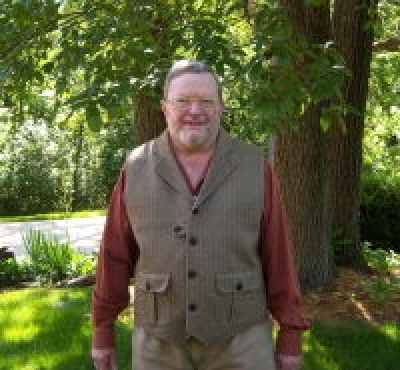
Danny C. Knestaut
.
*
.
Danny C. Knestaut grew up in the midwestern United States, but now resides in the Appalachian region with his wife and dog. He works as a nurse for a home health care agency and is pursuing an advanced degree in nursing.
.
*
.
.
Fahrenheit
by
Danny C. Knestaut
.
________
.
A trumpet squealed in the hospital halls. The note, like a brass rabbit, zipped past room 334. Moments later Mr. Fahrenheit watched two orderlies jog past the open door: not too fast, not real slow. It appeared to be the speed of indicated hurry. A few more notes from the trumpet whizzed down the hall before they too slowed to a jog, and then drew themselves out into expressions of gold, blue, green then stopped before Mr. Fahrenheit could call the name of the song to mind. The next few notes he tapped out on the back of the hand he held in his own. His wife did not respond. Even he had begun to forget to expect a response. She inhaled. She exhaled. The eyes beneath her blue lids quivered and shimmered.
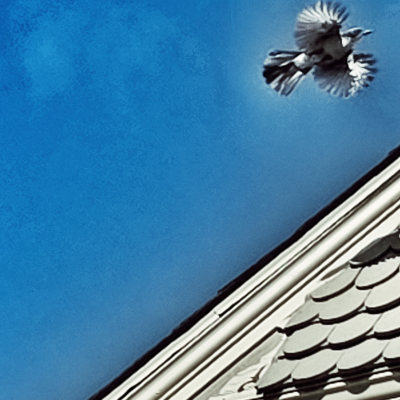
Outside Mr. Fahrenheit’s study, a blue jay grasped a birch tree’s branch. The limb bobbed. The blue jay fluttered its wings, shook its head. It squawked. Mr. Fahrenheit dropped his concentration. The effort to recall the notes of the old jazz tune lifted from his mind as if made of steam and then disappeared into the air of the room. He tapped at the oak of his desk where several bills from the hospital and statements from an insurance company laid, splayed like soiled laundry. He leaned back in his chair and crossed his arms over his chest as he regarded the bird, the marks on its wings. It shook itself again, the autumn mist repelled. Above, snow fell from clouds, but the air clasped too much heat yet for it to reach the ground.
After he had kissed the ground, Mr. Fahrenheit who was just plain ol’ “Jim” back then smoked his last cigarette while his copilot high-tailed it back to the barracks for a change of pants. The Lucky Strike smoldered between his fingers as Jim walked around his plane, the Blue Jay, and inspected it for damage. A gash interrupted the aileron where the other pilot had raked it with the fin of his own plane. He took a drag from his cigarette as he stuck a finger into the hole. The sharp, jagged edge where the aluminum tore threatened to slice through the calluses of his skin and spill blood. For the first time since his copilot had said, “My God. How beautiful!” and Jim had looked up from his magazine to see a geyser of flak erupting around them, he let out his breath. All of it. A wave of dizziness swept over him like dawn. He felt green, rubbery, a sapling. Jim grasped the wing of the Blue Jay with his right hand, and with his left, flicked the cigarette out onto the tarmac. The butt leaked a blue grease into the air. Jim closed his eyes and buried them in the crook of his right elbow. He shivered. He imagined broken planes, burning. He waited for the inevitable thought of what happened to Sarverson, their escort across the English channel. When the Germans opened fire, Sarverson panicked and raked the tail of his plane across the wing of their own. No one saw what happened to Sarverson’s plane. The runway awaited it.
With that in mind, Jim quit smoking, cold-turkey. Though not a man to believe in karma, he hoped, secretly, that his gesture of goodwill towards himself might grant him further favor in the eyes of God.
To no avail, Mr. Fahrenheit had spent the morning on the phone with several home health care agencies in an attempt to obtain enough help to bring Mrs. Fahrenheit home. He knew her recovery would be swifter if surrounded by the comfortable, familiar surroundings of home. Each agency, after hearing her diagnosis and the fact that she remained in a coma, kindly suggested that he seek the help of the local hospice. He refused. To invite hospice workers into his home stank as an admission of defeat.
In the hospital room, Mr. Fahrenheit removed a small, gold frame from the pocket of his overcoat. He wiped the glass with a white handkerchief, then set their wedding photograph on the night stand beside his old bride. He stepped back from the picture. The glare from the overhead light obliterated their grainy, black and white faces, though the tiny Polish girl still held the hand of her flying cowboy. Mr. Fahrenheit took her hand from the white sheets. Her hand was cold. It looked blue. It felt like sky.
With a start, Mr. Fahrenheit woke from a dream to find the kind-eyed nurse taking Mrs. Fahrenheit’s blood pressure.
Once finished, she slipped her stethoscope from her ears and pulled it down around her neck. “I’m sorry to have disturbed you,” she apologized as she watched her hand record the blood pressure on a white clipboard.
Mr. Fahrenheit twisted his neck to the right, and then left to stretch the muscles cramped along his spine. He sat up in his chair and assured the nurse she hadn’t disturbed him.
“Is that you?” the nurse asked as she nodded towards the picture in the gold frame.
He nodded, then scratched at the stiff, white beard grown wild on his chin.
My husband is in the Air Force,” the nurse said. “He’s serving in Afghanistan.”
Mr. Fahrenheit nodded again, asked, “How are her vital signs?”
The nurse glanced from him to the photograph, then to the clipboard she held in front of her.
“Oh,” she said as she looked back to Mr. Fahrenheit, “as well as can be expected.”
The nurse lowered her clipboard until it rested on the side of her thigh. She watched Mr. Fahrenheit, whose brown eyes stared somewhere over her left shoulder. As she opened her mouth to ask him if she could get him anything, just to halt the silence and alter his eerie expression, a note from a trumpet wound its way down the hall. The nurse tensed, turned around and then went for the door. She paused a moment to look over her shoulder. Mr. Fahrenheit remained still as a sack of flour in his chair. She walked out the door to go reprimand the musician.
A thick, blue smudge of smoke rolled over Jim and welcomed him home as he opened the rain-slicked door of Casper’s Last Diner. He coughed into his fist. For the first time in several months he felt the cinching of his lungs that insisted only a cigarette would relieve it.
Jim took a seat at the one empty table in the diner. It had yet to be cleared of the last customers’ meal. Before him sat a white plate that bore the cool bone of a steak, small mounds of stiff mashed potatoes, a swirl of steak sauce dried to a crust. A mess of bread crumbs and a few French fries littered the plate across from him, which sat next to a coffee mug. Jim reached out, turned the mug around. A pink, crescent smudge clung to the mug’s lip.
He blinked at the air. His eyes felt swathed in raw cotton from the smoke of a dozen lit cigarettes adding their ashy flavor to the years of cigarettes smoked while waiting for a meal, after eating a meal, smoked for the sake of having a thing to do with one’s hands and time to do it.
After he pushed aside the plate before him, Jim splayed his fingers and set his hands palm-down on the table top. He watched his hands. Rain water dripped from the brim of his leather hat and collected in a small pool on the table.
“Didn’t your mother ever teach you to take your hat off when you come inside?” a woman asked.
Jim looked up into the brown eyes of a waitress awaiting a response. Though her lips didn’t exactly curl up into a smile, the edges of her mouth made it plain that she was open to anything he might say in response. So he took her in. She had dark hair pulled up and piled on top of her head as if it was everything she owned. Though short, she stood tall, upright, with her shoulders back and her ample bosom made plain under the snug, white blouse of her uniform. Jim smiled, showing his straight, slightly-stained teeth.
“The name is Jim,” he said as he extended his hand to her. “Jim Fahrenheit.”
“Gretta Tilwinski,” she said as she took his hand in a warm, damp, and strong grip. Her touch was the friendliest thing encountered since he last left his hometown.
“Well, Jim Fahrenheit, did your mother ever teach you to take your hat off when you come inside?”
“Certainly,” he replied, then released her hand and removed his hat. As he did, a rivulet of water ran off the front brim and splattered across his lap. A cold shock shivered him. Gretta smiled, but didn’t laugh.
“Do you smoke?” Jim asked.
“No,” Gretta responded with a look of impatience.
“What are you doing after work?”
Mr. Fahrenheit leaned forward in a chair. He took Mrs. Fahrenheit’s hand in his own. A hand he did not remember. This was cold. Dry. When he rubbed his thumb over the back of the hand, the skin bunched into dunes of wrinkles against the pressure.
Hm-hmm hm-hmm hmm hmm hm, Mr. Fahrenheit hummed. The tune was as familiar as the skies and hills. The song was elusive. He hummed it a few more times, attempted to coax the next few notes from his memory. He met with a blank mind, his wife’s cold hand, and the barely audible buzz of florescent lights.
The phone rang eight-and-a-half times beore Mr. Fahrenheit picked it up. Jimmy’s voice greeted him.
“How are you doing out there?”
“Oh, fine,” Mr. Fahrenheit answered.
“How’s Mom doing?”
Mr. Fahrenheit turned his eyes from the phone’s cradle to the box window over the kitchen sink. The Christmas cactus drooped with dryness. Gretta normally took care of such things. The wrinkles on his forehead tightened momentarily in surprise at the dim reflection lit in the kitchen window against the cold night. The face hung longer than it ought to, and the white, scraggly beard paled his face and made him look old and sick. The eyes of the reflection could not be seen, but in their place sat black, bottomless wells.
“Dad?”
“Yeah, Mom is She’s coming along.”
“Will she be coming home?”
“Of course. She’ll be coming home soon,” Mr. Fahrenheit insisted.
“Look. Dad. I’m not going to beat around the bush here. Linda and I’ve been reading a lot about strokes. You’re not going to be able to take care of her yourself-”
“I’ve been making calls,” Mr. Fahrenheit interrupted. “There are agencies out here that’ll send orderlies, or, attendants is what they call them. Attendants who’ll come out here and help us.”
Mr. Fahrenheit patted the breast pocket of his flannel shirt.
“All right. I’m not going to tell you what to do, but I just wanted to let you know that you’re welcomed to come out here and live. Linda and I can make the room. Or, you can get an apartment out here and just have us close.”
“She’d come with me,” Mr. Fahrenheit said.
“Well yeah, of course she would. That’s what I meant. The both of you.”
“Well, I thank you for the offer, but I plan to wait it out and see. They won’t even know how much she’s lost until she wakes up.”
Mr. Fahrenheit took a deep breath. His lungs protested, as if wrapped in elastic.
“That’s true. I just wanted to let you know that we’re here for you.”
“Well, that’s kind of you. I appreciate it.”
“So how are you handling all of this?”
“Jimmy, the phone’s beeping. I think I’ve got another call, but I can’t remember how the heck to switch lines.”
“Press the button that hangs up the phone. That’ll switch lines.”
“All right. Well, I’ll let you go then. I don’t trust this thing.”
“All right, then. Talk to you later. Let me know if you need anything,” Jimmy was saying as Mr. Fahrenheit hung up the phone.
Mr. Fahrenheit returned to his study, switched on a lamp, and stood in the pool of light as he gazed at his desk. The clicks and metallic scrapes of Gretta’s knitting, like a slow-dance on steel stilts, did not waltz down the hall and into the study. The television sat dark in the living room. No ceramic cup of cooling tea clinked as Gretta set it back on a saucer. No call came from her, from the living room for him to come out of his hole and appreciate what a wonderful wife he had sometime before he died. Quiet. The house held its breath. Perhaps the house had ceased to breathe altogether.
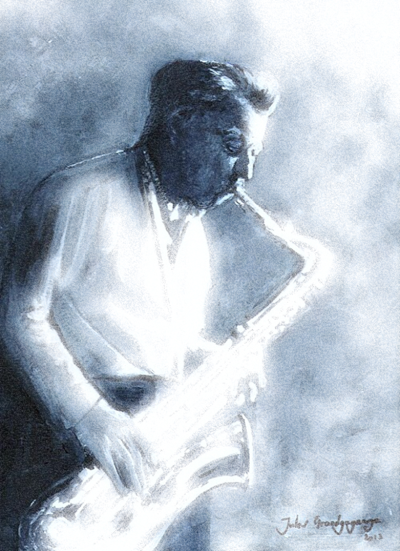
Mr. Fahrenheit walked over to an oak book shelf and plucked a Jimmy Lunceford album from the rows of records. He placed the record on the player, put the needle into place, and turned the player on. Brushed drums peppered out of the speakers, and then a tide of saxophone welled up, and then hushed, as if a curtain had been drawn. Sy Oliver’s slow, almost cold trumpet notes unwound themselves from the record through a haze of hisses and pops.
Almost half way through the first tune, he turned the player off. The song melted to a halt. Mr. Fahrenheit patted the breast pocket of his flannel again. He drew a deep breath past his lips, held it a moment, and then let it rush out through his nose. His tongue pushed at the back of his teeth. Drained of something, he went to their bedroom, undressed, and crawled into the left side of their bed.
Lately, Mr. Fahrenheit hadn’t seen the sense in percolating a whole pot of coffee for himself, and since it hadn’t occurred to him to brew only a few cups, he began to make a habit of waiting until he arrived at the hospital before he got his first cup. This morning, however, he had been awakened at 5:23 with a call from a nurse. Gretta Fahrenheit had passed away at 5:15. Mr. Fahrenheit went to his wife’s room without stopping for coffee.
As Mr. Fahrenheit left his wife’s room for the final time, the corner of his eye caught on a glimmer of brass. A man old enough to be his son came down the hall, seated in a wheelchair pushed by a large, portly female orderly past pastel prints of beach scenes and meadows. In his lap, he held a trumpet. His fingers pressed down on the valves and let up again in a slow, dripping, sloping rhythm. In the early morning quiet, Mr. Fahrenheit listened to the soft click, click-click, click of the valves closing and opening again. The man nodded at Mr. Fahrenheit. Mr. Fahrenheit nodded back, holding the man’s hazel eyes in his gaze, lost on how to even begin to open his mouth and ask what the young man had been playing. Before he arranged his mouth into the coordination needed, the orderly made an abrupt about-face and backed the man into an open elevator. The door slid shut. The clacking valves cut off.
“Can I call someone for you?” asked a short, dark-haired nurse who stood in patience beside Mr. Fahrenheit.
“No, ma’am. I’ll be fine. Thank you kindly,” he said as he gave a polite smile to the nurse. “Do I need to do anything more?”
The nurse’s lips seized between a smile, and a bland, professional expression of nothingness. “No. The mortician will be here soon. All further arrangements must be made with your funeral director.”
“I’ll be leaving, then. I’ll be fine,” Mr. Fahrenheit muttered as he turned to go. Outside the window at the end of the hall, a crust of a red sun emerged from the black hills. Mr. Fahrenheit blinked.
“My hat,” Mr. Fahrenheit said as he turned back to the nurse.
“It’s on your head,” the nurse said. Her expression drained into a banal stare with each syllable pressed through her lips.
Mr. Fahrenheit rolled his eyes up. The brim of his hat sat there.
“So it is,” he said as he turned his back to the nurse and walked towards the elevators, his right hand patting at the pockets of his brown canvas jacket.
At a convenience store constructed on the ashes of Casper’s Last Diner, Mr. Fahrenheit set a Styrofoam cup of coffee on the counter as he pulled his wallet from the back pocket of his jeans.
“Will that be all,” the young, male clerk told the cash register.
“A pack of Lucky Strikes, please.”
“Box or soft?”
Mr. Fahrenheit stood with his open wallet in hand. His left thumb rested on the edge of a twenty. He stared ahead at the brightly colored mosaic of cigarette packs that formed the wall behind the short-haired clerk whose mustache and goatee looked battle-weary from a long struggle with puberty.
The clerk turned around. He slipped a soft pack of Lucky Strikes from the rack behind him and placed it next to the cup of coffee.
“Five eighty-nine,” he said after he consulted the cash register.
Mr. Fahrenheit blinked. He handed the twenty over.
Once back in his truck, Mr. Fahrenheit realized he had not a lighter, or matches even. Rather than go back inside and face the clerk again, he started his truck and then pressed on the cigarette lighter in his dashboard. He watched the early morning traffic pick itself up as cars leaked through the intersection. All of the drivers appeared as faceless silhouettes against the sun that still had a toe on the hills.
As he watched the traffic, Mr. Fahrenheit slapped the pack against the edge of his palm, peeled the cellophane away, then tore a square from the foil, and drew a cigarette without a sign that his fingers had lost the least bit of practice in 60 years. The lighter popped up in its socket. Mr. Fahrenheit placed a cigarette between his lips with his left hand as his right plucked the lighter and brought it up to the cigarette’s tip. The metal coils inside glowed a deep orange and reminded him of the wonder and satisfaction Gretta had displayed as she watched the coils of her first electric range heat to a similar color. He lowered his head. The tip of the cigarette touched the coils, smoked, then glowed with a bright red as he inhaled. The smoke went through him like a comb.
In the nicotine rush he swayed. Then the coughs set in. With his left hand, he ripped the cigarette away, then brought his right fist up to cover his mouth. The lighter, still in his right hand, singed his week-old mustache and burned his upper lip. Still coughing, he tossed the lighter onto the floor of his truck.
When his lungs settled down, Mr. Fahrenheit looked out the windshield, up into the sky, where a jet scratched its vapor trail across the day; the first blue dawn in perhaps a month, since October, maybe. With a ginger daring, he brought his right index finger to his upper lip and tested the burnt spot. He winced, then took another drag from the cigarette, holding it off to the corner of his mouth. His lungs stirred, but accepted the smoke until he let it roll out through his nostrils, brushing down the front of his chest and into his lap before it swirled back up and floated with greasy apathy in the cab of his truck.
The smoke invaded Mr. Fahrenheit’s eyes. They watered. Tears welled until they dropped from the corner of his eyes and tangled with the gruff confusion of his beard. He did not wipe them away, or blink, but drew from the cigarette a third time. Some years back he heard that nicotine had been proven to increase concentration, so he hummed the few notes of the elusive jazz tune. He tried to recall its name and why he felt it important. His mind kept drifting back to the cigarette. He took the fourth drag. It went down so easy, as if the last 60 years and all they had encompassed had been no more than 60 minutes an hour since his last cigarette. How many more puffs it would take, if karma worked backwards, for this little show of self sacrifice to speed up his being shot down.
“My God,” he could hear his copilot saying from the passengers seat. “How beautiful!” as Mr. Fahrenheit watched a ray of sun catch the jet and deflect off its glistening shell like a spark.
.
.
*
.
.
.
.










I really enjoyed Danny’ s short story about Mr. Farhrenheit.
His descriptive scenes were unique and the imaginitive trip was worthwhile.
I look forward to reading more of Danny’s short stories.