
.
.
New Short Fiction Award
Three times a year, we award a writer who submits, in our opinion, the best original, previously unpublished work.
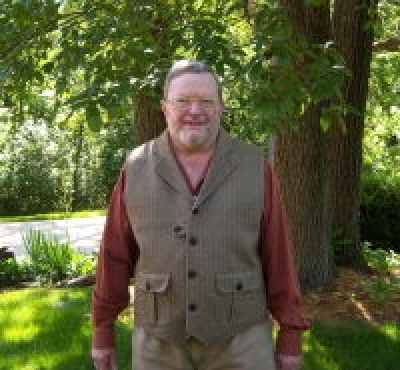
Mark Kerstetter of Saint Petersburg, Florida is the seventeenth recipient of the Jerry Jazz Musician New Short Fiction Award, announced and published for the first time on March 5, 2008.
.
.
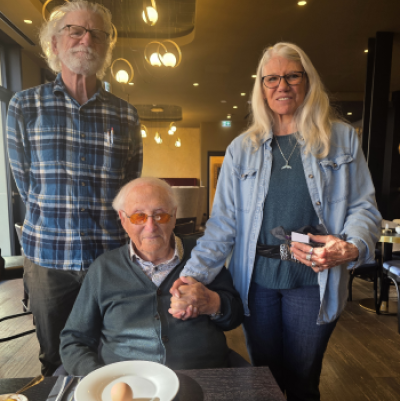
Mark Kerstetter
.
*
.
Author’s Statement
From trading verses and drawings with friends in a rural Pennsylvania grade school to composing poems to my first love, on to navigating through prose fictions which reflected the struggle to find my feet in New York City, to my first conventional stories in Key West, then on to my first attempt at a novel here in Saint Petersburg, Florida, one thing has remained constant: the passion to explore my world through the medium of writing, then to share those results with the world.
.
_____
.
“Mountain” is Mark’s first published short story.
.
.
*
.
.
“Men Are Fickle,” by Mark Kerstetter
.
Mountain
by
Mark Kerstetter
.
_____
.
…..I can’t fight. I’m not made for it. When I’m backed into a corner I can run, and that’s what I’m good at. I can’t gather myself to put up an opposition. I begin to quake and crumble and the parts of myself split into ever-smaller parts that want to get away as fast as possible. I’m an explosion, a spectacle to momentarily confuse the enemy. Also a physical wreck. The only movement that suits me is flight. My parts will converge into a fluid line of energy, but only in movement. It’s the way I’m made. If I held my hand out, lengthened my fingers for you and attempted to keep as still as possible, you would marvel at the trembling. But then give me a guitar and this same hand will produce a line no less marvelous in fluid grace.
…..I can stay in one place if I’m left pretty much alone. But begin to disturb me and I will begin to fall apart. I am therefore not a social creature, unless I’m playing my instrument with other players. No situation in this life is more ideal. I am with other people, we are sharing something we love, are communicating on a deep level, and I am moving my body in such a manner that inner needs and outer requirements converge in a rhythm that perfectly keeps me together, that actually justifies my being here. But when the music stops again, I’m lost.
…..I’m writing this in the hope that I can explain myself a little bit to you. How can you understand my flights when you’re as firm as a mountain? I must give you the eyes and hands so you can understand, move with me, and see the world from the perspective of flight. I hope you will understand. It is a different language, but we have these words in common; the words we share are our only hope for understanding.
…..And understanding is more important than ever. Because I feel that my ability to do even the minimal fighting necessary for survival is eroding. Call it the forces of nature, time included, call it age, call it whatever you like. Maybe I’m just tired and need a rest, I don’t know, how can I know? I’m in the middle of it. It makes me and my only way of making an impact in turn, right now, is to write these words. For what they’re worth, they’re for you, for us.
…..I remember the first time I saw you. You were the only person at the club who wasn’t either working the room or holding a pose. Not as though you were out of place. You looked like someone who could never be out of place, since you were comfortable in your own skin. But a klutz! Knocking that drink into the piano got my attention. A charming combination of amusement and chagrin confidence and awkwardness rolled into one. Physical awkwardness mortifies me. I can no more be caught stumbling than can a cat, and that takes a lot of practice. But you were able to laugh off your little faux pas, even though you alone were concerned about the piano. “Relax,” your friend said, whose drink it was, “it’s not the first time a drink has been poured on the keyboard.” And she was right, of course. We were all too young and stupid to know better than to keep our cups and bottles away from the instruments. All the same, your behavior demonstrated the error of our ways. For those of us who could see it, that is. Even I wasn’t sure of what I was seeing at the time. Your friend was a familiar face who worked in the fashion biz and had an interest in what was happening in the clubs. You were visiting her in the city, a childhood pal from a little town in Indiana. It was apparent that to some extent she had dressed you, but it was also apparent you had no interest in fashion. To me that was refreshing. Everyone I knew at the time spent tremendous amounts of energy on choosing the right look. I admit now I spent some time on it too but I wouldn’t admit it then. I was ashamed of it. My thing was that I was a natural. The world didn’t have to know how hard I worked at it. But you were a natural. A natural doesn’t give a flying fuck about fashion and in so doing they sometimes end up making it. That’s why you and your friend weren’t such an unlikely duo. She sought inspiration in places like thrift stores and trailer parks. And you, without trying in the least, could manage to look just like what, within a few years, became the Big Thing. But, the point is, it isn’t what you were wearing that I noticed, it was the way you wore it it was you.
…..It’s been almost twenty years and I talk about clothes. Something we take for granted now, so long as they’re clean and whole. When we’re old we’ll probably wear potluck pants and grab-bag shoes, whatever’s cheap and easily available. But the first time you see someone, especially when you’re young, it’s normal to notice the clothes. The next time you had taken a one-eighty. You had bleached all the color out of your hair and saturated it with hair spray, letting it stick straight up. No make-up. No jewelry. Just an old faded green raincoat. What was one to make of this? It was a negation, or at least an absolute limit on the fashion scale. Upon coming closer one noticed that, with the addition of your white night skin, this way of presenting yourself caused your green eyes to stand out like two stars. Perhaps that was your intention. Your way of saying, “If you’re going to look at me, come here and look at me!” I got the message alright. I fell into your eyes.
…..Right away my association with you caused friction with the guys. You saw it but had the good grace to pretend you didn’t. We all had various associations but their problem with you was that you were not an artist. More than once they let fall, “she’s not an artist,” as if this phrase contained some kernel of incontrovertible logic that I would conform to once I was seeing clearly again. But there was nothing wrong with my vision. They failed to see that without reading books your language skills were better than ours, you had a painter’s sensitivity to color and design, and although not a musician you understood music as well as anyone I had met. Not how to play the notes, but what playing the notes meant. That’s more than I can say about some of the musicians I’ve known. Maybe they did see it, after all. Maybe that was the problem. You were a conundrum. Music was complex enough. Not enough energy left over. The older you get the more true that is.
…..As children we latch onto a vision of what we want to be as adults. And, sometimes, we simply become that vision, we inhabit that image of a person, of an adult, but we drag all of our insecurities in there with us. I wanted to wield a guitar like a flaming sword and today, sometimes, I feel like I’m still just a kid playing at being a guitar god, and then I wonder, what’s the difference? Just that I’m older. Sometimes I’m tired of play-acting and sometimes I think that this is as real as it gets. I’m not blind to the positive sense of child’s play in all great art. In fact I take these insecurities, these broiling contradictions, and transform them in my playing into a message that is so distorted (or so I imagine) that the audience hears something else entirely. No doubt they project or inject their own emotions into what I play. I’m perfectly content with that. It creates an odd and unique communication, a sort of symbiotic relationship in which I transform what I want to say into a statement which disguises it, and the listener in turn inhabits this statement with her own unique and necessarily private meaning. In the end we make our own beds. You don’t really tear yourself open,”a suicide right on the stage.” Jagger pulled off a real coup with that one. It’s a bagatelle, a thing of no consequence, I throw these lines off like cries in the wind, they shift and wane and die. But I like it! Now tell this to another artist in plain language and it can sound like you’re not committed enough, passionate enough, serious enough. That’s what my band mates thought, or some version of it. If I stuck with you, they implied, it would dilute my energies as an artist. You’ve got to be with a fellow traveler, someone who understands, or else with someone simple, you know, a pretty face, a party girl. You were neither. A full human being, with thoughts of your own. When we got the chance to travel, you didn’t want to come along. I don’t blame you. It was a pretty crude and miserable life. I can’t help but wonder how it all would have turned out if you had, say, signed on to be our manager, but of course even I was incapable of thinking along such reasonable lines back then. You would have been great at it, don’t you think?
…..Twenty years on and I don’t know which details to snatch out of the chaotic past to present to you as the representative ones, the ones that link my interior life to you. The fact is the same scenarios have repeated themselves, the same act of getting to the hotel or club, the same routine of trying to get the right food, fiddling with the equipment, the nervous wait, the sudden burst of exposure and being swallowed by the crowd, the post-concert free fall and crash, the morning that tears you out of sleep, and then, always, the road. You become disconnected from the things that made you want to play in the first place. You become disconnected from your soul. Any notoriety that comes along has the strange effect of increasing the disconnection. You start to see yourself the way your fans do and it’s something less than human, a photograph out of a magazine. You can become hypnotized by that picture, like Narcissus, and then you’re in trouble. Believe it too much, become the picture too much, and the public denounces you as a phony. And they’re right, because you’ve lost your soul. The connection you have, not with the public, but with each person out there, is beyond words. It’s a conduit through which flows inspiration which enlivens or simply increases awareness between one individual and another, but that which is made more aware is the individual himself, what it means to be an individual in a world of individuals who are all in it together. That’s sacred; yeah, that’s jazz; you don’t fuck with it.
…..But it’s easy to lose track of it! The normal course of life will distract you at every moment. There’s the personalities of the band members. I don’t need to tell you. Remember Eddie, his inability to be in a decent mood unless he was properly stoned? Problem was, achieving that state was like a process of medieval alchemy, no end to the tinkering. And then Jake always letting us know, in innumerable ways, how sensitive, how perceptive, how whatever, he was. Fucking maddening! In the end all our little ticks and routines just became part of the sound-check, until, I don’t know what, a final weariness sets in, it’s just over. You move on, play with other people. Everyone breaks up it seems. Would you and I have broken up? I just realized how strange that question is. We never really did break up, but we were never really together, were we? Just what happened? These are the questions that propel me, that fuel my writing.
…..On the road, when not sleeping or occupied with matters musical, there’s a lot of time for daydreaming. You look out the window and wonder what other people are doing with their lives. When we get time off I like to visit the old hometown. I have a childhood friend there who has what’s considered a normal life. He gives me perspective, even though or probably because we never talk about music. Bart has always been into poetry. Poetry is what bonded us together all throughout school. But, like most people, he doesn’t earn a living through any kind of art. Despite that, he retains a deep connection to it, as many people do. While I was crashing pads in the city, strumming my guitar and scribbling lines of verse everywhere I went, Bart was back home working with his father, learning the trade of masonry, getting married, buying a house, having kids. While I toured the country, releasing albums, Bart raised his kids and started buying old houses, which he would restore and sell. When I visit him he takes me on a tour through his latest house, pointing out either what he plans to do or, as the case may be, what he has already done. He always throws a barbecue party in my honor and the experience is always a little surreal. There’s the Bart I’ve always known, with a finer sense of the written word than most self-proclaimed poets I meet, the fine craftsman who, whether he pours concrete, rebuilds a window frame, or barbecues a steak, does it as if the balance of the cosmos is at stake. Then there’s the Bart I don’t know. He’s right there in front of me, solid as rock, solid as one of his own brick columns. He’s thick and square, both feet planted. We’re a pair, me with gangling limbs which I need to keep moving to maintain balance. I see him standing in front of one of his houses, the long cement slabs of the front steps leaning with age. He’s explaining the finer points of masonry repair work and says, pointing to the steps, “gravity always wins.” I watch him with his wife and kids, see the light of joy in his eyes as the little one darts back and forth across the yard, but I can’t make contact with this Bart. It’s just so alien. I think of the comment about gravity and I shudder. I realize I am what I am, and I’m actually hungry for the road. When I can’t move anymore what will I do?
…..After these brief visits to the old hometown I’m re-lit. The first concert after one of these trips is always a good one. I extend my fire to the crowd, stand amazed at the blaze, then become a bellows until we’re feeding each other. But where does it come from? After one of these visits I feel more alone, more of what makes me alone, than ever. I have nowhere to go. The flames just swipe out into the ether. You think you hack off a mountain with the edge of your hand, but later on the mountain is still there, looming all around you. You have to get out again and run and it’s like a goddamned drug.
…..I’m supposed to be explaining myself and all I’ve done is recite cliches and whine. Maybe this wasn’t a good idea. I remember the good times. The parties. The fireworks on the roof, Ginnie’s bathtub, the candles. A thousand bottles rattle in my soul. But the good times aren’t what sticks. What sticks are the things that got away. Besides, as I’ve gotten older I’ve lost the taste for parties and booze. I have to save my energy. Sometimes a lot of times people can’t even drag a word out of me. It’s as if I have to save it all for a verse. Just one verse. I live to put these little tunes together and play and that’s it. But that’s my pleasure. Everything else is a distraction. I wish I could say I was all eyes and ears and it’s all inspiration and I filter it through me in some magical process and voila! art. But sometimes I wish I could close my eyes and ears. Everything pushes out a red vein, is so much noise pushing into a headache. Increasingly I rest on my memories like pillows. Keeping my senses open is an old habit, of course, where I take the incidentals of my craft at random it seems but it’s not attached to the heart of what I do.
…..It seems I can’t say what I want to say. All of my flights to see you, or your unexpected visits, the unplanned get-aways from the band and the spotlights, when you and I were our own complete world of two I have no words for these moments. Isn’t that what they were all about? A place beyond the world, beyond art, beyond ourselves? A sacred world. And it feels like sacrilege to mention it also unfair to words. Words have no business in that place of skin, silence, and peace. Cosmos. They try, like toy arrows, to point in the right direction. Watch them fly. Disappear. A gap in the discourse of my life, around which I buzz like a fly or, when I flatter myself, like an eagle around a mountain. How can something be emptiness and fullness at the same time? I don’t know. But when I have felt it the deepest, when it’s been a hole inside me, threatening to hollow out my very soul that is when I have reached the farthest, cried the loudest, screamed a silent scream. And it has been precisely then, at its most intense, that I have received the strongest accolades to the exact degree that I have been unable to hold you.
…..Well that was then. As a great writer said, “You can’t prolong an impossibility unduly.” Either it turns out to be possible, after all, or it comes to an end. Did we think we could be an exception? I’ve always endeavored to live without regrets. “Live life according to your beliefs and go for it”, I’ve always said, “and regrets will be impossible.” It sounds wise when you’re young. But older and older and more and more a fool, regrets follow me now like gnats, leading with the Hydra- headed question, “did you try hard enough, did you think deeply enough, did you believe strongly enough?”
…..Nobody’s to blame, but what am I to do with this cloud of doubt? Mostly it pisses me off, and I’ve got to do something with that. I am what I am. So I go out there and point my guitar into the darkness like a searchlight. My music has become the Big Question. The crowd hears what it wants to hear and screams back at me, but my question goes right through them, with this letter, out there. To you.
.
.
___
.
.
.
.
.