
Poetry by John B. Lambremont, Sr.

April 20th, 2009


A big mind


Think of One with rare flat-fingered technique,
Hat and Beard gave you a distinct mystique;
Evidence early of genius unique,
Let’s Cool One while your sweet glissandos peak.
Off Minor keys pressed with heavy-hand passion,
Nutty tunes composed in bright, Skippy fashion;
I Mean You can’t help but feel Bemsha Swing
under the influence of Rhythm-n-ing;
Suburban Eyes shine in Epistrophy.

Misterioso of space so sublime,
only you knew ’twas a matter of time;
Nellie in crepuscule first saw the light,
knew we’d catch on to you ‘Round About Midnight.


A big star


Classic example of heroin’s waste,
Hollywood handsome turned withered prune-face;
embrochure crushed in a ‘Frisco street fight,
tumbled to death from a Dutch window flight.

Bird from his yard said that you’d be the one
able to give Miles and Dizzy a run;
king of cool, yes, but a warm crooner, too,
even when your luck was finally through,
really was no one that could out-play you.


A big pioneer


Joyful proclaimer of pure love supreme,
oh! how you burned like none had ever dreamed;
Heaven reclaimed you; you passed the baton:
no giant steps taken once you were gone.

Chimney sweep tune from a new movie score,
only you transformed it and made it soar;
lengthy, bold phrases of mystic oration;
train colored blue made you the new sensation.
Rivers of Africa murmur your name,
Ascension glory beyond mortal aim;
never will sheets of sound be heard again;
eternal blazer, forever you reign.


A big iconoclast


Mute man so hoarse with such change in his chords,
in final years, a recluse of few words;
legacy in making music sound different;
electric move made him stadium riches,
steadily sipped he the brew of new bitches.

Dizzy successor in high-fly bird school,
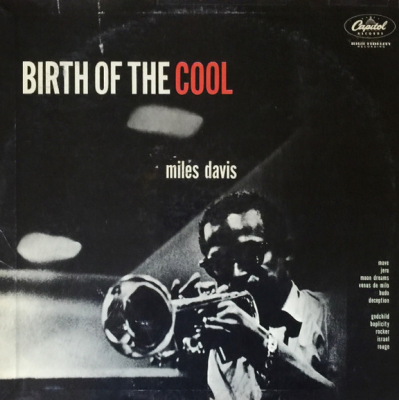
ably he gave birth to the style called cool;
varying modes, his bands found blue in green;
imitate? never, no question mark, clean,
So What if acid was his last new scene.


A big lady


Blues were born into your plaintive voice box,
infinite time in the school of hard knocks;
loving the easy living you knew best,
Lady Day, named by the tenor men’s Prez;
interesting way they arranged your strange fruit,
exquisite style that in our hearts took root.

Home life you longed after time and again,
only to ride wild on trains with jazz men;
limited range but such depth of emotion,
in solitude you earned our true devotion;
devils tormented you from East to West,
and while you died a well-chaperoned death,
yes, it’s still you we hear above the rest.


A big clown


Clown sweating upright on many a stage,
hog callin’ blues put you into a rage;
although there were those that said you were strange,
revered by all for the way you’d arrange
love chants and folk forms you sought to attain;
ecclusiastics you wrought from your pain;
sorrowful ecstasy, your voice not plain.

Mercurial leader of your small big bands,
intricate runs from your rough, callused hands;
Nogales to New York was a quick trip,
growling brown bear of such sardonic quip;
until this day we have never have seen
such a big thumper with long lines so clean.


A big vision


Wonder child, you single-handedly preserved a genre;
you deserve all of the recognition thrust upon you.
Never has a jazz man yet received such great acclaim;
trumpeter, you’re fast approaching Louis Armstrong’s fame.
Only generation left before pure jazz was through;
no one knew it better than did you at twenty-two.

Messenger of music, you direct with style and pace;
Art Blakey could see it, so he put you in his place.
Red blood on the fields you wrote of got us all to thinking;
slave songs from the Center in Manhattan named for Lincoln ;
all around you spread J Mood, your Citi Movements honed;
listen to Noo ‘Awlins callin’ with Levee Low Moans;
it’s time again you and your brothers made the Jazz Fest scene,
Steepie says he’ll treat you to Bayona’s on Dauphine …



Share this:

Comment on this article:

Your email address will not be published. Required fields are marked *

Site Archive

Your Support is Appreciated

Jerry Jazz Musician has been commercial-free since its inception in 1999. Your generous donation helps it remain that way. Thanks very much for your kind consideration.

Click here to read about plans for the future of Jerry Jazz Musician.

In this Issue

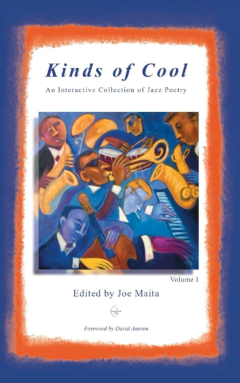
Announcing the publication of Volume II of Kinds of Cool: An Interactive Collection of Jazz Poetry...The second edition of Kinds of Cool, an Interactive Collection of Jazz Poetry has just been published, and is now available for sale on Amazon.com. This edition is dedicated to publishing women poets from all over the world who share their personal passion for and relationship with jazz music, and the culture it interacts with. With a foreword by Allison Miller, one of the world’s most eminent jazz drummers, and photography and design by Rhonda R. Dorsett

Poetry

Andrzej Barabasz, CC BY-SA 4.0, via Wikimedia Commons
21 jazz poems on the 21st of June, 2026...An ongoing series designed to share the quality of jazz poetry continuously submitted to Jerry Jazz Musician. In this edition…An eclectic mix of poetic styles and subjects display a collective love for the music and culture at the core of this creative community.

The Sunday Poem

The Sunday Poem: “Refreshing My Education” by Mike Mignano

The Sunday Poem is published weekly, and strives to include the poet reading their work...

Mike Mignano reads his poem at its conclusion.


Click here to read previous editions of The Sunday Poem

Performance

The performance poet Emmett Wheatfall
A Letter from the Editor…On “The Weary Blues: Celebrating Langston Hughes and the Harlem Renaissance”A brief recap and photos of the February 7, 2026 Jerry Jazz Musician-produced performance of “The Weary Blues: Celebrating Langston Hughes and the Harlem Renaissance”

Interview

photo of Billie Holiday by William Gottlieb/Library of Congress
Interview with Paul Alexander, author of Bitter Crop: The Heartache and Triumph of Billie Holiday’s Last Year...The author talks about the courage and resilience of the legendary Lady Day, and his outstanding book – an inspirational and revealing portrait of an iconic American, that, like his subject, exudes compassion and creative soul.

Feature

Book Excerpt from Crossing Bar Lines: The Politics and Practices of Black Musical Space, by James Gordon Williams...In this entire chapter from his book, the author explains how the trumpeter Ambrose Akinmusire expresses his political views and lived geography through his improvisational music, notably his critique of police brutality that has, as he states, “become a leitmotif throughout my albums.”

Poetry

Yves Moch, CC BY-SA 3.0, via Wikimedia Commons
“Remembering Sonny Rollins” – a collection of poetry...Over the years, many poems have been published on Jerry Jazz Musician that were written in reverence of the man we refer to simply as “Sonny.” In the wake of his death, many more have been written. The unsolicited poems making up this collection is an example.

Short Fiction

Photo by Johannes Schröter, via Pexels
Short Fiction Contest-winning story #71 – “Where the Music Wasn’t Allowed,” by Jane McCarthy....The award-winning story is about a young immigrant growing up in Southern California to the sound of music seeping into his family’s home from an upstairs neighbor’s piano, shaping the boy’s understanding of memory, family, belonging, and the improvisational ethics of music.

Interview

photo by Warren Fowler
Interview with John Gennari, author of The Jazz Barn: Music Inn, the Berkshires, and the Place of Jazz in American Life...The author discusses how in the 1950s the Berkshires – historic home to the likes of Hawthorne, Melville, Wharton, Rockwell, and Tanglewood – became a crucial space for the performance, study, and mainstreaming of jazz, and eventually an epicenter of the genre’s avant-garde.

Short Fiction

“The Cartographer” – a short story by Timothy Collyer...The story – a finalist in the recently concluded 71st Short Fiction Contest – is a work of speculative fiction about the gentrification of memory. It follows a recovering alcoholic who is building a guerrilla augmented-reality map of Philadelphia’s lost jazz history—specifically the “Blue Note” era of the 1960s—while battling a corporate developer who wants to sanitize the data for tourists.

Feature

Memorable Quotes: Abraham Lincoln..."I like to see a man proud of the place in which he lives..."

Community

Ricky Esquivel/Pexels.com
Community Bookshelf #6...“Community Bookshelf” is a twice-yearly space where writers who have been published on Jerry Jazz Musician can share news about their recently authored books and/or recordings. This edition includes information about books published within the last six months or so (September, 2025 – March, 2026)

Poetry

Six poets write eight poems (in the midst of our times)...Poets within this community of writers are feeling this moment in time, and writing about it. This collection is another example.

Short Fiction

collage by Judith Beth Cohen
“The Eating Club” – a short story by Judith Beth Cohen...The story – a short-listed entry in the recently concluded 71st Short Fiction Contest – centers on an affair two writers share around gourmet meals.

Poetry

Peter Buitelaar, CC BY 2.0 , via Wikimedia Commons
Two Poems for Miles Davis

Feature

photo by Laura Stanley via Pexels.com.
Trading Fours, with Douglas Cole, No. 28: “Little Samba”...Trading Fours with Douglas Cole is an occasional series of the writer’s poetic interpretations of jazz recordings and film. This edition is based largely on a documentary – They Shot the Piano Player – about Tenório Junior, a Latin jazz musician who only produced one album (1964) before he “disappeared” in 1976.

Short Fiction

kaboompics.com/via Pexels
“The title is not included in the word count…” – a short story by Scott Cash...In this story – a finalist in the 71st Short Fiction Contest – self-ordained genius Kevin feels that life has been against him. But he thinks he has discovered a loophole and can exceed the 3,000 word limit for a writing contest by utilizing the title. When this is thwarted, he instead lands upon footnotes as a way to exceed the limit. This story is a celebration of writers and the act of writing.

Jazz History Quiz

Besides being one of the first to be influenced by Charlie Christian (pictured), in 1944 this electric guitarist employed Charlie Parker on his first recording date and eventually led an R&B-oriented group “The Rockin’ Highlanders” that featured the saxophonist Red Prysock. Who is he?

Poetry

Poems on Charlie “Bird” Parker (inspired by a painting by Al Summ) – an ekphrastic poetry collection...A collection of 25 poems inspired by the painting of Charlie Parker by the artist Al Summ.

Contributing Writers

Click the image to view the writers, poets and artists whose work has been published on Jerry Jazz Musician, and find links to their work

Coming Soon

New poetry collections, Jazz History Quiz, and lots of short fiction; poetry; photography; interviews; playlists; and much more in the works...

Interview Archive

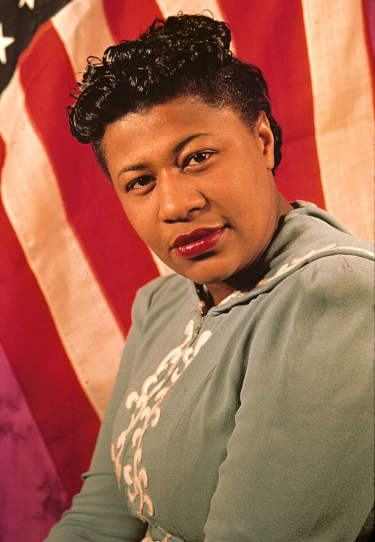
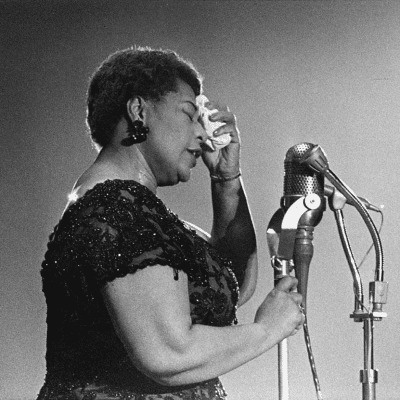
Ella Fitzgerald/IISG, CC BY-SA 2.0 , via Wikimedia Commons
Click to view the complete 25-year archive of Jerry Jazz Musician interviews, including those recently published with Judith Tick on Ella Fitzgerald (pictured),; Laura Flam and Emily Sieu Liebowitz on the Girl Groups of the 60's; Tad Richards on Small Group Swing; Stephanie Stein Crease on Chick Webb; Brent Hayes Edwards on Henry Threadgill; Richard Koloda on Albert Ayler; Glenn Mott on Stanley Crouch; Richard Carlin and Ken Bloom on Eubie Blake; Richard Brent Turner on jazz and Islam; Alyn Shipton on the art of jazz; Shawn Levy on the original queens of standup comedy; Travis Atria on the expatriate trumpeter Arthur Briggs; Kitt Shapiro on her life with her mother, Eartha Kitt; Will Friedwald on Nat King Cole; Wayne Enstice on the drummer Dottie Dodgion; the drummer Joe La Barbera on Bill Evans; Philip Clark on Dave Brubeck; Nicholas Buccola on James Baldwin and William F. Buckley; Ricky Riccardi on Louis Armstrong; Dan Morgenstern and Christian Sands on Erroll Garner; Maria Golia on Ornette Coleman.