
“On the Turntable” — May, 2019 edition

May 4th, 2019

.

.


.

.

___

.

.


Portland is alive with the promise of spring.  My early morning walks in the local park and within my northeast neighborhood are a respite from the ongoing madness of our world (and the “stress” of the NBA Playoffs!), have been mostly sun-blessed, and are always hopeful and inspirational – especially when stellar new jazz recordings make their way into my ear buds (and eventually into my living room).  Life is indeed good…

Here is what stood out for me during my April strolls.

.

.


(Songs from this playlist are available on Spotify and other music streaming services, and of course at your local music store)

.

.

_____

.

.


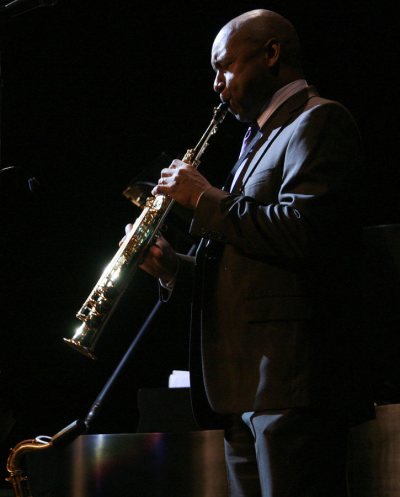
Branford Marsalis Quartet: The Secret Between the Shadow and the Soul (Okeh)

Let’s kick this playlist off with a heavyweight. The revered ensemble – led by the technical brilliance of its leader – is made up of the classic jazz ensemble of saxophone (Marsalis), piano (Joey Calderazzo), bass (Eric Revis), and drums (Jason Faulkner), and offers up a tasty array of seven compositions (five original) ranging from the muscular and brash (“Dance of the Evil Toys”) to the tender and poignant (“Conversation Among the Ruins”) to the Monk-like (Andrew Hill’s “Snake Hip Waltz”) to the joyful (“The Windup”). Marsalis is, again, clear and bright and often strikingly intense, but Calderazzo’s playing is what makes this session particularly notable. His work on “Conversation” and “The Windup” — and his interplay with Marsalis — are the album’s scene-stealers.

.

.

_____

.

.


Joe Martin:  Étoilée (Sunnyside)

This is a sneaky-good recording, filled with clever and enduring compositions and tantalizing performances, led by the bass of New York-based Martin, who over the years has worked with a wide array of top-tier talent, including Chris Potter, Brad Mehldau, Rudy Royston and Mark Turner, whose tenor play on this album is (predictably) breathtaking. Though finely supported by Turner and the pianist Kevin Hays and the drummer Nasheet Waits, Martin’s play sets the recording’s tone throughout – witness the introduction to “Malida” (the album’s best piece) and the effortless, comfortable pace he lays down.  In addition to “Malida,” “Two Birds” is an impeccable conversational ballad between Martin and his band mates, while the ensemble’s virtuosity glows on “Safe.”


.

.

_____

.

.

Scott Robinson: Tenormore (Arbors)

.

There is so much terrific music to recommend on Scott Robinson’s exciting new album, “Tenormore.”   Robinson’s voice is familiar as a standout multi-instrumentalist and key member of the Maria Schneider Orchestra, whose baritone play within that ensemble is sensational — he frequently contributes its most memorable moments.

On “Tenormore,” Robinson devotes the entire album to the tenor, and while I miss the sound of his baritone and clarinet, this is a wonderfully diverse album, whose highlights are two bright hard bop tunes, “Tenor Eleven” and “Tenor Twelve,” the sentimental standard “Put on a Happy Face,” (see if you don’t hear Ben Webster in this one), and “The Good Life,” a relaxed, serene tune (most famously recorded by Tony Bennett in 1962) that drips an appropriate amount of sentimentality.  Another reason to like this record is the fine play of those supporting him, in particular the pianist Helen Sung.

.
.

.

_____

.

.

Allison Au Quartet: Wander Wonder (Self Release)

This is an outstanding album to recommend — the group’s third, and first since their 2016 Juno Award winning Forest Grove.  Led by Au, an innovative and splendid alto player/composer/arranger who calls Toronto home, this is an impressive ensemble.

Au’s play can be understated and refined, but often notable.  “Future Self” is a favorite – Au’s alto is noir-ish and steamy, with a terrific piano interlude by Todd Pentney (who frequently stands out throughout the recording).  The drummer Fabio Ragnelli especially makes himself known on “The Rest is Up to You” – tasty accompaniment (great cymbal work) behind Au’s seemingly effortless play.  The interplay between Au and Pentney on “Looking Up” will get you listening to it more than once (great drumming, again, by Ragnelli), and “Morning” is an exquisite and innovative ballad.  These four songs are linked below for you to check out, but man, do yourself a favor and unpack the entire album.  It’s that good.

.
..

_____

.

.


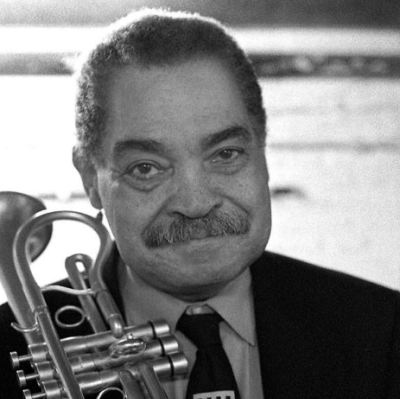
Warren Vache: Songs our Fathers Taught Us (Arbors)


My dad would have loved this album.

Coming of age during the Depression years, his world was filled with the trumpets of Louis Armstrong and Harry James and Bunny Berigan.  He fell in love with the instrument, enough so that he learned to play it himself, leading a big band in Sacramento as a young man and eventually playing professionally (albeit on a “second income” basis) for the rest of his life. He loved sharing his interest in trumpet players; he had a 1930’s friendship with Roy Eldridge, was open minded about Dizzy’s bebop, followed with interest the changes in Miles’ career, and of course loved Wynton, who we often listened to and marveled together during my visits with him.  He didn’t buy many CD’s late in his life — he bought Wynton’s.

He would have loved Vache’s warm, pure tone, and I can hear him rave about his vibrato on “Warm Valley,” his muted runs on “My Melancholy Baby,” the sheer romantic longing of “Love Locked Out,” and his nod to Dizzy on “Birk’s Works.”

Vache has been an accomplished trumpeter since the 1970’s, when he played in Benny Goodman’s orchestra, and has since recorded 20 CD’s as a leader, and with the likes of George Shearing, Woody Herman, Scott Hamilton, Rosemary Clooney, Gerry Mulligan, and Bill Charlap.

So…yeah…my dad would have loved this record – and I am betting you will also.

.

.
.
.

“On the Turntable” — June, 2019

“On the Turntable” – May, 2019

“On the Turntable” – April, 2019

“On the Turntable” — March, 2019

“On the Turntable” — February, 2019

“On the Turntable” — January, 2019

.

.

.

Share this:

Comment on this article:

Your email address will not be published. Required fields are marked *

Site Archive

Your Support is Appreciated

Jerry Jazz Musician has been commercial-free since its inception in 1999. Your generous donation helps it remain that way. Thanks very much for your kind consideration.

Click here to read about plans for the future of Jerry Jazz Musician.

In this Issue

Announcing the publication of Volume II of Kinds of Cool: An Interactive Collection of Jazz Poetry...The second edition of Kinds of Cool, an Interactive Collection of Jazz Poetry has just been published, and is now available for sale on Amazon.com. This edition is dedicated to publishing women poets from all over the world who share their personal passion for and relationship with jazz music, and the culture it interacts with. With a foreword by Allison Miller, one of the world’s most eminent jazz drummers, and photography and design by Rhonda R. Dorsett

Poetry

photo of Shelly Manne by William Gottlieb/Library of Congress
21 jazz poems on the 21st of May, 2026...An ongoing series designed to share the quality of jazz poetry continuously submitted to Jerry Jazz Musician. In this edition…An array of poetic styles communicate personal reverence for and experiences with jazz music, and its cherished musicians.

The Sunday Poem

Marek Lazarski, CC BY-SA 4.0, via Wikimedia Commons

The Sunday Poem: “Sonny Rollins” by Akua Lezli Hope

The Sunday Poem is published weekly, and strives to include the poet reading their work...

Akua Lezli Hope reads her poem at its conclusion.


Click here to read previous editions of The Sunday Poem

Interview

photo of Billie Holiday by William Gottlieb/Library of Congress
Interview with Paul Alexander, author of Bitter Crop: The Heartache and Triumph of Billie Holiday’s Last Year...The author talks about the courage and resilience of the legendary Lady Day, and his outstanding book – an inspirational and revealing portrait of an iconic American, that, like his subject, exudes compassion and creative soul.

Feature

Book Excerpt from Crossing Bar Lines: The Politics and Practices of Black Musical Space, by James Gordon Williams...In this entire chapter from his book, the author explains how the trumpeter Ambrose Akinmusire expresses his political views and lived geography through his improvisational music, notably his critique of police brutality that has, as he states, “become a leitmotif throughout my albums.”

Poetry

Yves Moch, CC BY-SA 3.0, via Wikimedia Commons
“Remembering Sonny Rollins” – a collection of poetry...Over the years, many poems have been published on Jerry Jazz Musician that were written in reverence of the man we refer to simply as “Sonny.” In the wake of his death, many more have been written. The unsolicited poems making up this collection is an example.

Short Fiction

Photo by Johannes Schröter, via Pexels
Short Fiction Contest-winning story #71 – “Where the Music Wasn’t Allowed,” by Jane McCarthy....The award-winning story is about a young immigrant growing up in Southern California to the sound of music seeping into his family’s home from an upstairs neighbor’s piano, shaping the boy’s understanding of memory, family, belonging, and the improvisational ethics of music.

Interview

photo by Warren Fowler
Interview with John Gennari, author of The Jazz Barn: Music Inn, the Berkshires, and the Place of Jazz in American Life...The author discusses how in the 1950s the Berkshires – historic home to the likes of Hawthorne, Melville, Wharton, Rockwell, and Tanglewood – became a crucial space for the performance, study, and mainstreaming of jazz, and eventually an epicenter of the genre’s avant-garde.

Poetry

photo by Tsutumu Takasu/via Flicker/CC BY 2.0
“Cajun Glory” – a prose poem by Robert Alan Felt

Community

Ricky Esquivel/Pexels.com
Community Bookshelf #6...“Community Bookshelf” is a twice-yearly space where writers who have been published on Jerry Jazz Musician can share news about their recently authored books and/or recordings. This edition includes information about books published within the last six months or so (September, 2025 – March, 2026)

Poetry

Six poets write eight poems (in the midst of our times)...Poets within this community of writers are feeling this moment in time, and writing about it. This collection is another example.

Short Fiction

“You Don’t Know What Love Is”- a short story by L.F. Graubard...A recovering junkie jazzman in a Starbucks time slips through the key years that fed his addiction — 1967 R&B and jazz gigs, ’69 biker bars, ’71 methadone hustles, ’79 script scams — before landing in the Narco Farm, where music, Sonny Rollins, and Secretariat crack his heart open. A fractured, noir confession about love, dope, and improbable grace.

Poetry

Peter Buitelaar, CC BY 2.0 , via Wikimedia Commons
Two Poems for Miles Davis

Feature

photo by Laura Stanley via Pexels.com.
Trading Fours, with Douglas Cole, No. 28: “Little Samba”...Trading Fours with Douglas Cole is an occasional series of the writer’s poetic interpretations of jazz recordings and film. This edition is based largely on a documentary – They Shot the Piano Player – about Tenório Junior, a Latin jazz musician who only produced one album (1964) before he “disappeared” in 1976.

Short Fiction

“From Ingenue to Earth Mother” – a short story by Lisa Grunberger...The story – a short -listed entry in the recently concluded 72nd Jerry Jazz Musician Short Fiction, centers on a couple who “get” each other from the beginning, but who can’t seem to make a life together.

Poetry

art by Marsha Hammel
“Learning the Alphabet of the Blues” – a poem by Mary K O’Melveny...A poem from Kinds of Cool: An Interactive Collection of Jazz Poetry, Vol. II

Short Fiction

Alejandro Aznar/via Pexels.com
“Down at the Crossroads” – a short story by David Rudd...In this story – a finalist in the recently concluded 71st Jerry Jazz Musician Short Fiction Contest – a jazz composer hears a lone fiddler play a tune that enters his head and won’t leave it, like a virulent earworm, wrecking his playing, his friendships, and indeed, his life, until he finally finds a way to remove it.

Feature

photo via Wikimedia Commons
Memorable Quotes: Two, by Edward R. Murrow…

Feature

photo via Wikipedia
“Two Famous Johns” – a true jazz story by Bob Hecht...The writer remembers an evening in New York’s Half Note in 1964 when he witnessed a John Coltrane performance that was also attended by the pop singer Johnny Mathis

Poetry

Haiku: Musings – by Connie Johnson...Exploring segments of the world of jazz – in three suites of vivid haiku poetry…

Jazz History Quiz

photo of "Hot Lips" Page by William Gottlieb
Jazz History Quiz #187...This trumpeter began his career in California, where he organized a big band that had a residency in China in 1934, and, during a trip through Kansas City in 1936, was invited to join Count Basie’s orchestra, replacing “Hot Lips” Page (pictured). Who is he?

Feature

“Bohemian Spirit” – A Remembrance of 1970’s Venice Beach, by Daniel Miltz...The writer recalls 1970’s Venice Beach, where creatives chased a kind of freedom that didn’t fit inside four walls…

Feature

Boris Yaro, CC BY 4.0, via Wikimedia Commons
“The Bowie Summer” – a personal memory, and how art can fundamentally reshape identity, by G.D. Newton-Wade

Poetry

Poems on Charlie “Bird” Parker (inspired by a painting by Al Summ) – an ekphrastic poetry collection...A collection of 25 poems inspired by the painting of Charlie Parker by the artist Al Summ.

Feature

Albert Ayler’s Spiritual Unity – A Classic of Our Time, and for All Time – an essay by Peter Valente...On the essence of Albert Ayler’s now classic 1964 album…

A Letter from the Publisher

The gate at Buchenwald. Photo by Rhonda R Dorsett
War. Remembrance. Walls.
The High Price of Authoritarianism– by editor/publisher Joe Maita
...An essay inspired by my recent experiences witnessing the ceremonies commemorating the 80th anniversary of liberation of several World War II concentration camps in Germany.

Interview

Interview with Tad Richards, author of Listening to Prestige: Chronicling its Classic Jazz Recordings, 1949 – 1972...Richards discusses his book – a long overdue history of Prestige Records that draws readers into stories involving its visionary founder Bob Weinstock, the classic recording sessions he assembled, and the brilliant jazz musicians whose work on Prestige helped shape the direction of post-war music.

Contributing Writers

Click the image to view the writers, poets and artists whose work has been published on Jerry Jazz Musician, and find links to their work

Coming Soon

An interview with Paul Alexander, author of Bitter Crop: The Heartache and Triumph of Billie Holiday's Last Year; New poetry collections, Jazz History Quiz, and lots of short fiction; poetry; photography; interviews; playlists; and much more in the works...

Interview Archive

Ella Fitzgerald/IISG, CC BY-SA 2.0 , via Wikimedia Commons
Click to view the complete 25-year archive of Jerry Jazz Musician interviews, including those recently published with Judith Tick on Ella Fitzgerald (pictured),; Laura Flam and Emily Sieu Liebowitz on the Girl Groups of the 60's; Tad Richards on Small Group Swing; Stephanie Stein Crease on Chick Webb; Brent Hayes Edwards on Henry Threadgill; Richard Koloda on Albert Ayler; Glenn Mott on Stanley Crouch; Richard Carlin and Ken Bloom on Eubie Blake; Richard Brent Turner on jazz and Islam; Alyn Shipton on the art of jazz; Shawn Levy on the original queens of standup comedy; Travis Atria on the expatriate trumpeter Arthur Briggs; Kitt Shapiro on her life with her mother, Eartha Kitt; Will Friedwald on Nat King Cole; Wayne Enstice on the drummer Dottie Dodgion; the drummer Joe La Barbera on Bill Evans; Philip Clark on Dave Brubeck; Nicholas Buccola on James Baldwin and William F. Buckley; Ricky Riccardi on Louis Armstrong; Dan Morgenstern and Christian Sands on Erroll Garner; Maria Golia on Ornette Coleman.