



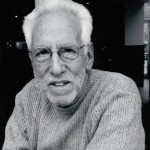
John Goodman, author of Mingus Speaks
_________________________
Charles Mingus is among jazz’s greatest composers and perhaps its most talented bass player. He was blunt and outspoken about the place of jazz in music history and American culture, about which performers were the real thing (or not), and much more. These in-depth interviews, conducted several years before Mingus died, capture the composer’s spirit and voice, revealing how he saw himself as composer and performer, how he viewed his peers and predecessors, how he created his extraordinary music, and how he looked at race. Augmented with interviews and commentary by ten close associates — including Mingus’s wife Sue, Teo Macero, George Wein, and Sy Johnson — Mingus Speaks provides a wealth of new perspectives on the musician’s life and career.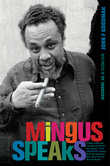
As a writer for Playboy, John F. Goodman reviewed Mingus’s comeback concert in 1972 and went on to achieve an intimacy with the composer that brings a relaxed and candid tone to the ensuing interviews. Much of what Mingus shares shows him in a new light: his personality, his passions and sense of humor, and his thoughts on music. The conversations are wide-ranging, shedding fresh light on important milestones in Mingus’s life such as the publication of his memoir, Beneath the Underdog, the famous Tijuana episodes, his relationships, and the jazz business.
Goodman discusses his book in a July, 2013 interview with Jerry Jazz Musician publisher Joe Maita.
_____
“…Mingus was fictionalizing and role-playing through most of his life, when and as it suited him: the Clown, the Baron, the King Pimp, and so forth. The real Mingus is finally as indefinable and inimitable as his music. A man whose ego sometimes overran his conscience and good nature, Mingus moved his friends to love, anger, and performance of the impossible – just as he moved his musicians. The urgent needs he manifested constantly and sometimes acted out to his detriment were often tempered by a warmth and openness that were not always on display. Mingus was ‘the easiest person in the world to love,’ said Bobby Jones, who frequently had formidable fights with him.”
–John Goodman
___________________
JJM Your book is a unique way to experience the culture and history of jazz. How did you manage to make a connection with Charles Mingus?
JG I’d been involved in jazz since I was a kid, but I didn’t get interested in his music until a little later. I became captivated not only by the breadth and variety of his music, but also by the fact that he was such a unique character who had much to say about so many subjects. When I was writing for Playboy back in the early ’70s, there was news about a comeback concert that he was going to give at Philharmonic Hall in New York (now Avery Fisher). There was quite a lot of talk in the press about this concert, so I talked to the managing editor of the magazine and asked him if he would be interested in having me review the concert and then possibly do a feature article based on that. He said OK, and so that’s what happened. After the concert I went backstage and talked to Mingus, who was very approachable and cordial, in fact, and we decided that we would go ahead and do some interviews on the basis of a possible feature for Playboy. We got along great, but the article was never published, principally because I didn’t do my best work in writing it. We then decided to go ahead and work on a book, which he had had in his mind for a while.
JJM Did your association with Playboy have anything to do with his decision to grant you these interviews?
JG I suppose so. Mingus loved to talk about women and sex, and I think that the whole Playboy mystique that existed in the early ’70’s must have appealed to him.
JJM During one of your interviews, Mingus said, “Everybody in the band gets $450 a week; I’m making $2500, and I pay the agent, the plane fare, expenses – I don’t make nothing, man. It’s like doing it for kicks. And I can’t go on for kicks anymore. That’s why I’m writing this book. That’s why you’re going to write a good book. That’s why I can’t fuck around. You got to go inside my head and take out all the cobwebs and take out all the real things and all the bad things. I think you can do it, man.” Did Mingus see the book as a financial opportunity?
JG I don’t know whether that was the principal reason for his finally agreeing to work with me on it, but I think that was part of it. He was very unhappy about the whole jazz scene in terms of how difficult it was to make a living, and it’s been that way forever, as you know. It may have been worse in the early ’70’s because jazz was really under assault from rock and roll and all kinds of commercial music developments that were pushing it aside. Jazz musicians, including Mingus, were having a tough time making a living.
JJM And he was resentful – or suspicious – of the direction rock was pushing jazz into. So, he must have seen this book as a way to make some money, but, as you suggest, it may have also been in response to the fact that a hero of his, Duke Ellington, published his autobiography, Music is My Mistress, around that same time…
JG Yes, although he never actually said that to me, I do think it’s true that the appearance of Ellington’s book was something that drove him to get his own piece done. The other thing is that he was trying to do some sort of follow-up to Beneath the Underdog that would tell the other aspects of his life story – his “life in music” is what Mingus called it. He wrote thousands of pages that he and his editors condensed down to Beneath the Underdog, but that stuff is still in boxes, I guess, in the Library of Congress where Sue Mingus put it. Some people have looked at that but I have not, and I think all that material – which he called “the original book” – was very important to Mingus. He really felt that was where the true Mingus lay, and not so much in Beneath the Underdog, which was mostly a lot of fictionalizing.
JJM Yes, but it was very creative also, although his sexual exploits tend to be the things people remember most about the book – it is certainly what I remember from reading it over 30 years ago.
JG If you read my comments on Beneath the Underdog, I find that after re-reading it again in the last few years the sex parts just don’t hold up for me. The parts that really ring true are the discussions with Fats Navarro and with other jazz people – these are the things that give flavor to the era and really sound like the Mingus that I knew. But the book did have its popularity and a lot of people read it for different reasons.
JJM What was his reputation as an interview subject when you took this project on?
JG Well, he was supposed to be very difficult, and I think that was one of the things that drew me to approach him. He had a reputation for being just plain nasty, and he had no affection or use for white people. He was also known as someone who would twist the facts, or try to twist the interviewer’s questions around. I took that as a challenge and wanted to see if I could get through to him. We had a wonderful relationship. We never had any real fights or arguments, and we had some very good conversations.
JJM Bobby Jones, a saxophonist in his band at the time of your interviews, told you, “When he senses where an interviewer is going, he takes entirely the opposite side that they expect him to take.” Was his authenticity ever in doubt?
JG What do you mean by “authenticity?”
JJM Well, since, as Jones said, “you never know when he’s playing with you,” was there ever a doubt in your mind about whether he was being truthful, or was he more interested in taking part in some sort of gamesmanship with you?
JG I never got the feeling it was gamesmanship – although if you read the introduction and the first chapter where he does an interview with a young Italian writer, he does do a lot of that twisting and turning in the interview. So, I think in a way Mingus tested you. He tested his musicians all the time, and he’d test interviewers. He also tested the women in his relationships. It was a constant sort of process with him to see whether he could cut away the bullshit and get to the truth. I think that was a big theme in his life.
JJM What’s clear in the reading of your interviews is that you seemed to have a genuine “like” for one another. Given his hatred of critics, how did he come to respect you?
JG I think partly because I always did try to be straight with him and talk in such a way that would not raise any controversial issues I knew would set him off. My whole goal was to develop a relationship with him. I’ve done a couple of books of interviews and know that interviewing someone goes beyond just asking questions and getting answers. The goal is to have some kind of real conversation with the person. I don’t think we always got to that because Mingus was a very moody guy, and I am too, in a sense, but we often had lengthy conversations and those were very exciting and wonderful.
JJM At times he came across as being argumentative and even contentious with you. Did you ever find him to be intimidating?
JG Yes, but not often. Occasionally when we would get into discussions like the one on avant-garde jazz, I would wonder how far I could push my point of view before he would react, and mostly it seemed to work. But yes, he had his contentious side, and some of the stuff that he wrote – for example, the letter he wrote challenging the criticism of New York Times writer John Wilson — was a classic Mingus vituperation. He just really let it all out there.
JJM In that letter he said, “I’ve never sold out or tommed with my music, yet every move I make to better myself so I can survive this system, you fuck with me, comment on me with your opinion as though you are the all-knowing god who won’t accept my music enough to allow me to earn a living by staying away from my music…You drive the new fans away and you drive away the businessmen who must support the music. You stay away from my job and I’ll stay away from yours. Unless one day you end up selling news copy on a street corner in Harlem at 12 A.M.” So, he didn’t have a lot of respect for people who, in his view, weren’t qualified to comment on his work…
JG That’s right, and I guess that’s one reason we got along, because I had been writing about jazz for quite a long time at that point, and, as I said earlier, I grew up with the music. So, I knew or knew about the people that Mingus was talking about – even some of the lesser-known characters from the West Coast – and this gave us a common bond of knowledge, which I think helped our relationship.
JJM Given his communication style, you must have had some interesting transcription challenges…
JG There were many! If you ever heard him talk you know that it’s really hard to understand him. He talked in a very rapid-fire way, occasionally slurring over words in a funny, broken rhythm – not like his music but analogous in a way. I had a pretty good little tape recorder for its time – a new Sony recorder that had a good mike on it – but transcribing the recording was really difficult. I had two or three transcribers that I worked with, plus I did a lot of it myself. Occasionally in the book you’ll see “unintelligible” in brackets where we couldn’t clearly understand his words, but not in too many places because we really worked over the interviews pretty diligently.













According to Mingus himself in Beneath The Underground, my uncle Joe Comfort from Watts, who played with Nelson Riddle, Sinatra, Nat King Cole, Ella, etc., taught Mingus how to play bass. It’s a shame this legacy which Mingus documents is never mentioned.
Joe Comfort is mentioned in the book Beneath The Underdog by Charles Mingus.
Mingus makes reference to learning bass from Joe Comfort in Watts, CA.
John H. High Jr.
(grand nephew of Joe Comfort)
According to Mingus himself in Beneath The Underground, my uncle Joe Comfort from Watts, who played with Nelson Riddle, Sinatra, Nat King Cole, Ella, etc., taught Mingus how to play bass. It’s a shame this legacy which Mingus documents is never mentioned.