
“Father Kniest, Jazz Priest”…a short story by Con Chapman

November 7th, 2019

.

.

Boston-based writer Con Chapman is the author of two novels, over thirty stage plays, and fifty books of humor.  Most recently, he is the author of Rabbit’s Blues, The Life and Music of Johnny Hodges.

I had the good fortune of interviewing Mr. Chapman recently about Hodges.  That discussion will be published in the near future.

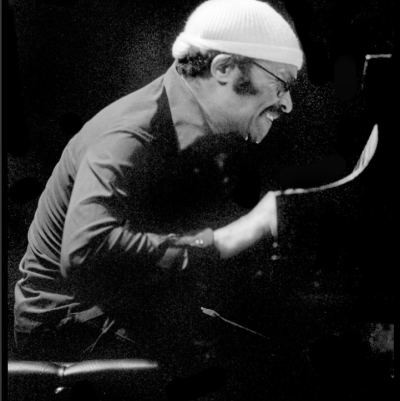
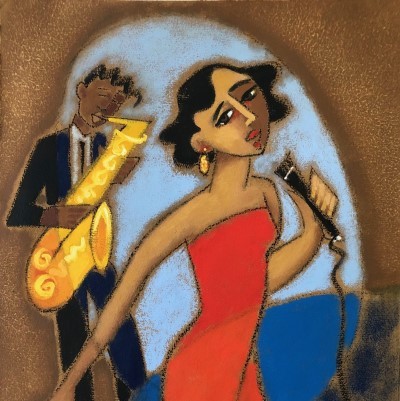
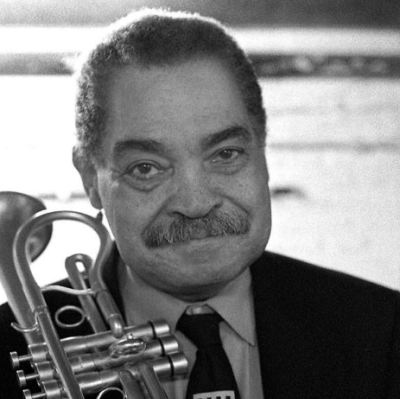
His short story “Father Kniest, Jazz Priest,” (published on Jerry Jazz Musician in 2015) is about “a man of the cloth…deputized by a higher power to save jazzmen’s souls from the lures and wiles and temptations of bad taste.”  It is published with the permission of the author.

.

.

photo/Creative Commons CC0.

.


Father Kneist, Jazz Priest

by

Con Chapman

.

___

.


I’m getting too old for this, I thought as I made my way down Boylston Street, my tambourine in one hand, the Good Book in the other. I started ministering to the jazz scene in Boston back when Estelle Slavin and Her Swinging Brunettes were the house band at Izzy Ort’s Coney Island Club on Essex Street. Floogie Williams and the Unquenchables were ensconced at the Tip-Top Lounge, which didn’t sit well with the sconces that came with the place as trade fixtures, but so what? We were young and crazy for jazz — we didn’t care.

But now I’m closing in on eighty, and eighty’s looking over its shoulder, nervous as hell. I’ll catch it soon enough — if I don’t die first.

Back in ’55 I was just out of the seminary and was assigned by my religious order — the Congregation of the Hep — to Boston, one of the most Catholic cities in America, and always viewed as nothing more than a stepping stone. Cats in Boston lived in an existential no-man’s-land; always doubting whether they were any good as long as they stayed in Beantown instead of moving on the Big Apple. To them, I was Father Kniest — Jazz Priest.

Like The Disgruntled Threesome — “Buzzy” Drootin, Sparky Tomasetti, Cas Brosky. Man, those guys could swing. The name was facetious, of course; if you came into Wally’s Wigwam in a disgruntled mood, those guys would have you completely gruntled by the time they’d finished “Muskrat Ramble” the second time.

But all that’s in the past, in the semi-glory days of Boston jazz. Now, I’m reduced by fifty years — a half century! — of rock, folk, disco and rap to trying to save a few forlorn souls from eternal damnation.

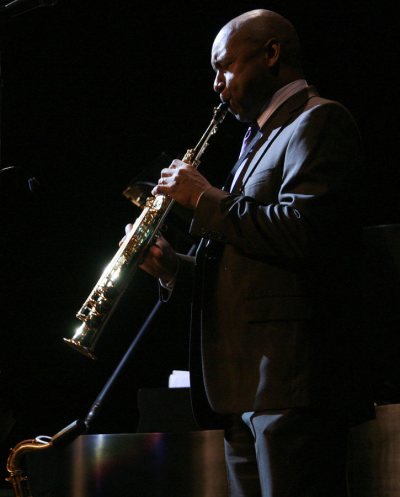
I pass by a soprano sax player in Dewey Square, or “Financial Center” as some urban planning goober decided to re-brand it in the 80’s. He’s playing “Chim Chim Cheree,” among other schmaltz-laden Disney tunes. I know the guy’s just trying to survive, but so are the hookers down on lower Washington Street — that don’t make it right.

I step out of the herd of faceless commuters making their way to South Station for the train ride to the suburbs, and pull a $5 bill from my pocket. The man says “thank you” without taking his mouth off his reed so he can keep the cash flowing, but I dangle the sawbuck in front of his face without letting it drop to let him know I’ve got something I need to say to him.

“I need to talk to you, man,” I say, and he finally stops playing.

“Really, thanks a lot, I . . .”

“You don’t get it,” I say with the seething demeanor Jesus must have taken on right before he threw the money changers out of the temple.

“What?”

“I’m paying you to stop . . . not keep going.”

“But . . . I won’t make any more money that way.”

“Yes you will, if you’ll stop playing that crap and switch to something worth the breath it takes to play it.”

“Like what?”

“If you play ‘Cherokee’ there’s another fin in the wallet where this one came from.”

His eyes light up. “Heck YEAH, man,” he says, and he launches into a creditable rendition of the Ray Noble classic. I drop two fives into his instrument case, nod my head as I give him a look of commendation, and I’m off to rescue another frail reed about to break beneath the burden of a culture that doesn’t appreciate his art.

It’s over to La Fisherie, an upscale restaurant in “Copley Place.” I can only shake my head at that solecism. Copley Square was already a place, the aorta of the heart of Boston jazz. It was here that Leonard “Dizzie” Groot joined forces with Bunny “Fred” Buchanan and Tommy “Flip” Phlegman to come thisclose to getting a contract with Verve that coulda shoulda woulda made them stars in the same constellation as The Dorsey Brothers.

But no. A cold sore hampered Bunny/Fred the night the A&R man from New York came to town to hear The Jazz Nocturnals at Mert’s Playland; by the second set his lip was bleeding and he could barely manage “In the Mood.” The guy from the record company got lost on the subway, like Charlie on the MTA. He didn’t know that there’s no inbound/outbound transfer at Copley, and he didn’t know that you pronounce the name of the place with a short “o”; it’s COP-ley as in “Cheez it-the cops!” — not COPE-ley, as in “I can’t cope with you any more, Laverne.”

There’s still one jazz venue left in the Square; the somnolent, soporific Swank Room in the basement of a Class B hotel where a Red Sox relief pitcher took his own life back in the 50’s, setting off a massive manhunt on the part of the ball club’s management to recover his $3.50 per day meal money.

I tread gently down the dimly-lit steps and see a scene that would break any self-respecting jazz man’s heart; there’s four, maybe five tables occupied, one by Lydia Tournquest, “society” columnist for The Back Bay Schooner, a relic of a bygone era before the MassPike made it easy to commute to the suburbs and drained the city of adults with a recollection of what jazz once sounded like, and the pocket money to pay for it.

On the bandstand is Wilson “Chet” Forskett, a Berklee student who’s wailing on alto sax; he’s chasing the Bird, playing an easy-swinging “Yardbird Suite” with enough invention to keep you listening while still tapping your feet to the Kansas City beat. I’m almost ready to get excited-is this the Second Coming of Boston Jazz?-when he ends on a mellow note and draws scattered applause.

Down front a mismatched couple-he’s wearing a toupee, her burgeoning breasts are about to spill out of her scoop neck-takes it all in with a knowing, somewhat superior air. Why not? They sprang for the $19.95 Veal Scaloppini Avec Porcini Mushrooms-the name of the dish is like a mini-United Nations Security Council.

They put their hands together in restrained admiration-probably don’t want to get the kid’s hopes up for a tip-and the woman speaks.

“Excuse me,” she says to the sax man.

“Yes?” he replies.

“Do you know “Lady,” by Kenny Rogers?”

The young man bites his lower lip but not, I think, because he can’t recall the changes.

“No ma’am, I’m afraid we don’t.” I know what he’s thinking: he’s drunk the milk of Paradise, like the man in Coleridge’s Kubla Khan — the paradigm shifting music of bebop; he’s not going back to Classic Country.

“Aww, that’s a shame,” the woman says. I think I’ve got these two figured out. Mr. Hair Club for Men is her boss, she’s his secretary. How — sordid!

“Sorry,” the budding jazz man says.

“You should learn it,” the woman says. “It’s really beautiful!”

I see the kid’s neck stiffen; he’s trying to keep from shaking his head.

“Well, uh, sheet music is expensive,” he says.

“That’s okay — I can hum it for you, and you can fake it,” the woman says. She clears her throat — should’ve got that flu shot, I think to myself — takes her long-stemmed red rose in hand and begins to emote.

“Lady,” she sings in a husky contralto, “I’m your knight in shi-i-ning armor!”

“Stop!” I yell as I make my way down front. “Stop it before you infect this young man with whatever pop virus has corrupted your brain!”

“Hey — don’t talk to her like dat!” the man says. Now that I’m up close, I see that I’ve judged him unfairly; his hair’s real, only it’s combed over from a point just above one ear all the way over to the other. He looks like a Georgia cotton field infected with kudzu.

“I’m a man of the cloth, pal. I’m deputized by a higher power to save jazzmen’s souls from the lures and wiles and temptations of bad taste.”

I have bad taste?” the woman says. Apparently no one’s ever leveled with her before.

“Abso-freaking-lutely,” I say, drawing myself up to my full 5’10” height.

“I thought the rule was ‘Cha-koon o sone gout’,” the man says. “To each his own.”

“Nope,” I reply with authority. “There are certain immutable laws of beauty, and your ‘lady’ here is a veritable one-woman aesthetic crime wave.”

“How do you know she’s got bad taste?” the man asks, a bit miffed at my condescension.

“Easy,” I say. “She’s with you.”

.

_____

.

.

 

conchapman


Con Chapman is a Boston-area writer, the author of two novels and “The Year of the Gerbil,” a history of the ’78 Red Sox-Yankees pennant race. His writing on jazz has appeared in Punchnel’s and Brilliant Corners, among other publications.  His book Rabbit’s Blues: The Life and Music of Johnny Hodges (Oxford) is now available.

.

.

.



Share this:

Comment on this article:

Your email address will not be published. Required fields are marked *

Site Archive

Your Support is Appreciated

Jerry Jazz Musician has been commercial-free since its inception in 1999. Your generous donation helps it remain that way. Thanks very much for your kind consideration.

Click here to read about plans for the future of Jerry Jazz Musician.

Community

Calling All Poets…Submissions guidelines for the anthology “Black History in Poetry”...We are currently seeking poetry from writers of all backgrounds for Black History in Poetry, an anthology scheduled for publication in the Summer of 2026. The anthology will be a means of celebrating and honoring notable Black Americans by offering poetry that teems with imagery, observation, emotion, memory, testimony, insight, impact, and humanity. Our aim is to give readers a way to visualize Black history from a fresh perspective.

In This Issue

21 jazz poems on the 21st of October, 2025...An ongoing series designed to share the quality of jazz poetry continuously submitted to Jerry Jazz Musician. This edition features poems inspired by the late Chuck Mangione, several on other trumpeters, the blues, and nods to Monk, Ornette Coleman, Coltrane, and Sonny Rollins.

Poetry

Ukberri.net/Uribe Kosta eta Erandioko agerkari digitala, CC BY 2.0, via Wikimedia Commons
In Memoriam: “Color Wheels” – a poem (for Jack DeJohnette) by Mary O’Melveny

Poetry

Monk, as seen by Gottlieb, Dorsett and 16 poets – an ekphrastic poetry collection...Poets write about Thelonious Monk – inspired by William Gottlieb’s photograph and Rhonda R. Dorsett’s artistic impression of it.

Publisher’s Notes

A dispatch from Portland, 2025 – and Boston, 1969...Peaceful protest is nothing new to America. It is happening every day in Portland, where I live. It is what makes our country great. And those of us who grew up in the 1960’s probably have a history of protest – some turning violent – ourselves. The poet Russell Dupont shares text and photos from his experience while photographing the October, 1969 March against the [Vietnam] War in Boston, when plainclothes Federal officers attempted to confiscate his camera.

The Sunday Poem

photo via pickpik.com

”Angel Mouthed Promises” by Saira Viola

The Sunday Poem is published weekly, and strives to include the poet reading their work.... Saira Viola reads her poem at its conclusion


Click here to read previous editions of The Sunday Poem

A Letter from the Publisher

The gate at Buchenwald. Photo by Rhonda R Dorsett
War. Remembrance. Walls.
The High Price of Authoritarianism– by editor/publisher Joe Maita
...An essay inspired by my recent experiences witnessing the ceremonies commemorating the 80th anniversary of liberation of several World War II concentration camps in Germany.

Interview

Interview with Tad Richards, author of Listening to Prestige: Chronicling its Classic Jazz Recordings, 1949 – 1972...Richards discusses his book – a long overdue history of Prestige Records that draws readers into stories involving its visionary founder Bob Weinstock, the classic recording sessions he assembled, and the brilliant jazz musicians whose work on Prestige helped shape the direction of post-war music.

Poetry

"Swing Landscape" by Stuart Davis
“Swing Landscape” – a poem by Kenneth Boyd....Kenneth Boyd writes poetry based on jazz paintings. “Swing Landscape” is written for a Stuart Davis painting of the same name.

Short Fiction

Short Fiction Contest-winning story #69 – “My Vertical Landscape,” by Felicia A. Rivers...Touched by the stories of the Philadelphia jazz clubs of the 1960s, a graffiti artist transforms an ugly wall into something beautiful – meaningful, even.

Poetry

photo via Wikimedia Commons
Jimi Hendrix - in four poems

Short Fiction

“Alas, for My Poor Heart” – a short story by Daryl Rothman...The story – a short-listed entry in the recently concluded 69th Short Fiction Contest – concerns art and its truest meanings—where you just might have to look twice at what the shadow and light of a piece says about that within your soul.

Essay

“Escalator Over the Hill – Then and Now” – by Joel Lewis...Remembering the essential 1971 album by Carla Bley/Paul Haines, inspired by the writer’s experience attending the New School’s recent performance of it

Poetry

“Still Wild” – a collection of poems by Connie Johnson...Connie Johnson’s unique and warm vernacular is the framework in which she reminds readers of the foremost contributors of jazz music, while peeling back the layers on the lesser known and of those who find themselves engaged by it, and affected by it. I have proudly published Connie’s poems for over two years and felt the consistency and excellence of her work deserved this 15 poem showcase.

Short Fiction

publicdomainpictures.net
“Corkscrew” – a short story by Mike Wilson...The story – a short-listed entry in the recently concluded 69th Short Fiction Contest – is about a night when everything goes wrong and everyone is annoying, an unexpected turn of events teaches a sarcastic lawyer that the old adage is true – a cynic is just a disappointed romantic.

Feature

Jazz History Quiz #184...Maurice Ravel (pictured) acknowledged basing his Bolero on an improvisation of this clarinetist, who was also influential in the careers of Benny Goodman and Nat Cole, who made famous this musician’s theme song, “Sweet Lorraine.” Who is he?

Interview

Interview with Sascha Feinstein, author of Writing Jazz: Conversations with Critics and Biographers...The collection of 14 interviews is an impressive and determined effort, one that contributes mightily to the deepening of our understanding for the music’s past impact, and fans optimism for more.

Feature

Trading Fours, with Douglas Cole, No. 26: “Bougainvillea Sutra”...An occasional series of the writer’s poetic interpretations of jazz recordings and film. In this edition, his inspiration comes from the guitarist John Scofield’s 2013 EmArcy album Uberjam Deux, and specifically the track titled “Scotown.”

Short Fiction

photo by Simon Webster
“Smoke Rings and Minor Things” – a short story by Jane McCarthy...The story – a short-listed entry in the recently concluded 69th Short Fiction Contest – is a meditation on missed chances, minor keys, and the music that outlives the room it was played in.

Essay

“J.A. Rogers’ ‘Jazz at Home’: A Centennial Reflection on Jazz Representation Through the Lens of Stormy Weather and Everyday Life – an essay by Jasmine M. Taylor...The writer opines that jazz continues to survive – 100 years after J.A. Rogers’ own essay that highlighted the artistic freedom of jazz – and has “become a fundamental core in American culture and modern Americanism; not solely because of its artistic craftsmanship, but because of the spirit that jazz music embodies.”

Publisher’s Notes

Creatives – “This is our time!“…A Letter from the Publisher...A call to action to take on political turmoil through the use of our creativity as a way to help our fellow citizens “pierce the mundane to find the marvelous.”

Community

photo of Dwike Mitchell/Willie Ruff via Bandcamp
“Tell a Story: Mitchell and Ruff’s Army Service” – an essay by Dale Davis....The author writes about how Dwike Mitchell and Willie Ruff’s U.S. Army service helped them learn to understand the fusion of different musical influences that tell the story of jazz.

Feature

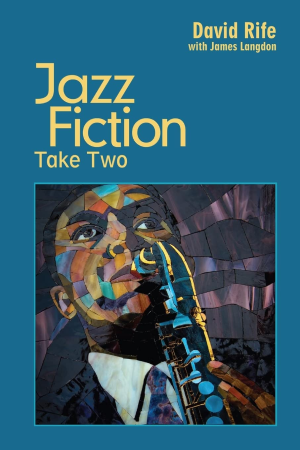
Excerpts from David Rife’s Jazz Fiction: Take Two– Vol. 16: Halloween on Mars? Or…speculative jazz fiction...A substantial number of novels and stories with jazz music as a component of the story have been published over the years, and the scholar David J. Rife has written short essay/reviews of them. In this 16th edition featuring excerpts from his outstanding literary resource, Rife writes about azz-inflected speculative fiction stories (sci-fi, fantasy and horror)

Poetry

“With Ease in Mind” – poems by Terrance Underwood...It’s no secret that I’m a fan of Terrance Underwood’s poetry. I am also quite jealous of his ease with words, and of his graceful way of living, which shows up in this collection of 12 poems.

Feature

William Gottlieb/Library of Congress
“Lester Young Cools a Village” – by Henry Blanke...On the origins of cool, and the influence (and greatness) of Lester Young.

Interview

photo Louis Armstrong House Museum
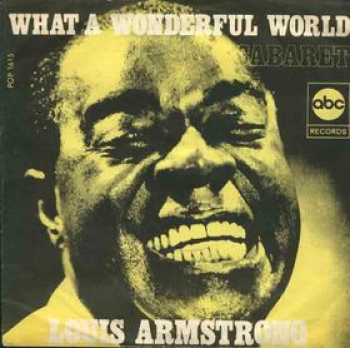
Interview with Ricky Riccardi, author of Stomp Off, Let’s Go: The Early Years of Louis Armstrong...The author discusses the third volume of his trilogy, which includes the formation of the Armstrong-led ensembles known as the Hot Five and Hot Seven that modernized music, the way artists play it, and how audiences interact with it and respond to it.

Poetry

“November Affair” – a poem (for November) by Jerrice J. Baptiste...Jerrice J. Baptiste’s 12-month 2025 calendar of jazz poetry winds through the year with her poetic grace while inviting us to wander through music by the likes of Charlie Parker, Hoagy Carmichael, Frank Sinatra, Antonio Carlos Jobim, Sarah Vaughan, Melody Gardot and Nina Simone. She welcomes November with a sensual, romantic poem that inspires a listening to Andre Previn and Doris Day’s 1962 recording of “My One and Only Love.”

Essay

“Is Jazz God?” – an essay by Allison Songbird...A personal journey leads to the discovery of the importance of jazz music, and finding love for it later in life.

Poetry

What is This Path – a collection of poems by Michael L. Newell...A contributor of significance to Jerry Jazz Musician, the poet Michael L. Newell shares poems he has written since being diagnosed with a concerning illness.

Playlist

“Look Ma, No Net!” – a playlist of nonets, by Bob Hecht...In this episode of our progressive instrumentation playlists, we add a ninth instrument to the mix to form a Nonet!

Art

photo by Giovanni Piesco
The Photographs of Giovanni Piesco: Art Farmer and Benny Golson...Beginning in 1990, the noted photographer Giovanni Piesco began taking backstage photographs of many of the great musicians who played in Amsterdam’s Bimhuis, that city’s main jazz venue which is considered one of the finest in the world. Jerry Jazz Musician will occasionally publish portraits of jazz musicians that Giovanni has taken over the years. This edition features the May 10, 1996 photos of the tenor saxophonist, composer and arranger Benny Golson, and the February 13, 1997 photos of trumpet and flugelhorn player Art Farmer.

Community

Community Bookshelf #5...“Community Bookshelf” is a twice-yearly space where writers who have been published on Jerry Jazz Musician can share news about their recently authored books and/or recordings. This edition includes information about books published within the last six months or so (March, 2025 – September, 2025)

Contributing Writers

Click the image to view the writers, poets and artists whose work has been published on Jerry Jazz Musician, and find links to their work

Coming Soon

Interview with John Gennari, author of The Jazz Barn:  Music Inn, the Berkshires, and the Place of Jazz in American Life; Also, a new Jazz History Quiz, and lots of short fiction; poetry; photography; interviews; playlists; and much more in the works......  Also, a new Jazz History Quiz, and lots of short fiction; poetry; photography; interviews; playlists; and much more in the works...

Interview Archive

Ella Fitzgerald/IISG, CC BY-SA 2.0 , via Wikimedia Commons
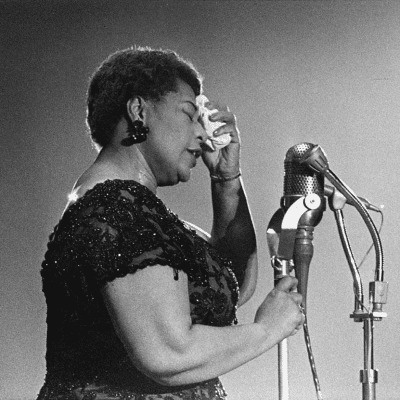
Click to view the complete 25-year archive of Jerry Jazz Musician interviews, including those recently published with Judith Tick on Ella Fitzgerald (pictured),; Laura Flam and Emily Sieu Liebowitz on the Girl Groups of the 60's; Tad Richards on Small Group Swing; Stephanie Stein Crease on Chick Webb; Brent Hayes Edwards on Henry Threadgill; Richard Koloda on Albert Ayler; Glenn Mott on Stanley Crouch; Richard Carlin and Ken Bloom on Eubie Blake; Richard Brent Turner on jazz and Islam; Alyn Shipton on the art of jazz; Shawn Levy on the original queens of standup comedy; Travis Atria on the expatriate trumpeter Arthur Briggs; Kitt Shapiro on her life with her mother, Eartha Kitt; Will Friedwald on Nat King Cole; Wayne Enstice on the drummer Dottie Dodgion; the drummer Joe La Barbera on Bill Evans; Philip Clark on Dave Brubeck; Nicholas Buccola on James Baldwin and William F. Buckley; Ricky Riccardi on Louis Armstrong; Dan Morgenstern and Christian Sands on Erroll Garner; Maria Golia on Ornette Coleman.