
Cover Stories with Paul Morris, Vol. 18

July 8th, 2016


Paul Morris is a graphic designer and writer who collects album art of the 1940’s and 1950’s. He finds his examples of influential mid-century design in the used record stores of Portland, Oregon.


In this edition, Paul writes about album covers picturing designer furniture


__________


My selection this time is album covers with designer furniture, which happens to be the first “category” that I decided to collect. I already had a sizeable vinyl collection, but had never bought something just for the cover. It was at Bop Street Records in Seattle that I heard from an employee about the owner’s large collection. Record collectors love to brag about how many thousands they have, and this fellow had rooms full of records, with a special depth in early rock. The clerk told me the owner collected albums with covers showing people smoking.

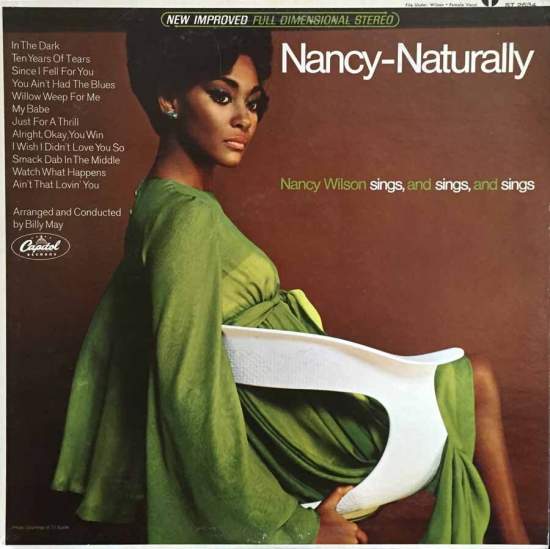
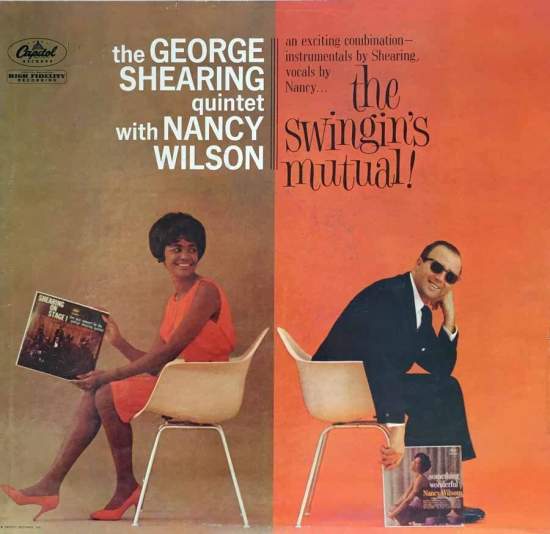
Collecting for covers was not an activity I’d thought of, but the tidbit stayed with me until one day I was looking through my Nancy Wilson albums and saw that two of them showed the singer in a modern molded plastic chair. And on The Swingin’s Mutual, where she was paired with George Shearing, the liner notes said, “Armchair on cover designed by Charles Eames. Herman Miller Inc.” These two famous names were about the extent of my knowledge of furniture designers and sellers, but I liked finding this link between the albums.

Since then I’ve found enough similar covers to see that 1950s art directors were eager to make use of current furniture design, just as they were alert to fashion and art trends. And judging from the liner credits, some furniture retailers were working to get their wares into the photo studios. This “category” is now one of a score or so in my collection, and I still don’t know much about modern furniture, but I certainly appreciate seeing a musician dressed sharply and lounging in an Eames chair.


_____


In Nancy—Naturally from 1966 the chair isn’t credited, but the photo is by fashion photographer Roger Prigent. On The Swingin’s Mutual from 1961, the Shearing photo is credited to New York photographer Maynard Frank Wolfe, along with the credit to Charles Eames and Herman Miller. By this time the Herman Miller firm had emerged as the preeminent American manufacturer of modernist furniture. Their marketing of a high-end lounge chair by Charles and Ray Eames in 1956 did much to bring cutting-edge furniture to public prominence.


a-pauljuly1


a-pauljuly2


__________


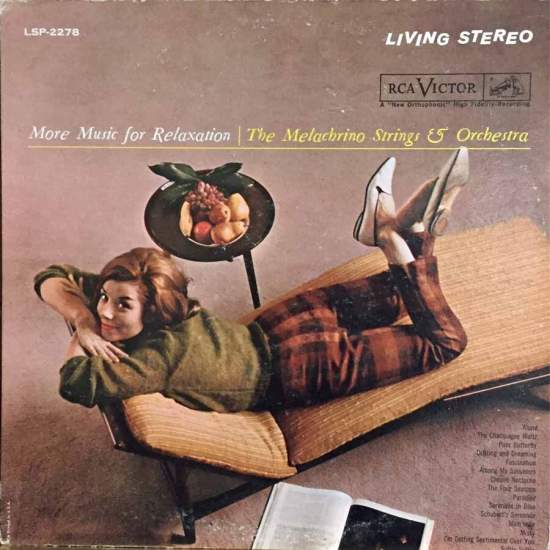
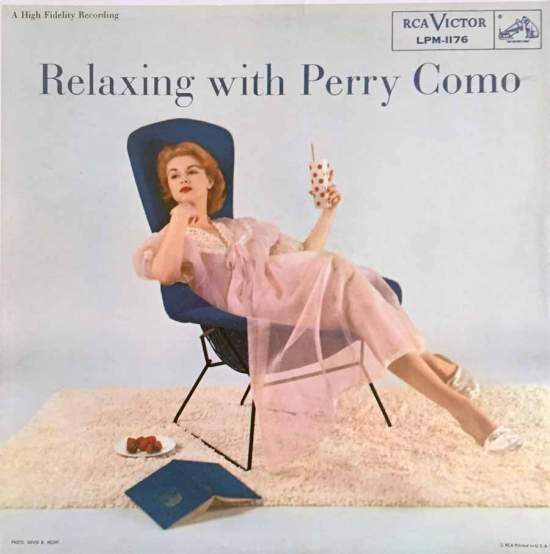
More Music for Relaxation, also 1961, comes with a model relaxing in “Clothes by Pantino, Inc.” on “Selig Furniture Courtesy of Bloomingdale’s.” The Selig company imported and manufactured Danish Modern furniture. This chair would go for thousands now, apparently. More relaxing is going on in the Perry Como cover, photo by RCA staff man David Hecht, chair designed by Harry Bertoia, Knoll Associates. I now know that Bertoia was a leading name in 1956 when Como ruled the charts, and that Knoll still sells his designs, known for achieving “sublime grace in an industrial material.”


a-pauljuly3


a-pauljuly4


__________


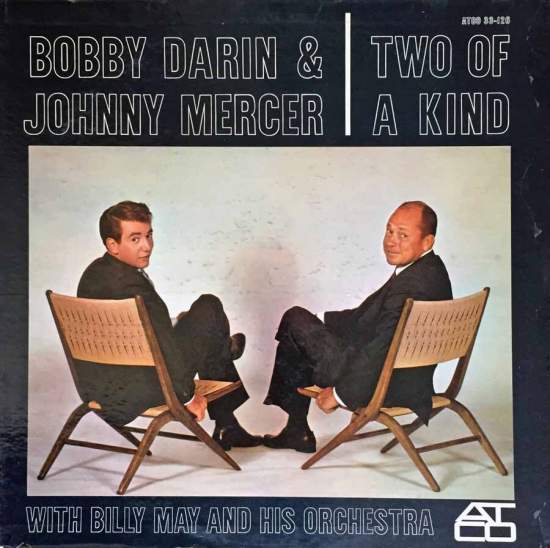
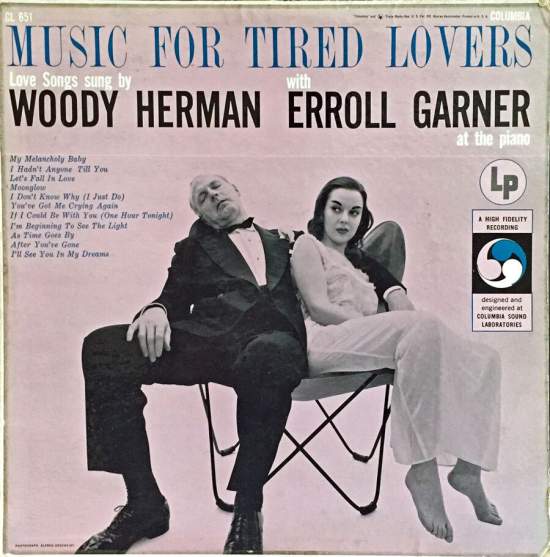
This Bobby Darin & Johnny Mercer album makes excellent listening, with Billy May arrangements. Loring Eutemey, who was once part of Push Pin Studios and worked for Atlantic, designed the cover. The chairs are uncredited, as is the butterfly chair on Woody Herman’s album. The title is “Tired Lovers,” but Woody is the tired one; his partner in the negligee looks peeved in the photo by Alfred Gescheidt.


a-pauljuly5


a-pauljuly6


__________


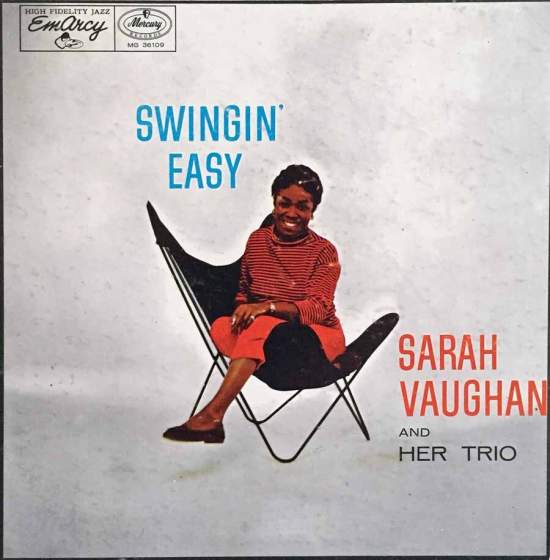
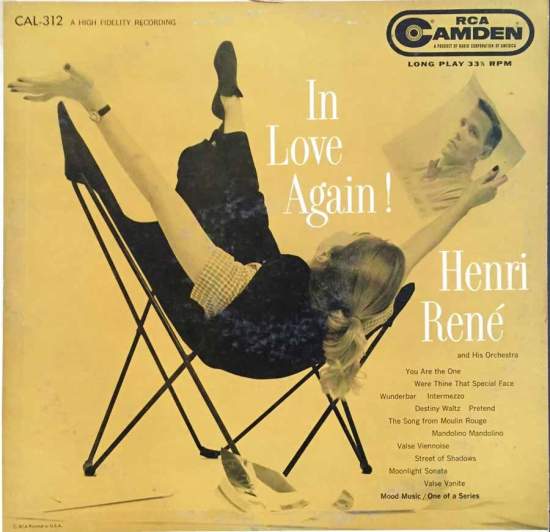
The 1954 Mercury album Swingin’ Easy first got me hooked on Sarah Vaughan, and it remains a definitive example of jazz singing and scatting, with outstanding drumming by Roy Haynes. I don’t know the photographer for this or the other butterfly chair pic on the Henri René album, but they both convey a casual mood.


a-pauljuly7


 a-pauljuly8


__________


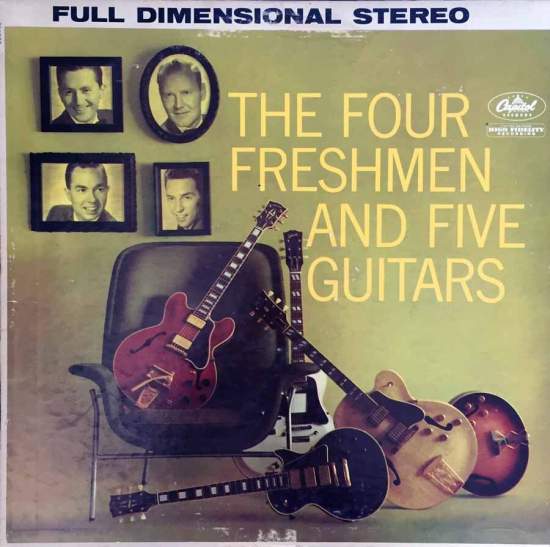
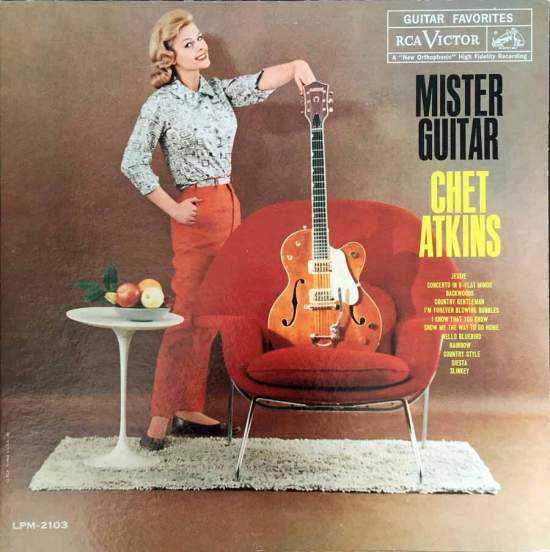
For this 1959 Four Freshmen cover, the photographer remains unknown but the chair was by George Nelson for Herman Miller. Nelson was a contemporary of Charles and Ray Eames; his chairs are still popular. The guitars are by Gibson. They don’t accurately show what the liner notes describe as four amplified guitars plus a bass guitar. A similar chair holds a Gibson in the Chet Atkins photo. The furniture, the fashions, the shag rug—they all say 1959.


a-pauljuly9


a-pauljuly10


__________


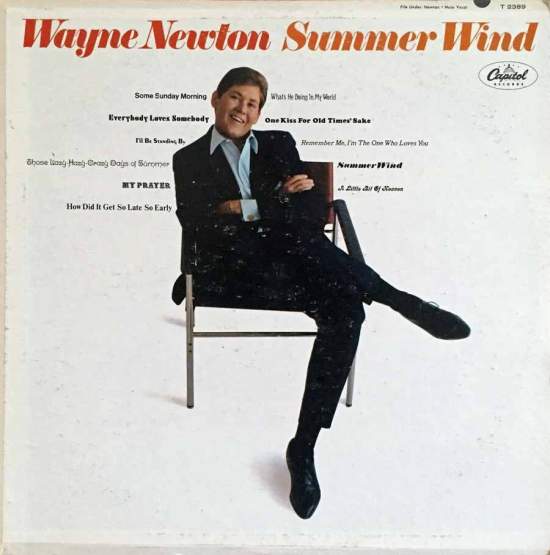
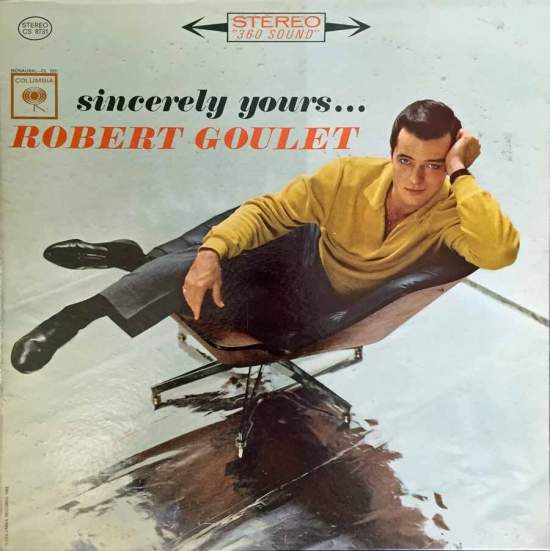
There’s only one way a Wayne Newton record is making it into my collection, and that’s if he’s sitting in a chair from Knoll Furniture in Los Angeles in 1965. Photo by Ken Veeder. Note the terrible technique of using a different font for every song title. In the case of Robert Goulet, from 1962, I’m worried he’s going to fall over.
 

a-pauljuly11


a-pauljuly12


__________


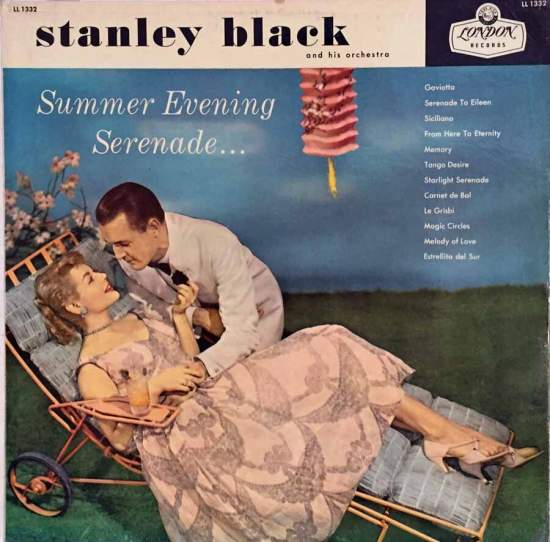
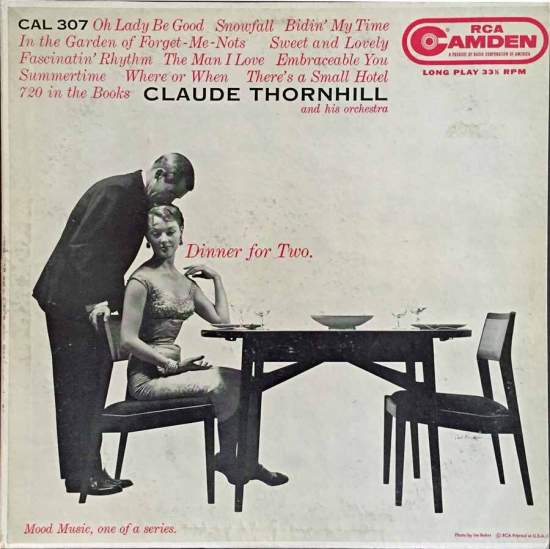
As they say on the radio, if you’ve already squandered a good five minutes looking at album covers of chairs, you might as well keep going. How about this garden chaise by Salterini on the Stanley Black cover? If you could find one of these Italian numbers in good condition, eBay would be your friend. The gown is by Ficol, “a high-end label carried by the likes of Bergdorf Goodman,” according to a source. Nice shoes, too. For the Claude Thornhill album, a similar classy couple gets intimate with a dining set by Nikos Zographos. The credit at the lower right reads, “Photo by Irv Bahrt,” but puzzlingly, the signature of noted lensman Carl Fischer appears under the chair on the right.


a-pauljuly13


a-pauljuly14


__________


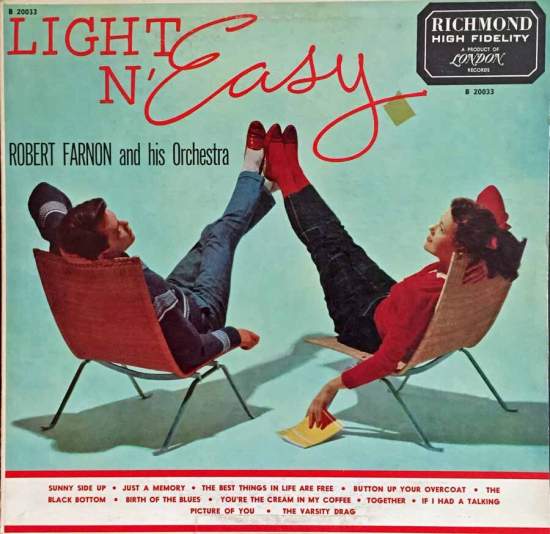
For a last example of this narrow but rich category, here are two 1953 teenagers in two sleek wicker chairs that, like other examples here, don’t look too comfortable. The boy’s shoes have taken on a red tinge. I’m sure there are more chair covers in basements somewhere out there—bring them in to your local record shop!


a-pauljuly15


*


Next time: choice selections from Decca Records.


__________


In Volume 1 of “Cover Stories,” Paul shared his collection of covers by Alex Steinweiss, known as the father of the record album cover, and for many years in charge of Columbia Records’ art department.

Volume 2 focused on Columbia covers

Volume 3 featured jazz illustrations from the early years of the record album

Volume 4 revisited the 1950’s with images of fans holding and enjoying their albums

Volume 5 explored the work of Alex Steinweiss when he used the pseudonym “Piedra Blanca”

Volume 6 featured teenagers of the 1950’s enjoying their music

Volume 7 featured Steinweiss album covers from his prime period — the late 1940’s and early 1950’s

Volume 8 featured a “disturbing” and fascinating trend in 1950?s album art — Records on the Floor!

Volume 9 featured a selection of RCA Victor album covers from Paul’s collection

Volume 10 featured a selection of covers by Curt John Witt, the prolific illustrator for mid-century budget record labels

Volume 11 featured a selection of “glamour girl” covers

Volume 12 featured the “late Columbia” era of master designer Alex Steinweiss

Volume 13 focused on Everest Records, the last of several new labels that Alex Steinweiss helped launch

Volume 14 Paul shares some of his personal jazz record collection, concentrating on the lesser known and sometimes quirky covers that emphasize photographs

Volume 15 took a look at the art of London Records

Volume 16 Paul shared some jazz covers from the 1950’s

Volume 17 looked at the album cover art of Erik Nitsche, a pioneer of modern design



Save

Save

Save

Save

Save

Share this:

Comment on this article:

Your email address will not be published. Required fields are marked *

Site Archive

Your Support is Appreciated

Jerry Jazz Musician has been commercial-free since its inception in 1999. Your generous donation helps it remain that way. Thanks very much for your kind consideration.

Click here to read about plans for the future of Jerry Jazz Musician.

In this Issue

Announcing the publication of Volume II of Kinds of Cool: An Interactive Collection of Jazz Poetry...The second edition of Kinds of Cool, an Interactive Collection of Jazz Poetry has just been published, and is now available for sale on Amazon.com. This edition is dedicated to publishing women poets from all over the world who share their personal passion for and relationship with jazz music, and the culture it interacts with. With a foreword by Allison Miller, one of the world’s most eminent jazz drummers, and photography and design by Rhonda R. Dorsett
Poetry

photo by William Gottlieb/adapted by Rhonda R. Dorsett
21 jazz poems on the 21st of April, 2026...An ongoing series designed to share the quality of jazz poetry continuously submitted to Jerry Jazz Musician. In this edition…Mix in poems on the blues with some Coltrane, Monk, Bix, Mingus, Miles, Art Farmer, King Oliver, Desmond, and Brubeck, and you have one hell-of-a lively and entertaining collection to take in. Enjoy!

Community

A collection of poetic responses to the events of 2025...Forty poets describe their experiences with the tumultuous events of 2025, resulting in a remarkable collection of work made up of writers who may differ on what inspired them to participate, but who universally share a desire for their voice to be heard amid a changing America.

The Sunday Poem

photo by Duncan Light/via Pexels

The Sunday Poem: Three poems on Mother’s Day

The Sunday Poem is published weekly, and strives to include the poet reading their work...

Readings of the poems by Daniel Warren Brown, Erren Kelly, and Michael L. Newell can be heard at their conclusion.


Click here to read previous editions of The Sunday Poem

Short Fiction

Photo by Johannes Schröter, via Pexels
Short Fiction Contest-winning story #71 – “Where the Music Wasn’t Allowed,” by Jane McCarthy....The award-winning story is about a young immigrant growing up in Southern California to the sound of music seeping into his family’s home from an upstairs neighbor’s piano, shaping the boy’s understanding of memory, family, belonging, and the improvisational ethics of music.

Interview

photo by Warren Fowler
Interview with John Gennari, author of The Jazz Barn: Music Inn, the Berkshires, and the Place of Jazz in American Life...The author discusses how in the 1950s the Berkshires – historic home to the likes of Hawthorne, Melville, Wharton, Rockwell, and Tanglewood – became a crucial space for the performance, study, and mainstreaming of jazz, and eventually an epicenter of the genre’s avant-garde.

Poetry

photo by Tsutumu Takasu/via Flicker/CC BY 2.0
“Cajun Glory” – a prose poem by Robert Alan Felt

Community

Ricky Esquivel/Pexels.com
Community Bookshelf #6...“Community Bookshelf” is a twice-yearly space where writers who have been published on Jerry Jazz Musician can share news about their recently authored books and/or recordings. This edition includes information about books published within the last six months or so (September, 2025 – March, 2026)

Poetry

Six poets write eight poems (in the midst of our times)...Poets within this community of writers are feeling this moment in time, and writing about it. This collection is another example.

Feature

photo by Laura Stanley via Pexels.com.
Trading Fours, with Douglas Cole, No. 28: “Little Samba”...Trading Fours with Douglas Cole is an occasional series of the writer’s poetic interpretations of jazz recordings and film. This edition is based largely on a documentary – They Shot the Piano Player – about Tenório Junior, a Latin jazz musician who only produced one album (1964) before he “disappeared” in 1976.

Short Fiction

photo J. & L. Caswall Smith
“Bitty’s Last Request” – a short story by Jill Bronfman...In the story – a finalist in the recently concluded 71st Short Fiction Contest – a very old dancer visits her young relative with stories to tell about the old days in the clubs.

Poetry

art by Marsha Hammel
“Learning the Alphabet of the Blues” – a poem by Mary K O’Melveny...A poem from Kinds of Cool: An Interactive Collection of Jazz Poetry, Vol. II

Feature

photo via Wikimedia Commons
Memorable Quotes: Two, by Edward R. Murrow…

Feature

photo via Wikipedia
“Two Famous Johns” – a true jazz story by Bob Hecht...The writer remembers an evening in New York’s Half Note in 1964 when he witnessed a John Coltrane performance that was also attended by the pop singer Johnny Mathis

Poetry

Haiku: Musings – by Connie Johnson...Exploring segments of the world of jazz – in three suites of vivid haiku poetry…

Jazz History Quiz

photo of "Hot Lips" Page by William Gottlieb
Jazz History Quiz #187...This trumpeter began his career in California, where he organized a big band that had a residency in China in 1934, and, during a trip through Kansas City in 1936, was invited to join Count Basie’s orchestra, replacing “Hot Lips” Page (pictured). Who is he?

Feature

“Bohemian Spirit” – A Remembrance of 1970’s Venice Beach, by Daniel Miltz...The writer recalls 1970’s Venice Beach, where creatives chased a kind of freedom that didn’t fit inside four walls…

Poetry

Linnaea Mallette/publicdomainpictures.net
A 2026 jazz poetry calendar...12 individual poets contribute a jazz-themed poem dedicated to a particular month, resulting in a 2026 calendar of jazz poetry that winds through the year with a variety of poetic styles and voices who share their journeys with the music, tying it into the month they were tasked to interpret. Along the way you will encounter the likes of Sonny Stitt, Charles Mingus, Jaco Pastorius, Wynton Kelly, John Coltrane, and Nina Simone.

Feature

Boris Yaro, CC BY 4.0, via Wikimedia Commons
“The Bowie Summer” – a personal memory, and how art can fundamentally reshape identity, by G.D. Newton-Wade

Short Fiction

photo by Iryna Olar/pexels.com 
“The Fading” – a short story by Noah Wilson...The story – a finalist in the recently concluded 70th Short Fiction Contest – examines the impact of genetic illness on a family of musicians and artists.

Poetry

Poems on Charlie “Bird” Parker (inspired by a painting by Al Summ) – an ekphrastic poetry collection...A collection of 25 poems inspired by the painting of Charlie Parker by the artist Al Summ.

Short Fiction

Los Angeles Daily News, CC BY 4.0 , via Wikimedia Commons
“The Pet Shop” – a short story by Sherry Shahan...The story – a finalist in the recently concluded 70th Short Fiction Contest, – is about an octogenarian couple who accept a part-time caretaker position at Crazy Goose Burlesque when the theater is temporarily shuttered due to archaic public indecency laws.

Feature

Albert Ayler’s Spiritual Unity – A Classic of Our Time, and for All Time – an essay by Peter Valente...On the essence of Albert Ayler’s now classic 1964 album…

Poetry

Laura Manchinu (aka La Manchù), CC BY 2.0 , via Wikimedia Commons
“Ron Carter Apple Sauce” – a prose poem by Martin Durkin

A Letter from the Publisher

The gate at Buchenwald. Photo by Rhonda R Dorsett
War. Remembrance. Walls.
The High Price of Authoritarianism– by editor/publisher Joe Maita
...An essay inspired by my recent experiences witnessing the ceremonies commemorating the 80th anniversary of liberation of several World War II concentration camps in Germany.

Playlist

photo by Robert Hecht
“Spring is Here!” – a playlist by Bob Hecht...With perhaps Lorenz Hart’s most sardonic lyric — which is saying something! — this song remains one of the greats, and has been interpreted in many ways, from the plaintive and melancholy to the upbeat and hard swinging, such as John Coltrane’s version. Check out this bouquet of ten tracks to celebrate this great season!

Poetry

Wikimedia Commons
“Dorothy Parker, an Icon of the Jazz Age” – a poem by Jane McCarthy

Community

Nominations for the Pushcart Prize L (50)...Announcing the six writers nominated for the Pushcart Prize v. L (50), whose work appeared on the web pages of Jerry Jazz Musician or within print anthologies I edited during 2025.

Interview

Interview with Tad Richards, author of Listening to Prestige: Chronicling its Classic Jazz Recordings, 1949 – 1972...Richards discusses his book – a long overdue history of Prestige Records that draws readers into stories involving its visionary founder Bob Weinstock, the classic recording sessions he assembled, and the brilliant jazz musicians whose work on Prestige helped shape the direction of post-war music.

Contributing Writers

Click the image to view the writers, poets and artists whose work has been published on Jerry Jazz Musician, and find links to their work

Coming Soon

An interview with Paul Alexander, author of Bitter Crop: The Heartache and Triumph of Billie Holiday's Last Year; New poetry collections, Jazz History Quiz, and lots of short fiction; poetry; photography; interviews; playlists; and much more in the works...

Interview Archive

Ella Fitzgerald/IISG, CC BY-SA 2.0 , via Wikimedia Commons
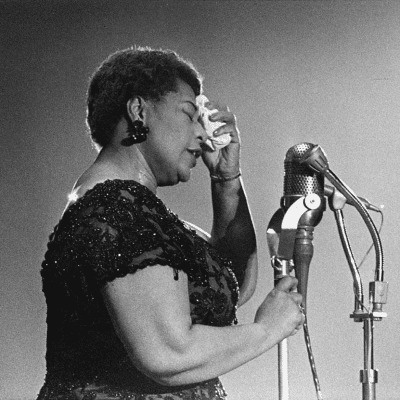
Click to view the complete 25-year archive of Jerry Jazz Musician interviews, including those recently published with Judith Tick on Ella Fitzgerald (pictured),; Laura Flam and Emily Sieu Liebowitz on the Girl Groups of the 60's; Tad Richards on Small Group Swing; Stephanie Stein Crease on Chick Webb; Brent Hayes Edwards on Henry Threadgill; Richard Koloda on Albert Ayler; Glenn Mott on Stanley Crouch; Richard Carlin and Ken Bloom on Eubie Blake; Richard Brent Turner on jazz and Islam; Alyn Shipton on the art of jazz; Shawn Levy on the original queens of standup comedy; Travis Atria on the expatriate trumpeter Arthur Briggs; Kitt Shapiro on her life with her mother, Eartha Kitt; Will Friedwald on Nat King Cole; Wayne Enstice on the drummer Dottie Dodgion; the drummer Joe La Barbera on Bill Evans; Philip Clark on Dave Brubeck; Nicholas Buccola on James Baldwin and William F. Buckley; Ricky Riccardi on Louis Armstrong; Dan Morgenstern and Christian Sands on Erroll Garner; Maria Golia on Ornette Coleman.