
“Welcome to America” – a short story by John Tures

January 14th, 2026

.

.


“Welcome to America” was a short-listed entry in our recently concluded 70th Short Fiction Contest, and is published with the consent of the author.

.

.

___

.

.
publicdomainpictures.net

.


Welcome To America

by John Tures

.

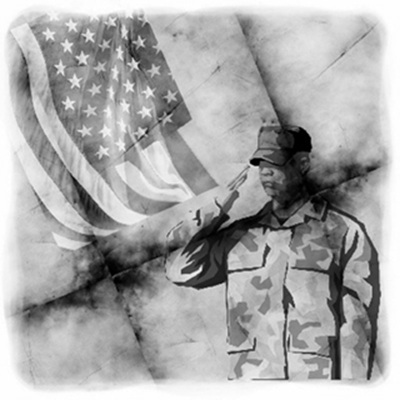
      …..      “Colonel Martin Carmichael, much has been written about your heroics at the end of the Vietnam War, rescuing so many Americans and Vietnamese,” the reporter from The Washington Morning Herald  began. “I just have to know—where did your courage and sense of duty come from, sir? Why were you willing to risk your life for others?”

      …..         The aged officer gave the journalist a hard stare. “Everybody is always askin’ the details of what I did at the end of the war…’bout the helicopter evacuations under gunfire from the NVA, landin’ on rooftops, ordering the sailors on aircraft carriers to push Hueys into the Pacific to make room for more refugees. Nobody asks why I did any of it.”

      …..           The reporter nodded eagerly. This was going to be his big exclusive for the Memorial Day edition later that month. He had driven all the way down from D.C. to the tiny V.F.W. building in Manassas. He held up his cell phone to capture it all.

      …..           “Well, turn that damn thing off,” Colonel Carmichael barked. “You’ll get your answers, but only you an’ I will know the reason. Even mah wife don’t know why, Mr. Al Reuther.”

      …..            The young reporter reluctantly pocketed his cell phone. The Colonel looked at some device in his hand, with a red light on. “An’ please switch off that other thing you got recording this whole conversation.”

      …..        “Sorry, Colonel,” the reporter blushed over his thick beard. “Just a habit where I back up everything.”

      …..             Martin fixed the journalist with a stare that grumped “Yeah right.”

      …..             “Well, it all began back in college….”

      …..           “College?” the reporter inquired. Then the army officer told him the name of an SEC university. That hadn’t shown up in most of his bios. Reuther assumed he just jumped straight into the military after high school.

      …..             “Well, it was during what they call ‘The Civil Rights Era.’ The first week of class, a Black kid came in the auditorium, the first our university ever had. Xavier Disman was his name. We later learned that his dad was an attorney and sued to get him in. State Court blocked him on opening day, but a Fed judge hit them with an injunction, and Xavier became a student three days later.”

      …..              Reuther stared at him in surprise. He knew about the struggle with George Wallace and the University of Alabama, as well as Little Rock in the 1950s, but not this.

      …..              “Two U.S. Marshals marched Xavier into our auditorium for Philosophy 101. As soon as they did, two-thirds of the class got up and left.”

      …..               “You stayed?”

      …..              “Yeah, just to see what would happen. The professor, who had stopped his lecture when the three entered the large room, closed his book and glared at Xavier over the podium. Nobody said a word for the whole hour. They just stared at him. Then when the bell rang, the U.S. Marshals escorted him out.”

      …..           The journalist’s mouth was hanging open until he recovered. “What happened the next day?”

      …..             “Nothin’. Later that afternoon, a Federal Appeals Court overturned the judge’s injunction. The school expelled him the next morning, just for bein’ Black. We heard that the Supreme Court later overturned the appeals judges, but it was too late. Xavier enrolled at an HBCU. I heard he graduated with a teaching degree or something years later.”

      …..           Reuther finally exhaled. “That’s quite a story, Colonel. I had never heard that one.”

      …..           “Everyone memorizes Brown v. Board of Education, and about Ruby Bridges,” Col. Carmichael harrumphed. “But hardly anyone talks about what those kids had to go through.”

      …..          “It’s pretty….moving,” the reporter finally found the right word. Clearly the lede had changed. “But why don’t you want this story to be told?”

      …..     Carmichael’s face flashed a streak of anger. “You don’ get it, do yuh?”

      …..     “But you didn’t do anything wrong.”

      …..        “An I didn’t do the right thing either, young man. Ah didn’t exactly say anything nice to him, or shake his hand, or even give a friendly wave, or ask the prof to do his job. Southern hospitality left that auditorium the same way those jerks did when he arrived with the marshals.”

      …..         When he started speaking again in the empty VFW meeting hall, his voice was hoarse. “Even though Xavier coulda come back after the Supreme Court ruling, he learned all he needed to know about us on that first day.”

      …..           Now both quietly stared out the window as the afternoon shower picked up to a full rainstorm.

      …..           “You wanna know about the heroic stuff, right?” Carmichael broke the silence. “Well, when I joined the military, I learned about the first Black cadet at West Point. His classmates all took a vow not to speak to him. He had to suffer that whole time in school in silence.”

      …..         Then Colonel Carmichael began the familiar stories of his daring missions to rescue refugees in the chaotic final days of the South Vietnamese regime. Like nearly every American, Reuther had seen the iconic photo of the young Vietnamese girl and her parents giving Carmichael a bear hug on the deck of the USS Midway aircraft carrier. “Welcome to America” the caption boldly stated in everything from encyclopedias to school textbooks. But the Colonel was fighting with every fiber in his body to keep from breaking down as he told about those who made it, and those who didn’t.

      …..           “I figured since I f***ed it up back in college, I’d do a better job next time,” he explained.

      …..           “You not only saved thousands of lives, but you used your celebrity status from that photo to get local officials to take in refugees from Wisconsin to Kansas to Texas,” Reuther pointed out, trying to console the colonel. “You’re a national hero!”

      …..      “Just doin’ mah job,” he stated flatly. “Tried to make up for gettin’ it wrong back in college. I’d do just about anything to take that day back.”

      …..          Reuther looked at the aged army officer in surprise. “Actually, there is.”

      …..         This seemed to shake Carmichael out of his sorrow. “What are you talkin’ about?”

      …..       “I just saw it on the NBC Today show the other day,” the journalist exclaimed. “The university that kicked out Xavier Disman is giving him an honorary degree for all he’s done for education in the state.”

      …..       “Really?” Carmichael stopped trying to pretend he was doing anything but wipe away tears and focused on the reporter’s words. “When?”

      …..       Reuther opened his cell phone and held up the story on his screen. “Tomorrow afternoon.”

      …..        Carmichael gathered up his bag and shuffled toward the door. “Changed mah mind…write whatever you want. Any or all of it. Ah got a plane to catch.”

      …..         “But sir, what will you say to him?”

      …..        The colonel threw a final glance at him by the door, grinned and said “I’ll tell him what I shoulda told him that first day in class. ‘Welcome to America.’”

.

.

___

.

.

John A. Tures began writing for the El Paso Herald-Post in high school. He wrote for his college paper at Trinity University in San Antonio and at Marquette University. He earned his doctorate at Florida State University, analyzed data in Washington DC, is now a Professor at LaGrange College. He writes a weekly column for newspapers and magazines. He has published a number of short story mysteries and thrillers. His book Branded will come out later this year with Huntsville Independent Press.  He thanks family and friends for listening to his stories.

Click here to visit his author website

.

.

___

.

.

Click here to help support the continuing publication of Jerry Jazz Musician, and to keep it ad and commercial-free (thank you!)

.

War. Remembrance. Walls. The High Price of Authoritarianism – by editor/publisher Joe Maita

The Sound of Becoming,” J.C. Michaels’ winning story in the 70th Jerry Jazz Musician Short Fiction Contest

Click here to read more short fiction published on Jerry Jazz Musician

Click here to read The Sunday Poem

Click here for information about how to submit your poetry or short fiction

Click here for details about the upcoming 70th Jerry Jazz Musician Short Fiction Contest

Click here to subscribe to the Jerry Jazz Musician quarterly newsletter (it’s free)

.

.

.

___

.

.
Share this:

Comment on this article:

Your email address will not be published. Required fields are marked *
Site Archive

Your Support is Appreciated

Jerry Jazz Musician has been commercial-free since its inception in 1999. Your generous donation helps it remain that way. Thanks very much for your kind consideration.

Click here to read about plans for the future of Jerry Jazz Musician.

In this Issue

A collection of poetic responses to the events of 2025...Forty poets describe their experiences with the tumultuous events of 2025, resulting in a remarkable collection of work made up of writers who may differ on what inspired them to participate, but who universally share a desire for their voice to be heard amid a changing America.

Poetry

photo by William Gottlieb/design by Rhonda R. Dorsett
21 jazz poems on the 21st of November, 2025...An ongoing series designed to share the quality of jazz poetry continuously submitted to Jerry Jazz Musician. This edition features poems communicating the emotional appeal of jazz music, as well as nods to the likes of Miles Davis, Regina Carter, Maynard Ferguson, Ornette Coleman, and Max Roach.

The Sunday Poem

photo by William Gottlieb/Library of Congress

”Snowfall” by Bernard Saint

The Sunday Poem is published weekly, and strives to include the poet reading their work....

Bernard Saint reads his poem at its conclusion


Click here to read previous editions of The Sunday Poem

Feature

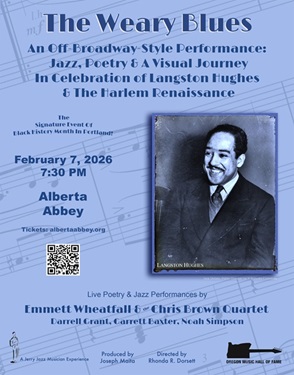
Press Release for “The Weary Blues: Celebrating The Harlem Renaissance and Langston Hughes...I recently wrote about a new endeavor of mine – producing a show in Portland celebrating the poetry of Langston Hughes and the Harlem Renaissance. What follows is the complete press release for the February 7 performance at the Alberta Abbey in Portland, Oregon.

Short Fiction

photo via Freerange/CCO
Short Fiction Contest-winning story #70 – “The Sound of Becoming,” by J.C. Michaels...The story explores the inner life of a young Southeast Asian man as he navigates the tension between Eastern tradition and Western modernity.

Feature

Linnaea Mallette/publicdomainpictures.net
A 2026 jazz poetry calendar...12 individual poets contribute a jazz-themed poem dedicated to a particular month, resulting in a 2026 calendar of jazz poetry that winds through the year with a variety of poetic styles and voices who share their journeys with the music, tying it into the month they were tasked to interpret. Along the way you will encounter the likes of Sonny Stitt, Charles Mingus, Jaco Pastorius, Wynton Kelly, John Coltrane, and Nina Simone.

Poetry

“To Renee Nicole Good, a poet” – a poem by Erren Geraud Kelly

Poetry

photo via Shutterstock
“The Music of Lana’i Lookout” – a poem by Robert Alan Felt...The 17th anniversary of president-elect Barack Obama's scattering of his beloved grandmother's ashes is at the center of the poem, and serves as a reminder that moral personal character of leadership is what makes a country great.

Poetry

Poems on Charlie “Bird” Parker (inspired by a painting by Al Summ) – an ekphrastic poetry collection...A collection of 25 poems inspired by the painting of Charlie Parker by the artist Al Summ.

Community

Letter from the Editor: “A Jerry Jazz Musician Experience”...Sharing a bit of what I’ve been up to of late, and make you aware of a new endeavor of mine…

Poetry

National Archives of Norway, CC BY 4.0 , via Wikimedia Commons
“Wonderful World” – a poem by Dan Thompson

A Letter from the Publisher

The gate at Buchenwald. Photo by Rhonda R Dorsett
War. Remembrance. Walls.
The High Price of Authoritarianism– by editor/publisher Joe Maita
...An essay inspired by my recent experiences witnessing the ceremonies commemorating the 80th anniversary of liberation of several World War II concentration camps in Germany.

Poetry

Wikimedia Commons
“Dorothy Parker, an Icon of the Jazz Age” – a poem by Jane McCarthy

Short Fiction

photo via publicdomainimages.net
“Welcome to America” – a short story by John Tures...The story – a short-listed entry in the recently concluded 70th Short Fiction Contest – is a combination of two true linked stories, both of which involved the same person. In one, he’s a witness to history. In the second, he’s an active participant in history, even becoming a hero. But one can’t understand the second until they know the first.

Feature

photo via Wikimedia Commons
Memorable Quotes – Lawrence Ferlinghetti, on a pitiable nation

Short Fiction

“Frusick: Making Sweeter Music” – a short story by J. W. Wood...In the 22nd century, a medical professional takes a bunch of kids to meet one of the last musicians left in England, and has an epiphany when he hears live music for the first time …

Community

Nominations for the Pushcart Prize L (50)...Announcing the six writers nominated for the Pushcart Prize v. L (50), whose work appeared on the web pages of Jerry Jazz Musician or within print anthologies I edited during 2025.

Interview

Interview with Tad Richards, author of Listening to Prestige: Chronicling its Classic Jazz Recordings, 1949 – 1972...Richards discusses his book – a long overdue history of Prestige Records that draws readers into stories involving its visionary founder Bob Weinstock, the classic recording sessions he assembled, and the brilliant jazz musicians whose work on Prestige helped shape the direction of post-war music.

Poetry

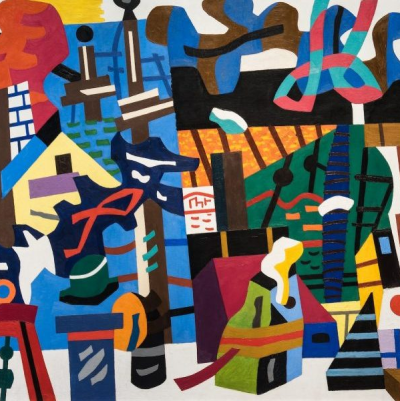
"Swing Landscape" by Stuart Davis
“Swing Landscape” – a poem by Kenneth Boyd....Kenneth Boyd writes poetry based on jazz paintings. “Swing Landscape” is written for a Stuart Davis painting of the same name.

Playlist

“A Perfect 10” – a playlist of tentets by Bob Hecht...Bob adds another instrument to his progressive playlist feature, and shares what a variety of arrangers have been able to accomplish writing for a tentet.

Jazz History Quiz

Jazz History Quiz #185...This posthumously-awarded Grammy winning musician/composer was the pianist and arranger for the vocal group The Hi-Lo’s (pictured) in the late 1950’s, and after working with Donald Byrd and Dizzy Gillespie became known for his Latin and bossa nova recordings in the 1960’s. He was also frequently cited by Herbie Hancock as a “major influence.” Who is he?

Poetry

photo via Wikimedia Commons
Jimi Hendrix - in four poems

Playlist

A sampling of jazz recordings by artists nominated for 2026 Grammy Awards – a playlist by Martin Mueller...A playlist of 14 songs by the likes of Samara Joy, Brad Mehldau, Dee Dee Bridgewater, Branford Marsalis, the Yellowjackets and other Grammy Award nominees, assembled by Martin Mueller, the former Dean of the New School of Jazz and Contemporary Music in New York.

Poetry

Ukberri.net/Uribe Kosta eta Erandioko agerkari digitala, CC BY 2.0, via Wikimedia Commons
In Memoriam: “Color Wheels” – a poem (for Jack DeJohnette) by Mary O’Melveny

Essay

“Escalator Over the Hill – Then and Now” – by Joel Lewis...Remembering the essential 1971 album by Carla Bley/Paul Haines, inspired by the writer’s experience attending the New School’s recent performance of it

Poetry

“Still Wild” – a collection of poems by Connie Johnson...Connie Johnson’s unique and warm vernacular is the framework in which she reminds readers of the foremost contributors of jazz music, while peeling back the layers on the lesser known and of those who find themselves engaged by it, and affected by it. I have proudly published Connie’s poems for over two years and felt the consistency and excellence of her work deserved this 15 poem showcase.

Feature

photo of Barry Harris by Mirko Caserta
“With Barry Harris at the 11th Street Bar” – a true jazz story by Henry Blanke...The writer - a lifelong admirer of the pianist Barry Harris - recalls a special experience he had with him in 2015

Interview

Interview with Sascha Feinstein, author of Writing Jazz: Conversations with Critics and Biographers...The collection of 14 interviews is an impressive and determined effort, one that contributes mightily to the deepening of our understanding for the music’s past impact, and fans optimism for more.

Feature

Trading Fours, with Douglas Cole, No. 27: “California Suite”...Trading Fours with Douglas Cole is an occasional series of the writer’s poetic interpretations of jazz recordings and film. This edition is dedicated to saxophone players and the mood scenes that instrument creates.

Essay

“J.A. Rogers’ ‘Jazz at Home’: A Centennial Reflection on Jazz Representation Through the Lens of Stormy Weather and Everyday Life – an essay by Jasmine M. Taylor...The writer opines that jazz continues to survive – 100 years after J.A. Rogers’ own essay that highlighted the artistic freedom of jazz – and has “become a fundamental core in American culture and modern Americanism; not solely because of its artistic craftsmanship, but because of the spirit that jazz music embodies.”

Community

photo of Dwike Mitchell/Willie Ruff via Bandcamp
“Tell a Story: Mitchell and Ruff’s Army Service” – an essay by Dale Davis....The author writes about how Dwike Mitchell and Willie Ruff’s U.S. Army service helped them learn to understand the fusion of different musical influences that tell the story of jazz.

Feature

Excerpts from David Rife’s Jazz Fiction: Take Two– Vol. 16: Halloween on Mars? Or…speculative jazz fiction...A substantial number of novels and stories with jazz music as a component of the story have been published over the years, and the scholar David J. Rife has written short essay/reviews of them. In this 16th edition featuring excerpts from his outstanding literary resource, Rife writes about azz-inflected speculative fiction stories (sci-fi, fantasy and horror)

Poetry

“With Ease in Mind” – poems by Terrance Underwood...It’s no secret that I’m a fan of Terrance Underwood’s poetry. I am also quite jealous of his ease with words, and of his graceful way of living, which shows up in this collection of 12 poems.

Poetry

What is This Path – a collection of poems by Michael L. Newell...A contributor of significance to Jerry Jazz Musician, the poet Michael L. Newell shares poems he has written since being diagnosed with a concerning illness.

Art

photo by Giovanni Piesco
The Photographs of Giovanni Piesco: Art Farmer and Benny Golson...Beginning in 1990, the noted photographer Giovanni Piesco began taking backstage photographs of many of the great musicians who played in Amsterdam’s Bimhuis, that city’s main jazz venue which is considered one of the finest in the world. Jerry Jazz Musician will occasionally publish portraits of jazz musicians that Giovanni has taken over the years. This edition features the May 10, 1996 photos of the tenor saxophonist, composer and arranger Benny Golson, and the February 13, 1997 photos of trumpet and flugelhorn player Art Farmer.

Community

Community Bookshelf #5...“Community Bookshelf” is a twice-yearly space where writers who have been published on Jerry Jazz Musician can share news about their recently authored books and/or recordings. This edition includes information about books published within the last six months or so (March, 2025 – September, 2025)

Contributing Writers

Click the image to view the writers, poets and artists whose work has been published on Jerry Jazz Musician, and find links to their work

Coming Soon

Interview with John Gennari, author of The Jazz Barn:  Music Inn, the Berkshires, and the Place of Jazz in American Life; Also, a new Jazz History Quiz, and lots of short fiction; poetry; photography; interviews; playlists; and much more in the works...

Interview Archive

Ella Fitzgerald/IISG, CC BY-SA 2.0 , via Wikimedia Commons
Click to view the complete 25-year archive of Jerry Jazz Musician interviews, including those recently published with Judith Tick on Ella Fitzgerald (pictured),; Laura Flam and Emily Sieu Liebowitz on the Girl Groups of the 60's; Tad Richards on Small Group Swing; Stephanie Stein Crease on Chick Webb; Brent Hayes Edwards on Henry Threadgill; Richard Koloda on Albert Ayler; Glenn Mott on Stanley Crouch; Richard Carlin and Ken Bloom on Eubie Blake; Richard Brent Turner on jazz and Islam; Alyn Shipton on the art of jazz; Shawn Levy on the original queens of standup comedy; Travis Atria on the expatriate trumpeter Arthur Briggs; Kitt Shapiro on her life with her mother, Eartha Kitt; Will Friedwald on Nat King Cole; Wayne Enstice on the drummer Dottie Dodgion; the drummer Joe La Barbera on Bill Evans; Philip Clark on Dave Brubeck; Nicholas Buccola on James Baldwin and William F. Buckley; Ricky Riccardi on Louis Armstrong; Dan Morgenstern and Christian Sands on Erroll Garner; Maria Golia on Ornette Coleman.