
Veryl Oakland’s “Jazz in Available Light” — photos (and stories) of Yusef Lateef and Chet Baker

September 11th, 2019

.

.

.
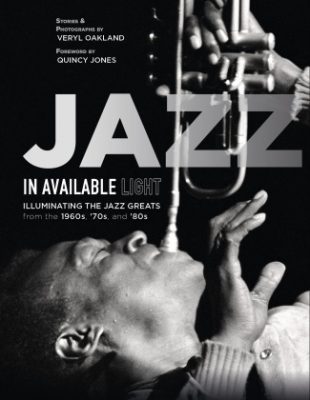
Jazz in Available Light, Illuminating the Jazz Greats from the 1960s, ’70s, and ’80s is one of the most impressive jazz photo books to be published in a long time. Featuring the brilliant photography of Veryl Oakland — much of which has never been published — it is also loaded with his often remarkable and always entertaining stories of his experience with his subjects.

With the gracious consent of Mr. Oakland — an active photojournalist who devoted nearly thirty years in search of the great jazz musicians — Jerry Jazz Musician regularly publishes a series of posts featuring excerpts of the photography and stories/captions found in this important book.

In this edition, Mr. Oakland’s photographs and stories feature Yusef Lateef and Chet Baker


.

.

All photographs copyright Veryl Oakland. All text excerpted from Jazz in Available Light, Illuminating the Jazz Greats from the 1960s, ’70s, and ’80s

.

You can read Mr. Oakland’s introduction to this series by clicking here

.

.

_____

.

.


© Veryl Oakland
.

Removing the Mystery

Yusef Lateef

San Francisco, California

.


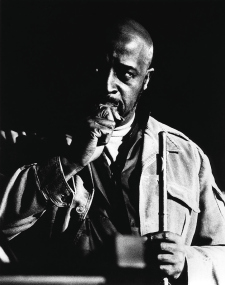
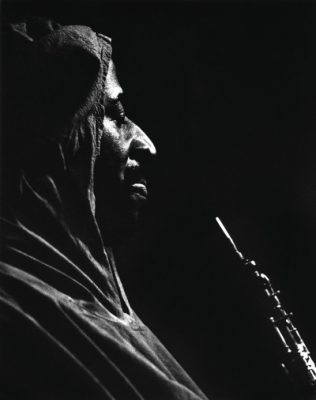
“Entranced” perhaps best describes my impressions of the man and his music the first time I saw him onstage leading a small quartet in the early 1970s.

…..There in the darkened club, shrouded in a lightweight, hooded cape, sat Yusef Lateef, surrounded by an assortment of obscure reed and exotic flute-like instruments: I knew this was not going to be any typical jazz engagement. The atmosphere at times during his set was almost hypnotic. On one number while playing oboe, Lateef’s drawn-out, distinctive vibrato notes quietly reverberated throughout the room, casting a haunting, trance-like spell. I was mesmerized.

…..After that performance, I knew I needed to work with the man one-on-one the next time our paths crossed. I just had to. It was October of 1977 while headlining at Keystone Korner in San Francisco that I caught up with Lateef in person.

…..Talking with him backstage after his set, I suggested we do an afternoon photo session. He agreed to do the shoot later in the week, offering to meet me in the home where he was staying on Bay Street near Fisherman’s Wharf.

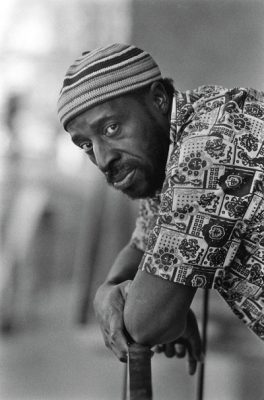
…..In some ways, working with Yusef Lateef that day was unexpectedly surprising, but overall, perfect. Unlike the image he projected onstage, there was nothing mysterious about him. I found him to be very open, engaging, and down-to-earth. During our time together, he exhibited an air of naturalness unlike that of any other artist I’d met. It brought to mind the title of one of his albums, The Gentle Giant. We spent an hour or so talking about his current work and taking photographs in and around the home.

…..Because he had grown up and worked with so many of jazz’s greats from the Detroit area whose passion was hard bop, I asked him about his embrace of middle Eastern and Oriental musics, and what it was that he felt made him unique from all the others. He mentioned one word, “Autophysiopsychic,” that at the time I had never heard of, and wasn’t even able to spell correctly, to best describe his work. He told me, “You’ll find out what I’m talking about later.”

…..I discovered that after completing his Keystone Korner gig, Yusef returned to New York and went directly into the recording studios with flügelhornist Art Farmer to co-produce, along with Creed Taylor, the CTI album entitled, Autophysiopsychic. Lateef’s surprising creations on that disc – representing more of a laid-back funk and soul sound – were a far cry from any of his previous explorations that I had heard.

…..Lateef has explained that the word comes from one’s spiritual, physical, and emotional self. Looking back, I still don’t know that I can identify with “autophysiopsychic,” but I do know this: Yusef Lateef was easily one of the most “photogenic” artists I ever encountered.

.

© Veryl Oakland
.

Yusef A. Lateef (William Emanuel Huddleston)

Tenor saxophone, flute, oboe, bassoon, composer, educator; also woodwinds, pipe instruments of Arabic, Indian, and Chinese origin

Born: October 9, 1920

Died: December 23, 2013

.

Listen to “Nubian Lady,” from Lateef’s 1972 album The Gentle Giant


.

.

.

_____

.

.

.


© Veryl Oakland
.

Defying the Odds

Chet Baker 

San Francisco, California

.

It was 1978. I was anxious to see and listen to the man in person, to learn first-hand if the reports I was hearing of his return as a player were actually true: Was his jazz career really on the rise once again?

…..Chet Baker’s ascent to stardom had been speedy. Almost from the very start of his career, after joining baritone saxophonist Gerry Mulligan’s first pianoless quartet, he was hugely popular. For five years, he was the trumpet poll-winner in most of the major jazz magazines. 

…..But his fall was just as fast, the result of drugs, incarceration, and then the San Francisco beating. It had been 10 years earlier, in this same city, that Chet Baker’s already flagging career was pronounced “finished” after sustaining a severe beating and losing most of his teeth at the hands of local drug addicts. It was almost like starting over again. The trumpeter had been fitted with a set of false teeth and was struggling through a painfully-long recovery period.    

…..When I first heard about his upcoming date at Keystone Korner, I managed to track him down on the road and explained that I wanted to do a photo session once he was in the City. He told me where he would be staying and we set the day for our get-together. 

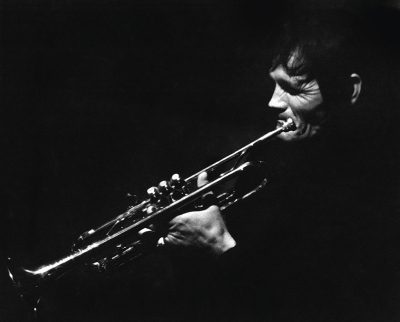
…..The night before our shoot, I touched base with him at the club, and then stayed to catch his opening set. Had I not known about his recent problems, I would never have guessed that Chet Baker was anything other than one of jazz’s most lyrical trumpeters, totally in command of his singular talents. From what I could tell, he was clearly at the top of his game. 

…..Late the next morning, I picked him up at his hotel and we headed over to the popular Ghirardelli Square near the Bay to take the photos. I mentioned how impressed I was hearing him in performance playing both trumpet and flügelhorn. I told him that to my ear, he sounded even purer than on any of his previous best recordings. He said he was still bothered by mouth pains and nagging embouchure problems, but agreed with my assessment. 

…..It was perfect, our day together in the sun. Chet appeared confident in his stylish sport coat, turtleneck sweater, and leather hat, looking refreshed and invigorated. At the end of our shoot, I asked him if he thought he would be returning anytime soon. “Europe is better for me,” he said simply.

…..I never got to see him again, but for the next decade, he would enjoy his most prolific era as a recording artist. One of my very close collaborator friends, the German critic and producer Joachim Berendt, who knew first-hand the trumpeter’s many career ups and downs, remarked in the 1980 edition of his internationally-known jazz calendar, “Slowly he came back onto the scene (and)…something astonishing happened; Chet Baker played better than he ever had during the time of his great successes – more masculine, more mature, more sovereign.” 

.

© Veryl Oakland
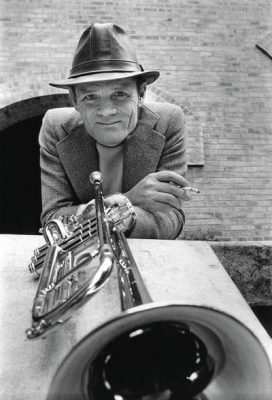
Chesney (Chet) Baker

Trumpet, flügelhorn, singer

Born: December 23, 1929

Died: May 13, 1988

.

.

Listen to Chet Baker play “Oh You Crazy Moon,” a December, 1978 live recording made in Ludwigsberg, Germany.


.

.


_____

.

.

Click here to read the edition featuring Stan Getz, Sun Ra and Carla Bley

Click here to read the edition featuring Art Pepper, Pat Martino and Joe Williams

Click here to read the edition featuring Yusef Lateef and Chet Baker

Click here to read the edition featuring Mal Waldron, Jackie McLean and Joe Henderson

Click here to read the edition featuring violinists Joe Venuti, Stephane Grappelli, Jean-Luc Ponty, Zbigniew Seifert, and Leroy Jenkins

Click here to read the edition featuring Frank Morgan, Charles Lloyd/Michel Petrucciani and Emily Remler

Click here to read the edition featuring Dexter Gordon, Art Farmer and Johnny Griffin

Click here to read the edition featuring Thelonious Monk, Paul Bley and Cecil Taylor

Click here to read the edition featuring drummers Jo Jones, Art Blakey and Elvin Jones

Click here to read the edition featuring drummers Buddy Rich, Louie Bellson, Tony Williams and Shelly Manne

Click here to read the edition featuring Monk Montgomery and the jazz musicians of Las Vegas

Click here to read the edition featuring Sarah Vaughan and Better Carter

Click here to read the edition featuring Duke Ellington, Dizzy Gillespie, Quincy Jones and Toots Thielemans

.

.

.

.

All photographs copyright Veryl Oakland. All text and photographs excerpted with author’s permission from Jazz in Available Light, Illuminating the Jazz Greats from the 1960s, ’70s, and ’80s

.

You can read Mr. Oakland’s introduction to this series by clicking here

Visit his web page and Instagram

.

.

.
Share this:

Comment on this article:

Your email address will not be published. Required fields are marked *

Site Archive

Your Support is Appreciated

Jerry Jazz Musician has been commercial-free since its inception in 1999. Your generous donation helps it remain that way. Thanks very much for your kind consideration.

Click here to read about plans for the future of Jerry Jazz Musician.

In This Issue

photo by William Gottlieb/design by Rhonda R. Dorsett
21 jazz poems on the 21st of November, 2025...An ongoing series designed to share the quality of jazz poetry continuously submitted to Jerry Jazz Musician. This edition features poems communicating the emotional appeal of jazz music, as well as nods to the likes of Miles Davis, Regina Carter, Maynard Ferguson, Ornette Coleman, and Max Roach.

The Sunday Poem

Tore Sætre, CC BY-SA 4.0, via Wikimedia Commons

”Analog,” by Susanna Schantz

The Sunday Poem is published weekly, and strives to include the poet reading their work.... Susanna Schantz reads her poem at its conclusion


Click here to read previous editions of The Sunday Poem

Poetry

Wikimedia Commons
“Dorothy Parker, an Icon of the Jazz Age” – a poem by Jane McCarthy

Short Fiction

photo via Freerange/CCO
Short Fiction Contest-winning story #70 – “The Sound of Becoming,” by J.C. Michaels...The story explores the inner life of a young Southeast Asian man as he navigates the tension between Eastern tradition and Western modernity.

Community

Calling All Poets…Submissions guidelines for the anthology “Black History in Poetry”...We are currently seeking poetry from writers of all backgrounds for Black History in Poetry, an anthology scheduled for publication in the Summer of 2026. The anthology will be a means of celebrating and honoring notable Black Americans by offering poetry that teems with imagery, observation, emotion, memory, testimony, insight, impact, and humanity. Our aim is to give readers a way to visualize Black history from a fresh perspective.

Poetry

Poems on Charlie “Bird” Parker (inspired by a painting by Al Summ) – an ekphrastic poetry collection...A collection of 25 poems inspired by the painting of Charlie Parker by the artist Al Summ.

Community

Letter from the Editor: “A Jerry Jazz Musician Experience”...Sharing a bit of what I’ve been up to of late, and make you aware of a new endeavor of mine…

Feature

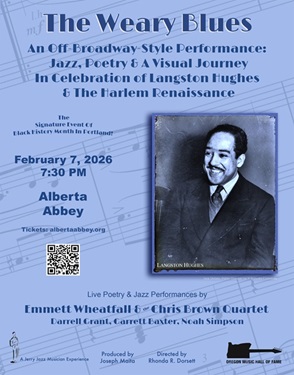
Press Release for “The Weary Blues: Celebrating The Harlem Renaissance and Langston Hughes...I recently wrote about a new endeavor of mine – producing a show in Portland celebrating the poetry of Langston Hughes and the Harlem Renaissance. What follows is the complete press release for the February 7 performance at the Alberta Abbey in Portland, Oregon.

A Letter from the Publisher

The gate at Buchenwald. Photo by Rhonda R Dorsett
War. Remembrance. Walls.
The High Price of Authoritarianism– by editor/publisher Joe Maita
...An essay inspired by my recent experiences witnessing the ceremonies commemorating the 80th anniversary of liberation of several World War II concentration camps in Germany.

Feature

Memorable Quotes: Horace Greeley, on character...“Fame is a vapor, popularity an accident, and riches..."

Community

Nominations for the Pushcart Prize L (50)...Announcing the six writers nominated for the Pushcart Prize v. L (50), whose work appeared on the web pages of Jerry Jazz Musician or within print anthologies I edited during 2025.

Interview

Interview with Tad Richards, author of Listening to Prestige: Chronicling its Classic Jazz Recordings, 1949 – 1972...Richards discusses his book – a long overdue history of Prestige Records that draws readers into stories involving its visionary founder Bob Weinstock, the classic recording sessions he assembled, and the brilliant jazz musicians whose work on Prestige helped shape the direction of post-war music.

Poetry

"Swing Landscape" by Stuart Davis
“Swing Landscape” – a poem by Kenneth Boyd....Kenneth Boyd writes poetry based on jazz paintings. “Swing Landscape” is written for a Stuart Davis painting of the same name.

Jazz History Quiz

Jazz History Quiz #185...This posthumously-awarded Grammy winning musician/composer was the pianist and arranger for the vocal group The Hi-Lo’s (pictured) in the late 1950’s, and after working with Donald Byrd and Dizzy Gillespie became known for his Latin and bossa nova recordings in the 1960’s. He was also frequently cited by Herbie Hancock as a “major influence.” Who is he?

Poetry

photo via Wikimedia Commons
Jimi Hendrix - in four poems

Playlist

A sampling of jazz recordings by artists nominated for 2026 Grammy Awards – a playlist by Martin Mueller...A playlist of 14 songs by the likes of Samara Joy, Brad Mehldau, Dee Dee Bridgewater, Branford Marsalis, the Yellowjackets and other Grammy Award nominees, assembled by Martin Mueller, the former Dean of the New School of Jazz and Contemporary Music in New York.

Poetry

Ukberri.net/Uribe Kosta eta Erandioko agerkari digitala, CC BY 2.0, via Wikimedia Commons
In Memoriam: “Color Wheels” – a poem (for Jack DeJohnette) by Mary O’Melveny

Short Fiction

“Alas, for My Poor Heart” – a short story by Daryl Rothman...The story – a short-listed entry in the recently concluded 69th Short Fiction Contest – concerns art and its truest meanings—where you just might have to look twice at what the shadow and light of a piece says about that within your soul.

Essay

“Escalator Over the Hill – Then and Now” – by Joel Lewis...Remembering the essential 1971 album by Carla Bley/Paul Haines, inspired by the writer’s experience attending the New School’s recent performance of it

Poetry

“Still Wild” – a collection of poems by Connie Johnson...Connie Johnson’s unique and warm vernacular is the framework in which she reminds readers of the foremost contributors of jazz music, while peeling back the layers on the lesser known and of those who find themselves engaged by it, and affected by it. I have proudly published Connie’s poems for over two years and felt the consistency and excellence of her work deserved this 15 poem showcase.

Feature

photo of Barry Harris by Mirko Caserta
“With Barry Harris at the 11th Street Bar” – a true jazz story by Henry Blanke...The writer - a lifelong admirer of the pianist Barry Harris - recalls a special experience he had with him in 2015

Short Fiction

publicdomainpictures.net
“Corkscrew” – a short story by Mike Wilson...The story – a short-listed entry in the recently concluded 69th Short Fiction Contest – is about a night when everything goes wrong and everyone is annoying, an unexpected turn of events teaches a sarcastic lawyer that the old adage is true – a cynic is just a disappointed romantic.

Interview

Interview with Sascha Feinstein, author of Writing Jazz: Conversations with Critics and Biographers...The collection of 14 interviews is an impressive and determined effort, one that contributes mightily to the deepening of our understanding for the music’s past impact, and fans optimism for more.

Feature

Trading Fours, with Douglas Cole, No. 27: “California Suite”...Trading Fours with Douglas Cole is an occasional series of the writer’s poetic interpretations of jazz recordings and film. This edition is dedicated to saxophone players and the mood scenes that instrument creates.

Short Fiction

photo by Simon Webster
“Smoke Rings and Minor Things” – a short story by Jane McCarthy...The story – a short-listed entry in the recently concluded 69th Short Fiction Contest – is a meditation on missed chances, minor keys, and the music that outlives the room it was played in.

Essay

“J.A. Rogers’ ‘Jazz at Home’: A Centennial Reflection on Jazz Representation Through the Lens of Stormy Weather and Everyday Life – an essay by Jasmine M. Taylor...The writer opines that jazz continues to survive – 100 years after J.A. Rogers’ own essay that highlighted the artistic freedom of jazz – and has “become a fundamental core in American culture and modern Americanism; not solely because of its artistic craftsmanship, but because of the spirit that jazz music embodies.”

Community

photo of Dwike Mitchell/Willie Ruff via Bandcamp
“Tell a Story: Mitchell and Ruff’s Army Service” – an essay by Dale Davis....The author writes about how Dwike Mitchell and Willie Ruff’s U.S. Army service helped them learn to understand the fusion of different musical influences that tell the story of jazz.

Feature

Excerpts from David Rife’s Jazz Fiction: Take Two– Vol. 16: Halloween on Mars? Or…speculative jazz fiction...A substantial number of novels and stories with jazz music as a component of the story have been published over the years, and the scholar David J. Rife has written short essay/reviews of them. In this 16th edition featuring excerpts from his outstanding literary resource, Rife writes about azz-inflected speculative fiction stories (sci-fi, fantasy and horror)

Poetry

“With Ease in Mind” – poems by Terrance Underwood...It’s no secret that I’m a fan of Terrance Underwood’s poetry. I am also quite jealous of his ease with words, and of his graceful way of living, which shows up in this collection of 12 poems.

Poetry

What is This Path – a collection of poems by Michael L. Newell...A contributor of significance to Jerry Jazz Musician, the poet Michael L. Newell shares poems he has written since being diagnosed with a concerning illness.

Playlist

“Look Ma, No Net!” – a playlist of nonets, by Bob Hecht...In this episode of our progressive instrumentation playlists, we add a ninth instrument to the mix to form a Nonet!

Art

photo by Giovanni Piesco
The Photographs of Giovanni Piesco: Art Farmer and Benny Golson...Beginning in 1990, the noted photographer Giovanni Piesco began taking backstage photographs of many of the great musicians who played in Amsterdam’s Bimhuis, that city’s main jazz venue which is considered one of the finest in the world. Jerry Jazz Musician will occasionally publish portraits of jazz musicians that Giovanni has taken over the years. This edition features the May 10, 1996 photos of the tenor saxophonist, composer and arranger Benny Golson, and the February 13, 1997 photos of trumpet and flugelhorn player Art Farmer.

Community

Community Bookshelf #5...“Community Bookshelf” is a twice-yearly space where writers who have been published on Jerry Jazz Musician can share news about their recently authored books and/or recordings. This edition includes information about books published within the last six months or so (March, 2025 – September, 2025)

Contributing Writers

Click the image to view the writers, poets and artists whose work has been published on Jerry Jazz Musician, and find links to their work

Coming Soon

Interview with John Gennari, author of The Jazz Barn:  Music Inn, the Berkshires, and the Place of Jazz in American Life; Also, a new Jazz History Quiz, and lots of short fiction; poetry; photography; interviews; playlists; and much more in the works...

Interview Archive

Ella Fitzgerald/IISG, CC BY-SA 2.0 , via Wikimedia Commons
Click to view the complete 25-year archive of Jerry Jazz Musician interviews, including those recently published with Judith Tick on Ella Fitzgerald (pictured),; Laura Flam and Emily Sieu Liebowitz on the Girl Groups of the 60's; Tad Richards on Small Group Swing; Stephanie Stein Crease on Chick Webb; Brent Hayes Edwards on Henry Threadgill; Richard Koloda on Albert Ayler; Glenn Mott on Stanley Crouch; Richard Carlin and Ken Bloom on Eubie Blake; Richard Brent Turner on jazz and Islam; Alyn Shipton on the art of jazz; Shawn Levy on the original queens of standup comedy; Travis Atria on the expatriate trumpeter Arthur Briggs; Kitt Shapiro on her life with her mother, Eartha Kitt; Will Friedwald on Nat King Cole; Wayne Enstice on the drummer Dottie Dodgion; the drummer Joe La Barbera on Bill Evans; Philip Clark on Dave Brubeck; Nicholas Buccola on James Baldwin and William F. Buckley; Ricky Riccardi on Louis Armstrong; Dan Morgenstern and Christian Sands on Erroll Garner; Maria Golia on Ornette Coleman.