
.
.
.
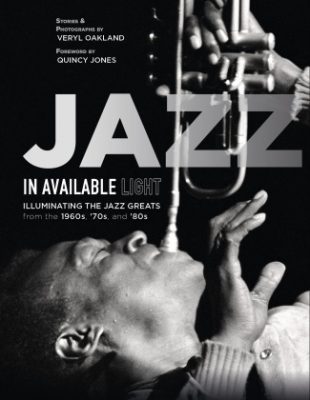
…..Jazz in Available Light, Illuminating the Jazz Greats from the 1960s, ’70s, and ’80s is one of the most impressive jazz photo books to be published in a long time. Featuring the brilliant photography of Veryl Oakland — much of which has never been published — it is also loaded with his often remarkable and always entertaining stories of his experience with his subjects.
…..With the gracious consent of Mr. Oakland — an active photojournalist who devoted nearly thirty years in search of the great jazz musicians — Jerry Jazz Musician regularly publishes a series of posts featuring excerpts of the photography and stories/captions found in this important book.
In this edition, Mr. Oakland’s photographs and stories feature Frank Morgan, Charles Lloyd/Michel Petrucciani, and Emily Remler.
.
.
All photographs copyright Veryl Oakland. All text excerpted from Jazz in Available Light, Illuminating the Jazz Greats from the 1960s, ’70s, and ’80s
.
You can read Mr. Oakland’s introduction to this series by clicking here
.
.
_____
.
.
© Veryl Oakland
.
Careers Saved by Significant Partners
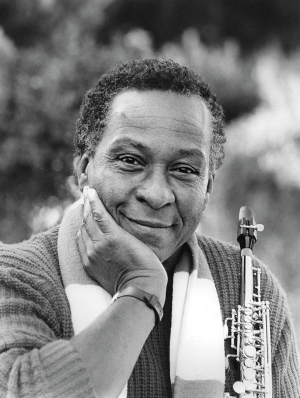
Frank Morgan
Oakland, California
.
.
…..The setting could easily have been seen as totally scripted, but this was no act.
…..Watching and photographing the pair as they strolled along the Berkeley Marina – two blissful soulmates, so much in love – there was no avoiding what was obvious. Locked in a warm embrace, the couple practically floated as one as they made their way along the boardwalk. I couldn’t help but notice all the passers-by, their heads turning to witness the magnetism radiating between these two.© Veryl Oakland
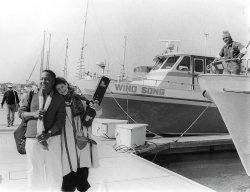 …..Here it was in May of 1987. For those who knew his story, it was perfectly understandable why Frank Morgan would now be projecting such a warm, inviting glow wherever he went. That’s because after 30 wasted years, mostly spent within prison walls, the alto saxophonist had at last tasted true freedom. He had found his guardian angel, artist Rosalinda Kolb, and because of her, was now back on the scene and finally receiving long-overdue critical acclaim as a major voice in jazz.
…..Like so many other musicians during the 1940s who became totally absorbed by the new and scintillating sounds of bebop and its leading practitioners – including trumpeter Dizzy Gillespie and alto saxophonist Charlie “Yardbird” Parker – it was only natural to want to emulate everything about these jazz giants.
…..For Morgan, the intense love affair of “all things Bird” actually began when he was just seven years old. His guitarist father had taken him to see the Jay McShann Orchestra featuring Parker; afterwards, he even got to meet and talk with the alto legend in his dressing room. By age 12, Frank had mastered many of Bird’s solos, and in his early 20s had already recorded, including his debut album as a leader. But by then, he had also embraced Parker’s heroin habit and destructive lifestyle. What followed would be a ruinously long span of incarceration.
…..Coming back after missing out on three decades of what should have been the most productive period of his playing career was not easy. Not for Morgan, nor for Kolb, his virtual companion for the last 30 years of his life.
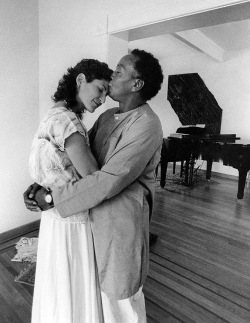
…..In her book, Leave ‘Em Hungry: A Love Story and Cautionary Tale, Rosalinda talked about those trying times, the difficulties of working with someone of Frank’s nature, where addiction absolutely ruled his life. For nine years from the time of their first meeting until Morgan’s final release in 1985, it was a near constant struggle getting Frank to break his cycle of dependence and face the responsibilities of surviving in the real world.
…..I spent most of that late spring day with the two Southern California transplants in and around their Victorian-style home in Oakland. It was a happy time. They had just returned from Frank’s New York debut – a week-long gig at the Village Vanguard – which had produced a cascade of rave reviews.
…..Remarkably, in less than two years – following the distribution of his long-awaited, return-to-the-scene record, Easy Living, with pianist Cedar Walton – Frank had already completed a total of five albums. A sixth, featuring pianist McCoy Tyner, had just wrapped up and was now in production. Morgan’s bookings were coming in from far and wide.
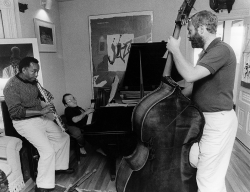
…..Back here in the Bay Area, Morgan was keeping a busy bookings schedule, as well as welcoming a regular stream of out-of-towners – visiting musicians who just wanted to hang out and jam. Frank referred to their spacious digs as “…our west coast version of the New York loft scene.” Since their move, some of those who had come by to play included trumpeter Kenny Wheeler, pianist George Cables, drummers Billy Higgins and Eliot Zigmund, and saxophonists Steve Coleman, Pharoah Sanders, plus the father-son duo Von and Chico Freeman.
…..The change of scenery and solid home base also gave Rosalinda, who holds a Master of Fine Art degree from Chicago’s School Of The Art Institute, an opportunity to spend more time developing what she calls her “personal vision,” original artworks which she compartmentalizes by different-named series.
…..As I looked back on that day, I kept thinking about the arduous journey of Frank and Rosalinda, what they achieved by working together, and how the rewarding outcome could only have been achieved through personal sacrifice and the power of perseverance.
.
.
© Veryl Oakland
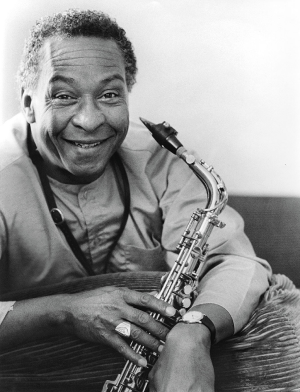
Frank Morgan – alto, soprano saxophones
Born: December 23, 1933
Died: December 14, 2007
.
.
Listen to a 1955 recording of Frank Morgan playing “The Nearness of You”
.
.
.
_____
.
.
© Veryl Oakland 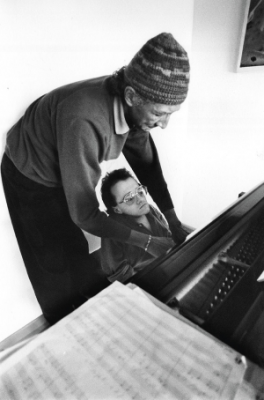
.
The Forest Farm Retreat
Charles Lloyd & Michel Petrucciani
Big Sur, California
.
.
…..“The first time I heard him, it was over the telephone. I was away. He was in the background. I was very touched by what I heard. I drove 200 miles in two hours. I got back, took out my instrument. We played, and I knew that it was time again.”
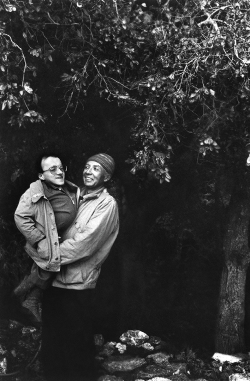
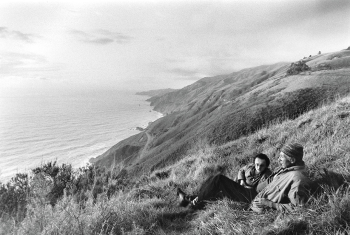
…..Living in relative obscurity since the early 1970s on this wild and secluded Big Sur property high in the hills overlooking the Pacific Ocean – the place he called “Forest Farm” – tenor saxophonist and flutist Charles Lloyd said simply it was “providence” that brought the 18-year-old French pianist phenom Michel Petrucciani to his doorstep in 1981. Whether he knew it or not at the time, Lloyd’s self-imposed decade in exile from the commercial music scene would soon come to an end.
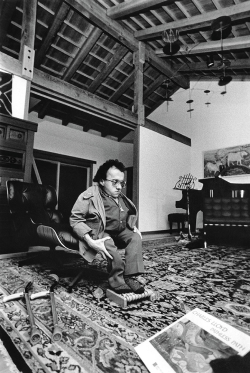
…..Seemingly out of nowhere came this little stranger “…trying to make his way onto the world stage,” Charles recalled. “He had a great talent, but had been born with such a rare bone disease.” (Petrucciani stood three feet tall and suffered from osteogenesis imperfecta, or “glass bones” disease.)
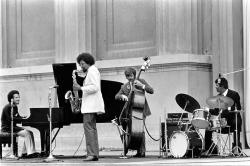
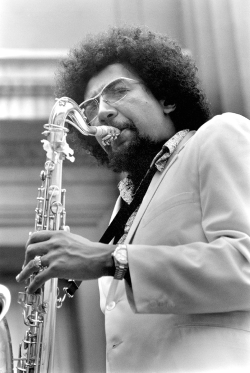
…..I had followed Charles Lloyd’s dazzling career from the time he had first chosen Keith Jarrett for his quartet in 1966. That young pianist, today one of the most recognized and successful of all jazz artists, had also asked Charles if he could join under his direction. Their albums, Dream Weaver, then Forest Flower: Live at Monterey, broke through previously-defined musical categories to capture heretofore unreachable audiences and catapult the group to international prominence. Lloyd’s composition, “Forest Flower,” made history by being the title track of one of the first jazz albums to sell a million copies.
© Veryl Oakland
© Veryl Oakland
…..The success that followed him was unsustainable. Month after month of relentless touring, controls on his time, and ongoing demands from his growing, insatiable fans around the globe took its toll. Charles was exhausted, and retreated “…to pursue an inner journey. It’s something I had to experience in silence,” he said.
…..When I learned that the now-rejuvenated Lloyd and his newest piano discovery would be enjoying a brief break at his home in January of 1983 following the current quartet’s acclaimed European tour, I literally jumped at the opportunity. I wanted to be the conduit for sharing and re-enacting this memorable turning point in both of their lives.
…..It was a day of total relaxation and contentment for Charles and Michel. It was obvious the two were perfectly-matched musical soul mates who not only understood, but brought out the best of each other. As an invited visitor that day, I sensed a loving bond between the two artists. On the one hand, Charles appeared protective of Michel, almost as a father would be with his child. But musically, the two were on equal footing.
…..Charles Lloyd was totally at peace that day, reflective and introspective. Once again, he knew that his latest young recruit was gaining his own footing, making huge strides, and would soon be ready to strike out on his own.
…..“Over the years,” he said, “all these incredible musicians continue to come to me and want to serve with me. So that’s like being chosen. That’s a great blessing.”
.
© Veryl Oakland
Charles Lloyd – tenor saxophone, flutes, composer; also synthesizer
Born: March 15, 1938
.
Michel Petrucciani – piano, composer
Born: December 28, 1962
Died: January 6, 1999
.
.
.
.
Watch a performance of Charles Lloyd, Michel Petrucciani, Cecil McBee and Jack DeJohnette play Lloyd’s tune, “Tone Poem”
.
.
_____
.
.
.
.
© Veryl Oakland
.
In Need of a Different Outcome
Emily Remler
Concord, California
.
.
…..
…..It was a whirlwind period in the guitarist’s life…her short life.
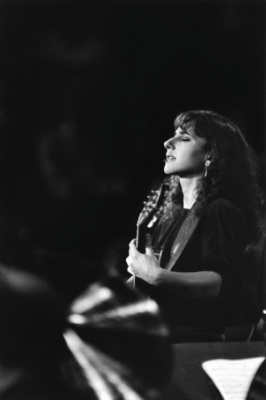
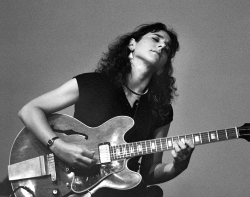
…..When we met that summer afternoon in 1984, 26-year-old headliner Emily Remler had just completed her second successful weeklong gig in New York in as many years – this time at Lush Life.
…..Two years earlier, leading a trio at the Blue Note with bassist Eddie Gomez and drummer Bob Moses, she had already begun turning lots of heads. Not only was she winning over a youthful crowd of new listeners – as well as surprising plenty of long-standing players and jazz aficionados – she was also drawing high praise from some of the music’s most revered guitar veterans.
…..For someone who had gone from not being able to read a note of music 10 years earlier, to now drawing the attention of the jazz world’s heavyweights, this was heady stuff.
© Veryl Oakland
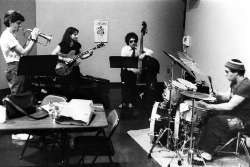
…..I caught up with Emily during a soundcheck at the Concord Summer Festival as part of her west coast tour. Following their scheduled evening performance, the quartet would head the next day to Coast Recorders in San Francisco to produce her fourth Concord Jazz album.
…..Everything at that time appeared to be going her way. Later in the afternoon, I sat down with Emily at her hotel. She was bubbly, excited about all the recognition and exposure she was getting. On the heels of her previous recordings, and the favorable reviews resulting from working with her current quartet, Emily was now in demand…just about everywhere.
…..Already, she had completed three separate tours of Europe, which had opened up a wide variety of playing opportunities. The guitarist was featured as guest artist at the Berlin Jazz Festival, and similarly, in many of the different countries’ popular jazz radio broadcast programs. Along the way, she was feted with such notables as pianist Tommy Flanagan and guitarist Herb Ellis, in duo dates with pianist and then-husband Monty Alexander, and with the John Clayton Orchestra in big band productions…even backing such singers as Nancy Wilson and the Brazilian Astrud Gilberto.
…..On one of her last stops at the Montreux Jazz Festival in Switzerland, she was thrilled to have learned that Down Beat magazine had announced the results of its International Critics Poll: for the second time, she was top guitarist in the “Talent Deserving of Wider Recognition” category.
…..In addition to sharing all of her most recent musical meanderings, Emily was enthusiastic about heading back into the studios, and for the first time, recording an album consisting entirely of her own compositions. It had been a project in the making for quite some time.
…..Writing and playing her own works was a significant milestone for Emily. “There’s a lot of emotion in there,” she told me about the songs she had written for the album. “They bring out a lot of my experiences. One of the tunes I’m calling, ‘Five Years,’ because it took me five years to write.”
…..Having already proven that she could fit in with the most seasoned artists playing any style of music, I asked Emily if she had one wish, who would she choose to have in her own band?
…..“It’s already happened!” she burst excitedly. “I used to say, ‘If I could play with Eddie Gomez, I could die right after that, happy.’ And I’ve done that now. I really can’t think of anyone I would rather play with.”
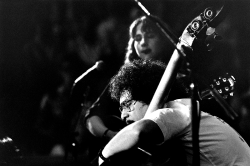
…..In late 2016, more than three decades after that August afternoon, I reached out to Gomez for his recollections of Emily Remler from that time.
…..“She was committed,” he told me. “She had that feeling. She loved Wes (Montgomery), and had that same swinging, melodic vibe – not (as) a clone – but she had that essence about her. There were fewer women around like her back then. She was a real stylist.”
…..In the chapter entitled, “Emily,” from his book, Waiting For Dizzy, critic Gene Lees shared what made Remler especially proud was her sense of time and her comping abilities. Foremost in Emily’s mind was to make sure that everyone else in the group sounded good.
…..I shared that point with Eddie, who remarked, “Absolutely. She didn’t play a lot of notes, and was not ostentatious. She left a lot of room for the others in the band.”
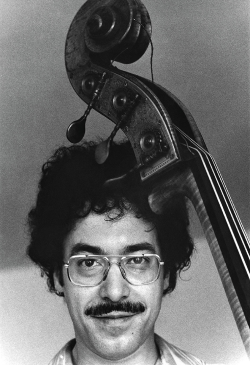
…..Gomez, who spent 11 years working with Bill Evans, one of jazz’s most deeply-sensitive pianists who could reach listeners to their very core, likened the guitarist to some of the most tasty keyboard players. “She came to the table with certain sensibilities…you immediately thought of pianists like Wynton (Kelly) and Red (Garland). It was all about her swing, that understatement. She was very musical.”
…..After that weekend, I never got to see Emily Remler again.
…..In his final chapters, Lees wrote: “In May of 1990, I got a call from a friend who told me Emily had been found dead in her hotel room in Sydney, Australia….The sensitivity that makes it possible to produce good art makes life painful for those who possess it. Chemicals may not enhance the creativity, but they dull the pain, or seem to, for a little while. In the end they add to it.”
…..I asked Eddie about his observations of Emily during the time they were together. “I had no sense there was anything wrong, or that she was having any issues,” he said. “When she came to the bandstand, she was happy, ready to play. As for her private life, I felt there was an emptiness…maybe (a lack of) love. Whatever happened, I sensed she channeled that into her music, tried to fill it with her playing.”
…..When I shared with Gomez Emily’s quote from so many years ago – about how he was the one musician who had fulfilled her wish professionally – Eddie was moved. It was something he hadn’t heard before. “She was a special person, had an aura about her. There was something almost ‘golden’ about her. She made a great contribution, and deserves her place in guitar history. She truly enriched our world.”
.
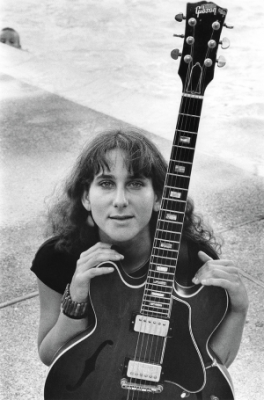
Emily Remler – guitar, composer
Born: September 18, 1957
Died: May 4, 1990
.
.
Listen to Emily Remler play “Softly, As in a Morning Sunrise”
.
.
_____
.
.
.
Click here to read the edition featuring Stan Getz, Sun Ra and Carla Bley
Click here to read the edition featuring Art Pepper, Pat Martino and Joe Williams
Click here to read the edition featuring Yusef Lateef and Chet Baker
Click here to read the edition featuring Mal Waldron, Jackie McLean and Joe Henderson
Click here to read the edition featuring Dexter Gordon, Art Farmer and Johnny Griffin
Click here to read the edition featuring Thelonious Monk, Paul Bley and Cecil Taylor
.
Click here to read the edition featuring drummers Jo Jones, Art Blakey and Elvin Jones
Click here to read the edition featuring Monk Montgomery and the jazz musicians of Las Vegas
Click here to read the edition featuring Sarah Vaughan and Better Carter
.
.
.
All photographs copyright Veryl Oakland. All text and photographs excerpted with author’s permission from Jazz in Available Light, Illuminating the Jazz Greats from the 1960s, ’70s, and ’80s
.
You can read Mr. Oakland’s introduction to this series by clicking here
Visit his web page and Instagram
.
.