



.
.
New Short Fiction Award
Three times a year, we award a writer who submits, in our opinion, the best original, previously unpublished work.
Salvatore Difalco, a resident of Toronto, Ontario, is the winner of the 67th Jerry Jazz Musician New Short Fiction Award, announced and published for the first time on December 5, 2024.
.
.
___
.
.
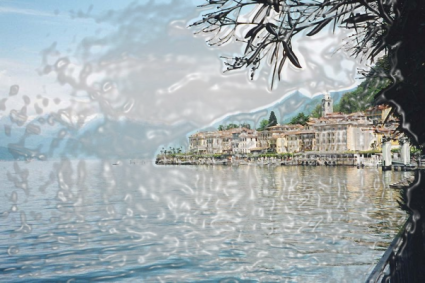
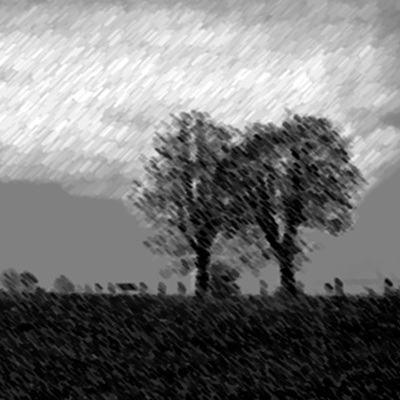
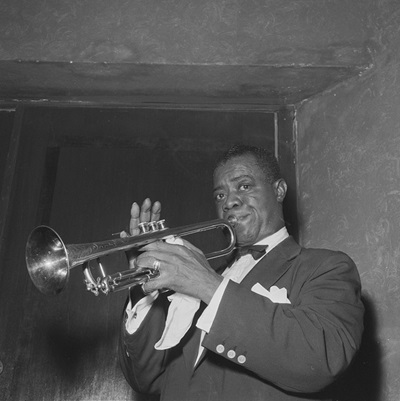
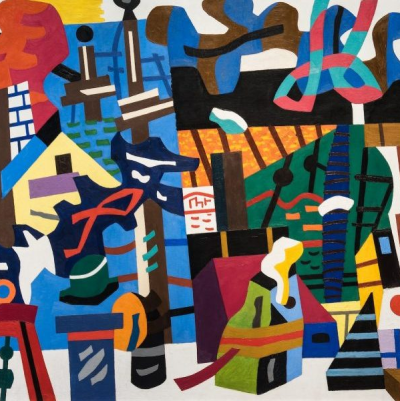
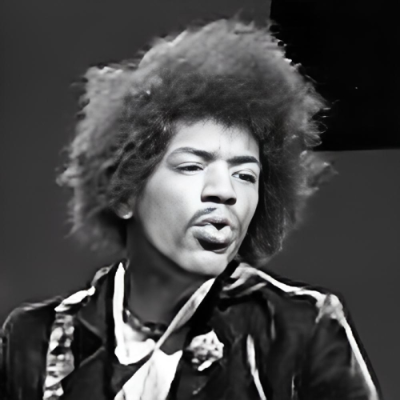
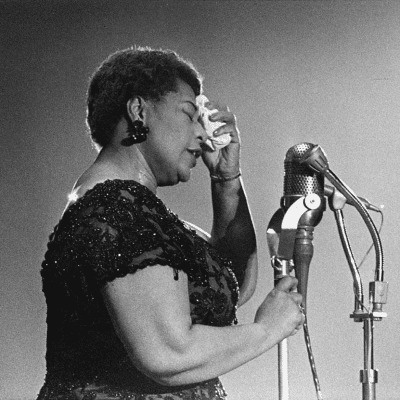
Stan Shebs, CC BY-SA 3.0 , via Wikimedia Commons/blur effect added
.
Bluesette
by Salvatore Difalco
.
…..The woman seated across from me resembled a series of geometric shapes, painted in primary colours—red, yellow, blue—and floating around each other as if weightless or suspended by invisible strings. The fruits of light and shade, perhaps. Or more correctly, the space-cake—somehow maintained in one piece on the train trip from Amsterdam to Nice, then to Milano—had taken hold, charging my perspective. Rather than shirk or fight the special effects, I embraced them. I held my hands before me and something in their appearance—perhaps the way the waxy light struck them—suggested prosthetics or at the very least a strange line of prophylactic gloves. That I could wriggle the fingers of the hands by merely thinking it astonished me and then I was immediately taken aback by my astonishment at so trivial an action. But it was all—along with the fragmented woman and the surreal backdrop—part of the trip, wasn’t it? And all I had to do was submit to it—acknowledge and submit to it. My broad, almost pained smile indicated the extent of my acceptance. Edgar Allen Poe wrote that those who dream by day are cognizant of many things which escape those who dream only by night. In my buzzy state, I took these words to heart.
…..Harmonica music droned pleasantly from some unseen source, just loud enough not to provoke the wolverine of anxiety bristling on the tendons of my nerves, despite my courageous face. Harmonica music was big in Europe. That and tunes with some dude or dudes whistling. A white-haired waiter—in what resembled a buckled straightjacket—wove nimbly among the tables, balancing a silver tray on his head. The axiom that we only grow old when we stop playing never seemed truer. A testy lake breeze muffled the murmuring patrons, linen and silk their fabrics of choice, Armani and Gucci their marques. Who were these people? No idea. I sat alone, admiring the shifting fluid blues of Lake Como and the imponderable bulk of the snowcapped mountains, now and then scoping the aforementioned woman. A failure to locate her eyes curtailed any contact, even though a failure to rationalize my reasons for stopping in Lake Como left me open to suggestions.
…..I had fled the ambitious but culture-free city of Toronto shortly after my wife of ten years left me without warning for her yoga instructor. Perhaps I should have seen it coming. Perhaps I did. My submission to the inevitable made me complict if not solely culpable. Why did I not fight for her? I didn’t want to end up in jail. These days you couldn’t fight for anything, let alone a woman’s love. In any event, after the break-up, I couldn’t escape all the daily reminders— of her, my lost love, love of my life, best friend and lover, heart of my heart—big and small, slapping me in the face, kicking me in the nuts, tickling me painfully at every turn. This is where we did this, this is where we did that. This is where we had our first lobster. This is where we had our last espresso. Even walking down the street became an impossibility. That porch, that tree, that squirrel, you know. Those torturer twins, regret and nostalgia, can be merciless. So I quit my job, stopped my gym membership, cashed out all my savings, and fucked off to Europe, with no plan in mind except to be gone from Toronto and memories of the last ten years, uncertain if or when I would return.
….. It had rained the entire week in Amsterdam. My visit to the Van Gogh Museum had so moved me I erupted into a hiccoughing fit of weeping that alarmed the staff enough for security to be summoned—two broad-shouldered Dutchmen with severe brushcuts—who escorted me briskly out of the museum. I resumed weeping in my room at the Hotel Smit. The hashish-hazed soon started closing in on me. I made several desperate and lugubrious calls to my wife only to be rebuked and warned that if I persisted she would take legal action against me. The thought of her lying in our bed with a patchouli-reeking, bare-footed yoga instructor sent me spiraling further into my pit of self-loathing, regret, and shame. I took the next train to Nice—and one might have imagined wistful European harmonica music playing as I watched the countryside flash by—and spent time doing virtually nothing on the beach. I did not think about my ex-wife or the past ten years or what my prospects for the future were. I allowed the sand and double blues of sky and sea lull me into a trance-like state of complete indifference if not oblivion. For three days I spoke to no one except waiters in restaurants and bars, and the formidable concierge at my hotel, a statuesque woman who could parry passes in five languages who eyed me with pity as I tried to be human in my interactions with her.
…..Is this the story of my recovery from heartbreak? Perhaps via a European sexual escapade so often depicted in books and film, or a more meaningful encounter with a humble village girl? The story isn’t over, but early signs indicate a complete lack of impetus in pursuing such a goal, and, not to mention, the utter unavailability of conditions in which to launch such a pursuit with any reasonable expectation of success. Me-Too and Covid had, wrongly or rightly, neutured the world. Romance had become an obsolete if not obscene practice; and any form of sex was at best a risky undertaking for all parties. Before long, it was time to leave the beaches of Nice. I felt I was turning into a mannequin. I could just see myself petrifying there on the beach in an eternal pose of contemplative detachment, only to have seabirds and urchins defile me as time passed, and then the vicissitudes of weather would finish the job and I would be ended properly.
…..Lake Como came out of the blue, like a line of poetry or a bar of song. I knew very little about it, only that it was a place for the rich—George Clooney reputedly owned a home there. I wasn’t rich. The pasticceria itself—recommended by a cabdriver—seemed lined with slabs of beeswax, glowing in the afternoon light, the air heavy with honey-scent. As the temperature rose, I feared the entire enterprise might liquify and ooze into the lake; but the steady breeze fanning the sweating surfaces cooled them enough to maintain their integrity.
…..The harmonica hummed on, ever unobtrusively. It didn’t please or displease me, but it seemed integral to the weave of things, the spirit.
…..My own integrity could have been questioned, like an actor fleshing out the senselessness of the human condition but lacking stage directions—perhaps the fate of the perpetual wanderer, suitcase always ready, no clear destination in mind, only the impulse to move, and keep moving. What about the wars? What about the wars? I wasn’t a soldier. And there would always be wars. What about the war in my soul? The war for my soul?
…..But what was I escaping, after all? Or more importantly, where was I escaping?
…..I shut my eyes. The harmonica persisted like a resonant whisper audible over the breeze’s gentle hush and whoosh. Would I allow myself a moment of true well-being? Was it even possible? Was George Clooney scoping me with binoculars from an ornate balcony? How happy was he at that moment? Could he have been happier? The waiter appeared, that is to say, first a tray with drinks appeared, then his small white hands, then his face—ears and shoulders blurred. I could barely move thanks to the space-cake. My muscles felt like Silly Putty. Even my hands looked moosh. My eyes and nostrils burned. My tongue filled my mouth like a kid glove.
…..“Quella musica,” I said, my voice weakly trailing off as I questioned my grasp of Italian, though it was my first language.
…..“Toots Thielemans,” the waiter said with a smile.
…..I thought he had sneezed, or said something in a northern dialect or other tongue unfamiliar to me. “Toots?” I said.
…..“Si, si, Toots Thielemans, il maestro suonatore di jazz armonica. Un vero genio.”
…..I nodded. So there existed a cat called Toots Thielemans—who was a jazz harmonica virtuoso. How did I not know this? I had certainly heard the music before. My half-lidded eyes likely failed to express my appreciation to the waiter for enlightning me on a subject about which I knew nothing. That jazz harmonca was a thing …
…..For the next hour I froze in my seat like a pensive paralytic. I doubt anyone around me took notice. Lake Como Lake Como Lake Como, what was this place? Was it real? Something about it smacked of the artificial, or at least artful. Even the lake seemed rendered from a comprehensive and refined aesthetic, something one could not say about the savage Great Lakes surrounding my hometown of Toronto.
…..The waiter returned. “Problemi?” he asked, his voice a layer of lake breeze.
…..“Non sono sicuro,” I confessed. I was sure of nothing.
…..“L’amore e molto difficule in quesi tempi.”
…..I glanced at him. What did he know?
…..“Il volto non mente.”
…..My face had given me away. The mask of indifference had melted like the beeswax would in time. The beeswax giving off that scent. What would George Clooney have done in my position? Did his wife have a yoga instructor? Would he have shook off the steel mesh of heartbreak like a warrior and soldiered on?
…..The waiter straightened up and cocked his ear. “Bluesette,” he said, perhaps referring to the whistled tune now playing from the unseen source. It sounded familiar, as from a Godard film.
…..“Bluesette,” I chimed. “Bello.”
…..“Bellissimo.”
…..“Toots Thielemans?” I asked.
…..The waiter’s smile vibrated. “Certo,” he said.
…..He leaned over me—with a complex tang of body, booze and eau de toilette—and set down a bottle filled with a creme liqueur that reminded me of a Giorgio Morandi still life, and two glasses. I wondered if he planned to join me. I would have almost welcomed the company, some back and forth in Italian, a harmless international exchange of ideas. Indeed he disappeared before I could inquire about the bottle’s contents. I poured a glass, raised it and sniffed: no odor whatsoever. What I noticed at this moment was the enormous size of the hand holding the glass, almost as if I had affixed a monstrous outsized prosthetic to my wrist, for comic or sinister purposes. This of course was not the case. I tried the white beverage; it tasted of nothing.
…..I glanced at the composite woman. What were her foundations, aesthetic or otherwise? Did she want for love? Could she be reached? But because of either internal psychic upheaval or external optical perturbations, she would not settle into a fixed form—or at least my mind in its space-caked state would not permit it. Ultimately, the choices we make and where the chips fall may not correspond. Her facial features escaped me. One eye stood out, a small blue orb, but it could have been an earring. I shut my own eyes and tried to refocus my mind, an impossible task. I imagined my ex-wife laughing at me in my current state. “I told you, I told you, I told you, I told you.” Yes, yes.
…..Perhaps it’s true that you can never escape. Not ever. That is to say, you can never escape yourself, even sitting by this dream that was Lake Como, tripping balls as they say back home. The truth was, I felt like a man trapped in someone else’s story, a sorry figure, remote, detached, unreachable. This could not be my life, I thought, this could not be true, this could not be the present I have constructed for myself. And yet was Lake Como and being there that bad? George Clooney didn’t seem to think so. This gave me small comfort.
…..When I opened my eyes the woman was gone. A thin veil of mist enveloped me. My lungs laboured. I felt submerged. The bottle shimmered on the table. I reached for it, but my heavy hand fell useless at its base. The waiter reappeared at my side.
…..“Problemi?”
…..“Non sono sicuro,” I said. I was sure of nothing.
.
.
___
.
.
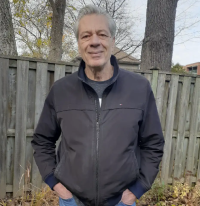
Salvatore Difalco is the author of five books, including the novel Mean Season (Anvil Press). His stories and poems have appeared in a number of print and online journals. He lives in Toronto, Canada.
.
.
Listen to Toots Thieleman (with the guitarist Philip Catherine) play his composition “Bluesette” [The Orchard]
.
.
___
.
.
Click here to help support the continuing publication of Jerry Jazz Musician, and to keep it ad and commercial-free (thank you!)
.
Click here to read “Not From Around Here,” Jeff Dingler’s winning story in the 66th Jerry Jazz Musician Short Fiction Contest
Click here to read more short fiction published on Jerry Jazz Musician
Click here to read The Sunday Poem
Click here for information about how to submit your poetry or short fiction
Click here for details about the upcoming 68th Jerry Jazz Musician Short Fiction Contest
Click here to subscribe to the Jerry Jazz Musician quarterly newsletter (it’s free)
.
.
.
___
.
.

Jerry Jazz Musician…human produced (and AI-free) since 1999
.
.
.
















Great story, but why are the winners only ever well-known authors? It’s rather unfair to new authors trying to get their works out there.
Jeffrey….I publish the best stories submitted, and of course MOST have been from those who are not “well-known” authors. I presume you read all 68 stories before posting this comment.