



.
.
New Short Fiction Award
Three times a year, we award a writer who submits, in our opinion, the best original, previously unpublished work.
Robert Glover of Louisville, Kentucky is the winner of the 43rd Jerry Jazz Musician New Short Fiction Award, announced and published for the first time on November 2, 2016.
.
.

Robert Glover
.
*
.
Robert Glover is a professional writer living in Louisville, Kentucky. Born and raised in New York, Robert traveled extensively before settling in Louisville with his wife and daughter. His humorous observations on life, family, and petty annoyances can be found at www.robglo.com.
.
.
_____
.
.
.
Pandora’s Sax
by
Robert Glover
.
_____
.
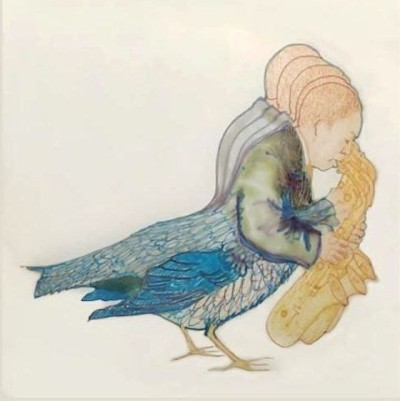
In the back of a closet, on top of a shelf, under two empty shoeboxes, and behind a small, carry-on bag lurked a humped, black, plastic case. Years of knocking about in the backs of vans and offstage in smoky clubs had etched lines into its surface. Every song had scuffed another memory: Dewey Redman’s “Imagination” or Clifford Brown’s “Night in Tunisia”. An accidental kick from a ska fan had left a dent even after the shell had popped back into place. For twenty years, it had remained closed, a relic of temptation, while inside a saxophone slumbered, waiting for its silent call to beckon again. It was patient. It had time.
Nathan Gold heard the call. It was a Saturday morning in mid-spring as he returned from racing his mountain bike along the Long Beach boardwalk. Pumping the pedals, he glided up the sidewalk to the front door of his house and hopped off. He wore a light jacket, and as he rummaged in its pockets for the garage door opener a random spark in his mind ignited a synapse, and the image of his trapped saxophone appeared before him. He couldn’t make out who was playing, but a long, sustained, single note emanated from it.
He waited for the garage door to rise. It wasn’t the first time he’d heard that note. It had spoken to him before, not with words but with a sweet, brassy whisper. The sound filled him with joy, but also made him forget the hours and minutes, the venue, the day of the week, and any responsibilities he may have had. Staggering in at sunup and snatching an hour’s nap before the alarm clock jolted him awake had ruined him for work. He couldn’t do it any longer. That was why he had stashed the sax away. He had banished it, exiled it to the farthest reaches of the closet, and he had no regrets.
He rolled the bicycle inside and leaned it against the wall. For twenty years, the saxophone had been easy to ignore. His son was a child. His wife stayed home with him. The sound had been soft and indistinct, rife with the ambiguous notes of the chromatic scale. It made no demands. The notes came and went without any discernible pattern. Had he answered the call, the journey would have required sacrifice and he would not commit to that. Father. Husband. Breadwinner. That was his journey. That was his sacrifice.
“How was your ride?” His wife Gabby sat at a small table in the kitchen noshing on carrots and celery, rabbit food.
“Outstanding.”
They kissed. “Sweaty,” she said. Her eyes dropped back to her women’s fitness magazine. “Nice out?”
“Windy. I’m gonna’ take a shower.” His eyes looked over her shoulder and lingered on a leotarded blond thrusting her pelvis.
Gabby pushed him away. “Get going.”
He sprang upstairs with a smile on his face, sax out of mind, another three letter word taking its place. Perhaps it was their similarity, the easy substitution of one vowel for another, that made him think about the sax again. Or was it the way both activities made him feel, how close the end result was? It didn’t matter. Half undressed, he heard the call again. This time, it was the children’s tune, “Twinkle, Twinkle Little Star”, the first song he’d learned. He froze, a pair of sweaty socks wet in his palm, and stole a memory moment of his first sax lesson. He was ten. His teacher, Howard Antman, had taught him the C Major scale and had him use it right away. Mr. Antman was a small man, and when he played the strap tugged his already slight frame down to Nate’s eye level. He wailed that kiddie tune. Nate was hooked.
The sax was only a few steps away. He just had to walk into the closet and pull it down off the shelf. What was the worst that could happen? He didn’t have to play. He just wanted a peek. Was it possible to look at the full-figured alto sax and not press the mouthpiece to his lips? Touch the shining surface without fingering its keys? Would the ghosts of excess and self-indulgence fly out shrieking instead? Would they soar into his skull and take possession of his soul as they had in the past? He was a different person, wasn’t he? He shook himself. He was cold. He needed a hot shower.
The next day, and the day and week after that, he pushed the sax out of his mind. Long hours at the bank, where ones and zeros mutated magically into dollar signs on a computer screen, wiped any thoughts of treble clefs and quarter notes from his mind. In the past, he had considered the binary processes that took place off-screen as a kind of musical score, but time and distance had stilled that stream. They were what they were: bits, bytes, and money. This was the language of men, not heaven. In heaven, they made music. He was sure of that.
He dozed most of his commute, soaking in the sports pages. At home he ate late, drank a whiskey, and went to bed when his job allowed. More often than he would have liked, he had to forego sleep to participate in virtual meetings with one of his Japanese clients, meetings that could drag on for hours and leave him and his team with lists of urgent items to plow through.
It was on one of these calls that his mind wandered again. Someone was rambling on about market fluctuations when he found himself back in the pit orchestra blowing “Let me Entertain You” in his high school’s production of Gypsy. Making sure he’d muted his phone, he drummed the rhythm with his pencil on the surface of the desk, his laptop, the lamp, anything that got in his way. One a.m. and he could count on a few hours of sleep at most. Twenty years earlier, the band would have just tuned up and begun their first number. It had conditioned him for this. Pro athletes had their training regimen and he had his. Maybe things hadn’t changed so much. After five minutes of using his metallic lampshade as a crash cymbal and his desk pad as a tom-tom, in walked his wife.
“Hey, Buddy Rich, I’m trying to sleep.”
The crescendo passed. He cringed. “Sorry.”
“Almost done?”
Voices in the background rose and fell according to the natural dynamics of conversation. They weren’t halfway through the agenda. “Not even close.”
“All right. I’m closing the door.”
“Sorry.”
“Just close the door next time. Good night.”
It was the dregs of night when he slogged upstairs. He’d drunk a double Jameson’s during the meeting, and his body wobbled from side to side on the stairs, brushing against the walls as he ascended. He’d had a lot of practice with bumper walls over the years. Plenty of times, vans had dumped him on the lawn, sax case in hand, and he’d stumbled up the same stairs, banging off one side then the other, and falling into bed. One night, after a Grateful Dead concert, it took him twenty minutes to crawl up the steps. The Dead had opened with “Cold Rain and Snow”, and Jerry had pried open his skull, dipped the neck of his guitar inside, and stirred the contents into molten lava. That was a night straight out of Sodom and Gomorrah in the third millennium B.C. Outstanding. Damn, did he miss that. When had it become all about money?
This was his witching hour, when forces trapped inside him for twenty years scratched at his brain in sharp, staccato bursts. Scotch coaxed these primal urges up from dark corners of his mind, where dim spotlights lit dingy clubs and soft streetlights lit the way home for drunken travelers. He could barely make out the shapes from his past now, but he knew they were having a blast, making music, drinking, getting high. Why wasn’t he with them? Instead of flopping down beside his sleeping wife, he stood by the bed. The closet door led to the River Acheron. Would he cross it?
Snap out of it, dude! He shook himself. You’ve got a wife and son to support! Manny’d gone off to college a month ago, but his tuition hung over his head. The kid was his joy, his buddy, but he had to suck it up for four more years. The pattern of Gabby’s breathing changed, shifted to another key, a parallel minor snore. It would make a great rhythm track. He laughed louder than he had wanted, and Gabby shifted positions. Go to bed, Nate.
Another week passed and he was antsier than usual, his finger-tapping and pencil-drumming prompting annoyed glances from coworkers and exasperated rebukes from his wife. Still, he did not take the saxophone down. For some strange reason, it had gone silent, almost as though it knew that it had accomplished its task and it was only a matter of time before he yielded to its tenor call. He dressed in the morning under the shelf that shielded the sax and heard nothing. Responsibility lashed him to the mast of job and family, and he enjoyed their safe harbors.
One Friday, Manny came home from college for the first time. His school was only an hour away, and he’d called every week, but that didn’t matter. Gabby was suffering from Manny withdrawal symptoms, and Nate missed the steady rhythm track his teenage son provided as he roamed the house, thumping up and down stairs, slamming doors, blaring music, and shouting over video games with his friends. Teenage noise is noise amplified, run through distortion, and blasted out of a Marshall tube stack with a high dose of reverb. To go from that constant assault on the senses to near silence was a drastic change. Maybe that was why he couldn’t stop fidgeting, why he was driving his wife and coworkers crazy with his incessant finger-tapping.
He thought about that as the three of them sat at a table at Da Ugo’s, their favorite Italian restaurant, waiting for an order of baked clams to arrive. Gabby cocked her head towards him and rolled her eyes. “Nate, stop. Please.”
He checked his alternating flams and double diddles, but wouldn’t return her look. “Where are those baked clams?” he asked and tossed back half a glass of Chianti. Quick change of subject: “So, Manny, did you meet any nubile and nimble young coeds? Luscious and lovely? Delightful and delicious? Agile and-”
“That’s enough adjectives, Nate.” She was smiling again. His ability to divert her attention and make her laugh had rescued him more times than he could count. “What your father’s trying to ask is ‘did you meet any nice girls?’”
And the conversational rondo circled round and round, school and girls, friends and girls, sports and girls. Nate relaxed. As long as Manny had a girl, he’d be fine. Had he been worried? He thought about it. Their only child no longer lived under their roof. Sure, he’d come home for breaks. He might even come back for a short time after graduation. But too soon he’d be on his own, gone for good. It was sad, but he also felt a mild sense of relief. All was well. Another slug of Chianti followed. This was as it should be. And with that realization, he heard the call again, loud and sustained, the end of a long solo, and with it a flurry of sensual imagery: a boat rocking on cool seas, keeping time with slapping waves; an airy mountain meadow where wild, trumpet-shaped flowers blew jazzy pollen out into symphonic scents; the boardwalk where wind and waves provided a backing track to his long distance bike rides; and a stage – a cramped, crowded, overheated stage where he sweated under bright lights and performed jazz alchemy, transforming his dull and noiseless breath into shiny, aural gold. He shivered. The clams arrived.
By meal’s end, Manny had devoured an order of clams, a salad, a plate of ravioli, two orders of Italian bread, a slice of cheesecake, and half his mother’s tiramisu. When they got home, he opened the closet and grabbed his Dad’s stash of chocolate Mallomars. Nate never saw them again. As he and Gabby drove home after dropping Manny off at school, he thought how the entire weekend amounted to one extended meal, a hundred course dinner.
“What’s so funny?”
He didn’t realize he’d been chuckling out loud. “I was just thinking about how much he ate. He was like a three-headed, bottomless pit.”
“He stopped twice to call that girl he’s been seeing.”
“He’s a fine frigate of a man, a chip off the old block. He’s got his priorities in order.”
“I’m just glad he’s okay.”
“Don’t worry, he’s fine.”
“I know,” she said. After a few highway exits passed, she looked out the window and said, “So go play.”
“What?”
“I was worried about him, but he’s fine, so go play.”
“What are you talking about?”
“The sax,” she said. “It’s fine.”
She’d caught him off guard. In all their time together, it was rare she mention his music. She had never asked him to stop playing, would never have asked, but he knew how relieved she had been when he’d stopped. Their relationship had transitioned from staccato to legato overnight. “The sax?”
“Stop pretending. Take it down again. Go play. Enjoy yourself. It’s fine.”
Another exit passed. “You sure?”
“Yes.”
He smiled and turned onto the causeway that led home. “Outstanding.”
Back at the house, he took the steps two at a time and swung the closet door open. He shoved the carry-on to the side and took the case down off the shelf, knocking shoeboxes onto the floor. Was he ready? In the past, blowing his horn had been an all or nothing proposition. He placed the case on the bed and flipped the latches. Did it have to be? He popped open the case.
The sax was there, untarnished by its twenty year imprisonment. He inspected it. Physically, it looked fine, but something was missing. He had expected all his personal demons to fly out and possess him, but that hadn’t happened. He felt the same. Confused, he took the sax out and held it, fingering its keys, examining its rods. Something had changed, but what? He glanced back at the empty case. Relief overwhelmed him. He smiled. Elpis, the spirit of hope, remained. Their eyes met, and as they did she flew up and out and circled above him. And then he knew. Everything would be fine.
.
.
_______
.
.
















Good story. I loved the relationship between the sax player and his wife, how easily they could read each other’s minds after being together such a long time.
Thanks, Elizabeth!
Nice job, Robert! Good contemporary piece. I usually go for old school, but was really drawn into the story…put me right there in the room while you were jonesing for your old horn. Cool, light and modern with a jazzy throwback feel. Just discovered this wonderful site and have already fell
in love with it. And am inspired!
Good story. I loved the relationship between the sax player and his wife, how easily they could read each other’s minds after being together such a long time.
Thanks, Elizabeth!