



“Louisiana Pearl,” a short story by Bokerah Brumley, was a finalist in our recently concluded 42nd Short Fiction Contest. It is published with the permission of the author.
Louisiana Pearl
by Bokerah Brumley
_____
April 1939
Near Natchitoches, Louisiana
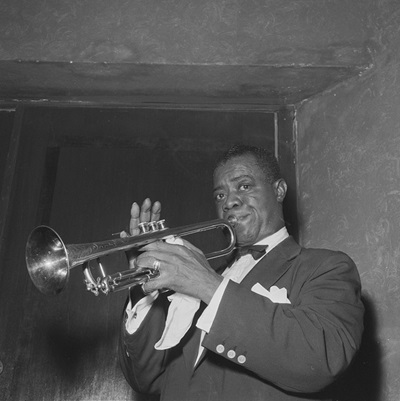
The faraway trumpet’s trill drifted into the home we shared. The tune stirred the heavy air. It should have been spring weather, but a heatwave had taken over our parish. It made the air heavy and made us languid during the days.
Mama hummed along with the hand-me-down song while she worked, stirring the wash or cooking supper or mixing herbs. Her mama taught her to hear it, same as she taught me. It was as constant as the wind.
Mama’s gray strands peeked from beneath a dark blue kerchief, the majority braided then twirled in an age-thinned bun. She didn’t know how old she was. Best she could figure, she was sixty-three, but still got around like she was fifty. I had been with Mama for seventeen years. I was a baby when she found me.
Today, she finger-fussed over herbs in the storeroom adjacent to the fragrant drying room while I separated our latest harvest from the “witch-garden” out back.
The towners liked to call us witches, but mostly we just were smarter with plants than them. I never met the heavenly trumpeter that always played, so maybe witching came into it when we weren’t looking.
Most days, I didn’t feel like a witch. Or if I did, maybe witching wasn’t so bad a thing.
With a practiced hand, I wrapped the ends of three sprigs of lavender in twine, wrapping the other end around a nail in the rough-hewn rafter above my head. A stray curl slipped from under my cap, dangling until I absently pushed it back into place. I wiped my hands down my apron. “What should we harvest next?”
Mama tapped her long mahogany finger against her lip, her dark eyes dancing. “I’ve been listening. War will be along. Upset among us.” She paused, tilting her head. “Valerian. Days are coming that they’ll need it when they start sending the boys home in pine boxes. You’ll need it, too, Pearl. It’ll help you sleep nights when the shadows press in.”
I scowled when she said that. Mama always knew what was coming by listening to crooning brass, but there wasn’t a reason for me to need Valerian. That was for troubled souls.
She pushed open the wrought-iron gate that covered the back door and kept the chickens out, but let the breeze through. She called over her shoulder, “Someday when your girl comes along, you teach her to hear your song just like I taught you. Then she’ll be ready to hear her own when you find me in the after. There’s been two of us since Eden. When my name’s called, your girl will be along before too much time marches by. That’s our way. There’s always been two humming the same notes.”
I finished the lavender sprigs while she recited uses for herbs. She spoke late into the night, hanging harvested herbs, moving from room to room, almost as though she was headed away on a trip.
I listened to all the truths I knew in her stories of healings, what works when and what doesn’t, and what to do for those that couldn’t be brought to right. All the while, Mama’s song played in the almost-summer air.
September 1939
The black-frocked, high-collared preacher was the only other person standing with me beside the freshly turned soil. I was hot in the long-sleeved dress. The black buttons down the front were the only design adorning the dark fabric. A hat covered the top of my head with wings that stopped just above my ears. Black netting covered my face and a simple handbag hung from my arm.
I was formal from head to toe and uncomfortable all over.
My gloved hands were clasped in front of me. The low heels of my hasty-bought lace-up Oxfords were sunk deep into the soft ground. Nearby, the Lincoln-Zephyr with swooping curves sat parked beneath a large sugarplum and next to the stand of yet fruitless possomhaw trees.
If only I could be the figure perched on the hood. If I was always racing forward, I would never have time for funerals. Mama’s song was a whisper today and that made me feel more alone than I felt last night, sleeping with her body in the house.
I said, “No one else will be here, sir. We can go on now.” I needed to get on with things. Waiting wasn’t helping.
Preacher shook his head. “We’ll wait a bit longah, Pearl. I’m in no hurry.”
I turned from the forlorn scene. I hid behind closed eyelids, focused on the slight breath of wind stirring the tops of the sassafras and sugarplum trees. I whispered, “I can’t hear so well today, Mama.”
I opened my eyes enough to send the dark away and consider the sassafras tree oil, thinking of the coming months and the catarrh that afflicted many. I would harvest that next. Better to be useful than to be lazy.
“It’s a sad thing, Pearl. Your mother helped so many. They cannot take time to pay respect to an incredible woman.”
“I expected it. They’ll come around when they’re sick and say the words they didn’t have time to say today. We kept them healthy, and then gave them time to be too busy for us.” They called us witches when they thought we couldn’t hear, but that didn’t stop them from coming anyway.
Preacher recited all the words meant for comfort when a left-behind life has been altered by death. He spoke kind words about Mama, sprinkled with words of hope for me. The air stirred, and I strained toward a new melody growing louder with each breath in the trees.
I could hear a Dixieland rendition of When the Saints Go Marching In. It was a new melody over the old one, but how it sounded like home. I leaned toward it.
A puff of wind caressed my face.
I heard Mama’s sigh as clear as anything, heard her humming her song as she drew away from us. She took her tune with her, but left the Dixieland behind. The brassy tones swelled.
Preacher walked me to my car. He shook my hand before I pulled the old door open and reached into the front seat. I turned to hand him the basket full of dried leaves and powdered roots. I stared up into the dark eyes of the tall man. “Here, here’s something’ to take home …”
I cringed at my desperate tone.
Preacher pushed the basket back to me. “Now, Pearl, no, your Mama helped us often enough. I find we owe you on the tally sheet.”
I set my face. I wouldn’t be swayed. I had to do this. I stamped my foot as one tear trailed down my cheek. “Now, Preacher, Mama would want this. This basket is full of gratefulness. I know your missus can use it. You have chil’ren.” I pushed it farther into his large hands, calloused from the hard work to overcome the lack in a pastor’s salary.
Preacher peered into my face. I did not turn away, but allowed him to study the anguish I knew was in my eyes. His shoulders sank.
“I accept this only for Opal. I know she’d be handing it to me if she was here in your place. Pearl …” His shoulders drooped farther before straightening. He pushed the basket over his forearm. “Thank you.”
I nodded once. “And thank you, Preacher – for beautiful words and being here.” I slipped behind the large steering wheel and slammed the door, turning the key of the old V-12 coupe.
When I climbed into my bed that night, I wrestled with wakefulness. I was alone. No part of Mama was left. Not her shell and not her song. The house was empty and I was hearing a new melody.
I tossed and turned. The pillow was too hot, the bed covers were too tight, and the normally smooth night clothes felt rough all over. Finally, my discomfort drove me to stand by the window, watching the night outside.
A full moon lit our homestead. The tall trees cast unmoving shadows surrounded by shrubby shadows at their feet. “Them shadows are giants to watch over us,” Mama always said. “When the wind blows hard enough to make the shadowy arms shake, you can know we’re safe.” The darkened arms held so still.
I studied Mama’s empty bed. It was the way Mama had left it, the 100-year-old cover draped over the ticking, ornately embroidered pillowcases gifted by a thankful woman past.
I crossed the room. At the bedside, I reached for the low-burning lamp and raised the wick to brighten the room. I eased down onto the edge of Mama’s bed, recalling her face looking so worn that last morning, but she still made the bed, shooing my hands away.
Reverently, I pulled the covers back. I missed her. She had been my home.
I tucked myself into the familiar smell. My head sank deep into the down pillow. I left the lamp burning bright, rolling away to dull the bright glare. I slid my hand under the pillow to settle it between my shoulder and my cheek. My hand slipped easily around … something.
I frowned and pulled it out.
An old, leather bound journal with a small brass pendant on the cover. The pendant read “Our History.” I sat up, bringing the large volume across my lap. The book was brittle with age, and I opened it carefully.
Stories were scrawled in penmanship that changed from page to page. I didn’t recognize the names, but every telling shared another detail. Each entry was written by a mama raising a daughter not borne from her own womb. The circumstances varied as much as the pen marks that told them.
Hours later, midway through the book, I recognized one name from my mother’s own stories.
Ruby.
The tale following was of when Ruby had found Opal. As I turned the page, I knew I would find my own name scrawled in Mama’s heavy handwriting. My eyes moved to the top of the page, and my throat dried.
“Pearl.” It was double underlined. It began …
“Pearl has been a blessing to me. She’s taken to the herbal ways better than I thought she might when she was a young’un. I have loved her as much as any I could have birthed from my own womb. She came along not long after my own mama Ruby died. Ruby told me my story ‘fore she died. I never did tell Pearl. Time never seemed right. She’ll be sorely surprised when she finds hers in here. Pearl, I love you. I am proud of you. It’s easier for me to write, plainer than speaking. And I’ll be as plain as I can about your coming.
“It was a windy night. The black sky was kicking up such a fuss and ruckus. I had a knock on my door late in the night. A man stood there, holding up a woman swollen with child. She was laboring, already screaming. When we got her to my bed, she was clenching her teeth, shivering. I sent the mister to boil water for teas and compresses. I could see that woman’s face turning pale. I could see your fuzzy black hair, too.
“You were coming.
“Your real mama’s struggle went on and on. So many times, I thought she wasn’t going to make it to seeing you here. But she did, and you came a-screaming into the world, mad as a hornet to be here.
“I wrapped you up, crying with the happiness and the relief from worry, almost as much as if I’d labored you forth myself. I laid you in your mama’s arms and she smiled, looking just like an angel. She looked up at her man and told him what a Pearl you were. She settled down in the bed and he lay down there with her. They were happy, so I let ‘em be.
“Your mama was still pale, but I thought it would pass so I went on to sleep. When the morning came, I woke up to your screaming and your mama had passed. Your daddy was gone. I spent three years searching for your kin. Nobody knew where your folks came from and nobody showed up to claim you.
“I raised you. And when we moved north from New Orleans, why, you were mine. You called me Mama and you were my Pearl. And I knew you were my story for these pages. And you were made to care for people, same as me, same as my mama and grandmamma–”
I turned the page, but only blank pages followed.
I closed the book. I had always wondered, but never asked. I stared at the slatted ceiling and I realized that it had always been all right that I did not know. And knowing, things were still all right, but different.
I glanced out the window toward the sun throwing beams over the tops of the trees. I blew out my lamp and fell asleep in Mama’s bed with my hand resting over the history of our kind.
Late September 1940
New Orleans
This city was something else.
I pursed my lips remembering Mama and her long-time love of this place. I had been in the city a whole year, but still no baby girl.
Maybe I was the last … It was an awful prospect – to be the last of a thing the world needed.
A cough caught my attention, low and in the gutter. I followed the sound down the alley. An old man sat huddled behind the refuse from stores and restaurants.
“Sir?” I waited for him to acknowledge me. When his dull eyes recognized my shape, he opened his mouth to speak, but was taken in a coughing fit.
I pulled a small glass bottle from my pocket and pressed it into the man’s hand. “Here, it’ll soothe your cough.”
He looked up at me and nodded, mumbling something under his breath. It sounded like “thank you,” but I wasn’t sure. Then he added, clearer this time, “I left my girl, she’d be ‘bout your age … Pretty baby … Mama died.”
I patted the hand clutching the bottle. “Can I take you somewhere? Help you?”
The man shook his head, “No, no, this is my alley. There’s a mission down at the end. I’ll keep this alley. Can’t leave or someone else will move in.” He held up the brown bottle. “This is enough.”
“Take a swallow when you start a coughing fit.” I studied the weathered face. There was something familiar about it. I stood, but my foot slipped on a bit of food sending my shoulder into a stack of empty crates.
A small cry filled the air.
I gasped. “Did you hear that?” I moved trash and bits of rotten food.
The old man lifted the tincture to his lips. After a sip, he sputtered, “Coulda warned me it would burn.” He cleared his throat. “That baby’s been there since yesterday. I don’t think the sisters realize it’s there. They ain’t been out so I could tell ‘em. The brothel gals leave their babies here. That one ain’t wanted.”
I bit my bottom lip, fighting a smile and tears. “Oh, but she is.” I pulled the babe into my lap.
The curly gray eyebrows pulled together in a scowl. “How you know it’s a girl without checking?”
“Oh, I know, and I have been waiting for her.” I smiled into the cherub face. She had bright blue eyes. I breathed, “Why, hello, Sapphire,” and gently rocked, softly singing our song.
_____

Bokerah Brumley is a speculative fiction writer and the author of three urban fantasy novellas, all scheduled for publication in 2016. She lives with her husband and children in West Texas, where she enters writing contests and enjoys Twitter pitch events and social media, in general. She also serves as the Publicity Officer for the Cisco Writers Club.















A beautiful story!
Thank you (:
A beautiful story!
Thank you (: