
John Goodman, author of Charles Mingus Speaks

September 6th, 2013

JJM  He was pretty pessimistic about jazz surviving and at one time told you, “I think jazz is over man,” and blamed everyone for jazz’s decline. You wrote, “On different occasions we talked about how the music business works, and Mingus of course had strong opinions on that subject. In 1972, he said on more than one occasion that the record companies had promoted rock and roll and R&B music to such an extent that they drove jazz out. In 1974, he seemed to be changing his tune, saying that the problem really lay with the radio outlets, the media in general, finally “society.” This lack of fairness came up quite a bit during your interviews…

JG  Well, you could call it lack of fairness, but you could also say that this may have been part of Mingus’s paranoia, which he possessed in spades. On the other hand, concerning the actual tenor of his remarks here, I think he’s right. There were multiple causes for the fact that jazz was in decline, and the one thing that Mingus and most jazz musicians didn’t address is the fact that the music got less and less accessible to people – it got more arcane and introverted, what some people would call more of an “art music.” But I think Mingus was right about how the recording companies and commercial and media interests pushed rock and roll and more popular music, though there’s a whole lot more to it than that.

JJM  He had a real concern for where the music was going artistically, particularly the avant-garde, which he thought was phony and inauthentic – a path he felt a real musician wouldn’t pursue. It is ironic that many critics and musicians ultimately associated him with the avant-garde, which angered him…

JG   He hated the term “avant-garde” and, as you can see in the book, I didn’t have much use for it either. But yes, Mingus was not really part of that free-jazz movement, although he is, in a way, an ancestor of it. His early music and some of the stuff that he did in the Jazz Workshop were the foundations for a lot of what happened later with free jazz. But I think Mingus felt that those early attempts to play true “avant-garde” music were born out of real study and serious attempts to understand modern classical music and bring some of that to jazz. But if I can interpret for him, the way it grew into a lot of shrieking and squawking became, in his eyes, sort of perverted.

JJM   Concerning how a contemporary musician viewed his work as avant-garde, you wrote, “Salim Washington, jazz musician, teacher, and critic, wrote an interesting piece proposing that Mingus represented the true avant-garde spirit in jazz (as opposed to some of the noisy revolutionaries of the ’60s), that Mingus synthesized tradition and ‘self-expression’ functionally and more musically than anyone else in jazz has done.” Another writer, Alex Stewart, wrote concerning this, “Many of the techniques championed by Mingus – additive composition or layering, collective improvisation, lack of concern with playability, rich unisons – form the core of the experimental or avant-garde composer. Although Mingus often disparaged the avant-garde movement, many avant-garde musicians continue to cite Mingus as a prime influence.”

JG  Yes. Alex is a friend of mine and I think he’s absolutely right to point that out. The fact is that Mingus created a very different kind of vocabulary and music from what anybody else was playing, and certainly from what followed from the free-jazz musicians. He felt he was being tarred with a brush that he didn’t approve of.

JJM  The “brush” he wanted to be associated with didn’t, as he would say, “throw paint,” meaning he wasn’t the musical equivalent of an avant-garde painter like Jackson Pollock.

JG  Yes, and our discussion about this went back and forth, if I remember right, with painting metaphors and led me to writing my essay in the book about Mingus and the avant-garde and some of the artistic controversy that went on during the 50’s and 60’s in particular. Mingus really was influenced by all kinds of artistic endeavors. He wrote for dance, and he wrote a very good piece for the Joffrey Ballet. He loved painting and was very much into poetry and all of the arts.

JJM  Many of those you interviewed – among them the jazz journalist Dan Morgenstern, band member Bobby Jones, his wife Sue, and Village Vanguard owner Max Gordon – talked about Mingus’s legendary temper and often explained it as part of his creative process. Was his temperament and how he treated people – his outbursts are legendary – ever a subject of conversation?

JG  No, not really, and my interpretation of his behavior is that he was a perfectionist, and he was really driven to get things right when the music was playing, whether it was in a big band or a small band, and if it didn’t sound right or somebody blew a wrong note or a clinker, he would stop the music and say, “Okay. Stop. Hold it. Let’s start over and we’re going to play it this way.” Then they’d continue. That was what I would call the “Jazz Workshop style,” and he carried that over even to his later years when he was giving concerts, and a lot of people were a little bit upset about that. George Wein [Newport Jazz Festival founder] talks about that in the book, and I think it was a real problem for Mingus. His audiences had sort of mixed reactions to that; some of them really didn’t like the interruptions and some tolerated them, but that was part of his urge to make things right at all costs.

JJM  Sure, but his temper is well documented. He slugged both Jimmy Knepper and Jackie McLean in the mouth – guys who used their lips for a living – and threw the door down the stairs of the Village Vanguard…

JG  Well, those are really inexcusable things to do. Mingus on several occasions apologized for his behavior after the fact, for whatever that’s worth, and he did certainly have a terrible temper at times. I never really saw that in the time that I spent with him, and I think most of those events took place in the 50’s and maybe early 60’s when he was gaining popularity and this drive for perfection just overcame everything, and if things didn’t go right he just flew off the handle and either hit somebody or treated them badly.  He was a volatile guy, what can I say?

JJM Concerning women, you wrote “Women were tools to use for pleasure and profit; they were also objects of worship and distraction from his real life – creating music.” Sex often came up during the interviews, and you wrote that “everything about Mingus’s upbringing created and reinforced his macho attitudes about sex and women. His feelings about women also related to his thoughts about race, protest, and money….He was a consummate romantic, a melodramatic one at that, who had to have women in his life constantly, sex twice a day (he said), and total openness and honesty from a partner.” Sex was an important topic for him…

JG  Well, his father was apparently a bear of a man and really difficult – he used to beat him and was an authoritarian, tough man – and I think a lot of Mingus’s behavior stems from modeling what he learned from his father. Mingus’s early association with jazz people was also part of an era in which, as some critics have commented, jazz was a very masculine, macho art, so I think his attitude towards women, at least in part, grew out of that time and experience.

But Mingus loved women. He would rather talk about women and sex than almost anything, including music. I don’t know whether that was the Playboy connection or if it was really just Mingus being Mingus, but he had some great stories. The first time I heard his story with Dannie Richmond in Tijuana I just fell on the floor. I thought it was great!

JJM  This is his story about all the women that they partied with in Tijuana?

JG  Yes, and going down in the limousine and putting on the act that Dannie was an African prince.


JJM  In addition to Mingus, you spoke to several prominent people. You mentioned the only person you regret not talking to was, in fact, Dannie Richmond…

JG  Yes, I really should have talked to Dannie, who knew Mingus as well as anybody in the world, but I never got to him for one reason or another. I really regret that because he would have had other insights and perhaps stories about Mingus just because they were so very close. The only other person I wish I’d been able to talk to was Eric Dolphy. But he died before my time with Mingus.

JJM  Is there a particularly memorable moment from your interviews that stands out for you?

JG  Gee, there are so many. We had an incredible couple of discussions, one in particular in a bar in the Lower East Side. There was enormous noise in the background and a lot of music playing. We were all drinking, and Mingus was really rolling that night – he would bounce from one subject to the next. Much of his talk that night had to do with sex, it was a real Mingus performance, and while I don’t think he meant it that way, that’s the way it turned out. In that sense, it was sort of like a Mingus solo, where you have some wonderful element developing, and then he’d hop to something else, and then he comes back to theme one. It bounced around like that but it still had coherence, and a few of the interviews went like that. Some of them were choppier than others, but that was a good one.

JJM  One of the discussions that stands out for me was when he talks about having a dispute with a dentist over the WaterPik, which he claimed to have invented, and believes this dentist stole his idea. It certainly displays his paranoia, and I am not certain he was being serious, but I couldn’t help but find it amusing…

JG  No, he was very serious, as I remember, and he really thought that they had stolen his idea from him – which has got to be nonsense, but he was pretty upset about it. Then he said, “Ah what the hell.” His attitude was, “Oh, what the hell, I’ll do it again,” or “I’ll invent something else” or “I’ll make another million dollars.”

JJM  His paranoia would show up at other times as well – for instance, he had a conspiracy theory about the Watts riots, saying that “…the government made it look like there was some black race riots when there wasn’t any at all.”

JG Yes, that’s right.

JJM Your book is hardly a typical jazz history, John, and I found it to be refreshing, and an entertaining and enlightening read which the reader can gain a lot from…Is there anything that this book reveals about Mingus that has never been revealed before?

JG  I don’t have a catalog of examples for you, but there is a lot of stuff that people haven’t heard before – that WaterPik story is just one example, and certainly his opinions on different jazz musicians, which were very straightforward and obviously not always positive. From what I have read of Mingus, he didn’t really talk much about other musicians. So, yes, there is a lot in my book that has not been published or known about Mingus before.

______________

“The thing about Charlie is he basically has more love than hate.  He may spew hate, but hate is bullshit with him.  Charlie is not antiwhite.  If he comes on in a very black way, chances are he’s doing it for a very particular purpose.  He makes good copy or it’s very effective – but he is not a hateful person, and I know that for sure.  In fact, the beauty about Charlie is that he responds to love, and that’s a very important thing in the man.”

– George Wein

An excerpt from Tom Reichman’s 1968 documentary, Mingus: Charlie Mingus


**************************************************

About John Goodman

John F. Goodman is a writer, former music critic, professor and media consultant based in Oaxaca, Mexico

_____

JJM  Who was your childhood hero?

JG  I don’t know how far childhood extends, but I used to read a lot of comic books and, while I don’t know if I would call him a hero, I admired Batman. He had this hidden identity, of course, but was a very flamboyant character nevertheless, and I guess that appealed to me. That, and the fact that he spent his family’s wealth on fighting crime.



Share this:

3 comments on “John Goodman, author of Charles Mingus Speaks”

  1. According to Mingus himself in Beneath The Underground, my uncle Joe Comfort from Watts, who played with Nelson Riddle, Sinatra, Nat King Cole, Ella, etc., taught Mingus how to play bass. It’s a shame this legacy which Mingus documents is never mentioned.

    1. Joe Comfort is mentioned in the book Beneath The Underdog by Charles Mingus.
      Mingus makes reference to learning bass from Joe Comfort in Watts, CA.

      John H. High Jr.
      (grand nephew of Joe Comfort)

  2. According to Mingus himself in Beneath The Underground, my uncle Joe Comfort from Watts, who played with Nelson Riddle, Sinatra, Nat King Cole, Ella, etc., taught Mingus how to play bass. It’s a shame this legacy which Mingus documents is never mentioned.

Comment on this article:

Your email address will not be published. Required fields are marked *

Site Archive

Your Support is Appreciated

Jerry Jazz Musician has been commercial-free since its inception in 1999. Your generous donation helps it remain that way. Thanks very much for your kind consideration.

Click here to read about plans for the future of Jerry Jazz Musician.

In this Issue

A collection of poetic responses to the events of 2025...Forty poets describe their experiences with the tumultuous events of 2025, resulting in a remarkable collection of work made up of writers who may differ on what inspired them to participate, but who universally share a desire for their voice to be heard amid a changing America.

Poetry

photo by William Gottlieb/design by Rhonda R. Dorsett
21 jazz poems on the 21st of November, 2025...An ongoing series designed to share the quality of jazz poetry continuously submitted to Jerry Jazz Musician. This edition features poems communicating the emotional appeal of jazz music, as well as nods to the likes of Miles Davis, Regina Carter, Maynard Ferguson, Ornette Coleman, and Max Roach.

The Sunday Poem

Wojciech Soporek, CC BY 3.0 , via Wikimedia Commons

”Pyramids” by John Menaghan

The Sunday Poem is published weekly, and strives to include the poet reading their work...

John Menaghan reads his poem at its conclusion


Click here to read previous editions of The Sunday Poem

Feature

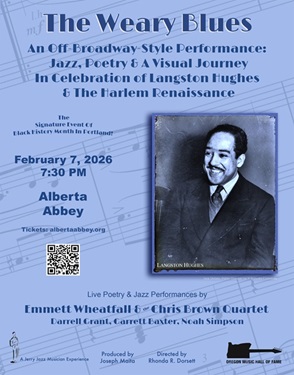
Press Release for “The Weary Blues: Celebrating The Harlem Renaissance and Langston Hughes...I recently wrote about a new endeavor of mine – producing a show in Portland celebrating the poetry of Langston Hughes and the Harlem Renaissance. What follows is the complete press release for the February 7 performance at the Alberta Abbey in Portland, Oregon.

Short Fiction

photo via Freerange/CCO
Short Fiction Contest-winning story #70 – “The Sound of Becoming,” by J.C. Michaels...The story explores the inner life of a young Southeast Asian man as he navigates the tension between Eastern tradition and Western modernity.

Feature

Linnaea Mallette/publicdomainpictures.net
A 2026 jazz poetry calendar...12 individual poets contribute a jazz-themed poem dedicated to a particular month, resulting in a 2026 calendar of jazz poetry that winds through the year with a variety of poetic styles and voices who share their journeys with the music, tying it into the month they were tasked to interpret. Along the way you will encounter the likes of Sonny Stitt, Charles Mingus, Jaco Pastorius, Wynton Kelly, John Coltrane, and Nina Simone.

Poetry

“To Renee Nicole Good, a poet” – a poem by Erren Geraud Kelly

Poetry

photo via Shutterstock
“The Music of Lana’i Lookout” – a poem by Robert Alan Felt...The 17th anniversary of president-elect Barack Obama's scattering of his beloved grandmother's ashes is at the center of the poem, and serves as a reminder that moral personal character of leadership is what makes a country great.

Poetry

Poems on Charlie “Bird” Parker (inspired by a painting by Al Summ) – an ekphrastic poetry collection...A collection of 25 poems inspired by the painting of Charlie Parker by the artist Al Summ.

Community

Letter from the Editor: “A Jerry Jazz Musician Experience”...Sharing a bit of what I’ve been up to of late, and make you aware of a new endeavor of mine…

Poetry

National Archives of Norway, CC BY 4.0 , via Wikimedia Commons
“Wonderful World” – a poem by Dan Thompson

A Letter from the Publisher

The gate at Buchenwald. Photo by Rhonda R Dorsett
War. Remembrance. Walls.
The High Price of Authoritarianism– by editor/publisher Joe Maita
...An essay inspired by my recent experiences witnessing the ceremonies commemorating the 80th anniversary of liberation of several World War II concentration camps in Germany.

Poetry

Wikimedia Commons
“Dorothy Parker, an Icon of the Jazz Age” – a poem by Jane McCarthy

Short Fiction

photo via publicdomainimages.net
“Welcome to America” – a short story by John Tures...The story – a short-listed entry in the recently concluded 70th Short Fiction Contest – is a combination of two true linked stories, both of which involved the same person. In one, he’s a witness to history. In the second, he’s an active participant in history, even becoming a hero. But one can’t understand the second until they know the first.

Feature

photo via Wikimedia Commons
Memorable Quotes – Lawrence Ferlinghetti, on a pitiable nation

Short Fiction

“Frusick: Making Sweeter Music” – a short story by J. W. Wood...In the 22nd century, a medical professional takes a bunch of kids to meet one of the last musicians left in England, and has an epiphany when he hears live music for the first time …

Community

Nominations for the Pushcart Prize L (50)...Announcing the six writers nominated for the Pushcart Prize v. L (50), whose work appeared on the web pages of Jerry Jazz Musician or within print anthologies I edited during 2025.

Interview

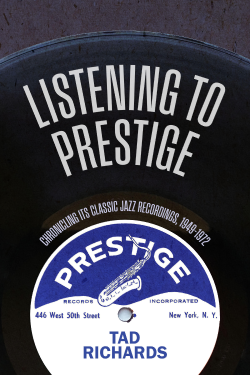
Interview with Tad Richards, author of Listening to Prestige: Chronicling its Classic Jazz Recordings, 1949 – 1972...Richards discusses his book – a long overdue history of Prestige Records that draws readers into stories involving its visionary founder Bob Weinstock, the classic recording sessions he assembled, and the brilliant jazz musicians whose work on Prestige helped shape the direction of post-war music.

Poetry

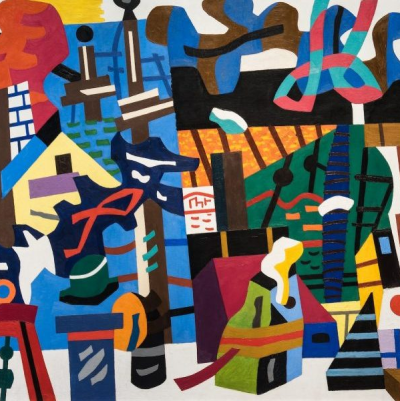
"Swing Landscape" by Stuart Davis
“Swing Landscape” – a poem by Kenneth Boyd....Kenneth Boyd writes poetry based on jazz paintings. “Swing Landscape” is written for a Stuart Davis painting of the same name.

Playlist

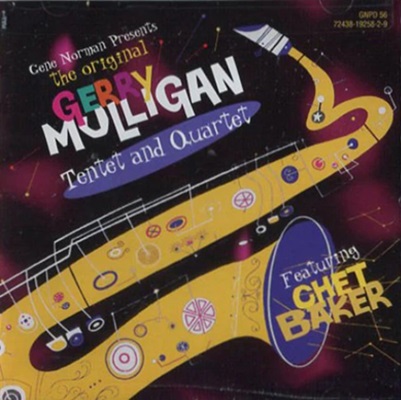
“A Perfect 10” – a playlist of tentets by Bob Hecht...Bob adds another instrument to his progressive playlist feature, and shares what a variety of arrangers have been able to accomplish writing for a tentet.

Jazz History Quiz

Jazz History Quiz #185...This posthumously-awarded Grammy winning musician/composer was the pianist and arranger for the vocal group The Hi-Lo’s (pictured) in the late 1950’s, and after working with Donald Byrd and Dizzy Gillespie became known for his Latin and bossa nova recordings in the 1960’s. He was also frequently cited by Herbie Hancock as a “major influence.” Who is he?

Poetry

photo via Wikimedia Commons
Jimi Hendrix - in four poems

Playlist

A sampling of jazz recordings by artists nominated for 2026 Grammy Awards – a playlist by Martin Mueller...A playlist of 14 songs by the likes of Samara Joy, Brad Mehldau, Dee Dee Bridgewater, Branford Marsalis, the Yellowjackets and other Grammy Award nominees, assembled by Martin Mueller, the former Dean of the New School of Jazz and Contemporary Music in New York.

Poetry

Ukberri.net/Uribe Kosta eta Erandioko agerkari digitala, CC BY 2.0, via Wikimedia Commons
In Memoriam: “Color Wheels” – a poem (for Jack DeJohnette) by Mary O’Melveny

Essay

“Escalator Over the Hill – Then and Now” – by Joel Lewis...Remembering the essential 1971 album by Carla Bley/Paul Haines, inspired by the writer’s experience attending the New School’s recent performance of it

Poetry

“Still Wild” – a collection of poems by Connie Johnson...Connie Johnson’s unique and warm vernacular is the framework in which she reminds readers of the foremost contributors of jazz music, while peeling back the layers on the lesser known and of those who find themselves engaged by it, and affected by it. I have proudly published Connie’s poems for over two years and felt the consistency and excellence of her work deserved this 15 poem showcase.

Feature

photo of Barry Harris by Mirko Caserta
“With Barry Harris at the 11th Street Bar” – a true jazz story by Henry Blanke...The writer - a lifelong admirer of the pianist Barry Harris - recalls a special experience he had with him in 2015

Interview

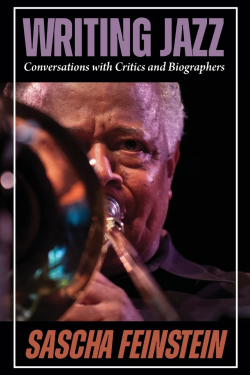
Interview with Sascha Feinstein, author of Writing Jazz: Conversations with Critics and Biographers...The collection of 14 interviews is an impressive and determined effort, one that contributes mightily to the deepening of our understanding for the music’s past impact, and fans optimism for more.
Feature

Trading Fours, with Douglas Cole, No. 27: “California Suite”...Trading Fours with Douglas Cole is an occasional series of the writer’s poetic interpretations of jazz recordings and film. This edition is dedicated to saxophone players and the mood scenes that instrument creates.

Essay

“J.A. Rogers’ ‘Jazz at Home’: A Centennial Reflection on Jazz Representation Through the Lens of Stormy Weather and Everyday Life – an essay by Jasmine M. Taylor...The writer opines that jazz continues to survive – 100 years after J.A. Rogers’ own essay that highlighted the artistic freedom of jazz – and has “become a fundamental core in American culture and modern Americanism; not solely because of its artistic craftsmanship, but because of the spirit that jazz music embodies.”

Community

photo of Dwike Mitchell/Willie Ruff via Bandcamp
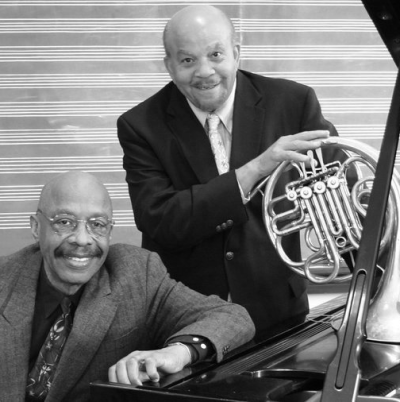
“Tell a Story: Mitchell and Ruff’s Army Service” – an essay by Dale Davis....The author writes about how Dwike Mitchell and Willie Ruff’s U.S. Army service helped them learn to understand the fusion of different musical influences that tell the story of jazz.

Feature

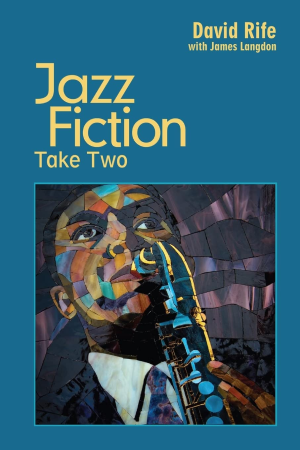
Excerpts from David Rife’s Jazz Fiction: Take Two– Vol. 16: Halloween on Mars? Or…speculative jazz fiction...A substantial number of novels and stories with jazz music as a component of the story have been published over the years, and the scholar David J. Rife has written short essay/reviews of them. In this 16th edition featuring excerpts from his outstanding literary resource, Rife writes about azz-inflected speculative fiction stories (sci-fi, fantasy and horror)

Poetry

“With Ease in Mind” – poems by Terrance Underwood...It’s no secret that I’m a fan of Terrance Underwood’s poetry. I am also quite jealous of his ease with words, and of his graceful way of living, which shows up in this collection of 12 poems.

Poetry

What is This Path – a collection of poems by Michael L. Newell...A contributor of significance to Jerry Jazz Musician, the poet Michael L. Newell shares poems he has written since being diagnosed with a concerning illness.

Art

photo by Giovanni Piesco
The Photographs of Giovanni Piesco: Art Farmer and Benny Golson...Beginning in 1990, the noted photographer Giovanni Piesco began taking backstage photographs of many of the great musicians who played in Amsterdam’s Bimhuis, that city’s main jazz venue which is considered one of the finest in the world. Jerry Jazz Musician will occasionally publish portraits of jazz musicians that Giovanni has taken over the years. This edition features the May 10, 1996 photos of the tenor saxophonist, composer and arranger Benny Golson, and the February 13, 1997 photos of trumpet and flugelhorn player Art Farmer.

Community

Community Bookshelf #5...“Community Bookshelf” is a twice-yearly space where writers who have been published on Jerry Jazz Musician can share news about their recently authored books and/or recordings. This edition includes information about books published within the last six months or so (March, 2025 – September, 2025)

Contributing Writers

Click the image to view the writers, poets and artists whose work has been published on Jerry Jazz Musician, and find links to their work

Coming Soon

Interview with John Gennari, author of The Jazz Barn:  Music Inn, the Berkshires, and the Place of Jazz in American Life; Also, a new Jazz History Quiz, and lots of short fiction; poetry; photography; interviews; playlists; and much more in the works...

Interview Archive

Ella Fitzgerald/IISG, CC BY-SA 2.0 , via Wikimedia Commons
Click to view the complete 25-year archive of Jerry Jazz Musician interviews, including those recently published with Judith Tick on Ella Fitzgerald (pictured),; Laura Flam and Emily Sieu Liebowitz on the Girl Groups of the 60's; Tad Richards on Small Group Swing; Stephanie Stein Crease on Chick Webb; Brent Hayes Edwards on Henry Threadgill; Richard Koloda on Albert Ayler; Glenn Mott on Stanley Crouch; Richard Carlin and Ken Bloom on Eubie Blake; Richard Brent Turner on jazz and Islam; Alyn Shipton on the art of jazz; Shawn Levy on the original queens of standup comedy; Travis Atria on the expatriate trumpeter Arthur Briggs; Kitt Shapiro on her life with her mother, Eartha Kitt; Will Friedwald on Nat King Cole; Wayne Enstice on the drummer Dottie Dodgion; the drummer Joe La Barbera on Bill Evans; Philip Clark on Dave Brubeck; Nicholas Buccola on James Baldwin and William F. Buckley; Ricky Riccardi on Louis Armstrong; Dan Morgenstern and Christian Sands on Erroll Garner; Maria Golia on Ornette Coleman.