



Great Encounters
Book excerpts that chronicle famous encounters among twentieth-century cultural icons
The romance of Bobby Darin and Sandra Dee
______________
Excerpted from
Roman Candle: The Life of Bobby Darin
by
David Evanier
______________________
AFTER CONCLUDING HIS TRIUMPHANT DEBUT at the Copa, Bobby was cast in his first major movie role in the summer of 1960. He was signed to appear with Rock Hudson, Gina Lollobrigida, and Sandra Dee in Come September. He would be playing the role of an American student vacationing in Rome who falls in love with another tourist, Sandra Dee.
When he arrived in Portofino, Bobby first became involved with an older woman: Sandra’s mother, Mary Douvan. “Sandy’s mother was even tinier than Sandy,” remembers actress Carol Lynley. “She was like a little Kewpie doll. Pretty, perky, very personable, very up, but tiny, like bell skirts and bright colors and a little Pomeranian.” Bobby soon shifted gears and infuriated Mary by courting her daughter.
In 1960 Sandra Dee was 16 and indisputably America’s teen sweetheart. Producer Ross Hunter brought her, originally a 13-year-old model in New York, to Hollywood for a screen test opposite John Saxon. She signed a movie contract with Universal in 1957, at the age of 14, and appeared in her first film, The Restless Years. She made a great success in such films as Imitation of Life, Gidget, A Summer Place, The Reluctant Debutante, Tammy Tell Me True, and Portrait in Black. She was all wide-eyed innocence: white bread and apple pie, a saucy virgin, demure and vivacious, and beautiful. She became the exemplfication of the pure American girl in the late ’50s and early ’60s, emerging as one of the biggest box-office attractions in the country. She was the only female actress to share every top-10 box-office poll with Doris Day and Elizabeth Taylor. She was surrounded by hairdressers, makeup men, publicity people, directors, reporters, and photographers.
“Bobby called me from Rome,” Dick Lord recalls, “and said, ‘You’re not going to believe this. I’m marrying Sandra Dee.’ When they came back to America, they got off the plane and the first place they came to was my apartment in Brooklyn. The neighbors were going nuts: ‘Sandra Dee’s in the laundry room!’ They were throwing themselves off balconies.
“She was a lovely, shy young girl who obviously had led a sheltered life, and this whole thing to her was brand new. She was used to going to the studio with her hairdresser and her mother, being pampered by the studio and groomed, and now she’s in the real world, in Brooklyn.”
“Oh yeah, America’s sweetheart,” Steve Blauner says. “It was that this ugly guy from the wrong side of the tracks — you know Bobby was always embarrassed by that sterotyped side of his Italian heritage, because he grew up seeing the guys in their underwear walking around. So he always went out there trying to prove how bright he was. You have to understand, Sandra Dee was when we really had movie stars. And this was — the prize. Sandra was the girl next door, this is what every girl wanted to be. Tammy, Bridget. Now I think Bobby felt he was in love with her, yeah, but look — he was dating the mother before Sandy.”
The first time Bobby and Sandra met each other, Bobby was standing on the shore at Portofino, wearing a canary yellow suit with white shoes and waving at her, and Sandra was standing on a boat pulling in to dock. She looked up and thought, “Is that him? Oh my God!”
He called out to her, “Hi, I’m Bobby Darin. You’re going to be my wife.”
She replied, “Not today.”
Bobby began by teasing her. “Sandra Dee has a flea,” he’d shout across the room. She would get mad and say, “I can’t stand that Bobby Darin.”
He sent 18 yellow roses to her every day. On the surface, they were opposites. She seemed pristine, untouched, constantly chaperoned by her possessive mother. Sandra appeared to have had no private life or experience at all; she lived on movie sets, where she was treated like a fragile doll and a valuable studio commodity. Bobby was the Italian sharpie from the Bronx, sophisticated, brilliant, raunchy, brimming with experience of life. But there must have been an emotional undertow that helped to bring them together. She was the product of a dysfunctional past, secretly the victim of years of sexual abuse by her stepfather. Bobby was the unloved orphan, at least in his own mind, dispossessed and homeless. There was always a fierce cynical calculation in Bobby’s moves, but there was genuine feeling on his part for her.
In a 1995 interview with Sandra by writer George Carpinone, he asked her, “How did you initially feel about Bobby?” Sandra replied, “I hated him! We spent four weeks in Portofino shooting, and I never said anything. He used to try to goad me just to get a response. He asked my mother, ‘Why doesn’t she give me a reaction?’ And my mother replied, ‘That’s my daughter!’ He took me on a carriage ride and he fell asleep. That started it, that one time. He shut his mouth and he lay in the carriage and his head was almost on my lap. I looked and thought, ‘With his mouth shut, he’s not as obnoxious.’ He would do anything for a reaction. He [splashed me with water] in one scene and I had to be dried off. I thought the director was going to kill him.”
Despite his mother’s vigilant watchfulness, Bobby would find ways of getting Sandra alone every day. They would walk together through Rome or Portofino, witnessing scenes of poverty and hunger. Sandra was repulsed by it, but Bobby told her these were the underlying realities she needed to be aware of.
Carol Lynley remembers Sandra from the days the two of them modeled together in New York. “We were both child models,” she says. “Sandy was personable, bouncy, cute. We were about the same age, and we were always surrounded by older people. Her stepfather, Gene, thought I would be very good for Sandy. He had money and took us out to wonderful restaurants. He would say to Sandy about me, ‘Look at that girl eat.’ [Sandra had eating problems with her early childhood.] I never believed for a minute that he was a child molestor.
“Sandra’s mother was very pissed off about Bobby dating Sandra, because she had pretty tight control. Apparantly she flew back to the States in a huff. And it took Bobby a day; Sandy was alone for the first time in her life, so she turned to Bobby. Good-bye Mary.
“Bobby really needed a passive type of lady. Sandy was absolutely catnip for a guy like Bobby. She was as cute as could be and helpless as a lamb. Could not have made it in the world alone. And Bobby never exploited Sandy. He certainly never took any money from her. He was basically very decent and caring; he liked women. I look at Come September now. It’s all there. You could see her with him. She’s 16; she’s on the back of the motorbike with him. She’s thinking, you can see it, ‘What is this?’ And Bobby just comes in and nails it and takes over.”
“The marriage to Sandra,” explains Rona Barrett, “was something that Bobby absolutely wanted more than life itself. When he went on to do Come September, where they were going to be together, I said to him, ‘Shall we bet now on how long it’s going to take you to get her or marry her?’ And he laughed at me and said, ‘Why are you always doing this to me?’
“So I knew from the beginning how crazy he was about her. But I also knew there was a rather strange relationship between him and Sandra’s mother. On the outside Mary appeared to be one way; on the inside she was obviously another person and I believe inflicted a lot of pain on her daughter. I remember the late producer Ross Hunter telling me many years later about how he and Mary would bin Sandra’s breasts up because they were getting so big, and they wanted her to appear to be flat-chested…So Mary in her own way inflicted her own damage on Sandra. Big time, I found this out many years later.
“Bobby was crazy about Sandra, but I believe it was a tormented marriage, with Mary hating him every step of the way. And the rumors were always there — which Bobby never admitted and never denied either — that perhaps there was a one- or two-night fling with the mother in order to get closer to the daughter. But Bobby was always attracted to older women. I think there was an attraction there. Bobby in all his romances, which were really nothing more than long rolls in the hay, were always with older women, except Sandra. She was the youngest person he ever went out with. It was more natural for all of us to believe that Bobby was having an affair with Mary than with Sandra. I think that Mary thought this was something for her and not for Sandra. And then Bobby turned his attention to Sandra, the person he had always wanted. And he wanted to marry a virgin; he was very hung up on that. That was part of the traditional Italian background. Bobby loved women. In his own way, he really loved them.”
When the filming ended, Bobby flew home on November 14, but he met Sandra at the airport upon her return November 21 with a huge, six-carat emerald-cut diamond ring. Their engagement became worldwide news. “I’ll tell you about that ring,” says Steve Blauner. “When Bobby and I went out on the road, he’d leave money lying around. I’d grab it and steal it from him. He didn’t care; he did whatever I told him. What I did was open this account. It was in his name, and only he could take it out. And I kept stealing money from him, stealing money from him. Now he’s marrying Sandy; he wants a ring. My uncle was Baumgod and Brothers, the biggest diamond importers in the world. So I went to him and said, ‘Bobby wants a perfect stone.’ My uncle said, ‘That’s insane. Nobody can tell a perfect stone.’ I said, ‘Bobby wants a perfect stone,’ so I got him this ring. It was going to cost ten thousand. I threw the bankbook at Bobby and I said, ‘Here, you can pay for it this way. Take the money out of the bank.’ He said, ‘Where did this money come from?’ I said, ‘I’d steal it from you every night when you left money on the dresser.’ So that’s how he got the ring. It was six carats and it was a perfect stone. After that he was always waiting for another bankbook to surface. But I never did it again. But he always thought there was more coming.”
At three o’clock in the morning on December 1, 1961, Bobby and Sandra were married in Newark, New Jersey. The party took place at Don Kirshner’s apartment in Elizabeth. Nina, Charlie, Vee, Vana, Gary Walden, Don and Sheila Kirshner, and Richard and Mickey Behrke were there. Nina was Sandra’s maid of honor, and Dick Behrke was Bobby’s best man.
Hal Taines was part of Bobby’s honeymoon in Florida. “Bobby had just married, and he was booked to play the Deauville Hotel,” Taines recalls. “And Bobby and Sandra hadn’t had a honeymoon. He brought her with him to Florida. He got very worried about her. He said to me and my wife, ‘I’m afraid she’s going to be alone up here at the hotel while I’m working. I don’t know what to do. How about you and Suzie staying with us at the hotel? We have a two-bedroom suite. Sandra can be with you and Suzie.’
“So we moved in with him and Sandra,” Taines continues. “She was adorable. A most wonderful, sweet, childlike woman. She was very, very withdrawn. You could see crowds would scare her. We would take her to see Bobby’s second show, and then Bobby, Sandy, Suzie, and myself would go up to his suite and we’d stay with them.
“Bobby loved to listen to Ray Charles. He used to sit there for hours, until two o’clock in the morning. If Sandra was tired and went to bed early, even on the honeymoon, he’d sit there listening by himself through the night.”
“One day Bobby and I were talking,” remembers Rona Barrett, “about what it was like for him to fall in love with Sandra. I think a part of it was his reaching for the stars. He wanted to be married to the number one American dream, and he made that happen. He got to sing with Judy Garland, he got to perform with Sammy Davis Jr., he got to go with Durante, he got to be with George Burns, and he married America’s sweetheart. It was like Eddie Fisher marrying Debbie Reynolds.
“In that conversation, we got to talking about virginity. He looked at me, just the two of us in the room, and said, ‘Everybody thinks it was a great relationship. After we got married, I never went to bed with Sandra for the first three weeks. She wouldn’t let me near her. I had to take it so slow.’ And then he alluded to the fact that it was not an easy sexual relationship to have with her.”
It was not Sandra’s virginity or her real personality that made it so difficult for her and made her so difficult for Bobby. The years of sexual abuse by her stepfather, which Sandra told Dodd about many years later, had taken a critical toll.
Roman Candle: The Life of Bobby Darin
by
David Evanier
__________
Excerpted from Roman Candle: The Life of Bobby Darin, by David Evanier; copyright, 2004. Excerpted by permission of the author and Rodale, Inc. All rights reserved. No part of this excerpt may be reproduced or reprinted without permission in writing from the publisher.

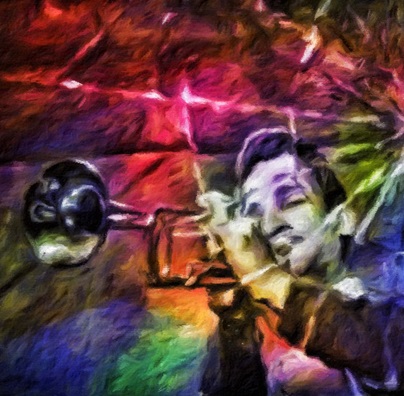

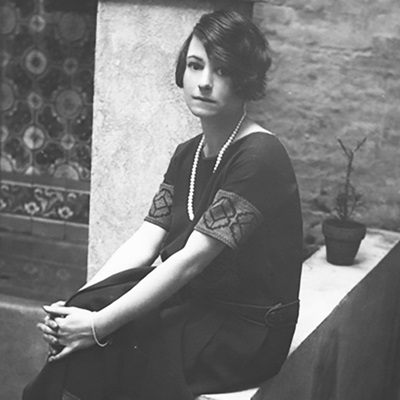



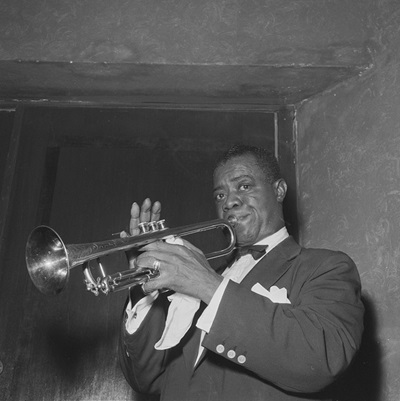



















Sandra & Bobby were a prime example of opposites attracting. Sandy was so young, so naive, & so venerable, like a little lamb, but w/a Tiger in the tank, awaiting her escape. Bobby would be the one to give her that escape. Bobby had his own issues & insecurities.
It was a perfect match. They were each, to a certain degree emotionally crippled. You can’t keep sweeping issues under the rug. & not expect them to not surface eventually.
I will always believe they were meant for each other. I don’t believe Sandy ever got over Bobby. I feel Bobby always loved Sandy. Their love was simply too hard to handle.
Their son Dodd is a true testament of the love they shared. He resembles both so strongly. He grew up to become a very loving, & protective son for Ms. Dee. She & Bobby were blessed with him. There are certain couples you will always see as together, whether they break-up or divorce. SANDRA DEE &. BOBBY DARIN will always be that way to me.