
.
.
“Frusick: Making Sweeter Music” was a short-listed entry in our recently concluded 70th Short Fiction Contest, and is published with the consent of the author.
.
.
___
.
.
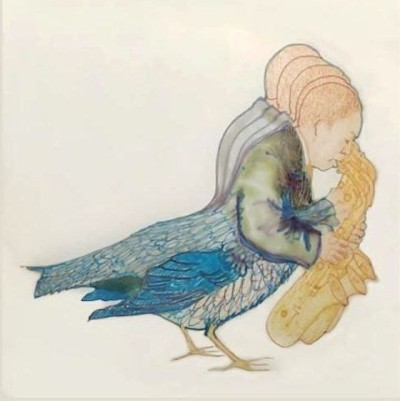
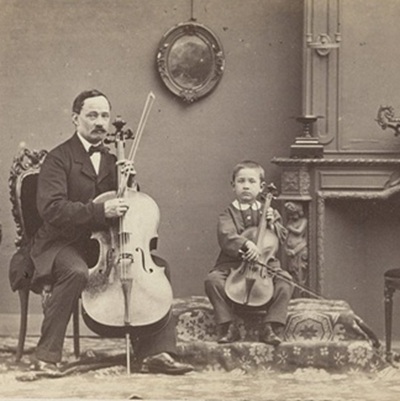
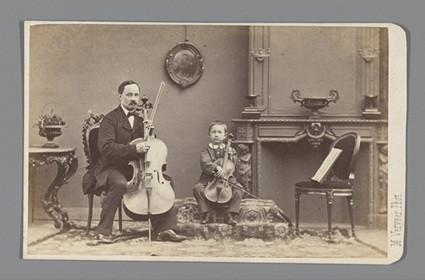
Rijksmuseum, CC0, via Wikimedia Commons
.
Frusick: Making Sweeter Music
by
J.W. Wood
.
…..They came up with the technology at the end of the last century: right after they’d perfected WiFi and 3D optics. Like so many inventions, Frusick was just waiting for some bright spark to pluck it out of the ether – and that’s exactly what some bright spark did. Via cute subroutines and a bit of sexy guesswork, naturally.
…..Here’s what you do – hum a tune into your mobile device. Once Frusick identifies it, do what you want. Rewrite the Missa Solemnis? No problem. Pretend to be Madonna backed by the Beatles? Sure. If you don’t like a chord, re-write the tune. Like that slurred chord in Hendrix’s “Stone Free” – it bothers you? Boom, it’s gone. And your take sounds identical to the original.
…..After Frusick launched, soloists went on strike since no-one needs to know how to play any more. Simply by humming what you wanted, you can re-imagine Haydn, Holst or Justin Bieber: all the greats of recent centuries.
…..Every day, Frusick’s software slowly eats its way through musical history: soon they’ll be doing the madrigals of Hildegard of Bingen. Then the Dark Ages, the Romans – hell, anything’s possible with the right algo!
…..However, Frusick has a flaw. And that is: it’s too perfect. See, there’s no point in learning to read or play music. Sure, some clung on a while, but they soon gave it up. After that, collectors went berserk snapping up Oboes, Bassoons, Viola di Gambas – any instrument you can think of.
…..You see, these instruments are rarities now: no-one needs them any more. One day, or so investors figure, they’ll look good on the wall of a restaurant or in someone’s living room, like a fourteenth-century barrell-maker or butter-churn – useless, but nice to look at.
.
###
.
…..I’m a clinical psycho-linguistic neuro-aestheticist who specialises in music: it’s my job to understand what motivates people so we can heal personality aberrations. Thanks to Frusick, we can now treat the perverted impulse to make music. Want to write a tune? We can do that for you, quick as light.
…..As a medical-psycho-social professional, I’m delighted to partner with the corporate sector to provide consumers with technology that assuages their creative desires without collapsing into the poverty, substance abuse and chronic depression so common among those previously known as musicians.
…..Nonetheless, the absence of musicians has created a problem. The same problem that arose when MP3s and early internet video systems came in last century. In one word, that problem is – kids. Disaffected youth who don’t want to be like everyone else. Being cool. Being different.
…..Just as kids back in the day started snapping up old vinyl records, or lionizing old people who played blues music, today’s youngsters delight in hunting down and hanging out with the last remaining musicians. Hanging out with musicians is proven to cause severe personality disorders. Furthermore, these children could become musicians themselves – arguably, a fate worse than the use of alcohol or drugs.
…..Our solution is to empathise with them. We let them record music as they find it, then slave the tunes they’ve recorded into Frusick’s memory banks. Sometimes the kids don’t want to know – but that’s why we fund the “Frusickal Mystery Tour.”
…..The kids get to travel around for free, hunting down the last few musicians wherever they live. Their parents love it because it’s healthier than screen time and gets them out of the house. We love it because it enhances our relationship with future customers and helps to build Frusick’s memory banks.
…..I won’t deny the program has its critics, principally those who argue that legitimate healthcare professionals such as myself shouldn’t be getting into bed, as they put it, with corporate interests. But come on, this is the twenty-second century! What do you expect, a taxpayer-funded healthcare system free at the point of use?
…..Anyhow, that explains why I’m in the back of a People Transporter on the MagWay down to Kent, England. We thought we’d identified all of the last musicians in Western Europe but apparently there’s some guy called Alfred Gardener who lives in this village called Hartfield.
…..Gardener plays the cello, and our web crawlers tell us the kids think this guy’s a genius. I mean, how could he be? He’s eighty-five if he’s a day, and he’s never had any publicity! He’s never taught at a University, let alone lectured at an online EasyLearn institute, certification guaranteed.
…..According to our records, he was a record-keeper at a life insurance company in London for forty years before he retired back to some village to tend his roses. I mean, what kind of genius goes and lives quietly in a village, for Gods’ sake?
…..Anyway, after taking the MagLev down to Kent we find ourselves at the gates of this guy Alfred Gardener’s Protected Village. I ask the kids to tap up their ID cards so the security Bot can read them. Amid much sighing and groaning, they pull out their mobiles and tap up.
…..One kid is chewing Coca-Guarana and bopping his long hair against the side of the People Transporter. Another one waves his fingers around with headphones – ha! Must be Frusick Beta. Some rebel he turned out to be – sounds like he’s polishing up something Bach could have done a better job on. But then, Bach never had algorithms, the poor guy. I guess he would have done better if he’d had access to our app.
…..After we get through the security Bot, we’re inside the wire and just one kilometer from this guy’s house. As a busy psycho-social-medical professional, I’ve rarely got the time to go inside Protected Villages, and when I do I always wonder why I bother. Those quaint old post boxes that will never see a letter; the inefficient housing and the pubs serving alcohol in archaic measures.
…..I guide the kids down the main street, their eyes widening at the sight of the petroleum-driven vehicles in driveways; pointless flowers climbing up walls, the quaint little gutters they used to have under their roofs to collect pine needles. Or was it rainwater?
…..When we get to the designated house my mobile blips to say we’ve arrived. Then I notice the house number is stenciled on the doorway. How quaint. I check my GPS location: the picture I’d called up looks about the same, so I push open the little wooden gate and walk up the neat flagstone path, red, white and yellow roses bordering a tiny patch of lawn that can’t be more than two metres square.
…..The kids gang up at the gate in hushed anticipation. Normally I’d be reminding them about their manners and behaviour, but no need. They’re perched by the gate like medieval monks and nuns, only dressed the latest teenage fashions, all spangled shirts and skinny rainbow trousers.
…..Poor, deluded kids. They’ll grow out of it. Being individual, I mean. But then, individuality is a different sickness – and one we’re yet to find a cure for. We believe we’ve found strong evidence that individuality is linked to musicianship, but more research is required.
…..I knock on the white door using the steel knob someone put there a century or more ago. A minute later the door opens and a small, round man, stooped with age, massively thick spectacles slithering down his nose, peers out from behind it.
…..“Yes?”
…..He looks at me with suspicion, then at the kids, door still half-closed against us as if I’m going to rush him. So this is the Alfred Gardener the kids venerate as a saint.
…..“My name is Doctor McMillan.” I smile to calm him. Make him think I’m on his side. “These young people would like to hear you play the cello.”
…..“Oh yes!” Gardener’s face brightens and the door opens. “Do come in – I’ve been expecting you.”
…..The old man shuffles off through a doorway to the left. I catch a glimpse of the hallway beyond him. The old black phone with its cord between earpiece and receiver, when we’ve had mobile devices for as long as he’s been alive.
…..I follow him into his sitting room on the left. Books – real books! – line the walls. Who knew anyone still had those? Even a painting, of some old brown dog on a farm, over the fireplace! The kids rustle in on tip-toe, walking as if at church, and sit down. Gardener catches my eye.
…..“Do you like the painting? It’s my dog, Billy. Not a day goes by that I don’t miss him.”
…..I’m unsure what to say. I check the kids: they are quiet, attentive which makes a change from their usual cynical, uninterested state. They sit on the floor, eyes rapt as they watch the old man’s every move.
…..“Righty-ho then,” he smiles. “I’ll just nip off and fetch my beauty.”
…..He shuffles out, heading down the corridor. A few minutes later, he returns slightly out of breath, his cello between his arms, its metal foot rubbing along against the carpet as he comes back in.
…..“Whew! I’m getting a bit old for all this”, he apologises, smiling at the children, who variously blush or look away.
…..Privately, I wish he would just get on and play the damned thing, then the kids could ask him a few questions and we leave. If we stay in the Protected Village for too long, the People Transporter will trigger the Security Bots to prevent harm from the alcohol abusers that frequent the “pubs”.
…..The old man sits down on his stool. In front of him there’s a thin metal frame with sheets of paper on it, sheets covered in squiggles, circles and lines. Music, I realise after a couple of seconds. Real music – a code that told musicians what to play. Like old-fashioned software for the brain, I guess.
…..“Thank you for coming to visit me today.” Alfred Gardener says. “I’m going to attempt Bach’s Cello Suite in C sharp minor.”
…..He picks up his bow, addressing the instrument like a dancing partner in some ancient ritual. He coaxes the strings and I hear a faint squeak as the waxed bow glissades against them. A long, mournful howl comes from the instrument.
…..Then the notes climbing in pitch, slowly, sadly, making the walls resonate, the books, the flowers, even the picture of the dog seems to join in chorus. I’m overcome. I listen, rapt, for ten minutes.
…..When he finishes, I examine the children. Tears in their eyes, heads bowed, weeping. Behind Mr. Gardener, the picture of Billy the dog, the books in their dusty rows. The old man gazes at his instrument as if he were in love, his round, lined face reflected in the rich polished wood.
…..He embraces the cello for a moment, then turns to me like I’m meant to break the silence. But for the first time in my career, I have no idea how to respond. Such purity and beauty. It defies all logic. It’s beyond reason. How do you answer that?
…..At that precise moment I realised all my science counted for nothing. That I – and these children, and everyone in the modern world – we were all living a lie. Only those outside the techno-cocoon, like this old man – only they knew real life, the joy of connection, of feeling a piece of wood vibrate through your body as it sang with and through you. Real music, the kind that couldn’t be replicated by a program or a loudspeaker.
…..The old man winked at me and smiled like he knew that I knew. And I did: finally, I’d understood what life is all about. And it’s not about subroutines, superintelligence or synthetic data-sets. Sharing feeling, creating community, being – these are all that matter. I now know that to be true, even if it might put me out of a job.
.
.
___
.
.

J.W. Wood is the author of six books of poems and a novel. He has reviewed for The Times (UK), Daily Telegraph (UK), National Post (Canada) and other titles. Individual stories have appeared in Short Story Substack, Thriller Magazine, Pulp Press USA, Crimeucopia (UK) and many more. Awards include Canada Council for the Arts (2022), Strands International Fiction Award (India, 2024), and British Columbia Arts Council (2018). His first book of stories was published in March 2025 by AN Editions (UK), with the paperback following in November 2025. This last year has also seen nominations for the Edgar Allan Poe Award and the International Mystery Writers Association Award. His second thriller will appear in Spring 2027.
.
.
___
.
.
Click here to help support the continuing publication of Jerry Jazz Musician, and to keep it ad and commercial-free (thank you!)
.
War. Remembrance. Walls. The High Price of Authoritarianism – by editor/publisher Joe Maita
“The Sound of Becoming,” J.C. Michaels’ winning story in the 70th Jerry Jazz Musician Short Fiction Contest
Click here to read more short fiction published on Jerry Jazz Musician
Click here to read The Sunday Poem
Click here for information about how to submit your poetry or short fiction
Click here for details about the upcoming 70th Jerry Jazz Musician Short Fiction Contest
Click here to subscribe to the Jerry Jazz Musician quarterly newsletter (it’s free)
.
.
.
___
.
.

Jerry Jazz Musician…human produced since 1999
.
.
.