
.
.
“Bridge Out of Brooklyn,” a short story by A.B. “Robbie” Robbins, was a short-listed entry in our recently concluded 61st Short Fiction Contest, and is published with the consent of the author.
.
.
___
.
.
photo by Kate Ter Haar/CC BY 2.0/via Flicker

.
Bridge Out Of Brooklyn
by A.B. “Robbie” Robbins
.
Part 1
“Autumn In New York”
.
…..The U.S. Marine Corps has a saying: “Once a Marine, always a Marine.” That’s how I feel about Brooklyn, New York: “Born in Brooklyn, always a Brooklynite. No matter where you live.”
…..I’m Giovanni Albert Triano, Johnny A-Train to my fans, maybe you’ve got one of my CD’s? I’m the leader of the Loco-Motions, an award winning big-band based out of my nightclub “Steppin’ Out,” in New Orleans, Louisiana.
…..Once a year I make a pilgrimage to the old neighborhood, to lay flowers on the stoop of the tenement I grew up in. I place them on the step where my sister Rosie was sitting when she was shot and killed.
…..It shouldn’t have been me, the one to go to Julliard. It should have been my sweet, younger-by-three-years sister Rosie. Rosie who could pick up any instrument and play it the first time; who could sit at the piano and play any song she’d ever heard. Beautiful Rosie at seventeen, who got cut down by a stray .22 caliber bullet while sitting on our front stoop eating an apple I’d just handed her. I looked around when I heard the shot but didn’t see anything. The echo of the shot bounced off the brick buildings, making it impossible to tell where it was fired from.
…..When I heard Rosie moan, I turned and saw her face, now contorted with pain. She was there on her back, blood gushing from her chest, reaching for my hand, and trying to say something. Her arm fell lifeless to her side and her eyes went empty. I pulled her to my chest, “No Lord, no,” I cried. “No, no, no, no, no.”
…..Mrs. Krakauer from the first floor, whose window opened right next to the stoop, stuck her head out of the window and said, “Mein Gott, Mein Gott. Ich’veIch dem genannt ambulanz und Polizei.” My aunt Mary, who also had an apartment in the building, came from where she was sitting with friends across the narrow street. A crowd started to form, all trying to catch a glimpse of Rosie’s dead body. The ambulance arrived before the police. To this day I can close my eyes and recall every detail.
…..Cops never did find the shooter. The police report concluded that the jagged hole the bullet made meant it was tumbling when it struck her. The wound and condition of the extracted slug led them to believe it must have been fired from a zip-gun. It had been decades since a zip-gun case had been filed in the precinct. It’s been thirteen years that Rose Anne Triano’s murder has been in the cold case file.
.
~ ~ ~
.
…..My folks passed on a few years later, and I’ve come home on the anniversary date of the shooting every year for the thirteen years since it happened. I’d place flowers at two-fifteen, the time of the shooting, then sit down on the stoop. I would sit there for a while, then walk about the neighborhood recalling scenes from the past. Visions of Rosie playing, laughing, and being a pesky kid sister appeared to me at every familiar turn.
…..I would repeat this ritual rain or shine, for three or four days. Some of the older residents on the block would come by and talk about old times. There was Mrs. Schwartz, Mr. and Mrs. Palermo, Mr. Quaglia, who was now using a walker; too many to name them all. Some would also bring flowers and folding chairs to sit by me. The old ladies would knit or crochet, and the old men would still argue about the Brooklyn Dodgers and New York Giants. I was one of the guys from the block who’d made good, and they loved it. All of them called me Giovanni, not Johnny; roots are important. It still felt like home.
…..This pilgrimage was something I undertook on my own, no friends, no fellow band members, not even my sweetheart. Just people from the block and me. The Jewish folks told me that this was the longest sitting Shiva they’d ever heard of. Mr. Buchanan said I’d set a record for the longest wake ever held in Brooklyn. Everybody had something to say. In the neighborhood they respected the practice.
.
~ ~ ~
.
…..When I come to New York for Rosie’s remembrance, I don’t head for my usual Manhattan hotel suite. I stay at my aunt Mary’s, on a fold-out sofa bed. She still lived in the building, third door at the back of the hallway. Apartment 1C, to be exact. A rent-controlled, tiny one-bedroom she’s been in since 1948. This trip she was three weeks shy of her 91st birthday. She gets by with the able assistance she receives from Lavinia, her Haitian caregiver and best friend.
…..Aunt Mary, Lavinia, and I were sitting out front on a glorious New York autumn day. I had just placed the flowers, and a few neighbors had come to join us. Harold, the Super from the building directly across the street, approached me.
…..“Mr. Triano,” he said, “Mr. Kaplan was wondering if you would come to see him.”
…..“Certainly I would, but he’s more than welcome to join us here.”
…..“Leo is not in a position to do that anymore,” Aunt Mary told me. “Poor man is in stage four of colon cancer. I went with Lavinia to see him last week. His family is keeping him in his apartment.”
…..I walked with Harold to Mr. Kaplan’s, and on the way we talked about how Brooklyn was changing. “Too many towers going up,” he said. “Blocks the view. It’s terrible. You can’t go up on the roof and see anything anymore. And if you wanted to move out, you couldn’t even afford it.”
…..The nurse answered the door and showed me in to see Mr. Kaplan. I looked at him lying there in his hospital-style bed and couldn’t help but think of the big burly man who used to own the Kosher butcher shop. He read it in my eyes.
…..“No pity, boychick,” he said. “It’s been a very good life. Come close. Sit. Talk.” He patted the chair next to his bed.
…..“Wanna go ‘tchrow a bawl around?” I asked, putting on my Brooklyn accent.
…..“Yeah, but ain’t no room on the street no more. And besides, my arm ain’t what it used to be.” He laughed and groaned at the same time.
…..My old neighborhood was not his. His recollections were of two-way streets, when the traffic was so light the girls drew their chalk potsy playing areas in the gutter. When you could still play stickball and stoopball without getting run over.
…..“So, Giovanni, I’m going tell you something important. I just want you should listen me out, before you say something. Okay?”
…..“Yes sir,” I said.
…..“Okay then.” He pressed the button that raised his bed to an almost sitting-up position and began.
…..“It’s about Rosie,” he said, and looked me square in the face. “I watch the TV and they talk on the news about closure. I don’t know from closure, but I know people need answers and information so they can sleep better. I have some of both for you about Rosie’s shooting.”
…..He stopped speaking and took a sip of apple juice from a little box with a straw sticking out of it. The way he was looking at me, I believe he had paused to see if I would react. I’d almost jumped out of my shoes but did and said nothing.
…..“My nephew Ralph, you remember Ralph, he had some friends from New Jersey who were here in Brooklyn that day. One of them had built a zip-gun contraption, and they went to Coney Island and found somebody to sell them a couple rounds of .22 ammunition. They were sitting by the bottom of the stairs leading to the basement alley in this building, fiddling around with it. The gun went off. They ran like crazy down the alley into the yard, then across to the building that used to be there.”
…..He saw the look that came across my face and said, “Please to let me finish. Please.” I nodded, yes, but it was hard to do.
…..“It was an accident, a tragic thing what happened. They didn’t know they hit someone with the bullet until the news told them. A couple weeks later Ralph came to me, not to his papa, told me what happened, and asked, ‘Uncle Leo, what should I do?’ It was like an electric shock, what he said. I thought for a minute and answered him: “Nothing, don’t do nothing.”
…..“How could you not tell him to go to the police?” I asked. I was up and pacing in front of his bed now.
…..“I know, I know. But they were three eighteen-year-olds who did a terrible thing. If it was on purpose, I would have carried them to the police myself. Little Rosie couldn’t be brought back, no matter what. So, should these kids have a ruined life for a God-awful accident? Very soon God will tell me if I was wrong, but I didn’t want to die without telling you.”
…..The moment Mr. Kaplan quit talking his eyes misted.
…..“Where can I find Ralph?” I asked.
…..He told me. Then he said, “I’m so sorry, Giovanni. God forgive me. You do what your heart tells you.”
…..I walked over to him and replaced his yarmulke which had slipped off onto his pillow, kissed him on the forehead, and said, “Thank you.” My emotions were mixed as to how I felt about his withholding this information for so long, but now I know, and at last somebody was going to pay for Rosie’s death.
.
Part 2
“It’s Hard To Be A Saint In The City”
.
…..I was angry when I left Mr. Kaplan’s. My mind was a jumble. What was I going to do? Being so agitated, I’d even been abrupt with Aunt Mary when she asked what Leo Kaplan and I talked about.
…..I told myself it’s been thirteen years, one more day won’t make a difference. Sleep on it.
…..After apologizing to Aunt Mary, I made up a story, then went up to the roof to sit and think. That’s what I used to do as a kid when something was on my mind. The building is called a five-story walk-up, but we kids would run the stairs to the roof, pulling on the banister and taking two steps at a time. Sometimes we’d have a contest on who could do it faster.
…..When I opened the heavy metal roof door and looked around, it appeared almost the same as I remembered. But now there was no more pigeon coop on the roof next door. There were still TV antennas, but no wires attached. The new additions were the grey satellite dishes, all pointing to the same spot in the sky. I went and looked over the edge, and my mother’s voice popped into my head, “Giovanni, get away from there,” she would call out. “You’ll fall off and kill yourself.” I grinned, then sat down on the tarpaper flooring, my back up against the front corner. It felt like I was seven years old again.
.
~ ~ ~
.
…..I couldn’t sleep that night. How was I going to handle this? There is no statute of limitations for murder. Was it murder? They killed Rosie, they deserve what they get. What would I say to Ralph? I rehearsed a dozen ways to approach this for when we met. None of them seemed right. I wanted revenge, they took my sister’s life. The fact that the police never found who did it has kept the act in the forefront of my thoughts all these years. It led me in a most unusual direction.
…..When my band—The Loco-Motions—and I first started making a real splash, on three separate occasions there had been murder committed, all young women who frequented our shows. The police were at a loss as to who and why. So, I jumped in and became a vigilante, a self-titled musical superhero. I caught the bad guys. A few other times I became involved, placed myself in harm’s way, and my efforts solved the cases. I’ve developed a reputation as a hell of a private eye. I’m good at it, and I like it. The fact of Rosie’s unsolved death was always my motivation.
…..Still not knowing what exactly I was going to say, I set an appointment with his secretary and arrived at Ralph Kaplan’s office by cab. He was now an extremely successful building contractor who specialized in redesigning old buildings, mansioning, mostly in Brooklyn, but also some high-profile hoity-toity digs in Manhattan. I didn’t know if his uncle Leo had called him, so I had no idea what to expect.
…..“Go right in Mr. Triano, Mr. Kaplan is waiting,” his secretary said.
…..I was shown into a most impressive office that demonstrated Ralph Kaplan’s handiwork; in fact, the entire building showed it. His office was on the street level of a mansion that was built in the late 1800’s. He lived with his family in the quarters above. An enormous photo of his wife and two daughters hung over the fireplace mantel.
…..He was shorter than I remembered, in pretty good shape, and balding. His demeanor was somber. He didn’t hold out his hand to shake, so I figured he knew what was coming.
…..“Giovanni, I’d have recognized you on the street,” he said. “You look the same, almost. Same Elvis pompadour, just a little older.”
…..He motioned me to a chair and took a seat behind his desk. We sat looking at each other for a few seconds. Then he said, “There’s nothing I can say to you that would have any meaning. So, you tell me … what is it you want?”
…..“Don’t know,” I answered. “I find out after all this time that you were responsible for Rosie’s death, and I don’t know. Justice maybe. Whatever the hell that is.”
…..“I was there, yes,” he admitted. “I wasn’t holding the thing when it went off though.”
…..“You’re an accomplice, then. What’s the damned difference?”
…..“No difference, none, I guess. But then what do you want, our asses?”
…..I stood up, placed my hands on the front of his glass desk, and noticed I was leaving sweaty palm prints. Leaning forward I said, “What I want is to confront whoever was there with you. Are you still in touch? Are they around? Can you set that up?”
…..His answer was yes to all. Said he would make the phone calls and he’d let me know when. He asked if his office would be okay.
…..When I left I had his promise to call me in a few hours. I felt empty. No emotion, no rage, nothing.
…..It was a cool autumn day and my hands were still sweaty. I wiped them on the front of my jacket and decided to walk back to Aunt Mary’s.
.
~ ~ ~
.
…..Ralph called. The meeting was set for nine at Kaplan’s mansion-office the following evening.
…..As for me, I spent another night tossing and turning and walking back and forth between the sofa bed and the refrigerator.
…..My head was full of noise. Those bastards, I’ll make them pay. How would they pay? It was accidental, is that manslaughter? Would the judge add to their sentence because they didn’t come forward? Would they get off? A good attorney could—. Then my thoughts would turn on a dime; how’s my Baby Doll doing? I can’t wait to get back and add some new numbers to our show; we need to update the tour bus. Damn … Back to the fridge for another piece of cheese and salami.
…..It was daylight when I finally caught a few hours of Z’s. Lavinia had dressed Aunt Mary for a walk and some shopping, and they nudged me awake before leaving. A shave and a hot shower got rid of my cobwebs. While drying my hair I thought about what Mr. Kaplan had said about closure. “I don’t know from closure,” he’d said. “But I know people need answers and information, so they can sleep better.”
…..I had to go see Leo Kaplan again, tell him It doesn’t work.
…..He was napping when I got there, so to kill some time I went back out, walked around the block twice, and sat down on his stoop. “That’s funny,” I thought to myself. “Crazy New Yorker attitude. When you rent an apartment, you start calling the place ‘My Building.’ The stoop becomes ‘My Stoop,’ and you also take possession of ‘My Street.’ You also acknowledge the ownership of others. Where I was, was Mr. Kaplan’s stoop, and it was on Aunt Mary’s street. I guess all of New York is one giant co-op.
…..I’d been sitting just a few feet away from where the shot had been fired, thinking back to that day, when I noticed Aunt Mary and Lavinia walking home carrying groceries. I ran across the street to help them in with the bags.
…..“Giovanni, what’s wrong?” Aunt Mary asked, after the foodstuffs had been put away. “You have not been you since you talked with Leo.”
…..Should I involve her?, I thought. Yes, I answered myself. Aunt Mary was always considered the brains in our family, and the most sensitive. She was the first to be college educated, and she was the head librarian at the Brooklyn Public Library when she retired. Rosie and I were her kids, as she’d never gotten married. Her fiancé had been shot down over France during World War II.
…..We sat in the kitchen face-to-face without saying a word. My eyes went back and forth from her 1950’s refrigerator to her vintage stove and oven, and I remembered happy times being here with Rosie.
…..I broke the silence telling her of my conversations with Leo. “I don’t know what to do. What happened should be punished. What would you do?”
…..Closing her eyes, she made the sign of the cross, and prayed out loud, “Jesus, Mary, and Joseph, help my Giovanni. Let him find the answers he seeks and grant him peace.” She then turned to me, “How can I give you an answer? No matter what I would say, if in the end it was wrong, it will have been my decision, not yours. It has been your quest.”
…..She was right of course. But what was wrong about turning it over to the police, to let them decide the proper avenue?
.
~ ~ ~
.
…..A traditionally garbed Orthodox rabbi was leaving as I was walking up the stairs to Mr. Kaplan’s. It looked to me he was older than anybody else I’d seen in the neighborhood.
…..He stopped me and asked, “You are Giovanni Triano?”
…..“Yes sir, I am.”
…..“You, mine boy, have taken a huge burden from Leo’s chest. He breathes now like he is free.”
…..“He has placed a burden on mine,” I replied.
…..The rabbi put a hand on my shoulder. “This, I’m knowing. For too long was he wanting to do this. No matter what now you do, Leo Kaplan has done his heart.”
…..He walked on, and I knocked on Leo Kaplan’s door.
…..The first thing Mr. Kaplan said when I walked in was, “So what brings you back? Ralph called and told me of your meeting tonight. What could possibly I do or say?”
…..“I came because I wanted to let you know that answers and information don’t help you sleep better. I’ve slept maybe five hours since we talked two day ago.”
…..“It worked for me,” he said. “Like, I haven’t rested so good in years since I told you.”
…..“How could that be?” I asked. “You must know I plan on doing something that will probably hurt your nephew.”
…..“Something,” he said. “Just something? Maybe the problem is being, you don’t know yet what that something is. For me, it’s in God’s hands now.”
…..“No,” I answered. “It’s in my hands.”
…..Smiling, he said, “Not really. Please sit again, and let an old man talk.”
…..What he did was paraphrase the Genesis story of Joseph, whose brothers had sold him into slavery. He ended the story with, “So Joseph was asked, ‘Forgive, I pray thee now, the trespass of thy brethren, and their sin; for they did unto thee evil.’”
…..Leo then said, “And, Giovanni, in your book of Matthew, he quotes your Jesus, ‘For if ye forgive men their trespasses, your heavenly Father will also forgive you.’ Whatever is God’s will. That is what is going to happen. I’m at peace with that.”
…..I exited his apartment still bitter and conflicted.
.
~ ~ ~
.
…..I didn’t want to be early or late for the meeting, so I told the cabbie to keep the meter running and handed him a fifty-dollar bill. At nine-on-the-dot I took a deep breath, exited the taxi, and walked in thinking about how I would approach them.
…..There was no offer to shake hands as Kaplan ushered me in to his office, and seated me at the head of the table. They had stayed seated around the conference table as they introduced themselves.
…..First was Thomas Ponzini. Thomas was a schoolteacher who lived and taught in Newark. He looked like he could also be the football coach.
…..Next was Marcus Cohen. Dr. Marcus Cohen, a pediatrician who was on staff at New York-Presbyterian’s Morgan Stanley Children’s Hospital. A rather smallish man.
…..Ralph opened the conversation. “We’re all here. The stage is yours.”
…..“Not a chance,” I said. “You’re not gonna lay that on me. You guys are responsible for Rosie’s death. You need to own up to it. You start.”
…..“They’re not responsible, I am,” Dr. Cohen said. “I built that stupid thing. It was in my hands when it went off.”
…..I was floored. For all these years I’ve held the image of a cold, hard killer. Now I was looking at a guy who reminded me of Woody Allen, glasses and all.
…..I pointed a finger at them individually and said, “Yeah, but you were all there. Then you all ran off to lead your lives like it didn’t happen. Me, I’ve lived with this every day. Rosie died reaching out to touch my hand. I saw the light go out of her eyes.”
…..Thomas Ponzini stood up with an anguished look on his face and blurted out, “Is that what you believe, that you’re the only one who was affected? I became a teacher to assuage my guilt. I chose a district where I teach teenagers who lose friends and family to gang violence. Those deaths are on purpose. Your sister Rosie appears to me in my classes, and I relive that tragedy every day,” and he sat back down. “My greatest relief comes when I walk in the door at home and hug my wife and kids.”
…..Ralph left his place at the head of the table and walked to the fireplace.
…..“Giovanni,” he said, and pointed to his oldest daughter in the family portrait. “That’s my daughter Rose, she’s ten now. My wife knows of this terrible thing that happened, and how I feel. It was her suggestion we name her after your sister.” Then he looked at Dr. Cohen. “Marcus, tell him what you do.”
…..“Because of that awful thing I did, I became a doctor and dedicated myself to the care of children. I have no wife and want no children of my own. I don’t deserve them.”
…..“And,” Ralph interrupted, “he travels to emergency rooms all over the area to handle gunshot wounds in children. Now, are you the only one who’s been affected?” he asked me.
…..“No, I’m not, no I’m not. But that doesn’t alter the fact you guys ran away. You didn’t even wait to see if you could be of help.”
…..“We ran because of the shot that went off,” Ralph continued. “It wasn’t until we heard the news that we learned about Rosie.”
…..“What now, Mr. Triano?” Dr. Cohen asked. “What do you want to do? We talked, and we won’t fight if you turn us in.”
…..“Let me flip that around,” I said. “What do you all think I should do?”
…..They looked at one another for a moment, some non-verbal communication between them, and it was Thomas who spoke.
…..“The three of us need to talk alone for a bit,” he said.
…..I went to wait in the reception area, glad for a few minutes to absorb all I’d just heard. My bitterness had disappeared, but I was still nonplussed as to what I would do. Aunt Mary’s and Leo Kaplan’s sentiments echoed in my thoughts: “It’s in God’s hands.”
…..I was called back in, and again Thomas, the schoolteacher, was the one who spoke. He began with a quote from Omar Khayyám: “The Moving Finger writes; and, having writ, moves on: nor all thy Piety nor Wit shall lure it back to cancel half a Line, Nor all thy Tears wash out a Word of it.” Thomas paused to let the words sink in for all of us.
…..Then he continued, “We believe justice would be better served by our actions, not our incarceration. Here’s what we propose.” He picked up a piece of paper and started to read down the list:
…..“One… I come from a very, very wealthy family. I will put up funds to have built ‘The Rosie Triano Free Clinic’ for children seventeen and under. Then I will establish a foundation in her name for its funding. The clinic will serve those area families unable to access proper care.”
…..“Two… Marcus will head the medical staff and leave his current position, once the project warrants it.”
…..“Three… Ralph has suggested that he would endow a scholarship in Rosie’s name at Julliard, to be awarded once a year to a promising young female musician. You would work with your alma mater to set up the selection committee.”
…..“Four… None of the above, and you contact the authorities. We will abide by your decision.”
…..“You left out number five,” I said, and then remained silent.
…..I had their attention, and no one said a word.
…..I cleared my throat. “Number five,” I said and looked around into each of their faces. “And maybe Doctor Cohen will find a wife.”
…..There was a collective sigh of relief. Ralph went to the mantel and retrieved a bottle of really good Cognac. There was no celebration, no high fives, just the toast I proposed:
…..“To Rosie, my Aunt Mary, and to Uncle Leo: our God made it right.”
.
.
___
.
.
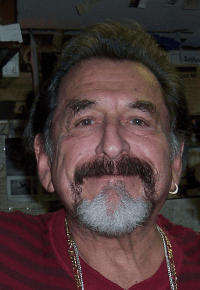
A.B. “Robbie” Robbins was born in Brooklyn, NY and now resides in the Pocono Mountains. He was eight years a U.S. Marine, is an accomplished ballroom dance professional, and a student of Classical and Flamenco guitar. Robbie was first recognized and published in a Michael Connelly Anthology. He has two short story collections ready for publication: “Johnny A-Train Musical Mysteries,” and “Worldwide Adventures of a Beverly Hills PI.”
.
.
___
.
.
Click here to read “Equal,” Chris Simpson’s winning story in the 61st Jerry Jazz Musician Short Fiction Contest
Click here for details about the upcoming 62nd Jerry Jazz Musician Short Fiction Contest
Click here to subscribe to the Jerry Jazz Musician quarterly newsletter
Click here to help support Jerry Jazz Musician
.
.
.