
.
.
New Short Fiction Award
Three times a year, we award a writer who submits, in our opinion, the best original, previously unpublished work.
Erin Larson of Tomball, Texas is the winner of the 47th Jerry Jazz Musician New Short Fiction Award, announced and published for the first time on March 15, 2018.
.
.
 Erin Larson
.
*
.
Erin Larson is an undergraduate student studying English Composition at the University of St. Thomas in Houston, Texas. She hopes to pursue a career in the publishing industry. She has written travel and culture articles for The Culture-Ist and has had literary pieces included in various school publications. This is her first published short story.
.
.
_____
.
.
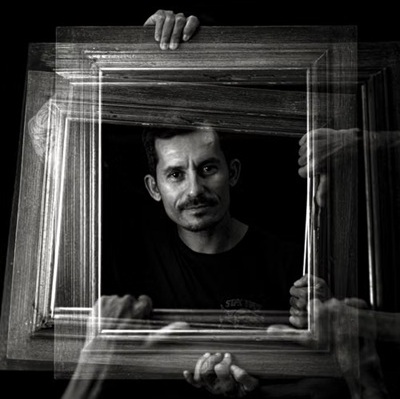
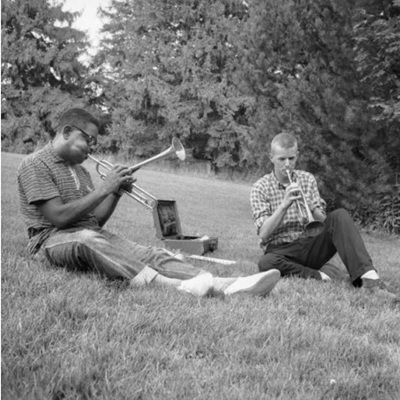
photo by John Messina
.
The Happy Thing of Bayou de Manque
by
Erin Larson
.
_____
.
“Repeat after me: I will not hunt alligators while Désirée runs deliveries.”
Léon blinks at me, rich hickory eyes peering up from a face darker than any glancing touch of the sun could produce. He wriggles in a barely-perceptible fashion, bare heels grinding ringlets into the muddy deck, a creature of obstinacy and faux innocence whose smile mystically exiles all suspicion from my mind.
“’course, Dezzy,” he says. “There aren’t any alligators around right now, you know—they ain’t come out ‘til nighttime.”
“They don’t come out ‘til nighttime,” I correct him, swiping a hand over the top of his head. “Stay out of Dad’s room, okay?”
He dips his chin obediently and thumbs the bamboo shaft of his frogging gig. Though his subtle grin persists, keeping my skepticism at bay, I am certain he is deceiving me. Recently he has talked about a new friend named Ruth, but my theory is that she is not a two-legged sort of friend.
I regard Léon ten seconds more as he crouches over a small ice cooler, then I shrug and clamber into the flatboat. Certainty is overrated, after all.
Satchmo, Bayou de Manque’s community mongrel, leaps from the deck to join me as I putter out into the main channel. He squirms between the crab coolers, nearly knocking one over and employing the same innocent expression as Léon after I scramble to catch its handle.
“Damn dog,” I mutter, scowling at the unblinking obsidian-bead eyes scrutinizing me from Satchmo’s pointed porcelain face.
Are you going to yell at me like your Daddy yells at you? he seems to ask.
But I don’t yell. I succumb to the sense of timelessness and deep serenity that the bayou offers as the flatboat slides between cypress trees, sluicing through the dark waters of the Macon River, and I’m moving too fast for my anger to catch me, though I know it tails behind in mad pursuit. I know, too, that it will stay far behind, unaided by the lazy Macon that oozes rather than flows.
Much like Bayou de Manque, the Macon River is indifferent and bored. Its history is lost, having failed to be memorialized in any sort of sign or map or visitor’s center. It has no history, save for the sighting of a bird thought to be extinct and the brief surge of visitors and money that came with it. With the visitors and money and prospects of fame now long gone, the river knows its purpose is not to be glamorous, but simply to exist.
I follow the Macon to Bayou de Manque’s trading hub, passing worn houses with dark, wormed wood poking through tired paint until I reach the strip of land cluttered with boats. The clearing beyond the boats teems with some of the bayou’s hundred-odd residents, all of whom embody the picture-postcard, stereotypical backwoods hillbilly. My arrival is hailed by joyful hoots and hollers, and sun-browned men splash down the muddy embankment to help unload my coolers. It is a good season in Bayou de Manque, where some seasons produce food and others produce desperation.
I catch sight of Mr. Dagobert leaning down to greet Satchmo. He is a man whose other features are rendered unimportant by his toothy, all-encompassing smile—it’s the sort of smile that looks as if the sun had toppled out of the sky and made a home right there on his face, radiance made flesh.
“Miss Désirée!” Mr. Dagobert exclaims when he sees me coming up the bank. His grin momentarily blinds me. “Y’all have been all but hoggin’ this mutt since Betsey hit—sorry about the school, by the way, I’m sure they’ll have it up and runnin’ again in no time—but I was starting to wonder if we’d ever see ‘im again.”
I open my mouth to reply, but he tweaks my chin.
“No, no, cher, don’t apologize. My suspicion is the Lord saw this bayou needed a happy thing and this dog goes where a happy thing is needed. How’s little Louisiana Jones Léon? Last time I saw ‘im he was haulin’ a sack of bullfrogs through my front yard. Your daddy used to bring him up here for deliveries, but I guess he’s grown to start his own business now, the way he’s out giggin’ frogs all day, but you should have ‘im come along next time—help you with those heavy coolers, yeah?”
I think of Léon, crouched over his ice cooler. The swollen contusions that decorated his jaw swim in front of my eyes, purple and blue and black, and I doubt he’ll be coming along anytime soon. I choose to remark on his proclivity for frogging instead.
“Those frogs aren’t caught for selling, I don’t think, Mr. Dagobert. I’m pretty sure he’s been helping a gator maintain her seven-hundred-pound physique. I’m actually pretty anxious to get back, if you’ll understand my rudeness.”
Mr. Dagobert’s smile flickers—almost as if a cloud flitted over the sun—but then he chuckles and flips open one of my coolers. “Certainly, Miss Désirée. These crabs are awful small. Where you been runnin’ your traps?”
“Off the crescent—I know it’s Mama Laveau’s territory, but no one else traps that far down, so I just thought—”
Mr. Dagobert drops the lid and takes a step backwards. “You run your traps in the circle?”
I don’t want to answer—men’s ears are angled towards me and Mr. Dagobert, waiting for me to confirm the superstitions they all deny possessing. Mama Laveau is Bayou de Manque’s very own voodoo queen, who lives on a point of land around which the bayou curves like a waxing moon. Through the woods that spread far into unknown regions she had drawn the form of her only mania, an imaginary line she dared not cross.
I don’t want to answer, but I don’t have to. Mr. Dagobert smelled the voodoo when he opened my cooler.
“No wonder,” he says, gazing down at the dog tangled between my ankles. I’m not sure he means for me to hear. “The Lord knows, don’t he?”
I cast a glance at Satchmo.
Lord knows this girl can’t provide for her family, he seems to tell Mr. Dagobert.
“Keep this pup around, Miss Désirée, y’hear?” Mr. Dagobert’s smile doesn’t quite meet his eyes, and there’s a cautionary hesitation in the tremble of his lips. “You never know what kind of evils you’ll need warded away by a happy thing like Satchmo.”
I realize he’s sending me away. No one wants the cursed crabs from Mama Laveau’s circle. Even the spongy ground beneath my feet seems to pulse, attempting to rid itself of my presence.
A cool fire ignites in the pit of my stomach, welcoming the return of my anger as I lug my crab coolers back into the flatboat.
“These men don’t know what they’re talking about,” I say to Satchmo. “Daddy started drinking before the crabs ‘got voodooed.’ You’re no happy thing, are you?”
He ignores me, snapping at sprays of water as we skim back down the Macon. I leave my anger again in the frothing wake, steering the pointed bow of the flatboat through knots of floating vegetation in an attempt at therapeutic destruction—the water lilies remind me of a happy thing I once had, one that left me and Léon long ago.
It is centuries before I’m home again, and I see Léon with his three-pronged gig, creeping through the marshes past the deck, poised in wait of helpless amphibian prey. I watch him for a moment before tying up the flatboat and pitching the unsellable coolers of crabs onto the deck.
Inside, I put a pot to boil and risk a look into the bedroom through a crack in the door. My father’s lower body hangs off the mattress, out of view, with the rest of him sprawled across the quilt as if discarded by a greater power. He lies among a nest of empty bottles, undoubtedly having passed out after finding no one to interact with in his inebriated state. I imagine him believing this particular indignity, for once, was between himself and God. Deciding it is a rare Bayou de Manque victory, I leave him to his celebration and return to the kitchen.
When I dump a cooler full of crabs into the roiling pot of water, I imagine dark voodoo spirits rising with the steam and escaping through the open screen door, freeing our home from Mama Laveau’s curse. But no, it is not spirits escaping that suddenly lightens the rotting ache in my bones—it is Léon, bounding up the porch steps with unrivaled childish enthusiasm. He deposits a bursting sack of frog carcasses on the floor and inspects the pot of crabs.
“I couldn’t sell them,” I say, knowing no apology can satisfy his growing appetite.
He rocks on his heels, fixing me with his impossibly bright stare, defying the chaos and ignorance that reared him. A small eternity passes before he speaks, and I’m lost in the liquid caress of his words when he says, “It’s okay, Dezzy, it’s okay…”
In Bayou de Manque, the crabs are just crabs and Satchmo is just Satchmo—but in Bayou de Manque, Léon is my happy thing.
.
.
_____
.
.
.
.
.