
A successful recording generally entertains and communicates passion on an earthly, mortal level. We typically respond to an effective performance by humming the melody, tapping our feet, and sharing it with friends. It might even “stomp the blues,” as the critic Albert Murray suggests.
Few recordings, however, actually challenge a listener to address one’s personal essence.
“If you look at the book (A Love Supreme: The Story of John Coltrane’s Signature Album),” author Ashley Kahn tells us in our interview, ” it starts and it ends with me talking about myself and how A Love Supreme forces me to talk about my own spirituality. There is no way to avoid it. If you are going to be an open and honest listener, and allow this music to enter you — which was (John) Coltrane’s intent — you have to be willing to speak about yourself.”
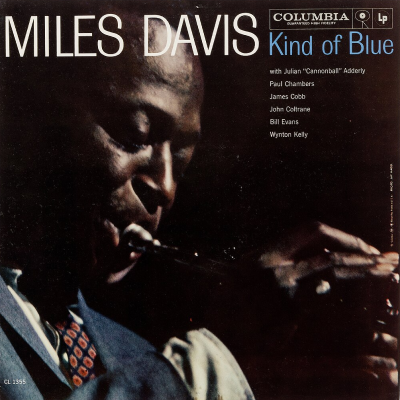
The impact of A Love Supreme on two generations of listeners led Kahn to report on its history and cultural significance. His previous book, Kind of Blue: The Making of the Miles Davis Masterpiece, is an original, entertaining, and justifiably acclaimed exploration of Davis’ classic 1959 session. It can be considered a best seller by previous standards of books on jazz, and a cult classic on a wider scale.
At the core of A Love Supreme: The Story of John Coltrane’s Signature Album is Coltrane, the legendary saxophonist whose fame was secured as a result of his participation in Davis’ group that recorded Kind of Blue. Coltrane’s path to the recording of A Love Supreme was carved by his rebirth from years of drug abuse, his historic 1957 Five Spot appearances with pianist Thelonious Monk, his work with Davis, and the subsequent formation of his classic Quartet — all of which resulted in intense creative growth that expanded jazz music’s emotional and spiritual boundaries.
Kahn’s book is a rewarding tribute to an album and its creator, whose best work continues to challenge listeners to reach well beyond their safest star…
Interview hosted by Jerry Jazz Musician publisher Joe Maita.
__________________
JJM What was your own first experience with A Love Supreme?
AK I was in the 15 year old expansive mode of wanting to explore music, starting from a rock and roll background. One of my source points for music at the time was a used record store in Cincinnati called Mole’s. For no reason other than that I picked the album up, the clerk there, who also had a blues show on the local arts station in Cincinnati, insisted that I buy A Love Supreme. He was not going to take no for an answer! $2.25 later and I had it. I still have that album with the $2.25 in the corner. It took a couple of years for it to sort of penetrate, but at least I had it there.
JJM Do you remember when you first played it, was it something you found immediately listenable, or did it take some time to get into?
AK I found the piece to be very long. I found myself trying to find the hook or the melody or the “cool hipness” to it that I had been familiar with in the Miles Davis LP’s I had at that point. I was not able to find an immediate doorway into it.
JJM How did the experience of researching this book differ from the book you wrote on Miles Davis’ Kind of Blue?
AK Because of Kind of Blue: The Making of the Miles Davis Masterpiece, a lot more doors were open, and they opened up a lot sooner. I had easier access to different people, archives, photos, etc. It helped that I had approached and shaped a project like this before. But I was also very aware that I didn’t want it to be a cookie cutter thing, that the story of A Love Supreme — the music and John Coltrane’s own story — should have its own shape and form. The fact that Coltrane died only two-and-a-half years after recording A Love Supreme also meant that the book should include more of Coltrane’s biography. As it turned out, A Love Supreme really was a watershed for him. Consider that the two A Love Supreme sessions that he did — one with his quartet and one with a sextet — in a way points back to where he was that day with the classic quartet, and forward to 1965, when he would explode creatively, changing sidemen as well as his approach to rhythm and non-chordal music. A Love Supreme served a totally different purpose for Coltrane’s career than Kind Of Blue did for Miles Davis’.
JJM You quote rock musician Patti Smith saying that, as a teenager, “Coltrane spoke to my soul and my developing intelligence.” Who were his records selling to?
AK Coltrane was reaching a much broader audience than people realized. Coltrane, far and above other jazz artists perhaps with the exception of Miles, was alone in the way that he reached listeners beyond the normally accepted jazz audience or jazz cognoscenti. He was reaching also a very young audience — black and white. The way that he spoke to someone like Roger McGuinn of the Byrds, in a way parallels the way white suburban youth were embracing Public Enemy a couple of decades later. Not just because of the music, and not just because of its soul, but because of the inherent sort of danger in it. Even though Coltrane and his many defenders talk about how his music was not angry, the perception of anger or the perception of frustration that black America had with its situation was something that definitely appealed to white listeners, especially white youthful listeners.
JJM Did they attach a different cultural relevance to the recordings than the black audience did?
AK I think that everybody sees what they need to see, especially in non vocal music. They carry a little bit of their own filter with them. Roger McGuinn was happy to admit that. On the other hand, you have a black musician like Rick James, who at the time was playing in Neil Young’s band in Toronto, who thought of Coltrane as just a black artist. But, for James to see Coltrane’s music in record collections of Joni Mitchell, Neil Young, David Clayton Thomas, Gordon Lightfoot — all important in the Toronto music scene — it was a unifying thing between the politically astute folkies and those who lived in the jazz world. As such, Coltrane’s music was a bridge not only between musical styles but also across the racial divide.
JJM Do you suppose Coltrane had a concern that his artistic development was moving too fast for his listeners?
AK Absolutely. As it is with Dylan, as it was with the Beatles, as it was with Ellington, they were defining their careers as they went along. It was totally new territory. The one thing that consistently comes out in interviews about Coltrane is that he was very aware of where he was concerning his record company, and concerning his audience. There is this brilliant conversation that he has with Leonard Feather where he admits to being totally aware of his youthful audience. He tells Feather, “I was into music before I knew what a G Minor seventh was,” and felt that as long as there was some sort of emotional connection, he was fine with having these young people in his audience.
JJM Before the release of A Love Supreme, when asked to address the concern that non jazz listeners could appreciate his music, Coltrane was quoted as saying “I never even thought about whether or not they understood what I’m doing. It isn’t necessary that it be understood.” A year later, following the release of A Love Supreme, Coltrane is quoted as saying a goal of his was to “uplift people as much as I can. To inspire them to realize more and more of their capacities for living meaningful lives.” How did A Love Supreme change his view about how the public viewed his work?
AK I am not sure it changed his world view in any way. As I said earlier, I think he was responding to his career as it transpired, and was carving his own path through the wildnerness. A Love Supreme was just another natural step for him — albeit a huge one — nonetheless it was within the logic of his own career. So, I don’t think he was knocked out by the response to A Love Supreme. Consider that a year later he was winning all sorts of awards, it was his best selling album to date, yet he was still willing to deconstruct his quartet and move in a totally different musical direction. So, its not like the success of A Love Supreme convinced him that he needed to do “A Love Supreme Revisited.”
JJM He only performed A Love Supreme once live, at Antibes
AK Yes, the only time he performed the entire suite live…
JJM And that is part of the album that Verve is releasing?
AK Yes, it is, and I felt it also needed to be part of the book. The fact is that he performed the whole suite only one time, and that he did it in a very impromptu manner, and that the performance was thankfully recorded and preserved and is there for us to study, meant it had to be included. It shows where he was musically just six months after recording A Love Supreme in the studio, and it is incredibly revealing.
JJM How did his separation from Naima affect his work?
AK I think that he was going through a lot of personal transitions between 1963 and 1964. It is pretty obvious that he wanted to start a family, because very early into his relationship with Alice McLeod — soon to become Alice Coltrane — she becomes pregnant with John, Jr. Prior to that, he was with Naima and her daughter from a previous relationship, Syeeda, for many years. He had never had his own child or his own family in the traditional sense. Perhaps I am being somewhat paternalistic in my definition of family, but things really changed for him at that point.
JJM For their part in the recording of A Love Supreme, you report that McCoy Tyner, Elvin Jones and Jimmy Garrison received $142 apiece, and Coltrane received twice that. Is the $142 the only money that his sidemen received?
AK Unless there are examples of largess that over the years Verve or whoever owned the Impulse catalog has sent their way, then yes, that would be it. They were paid for the assignment, and they did not participate in profits from album sales.
JJM Was Coltrane’s contract such that he would have received more money with each sale?
AK Yes, he participated in royalties, and he also had royalties against an advance that he would receive at the beginning of each year. So, his business set up with Impulse/ABC was a lot more involved.
JJM He obviously received some financial benefit from A Love Supreme, as he should have
AK Yes, and the family does continue to receive benefits from it as well.
JJM But there is really no evidence that he may have shared any of that with the other players.
AK Other than continued work, no. The way it works in the music world is that the leader, under whose name the music is recorded, is the main participant, and the others work basically under a “work for hire” arrangement as sidemen. It’s the industry standard then and remains that way. The thing is, it’s a lot to ask of someone to be revolutionary at all levels. While he may not have shared in profits from this recording, there are so many other examples of Coltrane’s altruistic nature and largess, that I don’t think we can fault him for not taking a more active approach in redefining the financial role of a leader. Also, it is important to note that what the musicians received — Trane included — for performing the music was union scale and standard for the time. That way of standardizing what musicians receive for session work remains the same today — whether one plays on a classic, timeless piece of music . . . or a throwaway jingle for a radio or TV commercial.
JJM Why did Impulse break tradition and use a white spine design for this album?
AK I wish I could tell you directly. The implication is that they saw this album as something very austere and elegant, therefore they needed to break away from the usual orange and black. They were willing to do it in a sort of monochromatic way that reflected the intensity of the black and white photograph they used. If you look at most Impulse albums, all the way back to the very beginning, they were full color covers. It is then not hard to understand why a designer back in 1964 would decide to get rid of all the coloring tints and make it very stark to match up with the black and white photo.
JJM The tapes of the famous second A Love Supreme session that included saxophonist Archie Shepp and bassist Art Davis were lost in the late seventies. How in the world could that have happened? If A Love Supreme was such a successful recording — a cash cow for Impulse — why wasn’t an album featuring the sextet recordings made available before the sessions were lost?
AK Believe me, out of all the Impulse and ABC people I spoke with, there is not one person who isn’t kicking himself for not having been more aware of the session tapes back then. But you have to understand that we are talking through the advantage of time here. Back then, there was the immediate day-to-day survival within a very fast moving, fast paced music industry to be dealt with, and that took the lion’s share of attention and resources. There are certain things that get put to the side and then become the responsibility of other people. The company may or may not have known or appreciated the value of what they had. ABC’s fortunes took a dive in the mid-seventies. The only act they had that was making much money at all was Steely Dan. Thus, as in any business, they went through a phase of cost cutting, in this case to reduce the size of their files at their storage facility in the San Fernando Valley. The paper trail that would have shown us what may have happened to the tape of that session has long been lost. They must have said, “Why don’t we take these tapes that we don’t really need and get rid of them?”
JJM Ahh, yes. If only there were low cost public storage facilities available in those days
AK Yes, or give it to me! I would have held on to the tapes in my apartment!
JJM Well, it really is quite astonishing when you think about it. Couldn’t they have sold it off to Columbia or someone else who could have found some value in it?
AK Yes, but you are opening up a Pandora’s box if you do that with proprietary material. So selling off the tape wasn’t an option. They decided, unfortunately, rather than the assembled masters — the freshest takes from engineer Rudy Van Gelder’s hands — they went with the workhorse tape, which was the tape that had been compressed and dolby-ized separate for use of making the LP. That unfortunately, in 1971, became A Love Supreme. It was Michael Cuscuna’s sort of impromptu genius who asked about Impulse’s foreign licensees from the sixties. He thought it was possible they would still have a second or third generation copy. Lo and behold, EMI still had a copy of that tape in their Abbey Road studios. That is why, when you pick up the new deluxe edition of A Love Supreme, you will hear a world of difference. Listen to Elvin Jones’ drums, to Coltrane’s chant, to the sound of the room, and compare it to any other CD that has come out on A Love Supreme.
JJM How much affect did the recordings of Impulse artists that Coltrane recommended, for instance Yusef Lateef and Archie Shepp, combined with the marketing strength of Impulse have on the general dissension of the jazz audience during the mid sixties and early seventies?
AK It was an incredibly wonderful, scintillating, brief window of time that was Coltrane-created. In his A&R capacity at Impulse, he made avant-garde and he made experimentation all right. He made it all right for a jazz audience, and he made it all right for a rock audience. That sort of dialogue that took place among youth America and the rock world that lasted basically until the early seventies, when releases by Yusef Lateef, Pharoah Sanders, Alice Coltrane, Albert Ayler, Keith Jarrett, and Charlie Haden’s Liberation Music Orchestra all pretty much created this Impulse mystique. While people say that when they think about a jazz label, they think about Blue Note, for me, coming over from a rock and roll background, I found Impulse much more exciting. The fact that it came and went gives it a sort of bittersweet panache. Blue Note seems to be forever, and you can’t get enough of its look, or its feel, but Impulse really came and went. It really was “of the moment.”
JJM My own experience with Impulse is that I stopped buying their records fairly early on because I found much of the music they recorded unmistakably unlistenable. Yes, it was creative, but give me three bucks and a free afternoon and I was turning away from the albums with orange spines and instead buying a Monk or a Basie album.
AK There is no doubt that they left some people behind. I was just young enough to embrace even the craziest stuff that was coming out on Impulse. The creative spirit of Impulse never would have happened without Coltrane.
JJM There was certainly a political edge to it as well. Critic Nat Hentoff wrote of the jazz avante-garde, “There’s almost a touching belief in music as a cleansing, purifying, liberating force, as if jazzmen were the unacknowledged legislators of the world. They all want to change the social system through their music.” Was this a goal of Coltrane’s? Was he socially conscious?
AK Oh, absolutely, but he worked on a much more spiritual level. He did not nail his activism down to the sixties, to the civil rights movement, or whatever. Coltrane was much more about the big picture. Archie Shepp’s work, when he worked with Cal Massey and others in doing Attica Blues, was much more specific than Coltrane ever would have been. Not to say that Coltrane did not get involved with social work. When Amiri Baraka had his fund raising benefit at Village Gate in 1963 or 1964 which resulted in the album The New Thing, Coltrane got involved in it. In the book, I write about how he performs on a Sunday afternoon at a Brooklyn church that was basically a benefit to help create a playground for kids. So, his social motivation was without reproach. It was definitely there, and very obvious. Did he tie himself into certain distinct political causes? Absolutely not, he was way too big picture for that.
JJM Yes, here is another interesting Hentoff quote.
AK I love the way Hentoff writes…
Nat Hentoff
JJM He wrote of the album Kulu Se Mama, recorded during Coltrane’s avante-garde era, “Listening to Coltrane work through his own challenge may well stimulate self-confrontation in the rest of us. Each listener, of course, will himself be challenged in a different way.” Do you suppose this was Coltrane’s goal during the avante-garde era, to challenge people to address their own seldom-visited emotions?
AK He certainly was doing it with his own life and I think that he was, in some sense, aware this was a challenge inherent in his music. He often spoke about how music should be a challenge, and that it shouldn’t come too easily. The reason I use the Hentoff quote in the book is because I wanted to show how even the most verbally astute critics of the day were forced to talk about themselves, when talking about Coltrane’s music. In fact, if you look at the book, it starts and it ends with me talking about myself and how A Love Supreme forces me to talk about my own spirituality. There is no way to avoid it. If you are going to be an open and honest listener, and allow this music to enter you — which was Coltrane’s intent — you have to be willing to speak about yourself.
JJM His spiritual essence was his guiding principle, wasn’t it?
AK Yes. The whole idea that music could take people to this level of self-confrontation, of self-honesty, is exactly what Coltrane was about. There is no album he recorded that he was willing to be more obvious about this principle than A Love Supreme.
JJM You talked earlier about how some heard anger in Coltrane’s playing. Carlos Santana described A Love Supreme as “violent and peaceful at the same time.”
AK Everybody brings their own bag of experience to the album, which is fine, because it meshes well with whatever you yourself are about. For example, Maurice White of Earth, Wind and Fire talks about how in the late sixties he was ready to disconnect from the African-American Biblical, Judeo-Christian experience — that he was looking for something else – and A Love Supreme was a doorway for him into other spiritual possibilities. Carlos Santana had to sit with A Love Supreme for a year or two before it penetrated. When it first hit him, he heard the violence and heard the depth of emotions, but he was not even ready to even think about it because he was lost in the world of B.B. King and Lightnin’ Hopkins, as he puts it. So, he was coming into it as a musician would stylistically enter. My conversations with Coltrane’s son Ravi were very interesting. He is a musician who is very well spoken as far of musical totality — its traditions and its culture. He felt that whatever doorway you take into A Love Supreme, whether you come to it as a musician looking at it musically, or whether you come to it historically and want to talk about it in the context of it being a spiritual doorway, you are always ending up at the same part, at its very deep spiritual core. I love that because it just shows how incredibly holistic Coltrane was about his music.
JJM Is that the reason why musicians over the years have been reluctant to record their own interpretation of A Love Supreme?
AK Absolutely. It’s like standing yourself up against Mt. Rushmore or the Washington Monument. You yourself have to feel that you are ready to take that on, that depth and intensity, and I think a lot of musicians have retreated from that. Joshua Redman talks about how it doesn’t feel like just a vision of jazz. For him, it feels like the vision.
JJM Yes, musicians seem in awe of it, as if they feel they can’t create anything as powerful as A Love Supreme.
AK Musicians especially know the history behind it, where Coltrane came from, and the intensity that he put into his life. This intensity didn’t exist just for this one recording session. He was at it 24/7, for basically most of his adult life. Now, that is very daunting. And for the result of that work to be a recording like A Love Supreme, most people would retreat from that.
JJM Is there anything else you want to add?
AK During the whole journey of writing the book, I tried to remain true to the musicians, to the people involved in A Love Supreme way back then, and to the people involved in the jazz community now. At the same time, I want to try to open the door to a new generation of listeners who can appreciate this recording. That is really at the heart and soul of the The Story of A Love Supreme.
______________________________
A Love Supreme
The Story of John Coltrane’s Signature Album
by Ashley Kahn
______________________________
JJM If you could attend one event in the history of jazz, what would it have been?
AK Tough question Okay, I have one. When John Hammond was able to get Charlie Christian to sit in with Benny Goodman, and Goodman resisted like hell. He counts off a song like “I Got Rhythm” at a really tough pace, and Christian is sitting in and takes the changes with no problem and just blows everybody away. I would love to have seen that.
_______________________________
Ashley Kahn products at Amazon.com
John Coltrane products at Amazon.com
_______________________________
This interview took place on September 16, 2002
_______________________________
*
If you enjoyed this interview, you may want to read our interview with Miles Davis historian Gerald Early