
*
Village Voice writer Gary Giddins, who was prominently featured in Ken Burns’ documentary Jazz, and who is the countrys preeminent jazz critic, joins us in a December 23, 2002 conversation about jazz legend Thelonious Monk.
Conversation hosted by Jerry Jazz Musician publisher Joe Maita.
______________________________
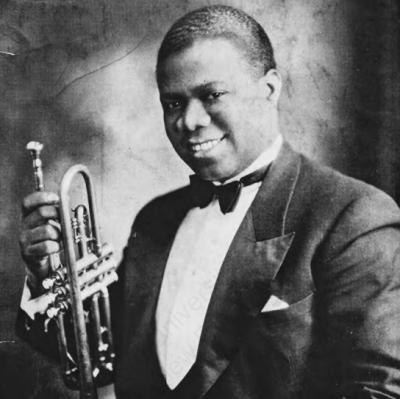
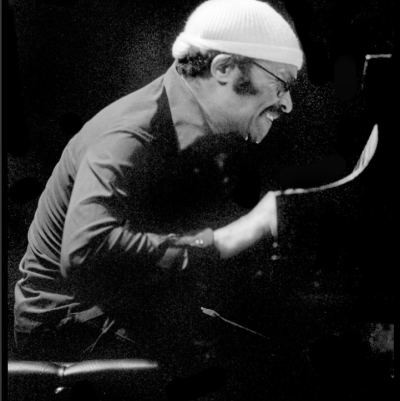
photo by Lee Tanner
“I say play your own way. Dont play what the public wants. Play what you want and let the public pick up on what you are doing, even if it takes them fifteen or twenty years.“
– Thelonious Monk
______________________________
JJM In an essay on Monk, you write, “No voice in American music was more autonomous and secure than Monk’s, and no voice in jazz relied more exclusively on jazz itself for its grammar and vision.” Can you explain this?
GG The first part of it, the autonomous style, is self-evident. I can’t imagine anyone confusing Monk with any other performer. If you do a blindfold test and play Monk, the listener is likely going to know it’s him after about two bars. Everything about the way he approaches the piano and music is so distinctive. People used to use words like idiosyncratic and eccentric, but there is, of course, more than that — there is a tremendous beauty in Monk’s music, and it is peculiar to him. Everything about his attack, the particular percussiveness of his style, his use of chords, his astonishing time, can only be described as “Monkian.” And in terms of his almost exclusive reliance on jazz, most great jazz pianists have some classical training that seeps into their approaches to melodic line, time, harmony and everything else. With Monk, when you try to trace him back, you always go back to figures in jazz itself, to stride pianists, to Teddy Wilson, and to musicians who specifically predate him in that music. Even though he quotes from folk songs and all kinds of different material in American popular music, there is nothing obviously European about his influence. You would never say, “His playing comes from the fact that he spent his childhood learning how to play Mozart sonatas.” You just don’t hear that in Monk’s music.
When I was an undergraduate, I spent the summer of my freshman year studying in the South of France. One of the Americans in my group was a classical pianist who had actually toured as a prodigy in the United States and in Europe. He didn’t know a great deal about jazz, but he absolutely worshipped two jazz pianists, Thelonious Monk and Bill Evans. The reason was that he was astonished at the idea that when these two musicians sat at the keyboard you knew instantly, from the first note, that it was them. The idea that an attack could be that distinct and individual filled him with admiration.
JJM Critic Dan Morgenstern said of Monk, “He may not be on your time, but he knows what time it is.” He also said that Monk is “one of those things only jazz could have made possible.” We know that Monk was a tad eccentric. Can you enlighten us a little about what Monk was like as a person?
GG Monk is a mystery to most of us. I met him (sort of), once, at the end of my freshman year in college. I had just been voted Concerts Chairman at Grinnell College in Iowa, and was in New York, attending an Elvin Jones gig at the Five Spot. Monk was in the audience, listening. I walked over to him and was struck by how imposing he was. Here was this great, towering genius, and I felt like I was coming up to his knee! I called him “Mr. Monk,” and I remember my friend thought that was hilarious, but what else are you going to call him? I wasn’t going to walk over and merely say, “Thelonious!” I introduced myself and told him that I was Concerts Chairman at Grinnell and I would like to talk to him about how much it would cost to bring his quartet out there. He put his hand on my shoulder, walked me to the bar and said, “You should talk to my manager. You would like him. He is a school teacher.” He introduced me to his manager, Harry Colomby, who was sitting at the bar. I had a little chat with him, who was a bit skeptical because Monk got a huge amount of money in those days. And that was that.
The interesting thing about Monk’s eccentricity is that he was married to a delightful and very normal “feet on the ground” woman, Nellie Monk, and his son T.S. is as normal as you can possibly imagine. The eccentricity wasn’t catching, although I imagine something of the genius was. An example of his eccentricity is a story of Nellie’s that Nat Hentoff published in his early sixties book, The Jazz Scene. She said she used to have a phobia about pictures hanging on the wall at crooked angles, and she was constantly walking around the apartment, straightening out the pictures. One day Monk nailed them all to the wall slightly skewed. Every picture was about a half inch off, and after a while she just got used to it and in essence said, “To hell with it!” I think that is what Monk did to jazz — he made you hear those minor seconds and those dissonances and his approach to time, until finally it just settled in and everybody said, “This is great. This is the way you play this music.”
Yet, I also remember taking my girlfriend to the Randalls Island Jazz Festival, and while Monk played, a famous jazz critic, who I will not identify, was heckling him from the grounds with remarks like, “Hey Monk! Play it straight!” He kept yelling at him. Besides thinking that the guy was a jerk, it dawned on me that as late as the mid and late sixties there were still people questioning whether Monk could play, which is amazing, because he was a true virtuoso. Try to imitate him. Try to come up with some of the kinds of things he played. He wasn’t a virtuoso in the more conventional sense of a Horowitz or an Art Tatum or Bud Powell, but he certainly invented an approach to piano that everyone has been influenced by. Many people have tried to imitate him but you tend to sound foolish imitating him, because all you get are the superficial elements of his music, and not the much deeper sense of harmony and rhythm that defines his music. His attack and Ellington’s attack are almost impossible for anyone to really imitate, because they come from an absolute security in what they are doing.
JJMDid the press overblow his eccentricities to the point where it affected his ability to succeed?
GG To a certain degree, yes. I imagine it must have been hard not to. I went to see Monk many times, if I could get into the Vanguard or the Village Gate, I went to see him. My friends and I loved how he got up and danced and wore different hats. We didn’t know what to make of it, because we didn’t know how much of it was him, and how much of it was showmanship. I can’t remember him ever saying anything on the bandstand. It was hard to leave a Monk performance and not marvel at what a strange, gnomic figure he was.
I went to hear him one night at the Vanguard where he played a very poor first set. He played a couple of choruses, did his dance, and basically the whole first set was Charlie Rouse and the two guys in the rhythm section. But then we stuck around for the second set, which was magnificent. In this regard he was quite a bit like Sonny Rollins, in that you got what you got depending on which set and which night. If you listen to his music from the sixties when he was recording for Columbia, the consistency of his playing is quite remarkable. It amazes me the degree to which critics put down his music in the sixties. Of course, they also put it down in the fifties and called him a charlatan before that. After the early work was widely accepted, they criticized the later work for not being as idiosyncratic. They put down Charlie Rouse because he came in and replaced Coltrane, and they felt he wasn’t as distinctive as Coltrane, yet he was as perfectly suited to Monk’s quartet as anybody could be. It can be argued that he blended into the quartet in a way that surpassed Coltrane, and inspired Monk into a different train of thought.
JJM Talking about the Coltrane connection, Riverside Records producer Orrin Keepnews wrote, “I know how greatly several months with Thelonious at the Five Spot in 1957 accelerated John Coltrane’s transition from a rather interesting young bebop tenor player into an unconventional, boundary-extending giant.” How did Coltrane’s playing change after his work with Monk?
GG It’s hard to be very specific, because first of all it strikes me as silly to say that Coltrane was a conventional bebop player before he played with Monk. We know better than that because we have the early Prestige recordings he made with Miles Davis, on which we hear clear evidence of him moving beyond anything that is remotely like conventional bebop. But, Monk apparently changed the playing of everybody who worked with him — Sonny Rollins as well as Coltrane. They all said it was like going to school. For one thing, the compositions are extremely challenging. You play things like “Criss Cross” — the one with the six bar bridge — and every time you come to the end of the bridge you feel like you have come to the edge of a cliff and you are going to fall off. The musicians have to really rethink the pieces, and can’t just run the changes. And the changes themselves, even when he uses standard changes like “Just You, Just Me,” involve so many substitute chords. And then he hues to the melodic line that he has conceived for those changes, SO you have to concentrate on the piece. If nothing else, Monk forces all the musicians to work with him, to really focus on the here and now — you have to be there — you can’t be on automatic pilot to play those pieces. They are just too difficult.
JJM You have pointed out that Monk was a constant source of ideas for Charlie Parker, Dizzy Gillespie, Bud Powell and other modernists. Was Monk bitter about Dizzy and Bird getting most of the credit for bebop?
GG I don’t know if Monk was bitter about that. I can’t imagine that he was. I think that what Monk must have surely been very bitter about was the medieval and barbaric cabaret laws which put his career on hold for many years. That must have been a source of enormous bitterness. But when Monk made the transition and found his audience, he found it with a vengeance! He was hugely popular, being one of the very few jazz musicians in history who ever made the cover of Time magazine, which he did in November of 1964, exactly one year after the scheduled run date — postponed due to the assassination of John Kennedy. His concerts were always packed. The Lincoln Center concert for which he revived the big band, originally introduced at Town Hall with Hall Overton’s arrangements, was a huge success.
In spite of his popularity, however, there were always detractors. The critic Leonard Feather, for example, was an early detractor of Monk’s. I loved his first book, Inside Bebop, and recommended it to an editor at Da Capo Press. I called Leonard and told him about my recommendation. He called me back and said he had spoken to Da Capo, who would reissue the book, which he was delighted about. I asked if he was going to write some kind of introduction and he said he wanted to leave the book pretty much the way it was. I asked if he wanted to say something different about Monk, because Feather is the guy who tarred Monk’s playing. In that book he started the idea that Bird and Dizzy were great musicians but that Monk was something of an eccentric and “high priest,” basically characterizing him as a fraud. Leonard was not the kind of guy who could eat his words very gracefully, so in the introduction to the new edition, he basically wrote that while Monk was not as bad as he described him, he was not as good as his defenders made out. That was as far as he could go.
JJMColeman Hawkins was very important to Monk early on. He once said, “Every night I ask myself why I didn’t get a normal pianist for my band.” What was it about Monk that inspired Hawkins to hire him at a time when others wouldn’t?
GG Hawkins was a sophisticated musician who knew classical music very well, and like any great figure of that period — with some exceptions — he recognized that Monk possessed a great brilliance, and that what he was doing was deliberate. Remember, Hawkins heard Monk during a time when he played a bit like Teddy Wilson, so there was no question among musicians of that generation who had seen Monk in Minton’s and other venues that he had the technique and was developing a style. He knew what he was doing.
Coleman Hawkins and many musicians of that generation loved the fact that Monk’s music had so much humor in it. Clearly the men felt a real connection. A lot of the tunes they played together — “Rhythm-A-Ning,” for example — seemed to originate between the two of them just working side by side. Clearly there was a real sense of camaraderie between them, because when Monk started to hit it big while making those Riverside records, he used Hawkins, putting him next to Coltrane on one album. Musicians who were hip enough to understand what Monk was doing were thrilled with the opportunity to work with him. Everybody learned from him because he made you hear differently. It’s like that minor second thing, where the first time you hear it you wonder if he is hitting the wrong note, is his finger in the crack between two white keys accidentally or is it deliberate? Once you get a feeling for his music, my god, he never does it accidentally, those minor seconds are almost always hit for tremendous rhythmic or percussive feeling at exactly the right moment. Monk is always in control.
JJM Miles Davis once said Monk gives musicians no support
GG I used to teach jazz history, and I loved playing some of the alternate takes where things go wrong, because students can understand what goes into a performance when they can hear one that didn’t go quite right. One of the examples I used was the Miles Davis recording of “The Man I Love,” where Monk plays A solo in which he bedraggles the line, getting farther and farther behind the beat until he is clearly lost. There is complete silence and the class invariably would crack up. When the bridge comes around, Miles plays the chord and suddenly Monk leaps in, diving right into it, and with tremendous velocity and force, finishing the solo. So, even Monk could go so far out that he couldn’t find his way back in again.
Monk liked the use of space and the unexpected. Miles wanted to know where he was and wanted the changes and wanted to be sure that when he left space, the rhythm section would fill it in. Monk often elected not to comp for his own musicians. He would get up and dance for a better part of the saxophone solo, leaving Charlie Rouse to play with just bass and drums, as if it were the Sonny Rollins Trio. Monk would come back when he wanted to.
JJM When Blue Note signed Monk, they employed some interesting marketing tactics. To describe him, they used the term “high priest of bebop” and “genius.” Did these tactics backfire?
GG I don’t know if they backfired because I wasn’t around then, and historically, it is hard to say. I believe that if Monk had a hard time reaching people in the early years it had less to do with marketing than the fact that people just didn’t know what to make of his music. By the time people were able to grasp it, it was conceded that Monk was a genius, sometimes using the word “genius” as a hapless way of saying he was so far out it wasn’t known what to make of him, and that becomes a mask. But aside from his stubborn detractors, I don’t think anyone thought calling him a “genius” was an unfair marketing tool because most of us agree that Monk would qualify as one of the few bona fide geniuses in jazz.
It is interesting that the two records that changed Monk’s standing with the general jazz audience were the first two records he did for Riverside, Monk Plays Ellington and The Unique Thelonious Monk, where he played standards. In retrospect, I wonder if a lot of the feelings about Monk wouldn’t have happened no matter what record he came out with — even if he started with Brilliant Corners — because the advent of the LP created a wider acceptance of much in jazz. For many people, the fact that Monk could play Ellington sort of proved the point that, yes, he can play tunes that we all know and make them delightful. That is certainly not one of his great records, but sometimes when somebody comes along with a style that is just too far out for people, they need him to do something they are comfortable with before they are willing to follow him into his own world. I suppose for some people hearing him play “Tea for Two” or “Sophisticated Lady” made it easier for them to grasp a record like Brilliant Corners or Monk’s Mood. It’s hard to say.
I got into Monk when a friend recommended him after I raved about Dave Brubeck. The first Monk record I heard was Criss Cross on Columbia, which I loved, and right around that time I also bought Thelonious Himself, the first solo album on Riverside. I didn’t know what to make of it, yet I loved it the first time I heard it. That record was one of those life-changing experiences for me because it was so different. I was so impressed by the fact that he could play “April in Paris” with so few notes and leave so many spaces, yet have such a tremendous emotional impact. I didn’t read the liner notes or look at the details, I just put the album on. I was in my room for the evening, completely transfixed by the recording. It was late at night, and I put side two on. I must have started to doze toward the end of it, and thought I was dreaming the sounds of Coltrane on the saxophone because it was supposed to be a solo piano album. It sort of woke me abruptly and I thought, “What is this?” As I got to know the record better, I thought it was a brilliant touch on his part to end a solo album with a trio selection, because what I believe he is saying is that even his trio and quartet music is a development of what he does on the piano.
JJM The third album on Riverside was Brilliant Corners. It was quite a departure from the first two
GG Yes, this is a frequent way that producers work. Think of Bob Dylan. The first time they recorded him at Columbia, with the exception of two Dylan originals, they had him do standard blues and folk tunes to show that he was a standard folk musician. The second album is mostly originals, and by the third record they let him go for broke, and from that point on it is the “Dylan experience.” With Monk’s first two albums, Riverside basically said to their audience that he could play standards and Ellington’s music. With the third album, Brilliant Corners, listeners are confronted with Monk as a composer, playing with a larger ensemble than those of the first two albums. Brilliant Corners is such a dramatic piece, one of what I consider the “jazz marches,” much like Ellington’s Such Sweet Thunder. From the very beginning, it takes control of you. It is a very long and difficult piece, because after they play it once, they play it again in double time. They constantly work through this piece, and the solos have to really feed off the melody in a way that is coherent from beginning to end. Brilliant Corners was the record that caused most everyone to recognize Monk as a major figure. I should point out that many critics had. Ira Gitler was a great admirer of his, as was Dan Morgenstern. Martin Williams declared Monk the great composer of his generation.
JJM Williams once contended that Monk’s contract with Columbia was his final step to ascendancy. How would you define the quality of Monk’s Columbia era? In other words, did they take advantage of what they had?
GG The only time I thought Columbia did him ill was the big band record he did with Teo Macero and Oliver Nelson. Nelson wrote some wonderful things during that period, and he was a very distinctive arranger. But I can’t imagine an arranger who is more antithetical to Monk than Oliver Nelson, who liked really close, rounded harmonies. That was his style. You always knew Oliver Nelson from his voicings. They did not have a lot of dissonances, unless he was writing for someone like Eric Dolphy, and even then Dolphy provides the dissonance. So I believe it was Macero’s doing, to take some of Monk’s tunes and make them sound like everybody else’s tunes. Then the indignity — which is the only way I can describe it — of having Monk play two Teo Macero originals. You can see what Monk does with them. One of the tunes, “Consecutive Seconds,” is so “Mickey Mouse” you can’t believe it. Monk’s solo is absolutely contemptuous, basically one note hammered repeatedly.
JJM Yes, the horns sound real filtered too.
GG Everything is. The record was a big mistake in my judgement, and I think Monk knew it. You suspect that from the way Monk plays on it. Not to dwell on that, the early Columbia’s are magnificent, especially the Criss Cross album. He plays incredibly on Monk’s Dream, as he does on “Shuffle Boil” and other tracks on the other early Columbia album, It’s Monk’s Time.
A couple of the albums from that period were very underrated, because people were actually tired of the quartet, and were tired of hearing him with Rouse. They wanted something radical from Monk, and he was down to making quartet records like Underground, which initially was more famous for the album cover than for the pieces on it. But these records stand up. He plays beautifully on them. So, the reaction to his records of this era was the exact opposite of what had been going on in the early fifties, when everyone was saying he was too far out, that he needed to sound more conventional. Now the criticism was that he is too conventional, that he should be writing more and playing with different kinds of instrumentation and doing something that hasn’t been heard before. The result was that people were beginning to take him for granted. It is fascinating. If you trace Monk from his Blue Note recording period of the mid-forties to the Columbia period of the mid-sixties — only twenty years — he goes from being far out and completely avante garde, to the “high priest of bebop” and mysterious “genius,” to being a great pop favorite, to being one of the most important jazz musicians on the scene along with Miles Davis and a handful of others, to being passe.
JJM Yes, in fact the critic John S. Wilson wrote, “What had once seen odd and angular in his compositions and form has now become so familiar as if to seem almost routine.”
GG Yes, this is true. This is the way it seemed to sound to people. Only now after his death do we go back and thank god we have as much as we have.
JJM Did he explore his creativity enough later on in his career?
GG I think Monk went as far as he could go and did everything he wanted to do. When he went into the silence of his later years, it was because he had said what he wanted to say. It is the only explanation I can come up with it. With the exception of the Oliver Nelson record, Monk never compromised. His whole career is sort of based on his famous comment, “Don’t play the way they want you to play, play the way you want to play, even if it takes them 15 – 20 years to catch up,” which was pretty much what Monk’s story was like.
Late in his career, in the early seventies, virtually out of the blue comes two records he did for Black Lion, one solo and the other a trio with Art Blakey, and they are among the most exquisite of his recordings. They show Monk having a grand old time. Monk’s music is filled with fun. If you compare his early album Thelonious Himself — which in some ways is the most idiosyncratic of Monk’s recordings — with the later solo album he did on Columbia, you can’t miss the fact that the Columbia album is in some way lighter, peppier, more rhythmic, and swinging. It is tremendous fun and the tunes are all familiar, but I don’t think it is a lesser work in any way. I feel the same way about the Black Lion recordings. I remember friends of mine, after hearing these records at my house, went out to buy them even though they didn’t know anything about jazz, nor were they particularly interested in Monk. But they were irresistible records. There is a line that I love from Edward Albee’s The Zoo Story, that “sometimes you have to go a long way out of your way to come back a short distance correctly.” I think that Monk had to go a lot out of his way to be able to play with that kind of assurance and wit and “joie de vivre,” but I don’t think it is a lesser music. After that, it is very difficult to predict what Monk is thinking because he is not telling anybody anything. He goes into a complete silence.
One of the great evenings of my music-going life was attending the tribute to Monk at the New York Jazz Repertory Company. Monk had been invited to play with a big band that was augmented with strings by the arranger Paul Jeffrey, who was one of the last saxophonists to work with Monk and who was the musical director for the evening. Because Monk had not responded to the invitation, the pianist Barry Harris was prepared to play the concert. That night, while the musicians were on stage getting ready and with Harris standing in the wings, waiting to be introduced, Monk suddenly arrives, rushes past him, goes to the piano and plays magnificently for two hours. That was the last time many people ever got to see him perform. The concert was nowhere near sold out because nobody figured Monk would be there. Occasionally after that, at least once or twice he sat in at Bradley’s, and those who saw him play there said he was great. Also, there was the return concert when he played opposite Keith Jarrett for George Wein, which was a great evening. But, basically I guess he felt he said what he had to say, he made his legacy, he made his peace with the music, gods and his muse, and went into a profound and apparently impenetrable silence. Even those closest to him report that he said nothing for the last several years.
JJM After the Watts riots in 1965, murals started appearing around black communities that had various figures on them, including Malcolm X, and Monk. What did Monk represent to young African American men during this period? What did his image mean?
GG I am not sure I can speak to that. The only thing I can speculate about is that he was a very famous figure. He was very artistic, dark skinned, tall and imposing. He also had a great face that was easy to caricature. Everything about him made him stand out, including his name, which was unforgettable. The fact that he was so uncompromising must have had something to do with it. The first thing one might think of about Monk is that he is the archetypal jazz musician who would not compromise. He had to play his own way and the rest of the world eventually caught up. Most importantly, he was universally regarded by then as one of the towering figures in American music.
JJMDo any great versions of Monk songs played by others come to mind?
GG Monk’s music has been covered by just about everybody. There are so many to choose from that I am certain to overlook many of the best. The ones that immediately come to mind are the Sphere records with Kenny Barron and Rouse, which are very good. Miles Davis’ “Round Midnight” is a classic recording. There are many great versions of that song. Pee Wee Russell’s version of “Ask Me Now” is a remarkable recording where he really gets to the beauty of that piece. Steve Lacy’s interpretations of Monk are wonderful. Barry Harris’s versions of Monk are beautiful, as were Tommy Flanagan’s. These guys really got into his harmonies and didn’t try to imitate his attack but were able to mime all the great qualities in the melodies he created. Flanagan’s Thelonica is a great example of a tribute to Monk. Bill Holman’s big band arrangements are superb, very different from Hall Overton’s; Holman has an album out called Brilliant Corners worth finding. There are so many. The most recent example I’ve heard is Dianne Reeves singing “Reflections” on the album she’s about to release this summer. After Ellington, Monk is probably the most frequently performed of all jazz composers.
JJM Monk had a great ability to swing
GG Yes, that is the thing about Monk for me, above everything else, is how hard he swings. I just don’t think anybody else swung harder. He made a bunch of trio recordings for Prestige in the interim between his recordings for Blue Note and Riverside. For some reason people often ignore these, as well as those he did for Vogue during the same period. I like just about everything he recorded during then, but a particular favorite is his version of “These Foolish Things,” a ballad that Billie Holiday and many other people sang. To me, it is one of the most stirring piano performances ever – Monk swings like mad. With virtually every note and beat the swing is almost italicized. You can’t listen to it without realizing that he is absolutely rocking. That’s what I love most about him. He wraps it up and is in complete control of it.
I’ll never forget that first time I heard Thelonious Himself. The first track is “April In Paris,” where he plays “da da da daaaa (pause) da,” and you think the speakers die or something before you hear that final note. When it comes up you think, “What the hell is this?” That record is brilliant. Every once in a while I take it out and it just chills me all over again – JVC put out a wonderful audiophile CD version that would make my desert island short-list. And when you listen to him playing upbeat swing pieces like “Just One Way to Say I Love You” or “Dinah,” no pianist in the history of this music, including Fats Waller and James P. Johnson — who obviously influenced him a lot — ever swung harder than Monk did.
_________________________________
Gary Giddins products at Amazon.com
Thelonious Monk products at Amazon.com
_______________________________
This interview took place on December 23, 2002
*
If you enjoyed this interview, you may want to read our interview with Thelonious Monk’s son, drummer T.S. Monk.