



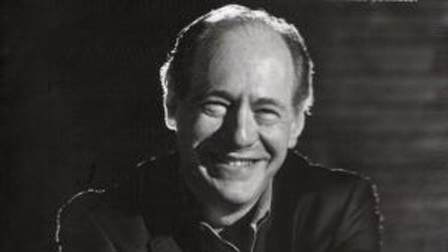
Gary Giddins
__________________________________
In the final column of his thirty year career as jazz critic of the Village Voice, Gary Giddins wrote, “I’m as besotted with jazz as ever, and expect to write about it till last call, albeit in other formats. Indeed, much in the way being hanged is said to focus the mind, this finale has made me conscious of the columns I never wrote.”
He went on to lament about not having written columns on the likes of Booker Ervin, Charlie Rouse, George Coleman and other musicians most easily categorized as “underrated.”
With that in mind, we thought it would be a great opportunity for Giddins to talk about those left behind, and thus present Part One of a conversation on underrated musicians.
Conversation hosted by Jerry Jazz Musician publisher Joe Maita.
*
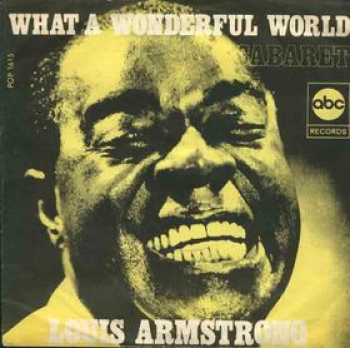
“…in jazz, everyone is underrated. The majority of the people in this country don’t really know who Louis Armstrong was, so begin there…”
– Gary Giddins
______________________
JJM In your final Village Voice column of December 15, 2003, you lamented about not having written columns on the likes of Booker Ervin, Charlie Rouse, Wardell Gray and others.
GG When I mentioned musicians like Wardell and Rouse in that column, I was very consciously limiting myself to dead musicians, because once we expand the dialogue and include living musicians, it can be an endless thing. Dave Liebman, for example, is somebody I never wrote a column about, though I’ve often thought about it. I wrote quite a bit about Anthony Braxton in the early years, but insufficiently about his later work. There are many others.
JJM Perhaps this is a good time, then, to discuss neglected and underrated jazz musicians in general. I thought we could go instrument by instrument, starting with the trumpet.
GG One musician I wanted to write about is Malachi Thompson — I must have started a column on him four or five times, but something always intervened. He’s a trumpet player from Chicago, not a great virtuoso, but a solid player who works within the bebop idiom but does so using a variety of avant-garde bells and whistles. He allows himself and those who work with him lots of freedom, yet it is disciplined. There’s usually some sort of harmonic predisposition in the way he plays. I would call him an inventive recording artist, because his albums are often thought through conceptually, and, of course, he’s an engaging soloist. I don’t always like when he gets into vocals and poetry and that kind of thing, but he’s been out there a long time, making a commanding series of records — mostly for Delmark — that haven’t gotten much attention. There are many musicians like that; you feel your way into their work and try to get a grip on it, and sometimes it takes longer than you would like.
Another trumpet player that I never actually did a whole column on — and it sort of spooks me that I didn’t because he’s one of my favorites — is Fats Navarro, one of the very pivotal players of the late forties. I wrote a number of times about Clifford Brown, who in some ways arrived as Navarro’s heir apparent, but he’s another musician I feel I never did justice to because he takes my breath away. I can’t imagine life without Clifford Brown. I rate him pretty close to the top. But I think I need to say here that the decision about what I wrote about was partly affected by circumstances and partly by my own craziness. For example, when the complete Navarro Blue Notes were collected, that would have been a good opportunity, but more pressing stories may have intervened, or maybe I had just done a couple of historical pieces and was focusing on newcomers — I always attempted to balance old and new. The craziness is more emotional — I have to get myself worked up by someone’s music to write at length about it.
JJM I think Brown is underexposed, at least to the present day audience.
GG At this point he may be, but certainly anyone who grew up with jazz knows that Clifford is practically a holy figure. I don’t think it’s unfair to say that his passing, some forty-eight years ago, is still mourned. When I listen to the tracks he recorded in a club in Philadelphia on the night of his death, “A Night in Tunisia” and “Donna Lee,” I am torn between utter exhilaration and tremendous sorrow for what he did not have the chance to become. Do you know his solo on “Delilah”? — the perfect trumpet solo. “I Can Dream, Can’t I” is another. And that opening solo on “Tunisia” is pure genius.
JJM Did you see Warren Leight’s play Sideman?
GG Absolutely. The scene I am sure you are reminded of is the one in which they play a tape of the “Night in Tunisia” solo. During the performance I attended, when that scene was over, the audience cheered and applauded. I was astounded by that. Here we were, watching a dramatic play, which basically comes to a stop while two guys sit at a bar and listen to a record for five minutes. That is unheard of in theatre. Yet the audience was enthralled, and when that solo was over, there was the kind of response you’d hear at a musical. That is so rare. Now, how many people in the theatre went out and bought a Clifford Brown album? That would be interesting to know, but I think the reaction indicates how powerful his music is.
JJM You were talking about Navarro before I got you sidetracked on Brown…
GG Yes. Navarro was one of the musicians whose influence you hear most predominantly in Clifford. He had an absolutely spotless sound and was a brilliantly inventive player. He was very different from Dizzy in that his phrases had a more cautious architectural structure that allowed him to sustain a luscious tone, and very different from Miles in that he was a solidly extroverted player. He was one of those musicians who, no matter what the moment called for, could come up with something creative, imaginative and exciting. Like Brown, he died terribly young — twenty-six — part of tragic cadre of trumpet players who died ridiculously early, including Sonny Berman, Clifford Brown, Booker Little, and Lee Morgan, who at least made it out of his twenties and died at thirty-three. Little was another unique trumpet player, who came along right after Brownie. The two trumpet players we usually think of from the early sixties are Freddie Hubbard, the great virtuoso, and Don Cherry, the great “free” player. Little walks between them. He is probably best known for his work with Eric Dolphy, but he was also an interesting composer. He never completely got his approach on track to the degree that Brownie and Fats did. But he was so imaginative, and when you listen to him now he still sounds modern in a suggestive way. He had a gorgeous sound, personal and supple.
JJM Nat Hentoff’s record company recorded Little if I recall
GG Yes, that’s right. Little wrote and recorded a suite for Candid, where Nat produced albums. Nat made a lot of good albums by Mingus, Phil Woods, a reunion of Hawkins and Pee Wee Russell, Otis Spann.
JJM What about Kenny Dorham?
GG Will Friedwald once wrote a piece for me in the Voice in which he said something like, if you look up “underrated” in the dictionary, it says, “See Dorham, Kenny,” because when anybody wrote about him it was de rigeur to preface his name with that word. Dorham was the other guy who came up during the late forties bop period who never quite achieved stardom. Yet, his Blue Note records — especially Whistle Stop, one of the great jazz albums — show that he had his own very sleek, very beautiful, and emotional sound. He loved long phrases that would kind of wind in and out of the changes, and he had a tremendous sense of time. He was a marvelous player. I’ll tell you a funny story about KD that involves another gifted and neglected trumpet player from the period of the late fifties and sixties, Ted Curson. Ted worked with Cecil Taylor and played beautifully on those Mingus Candid albums with Dolphy, and made a couple of very attractive albums on his own for Prestige and other small labels. In the sixties, he got a shot with Atlantic when his band had the equally underrated tenor saxophonist Bill Barron, Kenny’s big brother. So he made a really fine album called The New Thing and the Blue Thing, which shows off what an inventive tunesmith Ted was in that period, and KD was reviewing records for Down Beat. He reviewed Ted’s album and went on and on about how great it is, and gave it three and a half stars. Ted asked him, “Kenny, if you love the record so much, how come you gave it only three and a half stars.” And Kenny told him, “That’s what they gave [Dorham’s] Trumpeta Toccata, and that record’s just as good as yours.”
JJM Any other trumpet players come to mind that you feel were neglected or underrated?
GG There are so many players who are not written about anymore, especially from the swing period. When was the last time you read about Roy Eldridge or heard a representative reissue of his work in any period of his amazing career? Most of his recordings aren’t even available on American labels at the moment. He is someone I wrote a lot about at the Voice, so I don’t feel I overlooked him, but I can’t help but wonder what his name and music mean to a younger generation that is pretty much dependent on what is available on CDs.
There are many players from the thirties I enjoy. I was always fond of Bobby Stark, a big band player best known for his work with Fletcher Henderson. While I enjoy his work, he is somebody I wrote about only in passing. A lot of players like Stark get left by the wayside, and as time goes on, people forget about them. Bill Coleman, Benny Carter as a trumpet player (“More Than You Know” is a classic), Jabbo Smith, the great bluesman “Hot Lips” Page, even someone like Rex Stewart, who is remembered for his work with Ellington, but was such a striking, original, satisfying player on so many levels. Koch reissued the 1941 sides he and Johnny Hodges made leading Ellington small groups, and it created very little stir. When RCA-Vintage originally put that collection out in the 1960s, everyone was talking about it. In some ways, it’s even more powerful now. I wrote a long piece about it that will be in my next book, but I was surprised and disappointed that the reissue caused no stir at all. But in jazz, everyone is underrated. The majority of the people in this country don’t really know who Louis Armstrong was, so begin there
JJM Well, from a fan’s perspective, it is interesting to see who gets marketed most prominently. Among trumpet players, certainly Miles is up there, as is Dizzy. The person I keep running into in my studies of jazz is Red Nichols, so much so that I am left with the impression that the record companies have done an injustice to him in terms of marketing his music.
GG You’re going way back into jazz history now. It is hard to know what to do with Red Nichols. There are basically two groups of Nichols recordings, and those made in the twenties are the ones worth listening to — not so much for his playing but for the strange band he led, the “Five Pennies.” It had an unusual sound with Vic Berton playing tympani, and is still fun to listen to today. He used some great musicians, including Pee Wee Russell, who played a memorable solo on “Ida.” And I like Red’s solo on the Whiteman recording of “I’m Comin’ Virginia,” but he was not often an inspired player. Next to someone like Beiderbecke, he was decidedly second rate. Still, it would be nice if a label edited an anthology of the best of the early Five Pennies.
Then Nichols disappeared for a while and was rediscovered in the fifties as a consequence of The Five Pennies — a very silly biopic that starred Danny Kaye. Nichols became hugely popular because of it. At that time, he was recording for Warner Brothers, which had a jazz catalog in those years that consisted almost entirely of records by Nichols and other Dixieland musicians. The film and Nichols’s popularity spurred a revival of interest in that kind of music, but those records, despite featuring solid musicians, are pretty much by the numbers, second generation white Dixieland, and I don’t think they would find much of an audience today. But I do think there is enough material from his first group of records to justify a rediscovery of him.
JJM Shall we move on to the saxophone?
GG Good heavens, where do you start? Since I mentioned Charlie Rouse in my column, we may as well begin with him. The thing with Rouse, Paul Gonsalves and George Coleman — three tenor players I have always admired and who were very much criticized in the sixties — is that they all had the same career problem, which is that they came into a famous band replacing a legendary figure. Rouse joined Thelonious Monk’s band after Coltrane left, and he was sort of dismissed for not having the impact or excitement that Coltrane generated. But Rouse brought something else to Monk’s band — an incredibly sonorous empathy with the sound of Monk’s piano. I love the way the tenor blends in with the keyboard, in a way Monk never quite accomplished with Coltrane or Sonny Rollins. And Rouse’s cautious, step-by-step way of evolving a solo fits in perfectly with the structure of Monk’s compositions. I think that people are going back to Monk’s Columbia recordings, now that they are being reissued, and marveling at what a good player Rouse is.
When I was in high school, I was trying to convince a friend who would only listen to Dave Brubeck to check out Monk. Finally, he went out and bought a Columbia album called Monk. It was an album with a gray and black cover and a picture of Monk’s face with just the word “Monk.” It’s a quartet record, but there was no personnel listening. So if you bought it cold you wouldn’t know who was on it or who played what. He called me up that night and said, “You know, you were right. That it is an incredible, fantastic album. And I also think the piano player is great!” He just assumed the leader was the saxophonist. Rouse is such an appealing player and I loved when he cropped up as a sideman on various sessions in the late fifties and sixties on Blue Note or Epic. Whatever label or context, his sound is distinctive.
The same thing happened with George Coleman. While Miles Davis tried out many tenors — including Jimmy Heath and Sam Rivers — ultimately Coleman got the job. And he wasn’t as provocative as Tony Williams, nor did he possess the virtuosity of Ron Carter or Herbie Hancock. His solos were a bit long and compared to Miles especially, they lacked pith. When Wayne Shorter came in after Coleman, everybody said now the band is great, and Shorter was regaled for good reason. It was a great decision on Miles’s part because Shorter changed the whole sound of the band with his compositions and his approach on tenor. But go back to the 1964 album My Funny Valentine, which is one of my favorite Miles Davis recordings. Coleman’s playing on it is stunning. He is superb, completely “in the pocket.” The other great record that, mysteriously, Columbia hasn’t reissued, is Miles in Europe, which was the first Miles record I ever bought. It came out in 1963, the first quintet album with the trio of Herbie, Ron and Tony. Williams plays an unbelievable solo on “Walkin’,” one of his great moments on record, and one that really kicked off his career. Yet the LP was never reissued in this country, and I am pretty sure it has never been on CD.
JJM How would you characterize Coleman’s solo career?
GG Coleman has had an interesting career following his work with Miles. He put together an octet at a place called Boomers, an unusual thing to do in the seventies. This was before David Murray put together his octet, and it wasn’t common for a saxophonist to walk away from the usual quartet or quintet setting to favor headier voicings. He created a tremendous relationship with another very underrated musician, the pianist Harold Mabern. They both came from Memphis and are now New York mainstays. There are years when it seems like not a month goes by when you can’t find Coleman or Mabern or the two together playing at a club in New York. I think that when that happens, people tend to take them for granted. Johnny Griffin — another neglected tenor saxophonist — once remarked that the reason he continued to live in Europe following his comeback was because in the United States, they are glad to see you come down the street every six months; in Europe, they are glad to see you every day. And that’s the way it works on the club circuit. You are lucky to work in a major New York club twice a year. Art Blakey used to play one week uptown and the next week downtown — he was always working — and after a while he was bringing in tourists and kids on dates who viewed his playing as background music. Eventually the ardent enthusiasts began to take even Blakey for granted.
JJM And the third saxophonist, Paul Gonsalves …
GG Gonsalves was in the Ellington band and basically took over a seat that had been established by Ben Webster, the first tenor that Ellington ever hired full time. There had been a couple of others — Al Sears, for one — but they didn’t make much of an impression. Gonsalves became hugely famous at Newport in 1956 with his twenty-six or twenty-seven chorus solo on “Diminuendo and Crescendo in Blue,” and ever after, Ellington introduced him as the “Hero of the Newport Jazz Festival.” But Paul was a very easy going guy, and a drinker, and he wasn’t somebody who was going to go out and make his way as a leader. He had no interest in that. While he made some very pleasant records as a leader — especially with Ray Nance, with whom he was close — his key work is with Ellington, same as Johnny Hodges, only more so. Listen to the way he plays through the theme on the first track of Far East Suite, “A Tourist’s Point of View,” or in the adaptation of Tchaikovsky’s Nutcracker, his sound, his concept, the notes he chooses, the sustained bravura are remarkable. Coiled yet mellow, like blue smoke. Ellington had him completely nailed and he used him in a way that allowed Paul complete freedom, so that you feel nobody else could play the role quite like him. He was marvelous. The pianist Brooks Kerr introduced us one night during the seventies, and I had the pleasure of having a drink with Paul. He could really put it away, but it just kept him mellow, a really lovely man. I had such a great time hanging out with him for a couple of hours. I love his music. When David Murray started talking about him, people began to pay more attention, but he never got his due when he was alive.
Now if you really want to get into the underrated underrated, consider a player who to my knowledge has never made an album under his own name — and most people who are reading this will not know who I’m talking about — Kenny Hing, who has been with the Count Basie band for many years. He started during the last ten or so years of Basie’s life and just kept with it. He is a short little guy who plays in the Paul Gonsalves manner, and I have always liked his work. For a while Jimmy Forrest was there at the same time, and was the star tenor. He got all the solos and the applause, and he earned them. But every time Hing stands up, it’s a gas because you’re hearing a guy who hasn’t forgotten nuance and color.
And we haven’t talked about the Kenny Dorham of the tenor, Hank Mobley, a player’s player who shone with Miles, Silver, Blakey, and made so many splendid albums on his own — The Turnaround, No Room for Squares, Workout, A Caddy for Daddy — calmly swinging, inventive gems, filled with his own very clever tunes. Soul Station, though, is the one I return to most often, just Mobley and the ideal rhythm section, Wynton Kelly, Paul Chambers, and Blakey. No matter how familiar the material, ballads and especially blues, he gives it is fresh turn of phrase. “This I Dig of You” – man! I never got to see him live, a big regret.
Another tenor player I think is terrific, who is on the scene now and is better known among musicians than the public, is Ralph Lalama. Every time he stands up you are really hear something. He’s an old-fashioned, dig-in-your-heels-and-play kind of musician. I remember him one night at the Vanguard when I thought he cut Joe Lovano pretty good. Clifford Jordan is another player who never got the attention he deserved, even when he started his own big band. He had a very distinctive style and tone. And I think I mentioned Dave Liebman earlier. My problem with him is that I prefer him on tenor, whereas he obviously prefers himself on soprano. I have a similar thing about Donald Harrison, who moves me on tenor in a way he rarely does on alto, his preferred instrument. When Liebman first came along, he was in Coltrane’s shadow, but he has pushed himself out as if by an act of will. I think park of the thing is that he has never denied Coltrane’s impact. I mean, one of the most exciting performances I ever heard by him was a few years ago when he played A Love Supreme. For a while he was into pastoral themes that put me to sleep, but his recent work is just fraught with compositional ambition — you feel like you’re hearing someone uncover strengths he didn’t know he had. I don’t know what the quintessential Liebman album would be, if there is one, there’s so much out there, but digging through a oeuvre like that is precisely what makes jazz criticism such a stimulating field.
JJM You told a story earlier about turning a buddy onto a Monk album, and how he came away thinking that the sax player — Charlie Rouse — was the leader. I admit to having that experience as a young fan of jazz with Charles Mingus. While I had heard of Mingus, I didn’t know much about him, and after listening to a record of his, I was under the impression that the saxophonist, Booker Ervin, was the leader of the group.
GG Yes, I have to say that Booker Ervin is one of my absolute favorite players of all time. I love his playing. I love the fact that you know it’s him after two notes. There is no more distinctive player than Booker Ervin. I wouldn’t say he is more distinctive than Coltrane or Rollins or Lester Young or Hawkins, but he is every bit as distinctive. Nor would I say that he is as great as them, and I wouldn’t say that in his overall conception he is as original, and yet he is completely himself. He began as a trombonist, and I often get the feeling he’s playing trombone on a tenor sax. He comes as close to that echoey, sliding, engulfing sound as you can get on tenor, and his vitality is relentless. I like everything he did, but if I had to pick one album it would be The Space Book. “Number Two” makes he laugh out loud as the sheer relentlessness. It is not avant-garde jazz — he’s playing changes — yet it has the kind of freedom and velocity you might associate with Coltrane’s “Chasin’ the Trane,” though Booker didn’t sound anything like Trane. He was one of the few tenors of his generation who didn’t. Then he wraps himself around “I Can’t Get Started” with an ardor that’s almost palpable — it’s a swooning performance. After George Tucker, the bassist on the Jaki Byard Live at Lennie’s albums, died, Booker delivered himself of a twenty minute rant called “The Trance,” a sustained cri de couer. But he outdid even that in 1965 at a festival in Berlin with a piece, nearly half an hour long, issued after his death on Lament for Booker Ervin. Someone told me that the stage manager at the Berlin concert became abusive trying to get him to stop, but the audience loved it. Booker’s stuff with Mingus is wonderful, and he recorded beautifully with Ted Curson, Booker Little, and others, but I think his best collaboration was with Jaki Byard on the Prestige albums conceived by Don Schlitten as the “Book” series. It was strictly a studio concept. Like Louis Armstrong’s Hot Five, the quartet never played in a club. Alan Dawson, who was Tony Williams’s teacher and another “musicians’ musician,” was the drummer, plus Richard Davis, who Stravinsky once called his favorite bass player, and the incomparable Byard.
JJM I loved his Booker ‘n Brass album on Pacific Jazz. Do you remember that?
GG That is the one where he does the Peggy Lee thing, I Left My Heart in Salt Lake City. Oh yes, that’s a wild album, an attempt to make him commercial. But the choice of tunes is so far out. I think Teddy Edwards wrote the charts, didn’t he?
JJM Boy, I don’t recall. I bet it has been twenty years since I played it.
GG It’s been a while since I played that too.
JJM That album not only got me more into Booker Ervin’s music, but more into jazz as well.
GG How interesting that of all people to get you deeper into jazz it was Booker Ervin, because he was so underrated in the sixties. The last time I can remember him playing in New York was when he was working as a sideman in Ted Curson’s quintet at a little mob-controlled joint in the Lincoln Center district called La Boheme. Everybody was talking about Coltrane and Shorter and Rollins and the big guns, and Ervin was really something of a cult figure. Those Prestige records were hardly best sellers. He made a record with Curson called Urge, a quartet album that is a collector’s item because you can’t find it. I don’t think it has ever even been on CD, but it’s a helluva thing. He died in 1970 —not yet forty.
JJM Jackie McLean strikes me as someone who may be termed underrated …
GG Well, I’ve actually written a lot about Jackie. He’s another of my favorites and I covered his return to New York, after he has been teaching for several years in New England. He came back to play at the reconverted Five Spot, which existed for a couple of years in the early to middle seventies. At the time, he was staying at his mother’s place, a sunny upper West Side apartment overlooking the Hudson River. I went there to interview him and I remember that every surface had a reed hanging over the edge. He was choosing the right one for his opening. That night I arrived toward the end of the first set and he waved me over and, while the pianist was soloing, told me that he wanted to show me something unbelievable. So when the set ended, he came over and said, “Look at this!” He showed me the mouthpiece of his alto, and the reed had a gash with a good quarter of an inch of wood missing. Most people would have a hard time getting any sound out of a reed instrument with that much reed gone. And he had just played an entire solo without even realizing it — he was glowing about it.
He was one of bop’s “Young Turks,” started recording in his teens, like Sonny Rollins, who was a couple of years older. They came up around the same time in Harlem, chasing after Bird, learning the music and making it a part of themselves. And the beauty of it is that they weren’t imitating anybody. Jackie, from the time he came on the scene, was playing like Jackie. Sonny, from the time he started recording at nineteen, was playing like Sonny. Even Stan Getz started out sounding like Dexter Gordon, but not these guys. To me, that is one of the great generations in jazz. I love Jackie’s playing with Mingus, but for me he really hits his stride with the Blue Note records he did with Grachan Moncur, Destination Out, and the quartet album Let Freedom Ring. Almost everything he did in that period is exceptional, as is much that followed.
Another great alto player was Sonny Criss, a cult figure of sorts who ended up a suicide. I don’t know why he never got the attention, but I suppose it is because he made his comeback recording for Prestige in the late sixties, a time when jazz itself was not getting attention. All of the albums he made for Prestige are worth looking for, but the masterpiece is Up Up and Away, which includes “Willow Weep For Me” and a surprisingly dulcet duet with Cedar Walton on “Sunrise, Sunset” from Fiddler on the Roof. He originally recorded “Willow” for Vee Jay or one of the smaller labels, with Barney Kessel on guitar, and it was a fair performance — there are better things on that album. But when he re-did it on Prestige, he knocked it out of the park, a deeply felt, perfectly gauged performance, with a magnificent flourishing cadenza at the end, parsed with blues notes top to bottom.
JJM Shall we move on to piano?
GG There are a lot of neglected figures, as on every instrument. One that comes to mind is Barry Harris, one of those gloriously stubborn figures who saw the “second coming” in Bud Powell and Thelonious Monk and has remained true to that vision while developing his own way of pursuing it. He has a lyrical, understated, beautiful sound on the piano. He has made so many records that are not much listened to now, like Magnificent! which is one of the best trio records of its period. He made a few extraordinary albums on Xanadu, as well as duets with baritone David Allen, who is not my favorite singer but he is a good reader of ballads. No matter what he does, Barry’s taste is impeccable. He is a New York landmark, in a way, because of the huge concerts he does with singers, dancers and choirs. They’re like parties for the neighborhood, only the neighborhood is Manhattan. He was close to Monk personally, as well as to the Baroness Pannonica De Koenigswarter, and I think she helped finance a lot of what he’s done. He is a generous man, and a great teacher, a lot like Jaki Byard. We are getting into a period now where it is very hard to meet a young pianist who didn’t study with Jaki Byard, Barry Harris or Andrew Hill. The influence of these pianists is really felt in musicians of Jason Moran’s generation.
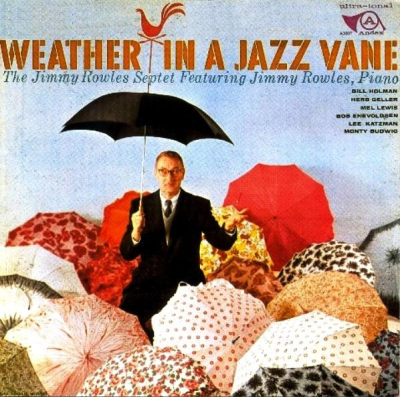
One of the great things that happened in New York during the seventies was the arrival of somebody nobody in my generation had heard of, Jimmy Rowles. The older critics remembered him from the Woody Herman days. In 1973 or 1974, a series of concerts were produced at Town Hall, and the first, as I recall, featured Johnny Mercer, maybe the greatest lyricist who ever lived, and someone who had not performed in concert in many years. The place was sold out, and Mercer came with Jimmy Rowles, who was billed in the program as “California’s Greatest Jazz Pianist” — a memorable evening. Shortly after that, Jimmy relocated to New York where his first performance, I believe, was at Michael’s Pub. The place was packed with musicians and critics — a mostly papered house. He was a very distinct, witty player. Then he moved into Bradley’s, which became one of the key piano bars in New York for about twenty years. Going to hear Jimmy Rowles there was a rite of passage for a lot of young fans and musicians. For a while he was working with George Mraz, and they had a great thing going. Jimmy was a funny dude. He used to call George “Bounce.” Because he didn’t speak English very well, Mraz was a little shy at first, but he finally asked Rowles why he called him “Bounce.” And Rowles said, “Man, because you’re a bad Czech.” He knew more obscure songs than anyone since Red Garland, and could really make them sing — a fascinating player. When he heard that I was working on the Bing Crosby biography, he called and said that he was from Spokane — Crosby’s hometown — and we talked a lot in phone calls back and forth. He was already ill and couldn’t travel much. But he did make one last concert.
He had a great period in the seventies and eighties where he made albums with the so-called “Four Brothers.” He did The Peacocks with Stan Getz, an extraordinary album still in print on Columbia. And he made one of the great cult albums called Heavy Love, with Al Cohn — duets. “Them There Eyes” is the masterly opener, worth searching out. But the most significant pairing was with Zoot Sims, whose quartet he joined. When Sinatra was in town, he would go down to Fat Tuesday’s to hear that group. It was a great period, and that quartet, like Tommy Flanagan’s trio a few years later, enjoyed a rare consistency. You didn’t want to miss it.
JJM While I always admired Flanagan’s work, a relatively recent recording of his especially caught my ear, Jazz Poet.
GG That was one of his best albums. But he had been making great records ever since he left Ella, beginning with a series on Norman Granz’s label, Pablo. Beyond the Bluebird is another great one, and the record he made of Coltrane’s music, Giant Steps, is tremendous, particularly in light of the fact that he was on the original Giant Steps. Thelonica is another magnificent album. Tommy became “the guy.” His trio had the precision of a watch. It included Mraz for a while, then he put together that great trio with Lewis Nash and Peter Washington. I miss Tommy and I miss Jimmy Rowles. I sound ancient, but every jazz lover learns that great musicians are not replaceable — you’ve got to catch them when you can and be grateful for the opportunity.
JJM Another turning point artist for me was the pianist Elmo Hope. What is your take on him?
GG He was another one who didn’t treat himself very well medically, but he had his own distinctive way of playing in the bebop idiom. A lot of the pianists came up playing in the Bud Powell tradition. They were frequently knocked as being right-hand piano players and that kind of thing, but the best of them found their own style and Elmo Hope was one. But he’s someone I need to spend more time with; I never really locked into him as I did with, say, Wynton Kelly or Sonny Clarke. Clarke was very shrewd, very inventive, with tremendous time and a slew of ideas. I love the things he did with Dexter Gordon and the one with Coltrane and all those he did under his own name, including a great one with Rouse.
Another pianist we have to talk about is Cedar Walton. He’s an extraordinarily distinctive player, someone you can recognize after a few bars because of his steely way of hitting the keys — like pistons. The first time I heard him was on a record with J.J. Johnson, and I can still remember his piano solo on “Fatback.” Like some others we’ve talked about, he has great taste and time, and is a New York standby, in the clubs all the time. Every Christmas for several years, he and Jackie McLean played together at the Village Vanguard, and of course he has worked with George Coleman for years, as well as with Clifford Jordan, going all the way back to the Boomers era. He is one of those guys who, season after season, never fails. He’s a great blues player and composer. Some of his tunes are memorable and ought to be covered more, as Jimmy Heath’s and Kenny Dorham’s tunes ought to be covered more. I don’t know why they aren’t.
JJM A player I have always liked a lot was Bobby Timmons…
GG I like Bobby Timmons too. I haven’t played him in years, but I remember he did one of the few Christmas albums I could ever listen to, because he turned everything into a blues. He made his reputation with Blakey and the tune “Moanin’,” and became so closely associated with a bluesy kind of soul jazz that he got locked into that and people forgot how flexible a bopper he could be. Same with Wynton Kelly, who, like Timmons, died young. He had tremendous vitality and was an exceptional sideman, quick thinking and empathic both for singers — he worked with Dinah Washington for years — and in bands, including Miles Davis’s. Sadly, when he got his own sessions, it was almost always to try to make Bobby Timmons-type soul albums. On Verve, they put out an album called It’s All Right, and while it has moments, it doesn’t show a fraction of what he could do. But, fortunately, they did record the trio he led for Wes Montgomery at the Half Note, a magnificent album. It has some of Montgomery’s best playing, as well as some of Wynton’s best. The Vee Jay sessions are also fine, but as a leader he should have been cultivated and recorded more imaginatively.
JJM Are there any contemporary pianists you feel deserve more attention?
GG George Colligan is a promising player, but he made a record under his own name that I don’t like at all. His record reminds me of what jazz is most lacking in — good Artist & Repertoire people. They don’t seem to exist anymore — intelligent, sympathetic, creative, and trustworthy producers who can see what a musician’s potential is and can really work out what an album should be. When musicians produce their own albums now they often sound like vanity projects. Everyone wants to record their own tunes, which are rarely distinguished, and is a key reason why so many mediocre albums are released by musicians of promise.
JJM Let’s finish up Part One of this talk on underrated and neglected musicians with the rhythm section, and do the drums and bass.
GG Well, a drummer who is now getting the recognition that he didn’t get for a long time is Roy Haynes, who for me is the greatest drummer alive, period. At times I may be unfair to other drummers because I want them to do what I think Haynes would do in certain situations. I like him because he is so aggressive. One difference between rock drummers and jazz drummers, generally — and one reason I can’t stand rock drumming — is that a rock drummer will jump on the beat and stay there like a hyperthyroid metronome, whereas a great jazz drummer keeps the beat but that is only the beginning of what he does. They are involved tonally and in every other way with what the soloist is doing, and where the music is. Recently I went to see the very gifted singer/songwriter Joe Henry. The set was great, but his drummer, who is probably a very good rock drummer, never interacted with him, and I remember thinking that if it was a younger Roy Haynes, a Lewis Nash or Winard Harper or Greg Hutchinson, he would have been pushing Henry, filling up the fills with more than tocket-a-tocket-a turnbacks. Anyways, Haynes is a guy whose antennae are always up.
Among newer drummers, Hamid Drake has originality and energy. I usually catch him in “downtown” places, but I think he could play in any context and I wish I got to hear him more often.
Another guy I would like to hear spread beyond the neighborhood that he’s king of is the bass player William Parker. The critic Kelvyn Williams once wrote a piece for me about Parker in which he made outsize claims, comparing him with Mingus. I thought he was going a bit overboard and told him so, but he defended his position and told me to go hear him play that night. Well, he was totally on the money. Parker is one of the most creative bass players alive, but is so completely wed to the “below Houston Street” world that you don’t often get to hear him play in another context. It isn’t necessary for him to do that, but unfortunately many musicians and fans listen to the so called “avant-garde” or to mainstream jazz, rarely crossing over, so they miss out on some of the extraordinarily high level of musicianship that exists in both worlds. And you do wonder what it would be like if downtown and uptown mixed it up more frequently.
JJM One of the drummers who I grew up with was Philly Joe Jones, although I realize he is not exactly a guy who was short on getting any ink …
GG Right. I never thought of him as being underrated because he got so much attention when he was with Miles’s group. But after he left Miles he had a lot of personal problems, as they say, and he sort of disappeared. He came back playing in Bill Evans’ trio, which was an unexpected gift, and for a while he led a band called Dameronia. The stuff he did with Miles changed the way drummers played.
Freddie Waits was a very underrated drummer. Whenever he appeared on a record in the sixties and early seventies, he added a dazzling sense of total commitment. Another exciting drummer from that period, who suffers from schizophrenia and hasn’t been heard from in a while, is Roy Brooks. He worked with Mingus, Horace Silver, and a lot of other bands. He had a thing where he would put a hose through one of the drums and blow into it. On occasion he would even use the old vaudeville trick of bowing arco-style on a saw. He was also the first drummer I ever saw play a silent four bar break in a series of exchanges, which is now the kind of thing high school drummers do. A drummer I want to mention that people may not know is Dick Berk. He worked briefly with Mingus, but I first got to know him when he was with Ted Curson’s quartet. He played wonderful solos all over the set, making the cymbals swoosh like a torrent of autumn leaves, but is also a precisely swinging drummer. He moved out west and every once in a while I will get some album recorded in California with Dick on it. I think he’s in Nevada now.
JJM Any bassists other than Parker?
GG There are so many good ones. Rufus Reid is a guy who spends more time in the Academy than on the bandstand, but he is an impeccable bassist. I think everyone knows Christian McBride, among the younger players. A bass player that people in the jazz world don’t know much about is Lynn Seaton, a gifted player with tremendous facility and booming tone. I wish I saw him in the clubs more, working with different kinds of bands. I think he does mostly studio work.
JJM I think I’ve worn you out. We’ll get together soon and do a Part Two.
_______________________________
Gary Giddins products at Amazon.com
_______________________________
This conversation took place on January 5, 2004





Marvelous interview with Mr. Giddiness! Especially liked his take on George Coleman, Hank Mobley, and Bobby Timmons. Has Part 2 interview been done yet?
Glad you enjoyed part one…Part two is found on the link below. It is one of 15 interviews we have conducted with Gary. JJM
https://www.jerryjazzmusician.com/2004/04/conversations-with-gary-giddins-on-underrated-jazz-musicians-part-two/