
.
.
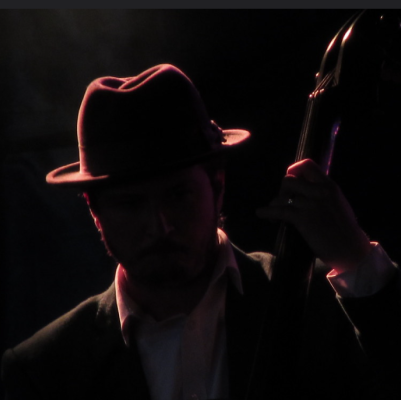
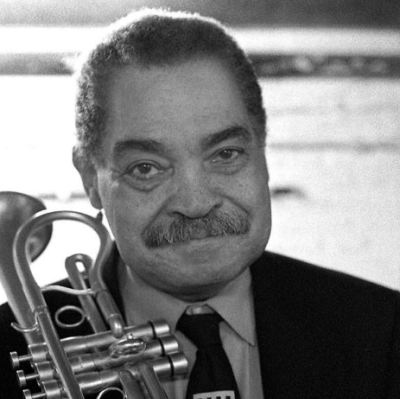
Mirko Caserta, CC BY-SA 2.0, via Wikimedia Commons
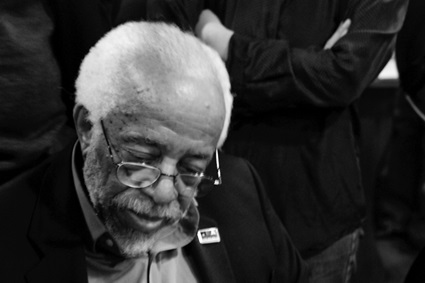
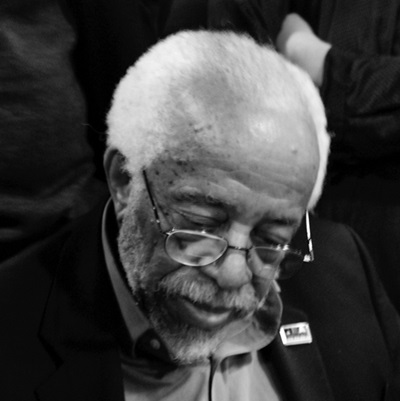
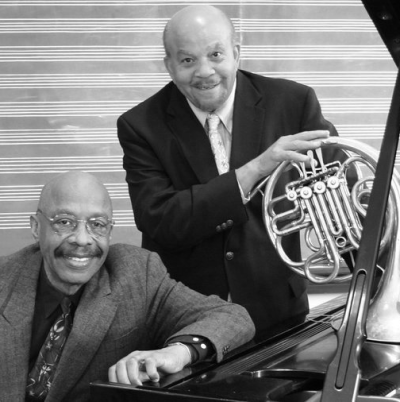
Barry Harris, 2007
.
___
.
With Barry Harris at the 11th Street Bar
by Henry Blanke
.
…..Some time around 2015 I was walking along the East River in New York City when I heard a cat blowing tenor sax and stopped to chat. He mentioned that the 11th Street Bar on the lower east side had jazz on Monday nights. I went the next week and the place was comfortable, the drinks generous and the people fun and interesting. I was sitting alone at a table enjoying the house band when I was joined by a group and gleaned from their conversation that they were players. One was considerably older than the rest and the others seemed to defer to him when he spoke. I vaguely recognized him and asked one guy who he was. “That’s Barry Harris. He comes here a lot.” Shivers ran down my spine when I realized I was sharing a table with jazz royalty. After years of rubbing elbows with jazz musicians at clubs I was comfortable enough to interject a few quips into the ribald conversation which drew appreciative laughter.
…..After the set I got up the nerve to approach Mr. Harris and he indulged a few of my questions. I knew that he was a bebop purist who felt that jazz had degenerated since about 1956. When I asked who among his piano peers played the “real bebop” his answer surprised me. “Bobby Timmons could play.” I had always associated Timmons with his later soul jazz hits “Moanin’” and “Dat Dere.” Towards the end of the last set Harris sat in on Monk’s “Ruby My Dear” and “Round Midnight.”
.
Listen to the Barry Harris Trio perform his composition “A Soft Spot,” with Sam Jones (bass); and Leroy Williams (drums).
.
…..In addition to decades of brilliant records and live performances, Harris was perhaps jazz’s foremost educator and many of his students and acolytes sat in, including a female drummer from Japan who couldn’t have been past her mid-20s. Later they all gathered around as he conducted an impromptu master class by demonstrating ways to reharmonize the old standard “A Nightingale Sings in Berkeley Square.” (Among them was the pianist Spike Wilner, who runs the jazz club Smalls. He said to me “I fucking love this place.”) The jazz approach to standard European harmony is unique and no one can teach it like he can.
.
Watch a short video of Barry Harris during a workshop he hosted in The Hague. “This video is part of a collection of videos which Frans Elsen recorded during workshops that Harris gave at the Royal Conservatory in The Hague between 1989 and 1998. Frans Elsen was a very important Dutch pianist, arranger and educator of jazz who shared a mutual appreciation of each other’s music, and were close friends. This material has been edited and selected by Frans himself. It gives a unique insight in Barry’s wonderful ways of teaching and his extraordinary musicianship.” [Barry Harris Videos – Youtube]
.
…..Barry Harris was born in 1929 in Detroit to a musical family. His brothers Thad and Elvin went on to become masters in their own right. He moved to New York in 1960 where he established himself with such luminaries as Dexter Gordon, Hank Mobley and Lee Morgan. From 1965 to 1969 he had a regular gig with Coleman Hawkins, who was especially receptive to the innovations of younger players at the Village Vanguard. Remember, this was a time when the audience for serious jazz was dwindling and the electric jazz fusion pioneered by Miles Davis was becoming popular and attracting a young and white audience. But Harris defiantly insisted, as he did for the rest of his life, that high jazz modernism (classic bebop) was the pinnacle of the art form.
.
Listen to the 1976 recording of Dexter Gordon playing the Gene de Paul, Patricia Johnston and Don Raye composition “I’ll Remember April,” with Gordon (saxophone); Barry Harris (piano); Sam Jones (bass); and Al Foster (drums). [The Orchard]
.
…..Jazz experienced something of a revival with Dexter Gordon’s return to the United States in 1976 after spending 14 years in Europe. His first album upon his return, Biting the Apple, featured Harris in splendid form. Through the 1970s he lived with the increasingly reclusive Thelonious Monk in the Weehawken, New Jersey home of the jazz patron Pannonica de Koenegsworter. Barry said, “Monk rarely came out of his room. But one time he sat at the piano and played ‘My Ideal’ and told me to trade choruses with him. We must have played a hundred back and forth.” It was he who found Monk after he checked out for the last time in 1982.
…..I was outside the bar having a smoke when Mr. Harris finished the impromptu class with his students, none of whom could have absorbed the aesthetic grandeur of bebop in the organic way that he had. Very few musicians alive could have. As he was being escorted to his car I approached him and said what a privilege it was for me to have heard him play over the years, and we chatted a bit. He told me that he had recently visited Monk’s long-time drummer Ben Riley, who didn’t recognize him. Wondering if it was because they hadn’t seen each other in so many years or something worse, I asked why not. “We old,” he said.
…..As I watched his car leave my palms came together and I bowed deeply. I am a practitioner of Zen Buddhism and this gesture of respect is called gassho. As I turned with tears in my eyes I saw the young Japanese drummer doing the same. I think she understood. “We old.” More ancient than we can know. More modern than we can imagine.
Barry Harris died on December 8, 2021 two weeks before his 92nd birthday.
.
.
___
.
.
Henry Blanke has been listening to jazz and Black popular music since 1973. He frequented the Village Vanguard and other New York City jazz clubs for 40 years. He now resides in New Orleans, where much of the music he loves originated.
.
.
Click here to read Henry Blanke’s appreciation of Blind Willie Johnson, “Blind Willie Johnson Leaves the Solar System,” and click here to read his essay, “Lester Young Cools a Village”
.
.
___
.
.
Click for:
Previous editions of “True Jazz Stories”
Information about how to submit your essay, poetry or short fiction
Subscribe to the (free) Jerry Jazz Musician quarterly newsletter
Helping to support the ongoing publication of Jerry Jazz Musician, and to keep it commercial-free (thank you!)
.
.
___
.
.

Jerry Jazz Musician…human produced since 1999
.
.
.