
.
.
Dear Readers:
…..The author’s inspiration for his essay began with his discovery that the Department of Defense had deleted the web pages on Jackie Robinson and the Tuskegee Airmen. Dale wrote me in an email that “if the military could delete the pages of these inspiring stories, what other stories might disappear?” That led him to the story of the noted educators pianist Dwike Mitchell and his musical partner/French hornist/bassist Willie Ruff’s service in the U.S. Army, and their meeting at Lockbourne Air Force base outside Columbus, Ohio.
…..“Their service in the Army was a transformative chapter in their lives,” Davis wrote. “They learned the discipline that later served them in their formal training and made them serious students of music. They were surrounded by a nurturing yet competitive community of talented Black musicians from diverse backgrounds who came from different parts of the country. During their service in the Army, they learned to understand the fusion of different musical influences that tell the story of jazz.”
…..Hats off to the author for telling this fascinating story – one that won’t be deleted from this website.
Joe Maita
Editor/Publisher
.
.
___
.
.
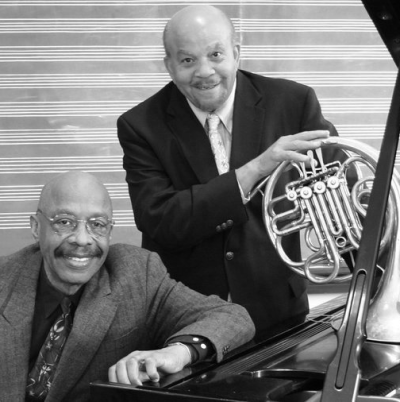
photo via Bandcamp

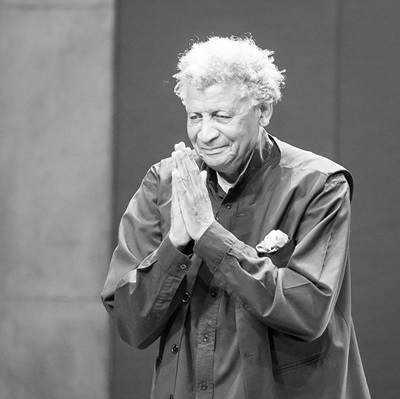
Dwike Mitchell and Willie Ruff
.
___
.
Tell a Story:
Mitchell and Ruff’s Army Service
by Dale Davis
.
…..Teachers hope to ignite their students’ interest in class, and this day sparked a bonfire. In 1969, Willie Ruff invited jazz pianist Dwike Mitchell to his Afro-American Music class at UCLA where Mitchell performed various songs and talked about jazz. During the question-and-answer session, one young woman asked Mitchell when he and Mr. Ruff met and started playing together. In his memoir A Call to Assembly, Ruff writes that the question seemed simple enough as Mitchell replied, “We met in the army at an all-black air base in Ohio, where we learned our craft under a musician and teacher, Chief Warrant Officer John Brice. Mr. Brice taught us that this music is one of our culture’s strongest and most honorable legacies and that we should do all we can to serve it well”.
….. Hands shot up throughout the room, but instead of questions about jazz improvisation, these students asked for more detail about this all-Black air base in Ohio. Why were they just now learning this story? Many of Ruff’s white students “couldn’t even imagine that black men had ever been refused training in military aviation; or that black officers had organized themselves to challenge racial segregation in the army. The very idea that America ever had had a Lockbourne snatched their breath away.”
….. Lockbourne Air Force Base, located outside Columbus, Ohio, became home for the famous Tuskegee Airmen after World War II. It had been designated as an all-Black base after more than 60 Black officers and pilots at Freeman Field, Indiana, were arrested and court martialed for protesting being denied entrance to the whites-only officers’ club. Colonel Benjamin O. Davis, Jr., commanded Lockbourne, becoming the first Black officer to command an Army Air Force base.
……….That student’s question sparked proud memories for Mitchell and Ruff as the two musicians recalled their learning experiences at Lockbourne, performing as a duo and as members of one of the most respected military bands in the country during the late forties. Their experiences in the Army and at Lockbourne were more than distant memories, more than a footnote in the story of Black American military service. Lockbourne was the conservatory where they became serious about learning to play music and found themselves surrounded by dedicated musicians who mentored and challenged these two enlisted teenagers as they began their journey to become musicians, teachers, and ambassadors of jazz. Lockbourne taught Mitchell and Ruff discipline, an appreciation for community and the mentors in that community, and an awareness of the historical and cultural legacies that shaped their music.
….. The Army allowed Mitchell and Ruff to escape difficulties at home and find a sense of personal independence. Both men lost the nurturing influences of their mothers before enlisting. After Mitchell’s parents divorced when he was eight, his mother moved to Jacksonville, Florida, leaving her son Ivory Junior with his father. Ruff’s mother died from tuberculosis when he was thirteen. Both mothers recognized their sons’ talents and insisted on their taking lessons, laying the foundation of their musical skills in the Army and their later careers.
….. Life with their fathers, though, was less than ideal. Mitchell’s strict father, Ivory Mitchell, Sr., a garbage truck driver, believed his son lacked discipline, a fault that he was sure would land the boy in trouble. Ivory Junior saw the matter a different way: his father was angry at having to raise his son on his own. When Mitchell turned seventeen, he enlisted in the U.S. Army. He left his father’s house in Dunedin, Florida, hoping the Army would free him from the strict rules his father imposed on him. Ironically, he fled to an organization that demanded strict adherence to its rules and imposed severe punishment to those who did not measure up. The Army did its best to instill discipline in the young man, but to little avail. When Ruff later met Mitchell at Lockbourne, Mitchell had a reputation as one of the most undisciplined soldiers on the base.
….. After Ruff’s mother passed away, he went to Evansville, Indiana, to live with his father who barely made any money hauling and selling coal from the back of his truck during the years of the Depression. Once America entered World War II, young men wearing military uniforms were everywhere, and Ruff admired the self-confidence they projected. Ruff craved the discipline of Army training. He had seen Tuskegee pilots perform during an air show. After the war, his cousin joined the Army at seventeen, encouraged by a recruiting campaign to enlist young men before they graduated from high school. Dressed in his uniform, this cousin told Ruff about all the fine things that the Army offered and how he could get around the age requirement by forging his father’s signature on the enlistment papers. Ruff was fourteen when he enlisted.
….. Being surrounded by talented Black musicians who mentored and challenged Mitchell became a pivotal moment in his education as a pianist. From the time he was five years old, Mitchell played piano for his church in Dunedin. Although he could listen to a song and play it back, his mother and other teachers insisted on his learning to read music and practice scales and exercises. Sergeant Proctor, the concert band director, challenged Mitchell and assigned him to learn the Grieg A-Minor concerto. For Mitchell, the task was daunting. The concerto was so difficult, learning it made him cry. Years later, Mitchell told William Zinsser, author of Mitchell and Ruff: An American Profile in Jazz, “I had never even seen a concerto. I was still a slow reader of music, and this concerto was the most frustrating thing—it was too full of notes. But Sergeant Proctor said, ‘You can do it,’ and he worked with me at night.” Sergeant Proctor recognized that this piece would strengthen Mitchell’s skills. With help from Captain Alvin Downing, Mitchell mastered the complicated fingering and performed the piece in concert. Though a nervous wreck before the performance, Mitchell realized he could not disappoint his mentors.
…..Two other mentors, Sergeant Wiggins and an aviator Mitchell knew only as Flaps, introduced him to the sophisticated styles of Rachmaninoff and jazz pianist Art Tatum. Before he heard these artists’ recordings, Mitchell rarely thought about how to make the piano work for him or how to convey emotion by touch. In Dunedin, his father would listen and tell him not to play so hard. What did his father know? After hearing a recording by Art Tatum, Mitchell realized his father was right. He played as he had heard other piano players in Dunedin, hammering the keys so audiences at churches or nightclubs could hear the music. After hearing the Rachmaninoff and Tatum recordings, Mitchell worked to create nuances of sound and emotion through touch. As he told Zinsser, “And I had to teach myself that: by listening to a sound and trying to duplicate it on the piano.”
…..Years later, as he and Ruff toured the country and performed before school and college assemblies, Mitchell had to work with pianos that had been provided for him. He could not travel with his piano as Ruff traveled with his bass and French horn. He turned adversity into advantage if a piano hadn’t been properly tuned or produced a flat sound. The discipline and wisdom those mentors passed along transformed his outlook and attitude of getting by on his ability to play by recall and basic reading into a passion for learning all he could about music. A more serious and focused Mitchell emerged. As he later told William Zinsser, “. . . those men were eager to show you whatever you asked about, and at the same time, I had a thirst. I was totally immersed in the learning process. That was when I really became interested in music. That was when it hit me: ‘This is what I want to do.’”
…..Having forged his father’s signature to enlist in the Army at fourteen, Willie Henry Ruff fell in love with the discipline of military drill and soon found himself part of the band at Fort Francis E. Warren, in Cheyenne, Wyoming, where he was first stationed. Ruff played the drums, having learned from his brother’s friend Mutt McGraw who lived across the road in Sheffield, Alabama. Ruff never mastered the drums, but the band duty sure beat working as a truck driver, the duty for which the Army assigned him. When news came that the band at Fort Lee, Virginia, was being split up, with most of the more accomplished musicians transferring to Fort Warren, Ruff’s days as a drummer in the band ended when the band’s director, Mr. Ruffin, told him to head back to the truck unit.
…..Noticing that the band lacked enough French horn players, Ruff recognized an opportunity to stay with the band and made a deal with Mr. Ruffin. If he learned to play the French horn, could he stay in the band? Mr. Ruffin reluctantly gave the young man a shot and provided him with a French horn and a place to practice. He would get no favors; he had to earn his spot or go to the truck unit. Ruff applied every ounce of discipline he could muster. Mutt McGraw had told him countless times that if he didn’t follow his instructions, he could go home. That discipline fueled the drive to learn the French horn.
….. Pete Lewis, a baritone player from Fort Lee, offered to help Ruff. For weeks they practiced together, working through exercises until Pete felt it was time for Ruff to try something the band was practicing, “Ballet Egyptienne,” a piece that Ruff felt he could never master. To return to the band, he had to accomplish the French horn solo in that song. With Pete’s patient guidance, Ruff performed the solo for Mr. Ruffin and found himself back in the band and promoted to first horn.
…..During their weeks of practice, Pete Lewis demonstrated lip exercises and breathing control, taking deep breaths and pushing from the diaphragm. As Ruff later told William Zinsser, Pete insisted that “’Whenever you’ve got anything to play, always tell the story. You can tell the story with one note.’ And he showed me how to tell the story with one note.” Letting the music tell stories commemorates a song’s composers and musicians, revealing their humanity and their legacies. As Ruff writes in his memoir, Pete explained, “that music don’t mean a thing unless it tells a story. It’s got to say something. Now you got a story to tell, and don’t you ever let nothing or nobody make you ashamed to tell it in music.”
…..Pete’s comments echo the wisdom of W. C. Handy, who once came to Ruff’s second grade classroom, performing songs and discussing their significance to the children. As Ruff writes in A Call to Assembly, Mr. Handy “was passionate about the music’s worth and admonished us children to always value all the rich legacy of our musical ancestry, the secular and the sacred alike.” Handy wanted the children to understand that the music of American Black folk was more than blues and jazz and spirituals. The songs told the stories of people who endured hardship and fought to prove themselves capable of many wonderful things. Those musical forms told stories of tragedy and triumph, of heartbreak and celebration. “Be proud of [your music] and hold it up,” Mr. Handy told the students. “Sing it with thanksgiving in your hearts, and with pride and dignity in your voices.”
….. Handy’s wisdom prepared Ruff for the lessons he learned from Pete Lewis and from Chief Warrant Officer John Brice, director of the band at Lockbourne Air Force base. The band enjoyed the reputation as one of the finest military bands under Mr. Brice’s leadership, especially in his selection of classical symphonic music for major concerts. Many white officers believed that Black soldiers were incapable of serving with discipline or strong leadership and incapable of performing classical music. Opportunities for Black musicians in civilian symphonic orchestras were nonexistent, so Mr. Brice and Sergeant Ruffin, who had transferred to Lockbourne, set as their standard the classical music their black musicians were supposed to be incapable of learning.
…..As Ruff tells the story, Mr. Brice “had taken it as his mission to build a symphonic ensemble to rival the prestigious all-white Army Air Corps band in Washington. ‘Those damn lowbrow Washington trashy-assed colonels can’t stand the idea of a black symphonic band here.’” When Washington brass wanted to form a traveling musical revue, Mr. Brice resisted efforts to enlist members of his band in this proposed “GI minstrel show.”
….. One day during practice for an upcoming concert, Mr. Brice called the musicians to assembly. He told them the story of Antonin Dvorak, whose Symphony # 9, From the New World they were practicing. As Mr. Brice explained, the Adagio movement, “Going Home,” was important to each member of the band, that the “theme is something you feel in a special way because it goes to the heart of something deep within you that you cannot deny. . . . Such is the power of music to express the true soul of a people.” According to Mr. Brice, when Dvorak came to the United States, he worked with two Black colleagues, composition student Will Vodrey and organist Henry Burleigh. Burleigh became friends with Dvorak and helped him understand “the wealth of musical material that grew out of our people’s story in America. This movement is a distillation of the essence of the great Negro spiritual.” As the men practiced the movement that day, Ruff writes, “the ‘New World’ Symphony became a different composition for every musician in the room.”
….. Mr. Brice’s comments focused the piece into more than an evening’s entertainment. The musicians’ work in the band was more than a means to fulfill the obligations of their enlistments. This concert connected these Black musicians to a larger story of history and culture honoring the legacies of the Black experience in America and beyond its shores. These men would tell those stories.
….. The Army was a great democratizer. Lockbourne’s musicians came from different regions of the country and from diverse backgrounds. Mr. Brice’s story of how two Black men helped Antonin Dvorak understand the cultural significance of the negro spiritual to write his Symphony # 9 changed every musician’s perspective about the music they practiced, inspired them with a renewed purpose in their work, and instilled in each the desire to do his best as they practiced the Adagio in the piece.
…..As their enlistments approached the end, Mitchell and Ruff knew the Jim Crow South offered no opportunities to advance to the next challenge of their learning: formal classical training. Mitchell left the Army and found his way to the Philadelphia Musical Academy to study under the guidance of pianist Agi Jambor. Ruff found his way to Yale to study under Paul Hindemith.
….. The discussion in Ruff’s UCLA classroom ignited a bonfire of interest in historical stories that his students didn’t know. After that classroom experience, one of Ruff’s students came and told him that she had talked to her parents that night about the stories she had learned. During the conversation, her father mentioned that her uncle had been a pilot while stationed at Lockbourne. One story begat another story, and the young woman told Ruff about how she had “raised hell with both my parents” that they had never told her this story before now. As Ruff writes in A Call to Assembly, “It made me proud that a music class had illustrated to the young lady how quickly our story, a significant story in the American experience, erodes if not reinforced from generation to generation.”
…..Mitchell and Ruff’s service in the Army and at Lockbourne transformed them from relatively talented teenagers to mature, lifelong students of music. They emphasized that discipline was crucial for young musicians and students to learn improvisation. Before diverse audiences, they seized every opportunity to tell stories about the music they performed and its rich legacies. They believed in jazz as music for everyone. They wanted audiences of all ages to appreciate the greater story that music told.
…..The reactions of the UCLA students surprised Mitchell and Ruff. If these students had not learned this story of Lockbourne and its influence on these two jazz musicians, what other stories might disappear from the rich tapestry of Black American achievement? It was true in 1969; it is true today. Sharing their wisdom preserved those stories and enlightened others to celebrate the music and, as W. C. Handy told Ruff and his classmates, to sing it “with pride and dignity in your voices.” Jazz is the music of smoky and crowded night clubs and raucous concert halls, of school rooms, and even churches on Sundays when the spirit seizes the congregation. Jazz tells the story of Black America; it tells the story of America.
.
.
___
.
.
Dale Davis is a retired Mississippi community college instructor. He has been published in Boomer Magazine and Mystery Tribune.
.
.
Watch a video of Mitchell & Ruff talking about, among other things, their time in the Army, before performing the Edgar Sampson composition, “Stompin’ at the Savoy”
.
.
.
Resources for the essay:
Ruff, Willie. A Call to Assembly: The Autobiography of a Musical Storyteller. BookBaby, 1991. Kindle.
Zinsser, William. Mitchell and Ruff: An American Profile in Jazz. Paul Dry Books, 2000. Kindle.
.
.
.
Click here to read the 2000 Jerry Jazz Musician interview with William Zinsser, author of Mitchell & Ruff: An American Profile in Jazz [Paul Dry Books]
.
.
___
.
.
Click for:
“My Vertical Landscape,” Felicia A. Rivers’s winning story in the 69th Jerry Jazz Musician Short Fiction Contest
Information about how to submit your essay, poetry or short fiction
Subscribe to the (free) Jerry Jazz Musician quarterly newsletter
Helping to support the ongoing publication of Jerry Jazz Musician, and to keep it commercial-free (thank you!)
.
___
.
.

Jerry Jazz Musician…human produced since 1999
.
.
.